
Seawall Weep Holes: What They Do and Why Clogs Are Dangerous
Learn what a seawall weep hole does, why a clogged weep hole can cause catastrophic wall failure, and when to call a Florida-licensed engineer to inspect yours.
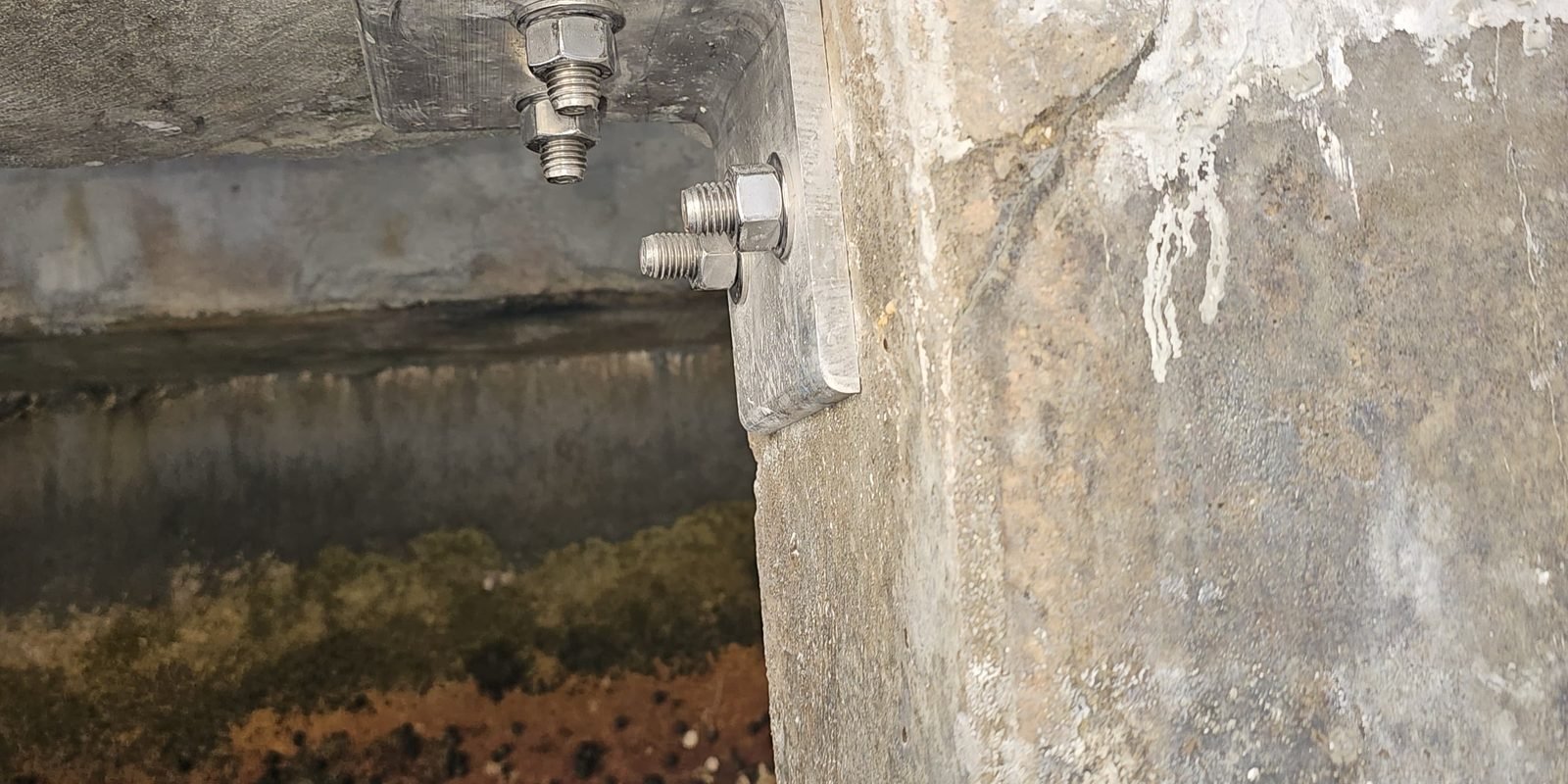
A seawall weep hole is a small drainage opening built into the wall face that relieves hydrostatic pressure — the force of groundwater pressing against the landward side of the wall. When a weep hole clogs, that pressure has nowhere to go, and it can crack panels, blow out joints, or topple a seawall entirely. In South Florida’s saturated soils, a blocked weep hole is one of the most common and most underestimated causes of sudden seawall failure.
Key takeaways
- Weep holes equalize water pressure between the soil side and the water side of a seawall — without them, hydrostatic pressure builds until something gives.
- Clogs form from sediment, marine growth, root intrusion, and corroded screens; they are often invisible from the surface.
- A clogged weep hole puts extra load on tiebacks and panel joints — structural components that are expensive to replace.
- Signs of weep hole failure include horizontal cracks in panels, leaning walls, soil voids behind the wall, and sinkholes near the cap.
- A Florida-licensed structural engineer can confirm weep hole condition as part of a flat-fee seawall inspection, typically $1,500–$3,000, quoted upfront before any site visit.
What a seawall weep hole actually does
Behind every seawall sits a mass of saturated soil. Rain, irrigation, and tidal fluctuation constantly push groundwater through that soil. That water exerts outward pressure on the back of the wall — a force engineers call hydrostatic pressure.
Weep holes — typically 2–4 inch diameter openings spaced every 5 to 10 feet along the wall face — let that groundwater drain through the wall and into the adjacent waterway. By allowing water to escape, they keep the pressure differential between the soil side and the water side manageable.
Think of it this way: the wall is designed to resist soil pressure, wave action, and surcharge loads from structures above. It is not designed to also hold back a column of pressurized groundwater indefinitely. Weep holes remove that extra variable from the equation.
Where weep holes are located
On a concrete panel seawall — the dominant type in Miami-Dade, Broward, and Palm Beach — weep holes are typically cast into the panels near the base, just above the normal water line. Some older walls have them only at the cap level, which is less effective. Sheet pile walls may use slotted sections or separate drainage pipes rather than drilled openings, but the function is identical.
Weep hole screens and filters
Most modern installations include a filter fabric or gravel pack behind the opening to prevent fine soil particles from washing through with the water. Some have PVC sleeves or stainless-steel mesh screens to keep marine organisms out. These components require periodic inspection because they are the first things to fail.
How weep holes clog — and why South Florida makes it worse
South Florida’s environment is particularly hard on weep holes. Warm saltwater accelerates biological growth. Sandy, silty soils migrate easily. And the flat topography means even light rain saturates soil quickly and keeps it saturated.
Common clog causes
- Sediment and silt migration: Fine soil particles wash into the opening over time, especially when filter fabric degrades.
- Marine growth: Barnacles, oysters, and algae colonize the opening from the water side, sealing it from the outside in.
- Root intrusion: Seawall-adjacent landscaping — sea grape, ficus, palm roots — can penetrate the opening or the surrounding concrete and block drainage pathways.
- Corrosion of screens: Standard steel mesh rusts in salt air within a few years. A corroded screen collapses inward and traps debris.
- Previous repair work: Poorly applied epoxy or hydraulic cement used to patch cracks near a weep hole sometimes seals the opening accidentally.
- Soil settlement: When the soil behind the wall shifts, it can physically compress or redirect the drainage path, slowing flow until the hole becomes effectively blocked.
Why a clogged weep hole is structurally dangerous
The danger is not gradual — it can be sudden. Hydrostatic pressure builds quietly over weeks or months. Then a heavy rain event, a king tide, or a rapid tidal drop creates a pressure spike the wall cannot absorb, and failure happens fast.
What happens structurally
When weep holes are blocked, excess groundwater pressure transfers directly to the panel face and the joints between panels. Concrete panels are strong in compression but relatively weak in bending. A sustained pressure load causes horizontal cracking through the panel, typically at mid-height — the point of maximum bending stress.
The tiebacks — buried steel rods or helical anchors that resist the wall rotating outward — were sized for normal soil loads, not for soil plus a head of pressurized water. Extra load accelerates tieback corrosion and can cause sudden rod fracture, which removes the wall’s primary lateral support in an instant.
Soil voids form on the landward side as saturated soil is pushed through cracks or slowly erodes. Those voids can open into sinkholes at the surface, damage pool decks, undermine slabs, or destabilize the footer of a seawall cap. In South Florida, where many waterfront homes sit on relatively thin slabs near the water’s edge, this progression from clogged weep hole to structural damage can happen within a single wet season.
The cost comparison
Clearing and restoring functional weep holes is a minor repair — far less expensive than what comes next. General industry ranges for seawall repair run roughly $100–$250 per linear foot for moderate work; full panel or tieback replacement can reach $400–$600 per linear foot or more, depending on access, depth, and permit requirements. Catching weep hole failure early means the difference between a maintenance item and a major structural project.
How to tell if your weep holes are failing
Most clogged weep holes are invisible to the untrained eye until secondary symptoms appear. A visual inspection from the dock or seawall cap is a reasonable starting point, but it will not reveal what is happening below the waterline or behind the wall face.
Warning signs at the wall face
- No visible water seeping from weep hole openings during or immediately after heavy rain (when flow should be highest)
- Horizontal cracks in concrete panels, especially at mid-height
- Efflorescence — white calcium deposits — around cracks, indicating water is finding new paths through the concrete
- Visible marine growth completely covering the opening on the water side
- Rust staining below the weep hole from a corroded internal screen
Warning signs on the landward side
- Soft spots, depressions, or sinkholes within 10 feet of the seawall
- Cracks in a pool deck, patio slab, or driveway running parallel to the wall
- The seawall cap leaning or tilting toward the water
- Gaps opening between the cap and the panels below it
- Standing water that does not drain near the base of the wall after rain
Any one of these signs warrants a professional inspection. Multiple signs together indicate an urgent situation. The Florida Department of Environmental Protection and Miami-Dade’s Department of Environmental Resources Management (DERM) both regulate coastal structures, and work on or near navigable waters typically requires permits before any repair begins.
What a professional seawall inspection covers
A Florida-licensed structural engineer’s seawall inspection goes well beyond looking at the weep holes. It is the only way to get a complete picture of the wall’s condition.
What the inspection includes
- Visual inspection above the waterline: Panel condition, joint integrity, cap condition, tie rod access covers, hardware corrosion, drainage function.
- Below-waterline assessment: On complex or suspect walls, an underwater dive inspection checks the panel base, embedment zone, and any toe scour — the erosion of material at the bottom of the wall that can undermine its footing.
- Weep hole documentation: Each weep hole is checked for obstruction, corrosion of screens, evidence of soil migration, and drainage function relative to recent rainfall.
- Tieback and deadman evaluation: Soundings and probing identify whether tiebacks are still engaged or have corroded through.
- Engineer-sealed report: A written report with findings, photos, a condition rating, and specific repair recommendations — not a verbal summary.
Souffront’s seawall inspections are priced as a flat fee — typically $1,500–$3,000 depending on complexity, access, and whether an underwater inspection is needed — quoted upfront before any site visit. The fee is not calculated per linear foot. See the engineer-sealed report service for more on what the documentation includes.
For waterfront properties in Fort Lauderdale’s Intracoastal neighborhoods, Miami Beach canals, or Boca Raton’s finger-canal communities, local conditions — tidal range, soil type, canal traffic wake — affect how quickly weep hole problems develop. Our Fort Lauderdale and Miami Beach service pages cover area-specific considerations in more detail.
Can you fix a clogged weep hole yourself?
Clearing visible marine growth from the water-side opening with a stiff brush is a reasonable maintenance step any homeowner can take. But that addresses only the most superficial obstruction. If the filter fabric has collapsed, if silt has compacted behind the opening, or if the screen has corroded into the cavity, surface cleaning accomplishes little.
More importantly, clearing a weep hole in a wall that already has pressure-related cracking can release trapped water pressure suddenly, accelerating damage. Before any repair — even a minor one — it is worth knowing the current structural condition of the wall. An inspection first prevents cleaning from becoming a trigger for a larger failure.
If repairs are needed, the scope determines the permit requirements. Miami-Dade DERM, Broward County Environmental Planning, and the U.S. Army Corps of Engineers all have jurisdiction over work in or near navigable waters. A licensed engineer can confirm what permits apply before work begins.
Talk to a Florida-licensed engineer
If your seawall shows any of the warning signs above — or if you simply do not know when it was last inspected — Souffront Contractors can assess the full wall, confirm weep hole function, and deliver an engineer-sealed report with clear next steps. The inspection fee is quoted as a flat fee before we visit, and our team typically responds the same business day. Fill out the form below to get started.
Frequently asked questions
What is the purpose of a weep hole in a seawall?
A weep hole allows groundwater that has accumulated behind the seawall to drain through the wall into the adjacent waterway. This drainage relieves hydrostatic pressure — the outward force of water-saturated soil pressing against the back of the wall. Without functional weep holes, that pressure accumulates and adds structural load the wall was not designed to sustain indefinitely.
How do I know if my seawall weep holes are clogged?
During or right after heavy rain, look at the wall face near the waterline — you should see water seeping or dripping from the weep hole openings. If the openings are dry during those conditions, or if you see marine growth completely covering them from the water side, they are likely obstructed. Other signs include horizontal cracks in the panels, soft spots in the soil near the wall, and sinkholes or deck cracks on the landward side.
Can a clogged weep hole cause a seawall to collapse?
Yes. A blocked weep hole allows hydrostatic pressure to build behind the wall. Over time that pressure cracks panels, overloads tiebacks, and causes soil voids that undermine the wall’s foundation. Sudden failure — where the wall rotates outward or a panel blows out — most often occurs during a heavy rain event or rapid tidal change when pressure spikes quickly. In South Florida’s saturated soils, this progression can happen within a single wet season.
How much does it cost to fix a clogged seawall weep hole?
Restoring a functional weep hole — clearing the obstruction, replacing a degraded filter sock or screen, and sealing around the penetration — is a minor repair compared to structural work. The actual cost depends on the number of openings, the type of blockage, access conditions, and whether any surrounding concrete needs patching. A full seawall inspection, typically $1,500–$3,000 as a flat fee quoted upfront, will identify the scope before any repair commitment is made.
How often should a seawall be inspected in South Florida?
Most structural engineers recommend a professional inspection every 3–5 years for seawalls in normal condition, and annually for walls older than 20 years or showing any visible distress. South Florida’s tidal activity, salt exposure, and frequent heavy rain accelerate deterioration compared to inland structures. Properties on high-traffic canals — where boat wakes add repeated impact loads — should err toward more frequent inspection intervals.
Do I need a permit to repair or clean seawall weep holes in Miami-Dade or Broward?
Minor maintenance — clearing marine growth from a weep hole opening — generally does not require a permit. However, any repair that involves modifying the wall structure, replacing panels, or adding new drainage components in or near navigable waters typically requires permits from Miami-Dade DERM, Broward County, and potentially the U.S. Army Corps of Engineers. A Florida-licensed structural engineer can confirm what applies to your specific project before work begins.
What is hydrostatic pressure and why does it matter for seawalls?
Hydrostatic pressure is the force exerted by a fluid — in this case, groundwater — at rest. Behind a seawall, rain and tidal infiltration saturate the soil. That water exerts an outward force on the back of the wall proportional to its depth and density. Functional weep holes drain that water before pressure reaches dangerous levels. A seawall with blocked weep holes must resist both soil pressure and water pressure simultaneously — a combined load that can exceed its design capacity.
What type of engineer inspects seawalls in Florida?
Seawall inspections should be performed by a Florida-licensed structural engineer — someone who can evaluate load paths, assess panel and tieback integrity, and produce a
About Souffront Contractors Inc.: a Florida-licensed structural engineering and marine construction firm serving Miami-Dade, Broward, and Palm Beach counties. Get seawall repair in Coral Gables and across Miami-Dade County — or call (877) 420-7220.
Got a seawall or structural question?
Five fields. Same business day from a Florida-licensed engineer, routed into our dispatch CRM in real time.
- Same business dayAcknowledgment from a Florida licensed engineer — Mon–Fri 8 AM–5:30 PM.
- Engineer-sealed reportAccepted by carriers, building departments, and real-estate transactions.
- Fixed-fee proposalNo hourly billing. Repair scope priced line-by-line.