
Seawall Cap Cracks: Cosmetic vs. Structural (How to Tell)
Not all seawall cap cracks are equal. Learn how to tell cosmetic surface cracks from structural failures — and when to call a Florida-licensed engineer.
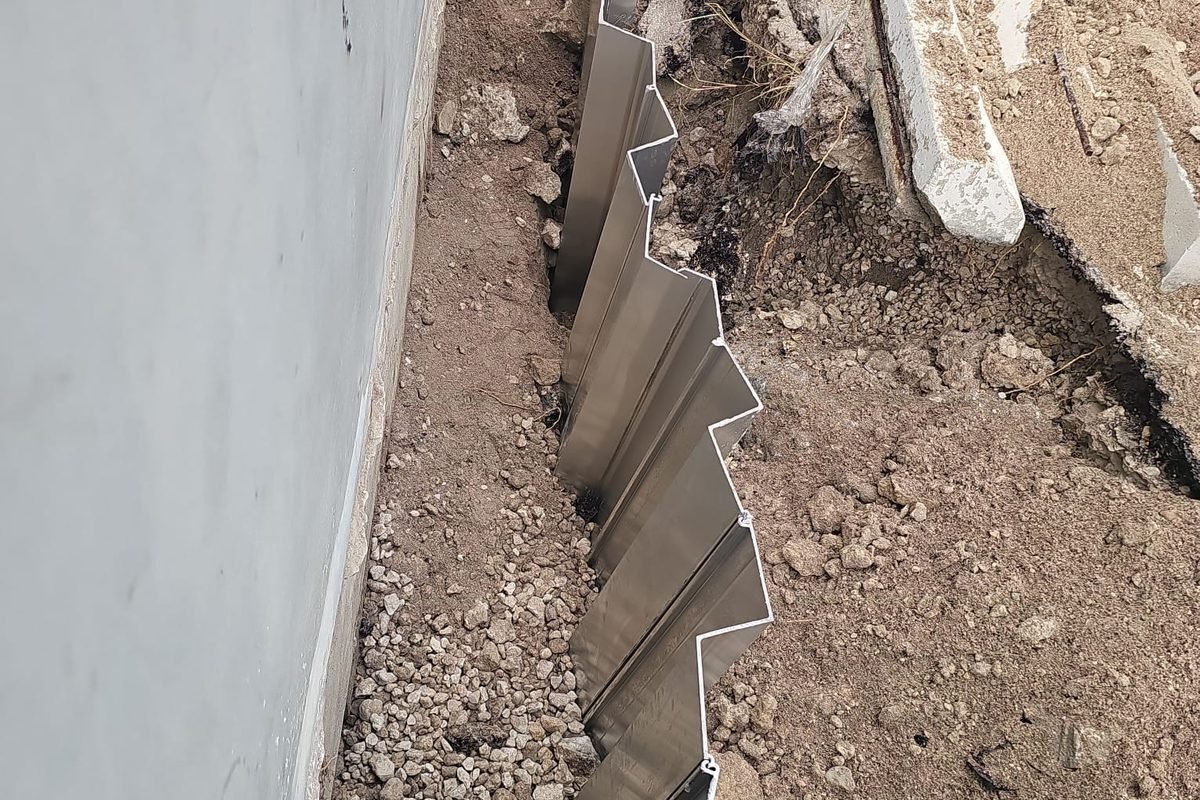
Seawall cap cracking is one of the most common concerns waterfront homeowners in South Florida raise — and one of the most misread. Some cracks are surface-level and pose no immediate threat; others signal active structural failure that can lead to seawall collapse, erosion, and costly emergency repairs. Knowing the difference can save you thousands of dollars and prevent a small problem from becoming a catastrophic one.
Key takeaways
- Hairline surface cracks in seawall caps are often cosmetic, but they still warrant monitoring — salt air and moisture accelerate concrete deterioration in South Florida’s climate.
- Wide cracks (generally ¼ inch or wider), diagonal cracks, cracks with vertical displacement, or cracks running through the full cap depth are structural red flags.
- A seawall cap crack combined with cap movement, tilting, or soil loss behind the wall is a sign of active structural failure — not a cosmetic issue.
- Only a Florida-licensed structural engineer can determine whether a crack requires monitoring, patching, or full repair.
- Seawall inspections are a flat fee — typically $1,500–$3,000, quoted upfront — not a per-linear-foot charge.
What is the seawall cap, and why does it crack?
The seawall cap is the concrete beam that sits on top of the seawall panels. It ties the wall system together, protects the top of the panels from wave energy and impact, and often anchors the tieback rods — the buried steel rods that hold the wall against the lateral pressure of the soil behind it.
In South Florida, seawall caps take a beating. The combination of salt spray, UV exposure, wetting-and-drying cycles, tropical storms, and boat wake creates constant stress on the concrete. Rebar inside the cap corrodes over time, and as it rusts, it expands — a process called spalling — which can crack the cap from the inside out.
Cracking can also result from differential settlement (the wall shifting or sinking unevenly), tieback failure, or active lateral pressure from soil behind the wall. These causes produce very different crack patterns, which is why the shape, location, and orientation of a crack matters as much as its size.
Cosmetic cracks: what they look like
Not every crack in a seawall cap signals structural trouble. Cosmetic or “shrinkage” cracks are common in aging concrete and often develop during the original curing process or from minor surface weathering. Here is what they typically look like:
- Hairline width: Less than 1/16 inch wide — often barely visible without kneeling down to look closely.
- Shallow depth: They do not penetrate through the full thickness of the cap.
- Horizontal or parallel to the wall face: Running along the cap without diagonal orientation or displacement.
- No movement: Both sides of the crack are flush — no vertical or horizontal offset between them.
- Stable over time: The crack does not widen or lengthen when monitored over several months.
- No associated symptoms: The cap is level, the wall face shows no bulging or lean, and there is no soil loss behind the wall.
Even cosmetic cracks deserve a coat of concrete sealer or patching compound. Once water penetrates, it reaches the rebar and begins the corrosion cycle. A crack that is cosmetic today can become structural within a few years if ignored in a saltwater environment.
Structural cracks: the red flags
Structural cracks indicate that the seawall cap — or the wall system beneath it — is under abnormal stress or actively failing. These require professional evaluation, not a patch-and-paint approach.
Width and depth
A crack that is ¼ inch wide or wider has moved beyond surface shrinkage. Width alone does not confirm structural failure, but it is a threshold that demands closer inspection. Cracks that run through the full depth of the cap are especially serious — they can allow water to infiltrate the wall system and corrode embedded steel components.
Diagonal orientation
Diagonal cracks — particularly those running at roughly 45 degrees — are a classic sign of shear stress or differential movement. When one section of the seawall settles faster than an adjacent section, or when tieback anchor points shift, diagonal cracks appear at the transition. These are not cosmetic.
Vertical displacement (step cracks)
If you can run your hand across a crack and feel one side sitting higher than the other, that is vertical displacement. It means two sections of the cap have moved independently. This almost always reflects movement in the wall panels or foundation below — a structural issue.
Cracks at tieback locations
Tiebacks — the buried steel rods anchored in a deadman (a buried concrete or steel block) behind the wall — attach to the seawall cap at regular intervals. Cracks that radiate outward from tieback attachment points suggest the tieback is pulling through the cap, corroding, or failing entirely. This is one of the more serious findings an engineer can make.
Cracks combined with other symptoms
A crack on its own is one data point. A crack accompanied by any of the following is a structural emergency:
- The cap or wall face is visibly tilting toward the water.
- There is a gap between the cap and the top of the seawall panels.
- Soil, mulch, or fill material is washing out from behind the wall.
- The cap has sunk or settled unevenly along its length.
- You can see exposed rebar, rust stains running down the wall face, or concrete delaminating in chunks (spalling).
Why South Florida conditions accelerate cap deterioration
Florida’s coastal environment is unusually aggressive toward concrete. Chloride ions from salt water penetrate concrete and attack the protective oxide layer on embedded steel rebar. Once corrosion begins, the rebar expands, cracking the surrounding concrete from within. This process — chloride-induced corrosion — is the leading cause of seawall cap failure in Miami-Dade, Broward, and Palm Beach counties.
The Florida Department of Environmental Protection (DEP) regulates coastal construction and repair along the state’s shoreline. Any repair or reconstruction of a seawall typically requires permits through the local building department, and in many cases approval from Miami-Dade’s Department of Environmental Resources Management (DERM) as well. Work in navigable waters may also require a permit from the U.S. Army Corps of Engineers (USACE). This is not a DIY-friendly regulatory environment.
The High-Velocity Hurricane Zone (HVHZ) provisions of the Florida Building Code apply to most of South Florida, imposing additional requirements on repair materials and methods. A contractor who skips engineering and pulls no permit is not saving you money — they are creating a liability.
How a Florida-licensed engineer evaluates seawall cap cracks
A qualified engineer does not simply look at a crack and call it cosmetic or structural. A proper seawall inspection follows a systematic process:
- Visual survey of the full cap: Documenting crack location, orientation, width, length, and any associated displacement — both above and at the waterline.
- Sounding (hammer test): Tapping the concrete to identify delamination — hollow sections where the concrete has separated internally but has not yet spalled away.
- Probe and measurement: Using a crack gauge (sometimes called a comparator card) to measure crack widths accurately, and a probe to test crack depth.
- Below-waterline assessment: When warranted, a dive inspection or underwater camera evaluation of the wall panels and toe — the section below the waterline where erosion and undermining often begin before any surface cracking is visible.
- Review of tieback and deadman condition: Assessing whether tieback locations show signs of stress, corrosion, or pull-through.
- Evaluation of soil conditions behind the wall: Looking for voids, settlement, and loss of fill that would increase lateral pressure on the wall.
The result is an engineer-sealed inspection report — a formal document that classifies findings, assigns a condition rating, and provides specific repair recommendations. This report carries legal and permitting weight that a contractor’s verbal assessment does not.
What repairs for structural cap cracks typically cost
Repair costs vary based on what is actually wrong. The cap crack you can see is often the symptom; the cause may be in the panels, tiebacks, or foundation below. General industry ranges for South Florida seawall work:
- Cosmetic patching and sealing: Surface repair with epoxy injection or hydraulic cement is a low-cost maintenance item — but it only addresses the surface. It will not stop structural movement.
- Moderate structural repairs (partial cap replacement, tieback repair, panel patching): roughly $100–$250 per linear foot, depending on scope and access.
- Full panel or tieback replacement: roughly $400–$600 per linear foot — general industry ranges, not a Souffront quote. Final cost depends on wall height, material, site conditions, and permit requirements.
These are repair costs, not inspection costs. The inspection is a separate, flat-fee service — typically $1,500–$3,000 for a residential property, quoted upfront before any site visit. See our guide to seawall repair in South Florida for more on what different repair approaches involve.
Monitoring cosmetic cracks over time
If an engineer determines a crack is cosmetic at the time of inspection, that does not mean it can be ignored forever. Implement a simple monitoring program:
- Mark the ends of each crack with a pencil line and the date. If the crack extends past your mark, it is growing.
- Photograph each crack at the same time of year, ideally after the wet season and after any major storm event.
- Check annually — or after any hurricane, tropical storm, or significant boat-wake event — for widening, new displacement, or new cracking nearby.
- Schedule a professional re-inspection if any crack grows by more than 1/16 inch in width or 6 inches in length between monitoring cycles.
Waterfront properties in areas like Miami, Fort Lauderdale, and Boca Raton sit in some of the most corrosive marine environments in the continental United States. What is stable today can degrade quickly once water infiltration and rebar corrosion gain a foothold.
Talk to a Florida-licensed engineer
If you are seeing cracks in your seawall cap and are not sure whether they are cosmetic or structural, the right move is a professional evaluation — not a Google search or a contractor’s free estimate. Souffront Contractors Inc. is an engineer-led firm that inspects, engineers, permits, and builds, all under one roof. Every inspection ends with an engineer-sealed report and specific repair recommendations. Our inspection fee is a fixed flat rate, quoted before we visit your property, with same-business-day responses. Call (877) 420-7220 or fill out the form below to schedule your seawall inspection.
Frequently asked questions
How can I tell if a seawall cap crack is cosmetic or structural?
Cosmetic cracks are typically hairline-thin (under 1/16 inch), shallow, horizontal, and show no displacement between the two sides of the crack. Structural cracks are wider (¼ inch or more), diagonal, or show one side sitting higher than the other. Any crack combined with wall tilting, soil loss behind the wall, or gaps between the cap and panels is a structural concern that requires professional evaluation.
Do I need an engineer to evaluate a seawall cap crack, or can a contractor assess it?
A licensed contractor can observe visible damage, but only a Florida-licensed structural engineer can classify a crack as structural or cosmetic, determine the underlying cause, and produce a sealed report that carries legal and permitting weight. For any crack wider than hairline, or any crack combined with other symptoms, an engineering inspection is the appropriate first step.
How much does a seawall inspection cost in South Florida?
A professional seawall inspection is a flat fee — not a per-linear-foot or hourly charge. For most residential properties in Miami-Dade, Broward, or Palm Beach County, the fee typically ranges $1,500–$3,000 depending on the complexity of the inspection, including factors like wall length, whether an underwater assessment is needed, and the number of structural components involved. The fee is quoted upfront before any site visit.
What causes seawall caps to crack in Florida?
The most common cause is chloride-induced corrosion — salt water penetrates the concrete, attacks the embedded steel rebar, and the expanding rust cracks the cap from the inside out. Other causes include differential settlement, tieback failure, lateral soil pressure, storm and wave impact, and original construction deficiencies. South Florida’s combination of salt air, UV exposure, and wet-dry cycles accelerates all of these mechanisms.
Can I patch a seawall cap crack myself?
Surface sealing of a confirmed cosmetic crack with a concrete sealer or epoxy filler is a reasonable maintenance step. However, patching a structural crack without addressing the underlying cause — tieback failure, panel movement, rebar corrosion — will not stop the problem and may mask it. Always get an engineering assessment before deciding a structural crack only needs patching.
How often should a seawall be inspected in South Florida?
A general guideline for South Florida’s marine environment is a professional inspection every three to five years for a well-maintained wall, and annually for walls that are older than 20–25 years, have known damage, or are in high-energy water environments with heavy boat traffic. After any major hurricane or tropical storm, an immediate post-storm inspection is advisable regardless of visible damage.
What happens if a structural seawall cap crack is ignored?
Ignored structural cracks allow water to reach and corrode the rebar and tieback hardware inside the wall system. Over time, this leads to panel cracking, tieback failure, and eventually wall collapse or significant lean toward the water. A collapsed or failed seawall can undermine adjacent structures, result in property loss, and require emergency repair at two to three times the cost of planned repair. It can also create liability if the failure affects a neighbor’s property or a navigable waterway.
Do seawall cap repairs require a permit in Miami-Dade or Broward County?</h
About Souffront Contractors Inc.: a Florida-licensed structural engineering and marine construction firm serving Miami-Dade, Broward, and Palm Beach counties. Book a seawall inspection in Miami or anywhere on the South Florida waterfront — or call (877) 420-7220.
Got a seawall or structural question?
Five fields. Same business day from a Florida-licensed engineer, routed into our dispatch CRM in real time.
- Same business dayAcknowledgment from a Florida licensed engineer — Mon–Fri 8 AM–5:30 PM.
- Engineer-sealed reportAccepted by carriers, building departments, and real-estate transactions.
- Fixed-fee proposalNo hourly billing. Repair scope priced line-by-line.