
Why Seawalls Lean, Bow, or Bulge (and What It Means)
Learn why a seawall leans, bows, or bulges, what causes it, and when a Florida-licensed engineer should inspect it before failure occurs.
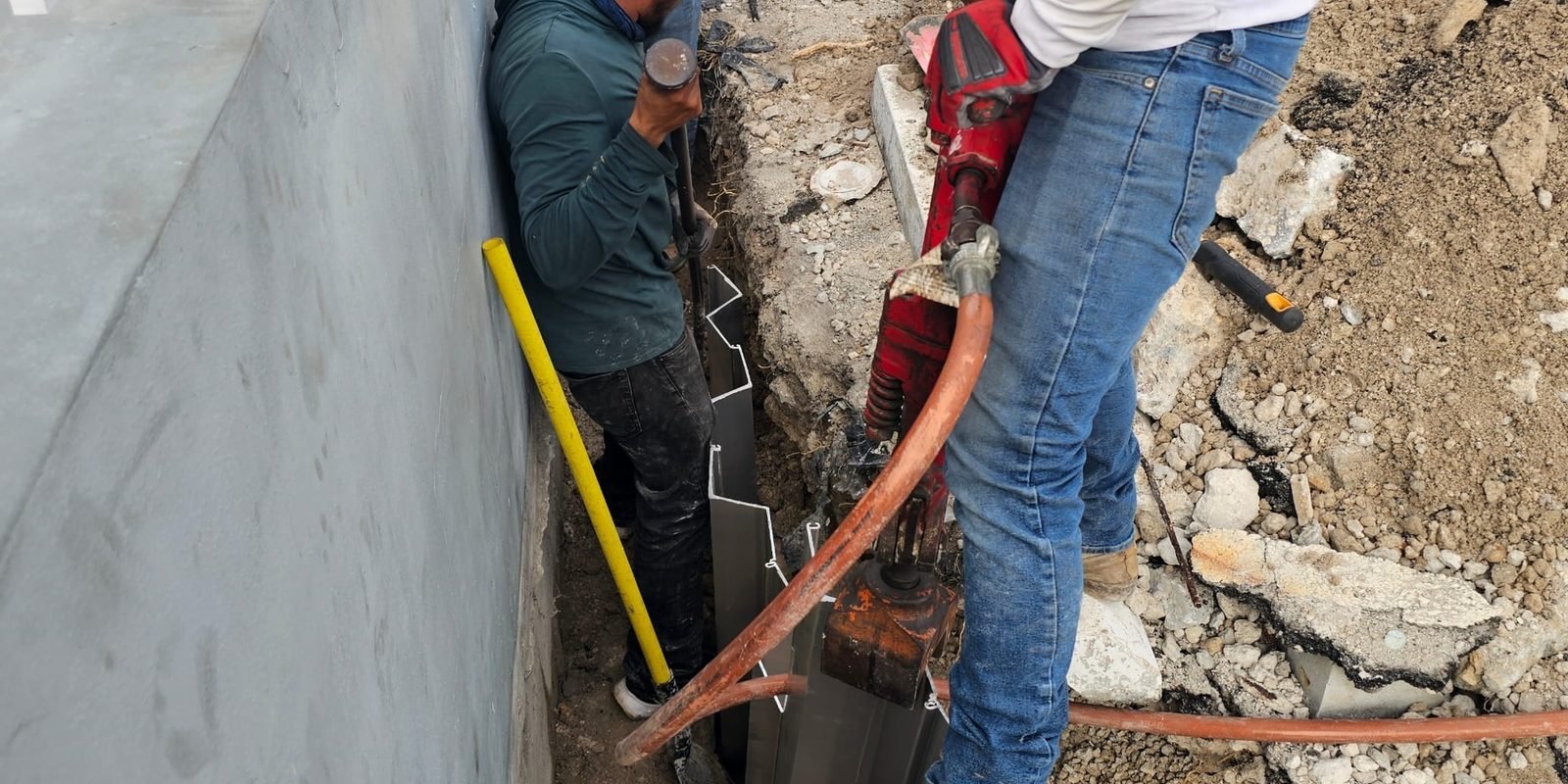
A seawall leans, bows, or bulges when the soil pressure behind it exceeds the wall’s ability to resist that force — usually because of soil loss, a failed tieback, corroded reinforcing steel, or age-related deterioration of the panel and cap. Any visible movement in a seawall is a structural warning sign, not a cosmetic issue. A Florida-licensed structural engineer should evaluate the wall before the movement progresses to a breach.
Key takeaways
- Leaning, bowing, or bulging almost always means the wall is losing its fight against soil and hydrostatic pressure behind it.
- The most common causes are soil/void loss behind the panel, corroded or snapped tiebacks, deteriorated deadmen anchors, and rebar corrosion that weakens concrete panels.
- A bulge in the middle of a panel points to a localized failure; a wall leaning uniformly along its length points to a systemic anchor or soil problem.
- Movement tends to accelerate after storms, king tides, or heavy rain events that raise water and soil pressure quickly.
- A structural seawall inspection (typically $1,500–$3,000, quoted upfront based on complexity) identifies the cause and whether repair or replacement is the right next step.
What “leaning, bowing, or bulging” actually means
These three terms describe different failure patterns, and the difference matters for diagnosis:
- Leaning — the entire wall tilts landward-to-seaward (or vice versa) along a stretch, usually a sign the whole system — cap, panels, and anchors — is shifting together.
- Bowing — the wall curves outward across a section, often between two piles, indicating the panel itself is flexing under pressure it wasn’t designed to carry alone.
- Bulging — a localized outward deformation in one panel or area, frequently tied to a void or soil loss directly behind that section.
All three are signs the wall’s structural system — panels, piles, cap, and tiebacks (the buried anchors that hold the wall against soil pressure) — is no longer working together as designed.
The main causes of seawall movement
1. Soil loss and voids behind the wall
Water moves through cracks, gaps at panel joints, or failed weep holes, carrying fill soil out from behind the wall and into the waterway. Over years, this creates voids. Without soil to brace it, the wall has nothing to push back against tidal and hydrostatic pressure, so it bows or bulges into the open space.
2. Failed or corroded tiebacks
Most seawalls rely on tiebacks connected to a buried deadman anchor to hold the cap and panels in place. Saltwater intrusion corrodes the steel rod or cable over time. When a tieback snaps or the deadman shifts, the wall loses its primary restraint and leans landward pressure has nothing counteracting it.
3. Corroded reinforcing steel (rebar) in the panels
Concrete seawall panels rely on internal rebar for tensile strength. Saltwater penetrates hairline cracks and corrodes that steel, which expands as it rusts and cracks the surrounding concrete from the inside. A panel weakened this way bows under normal soil pressure that it previously handled without issue.
4. Deteriorated batter or king piles
Piles anchor the wall vertically and resist lateral movement. Marine borers, corrosion, or impact damage can weaken a pile enough that it can no longer hold its section of wall in position, allowing that stretch to lean independently of the rest of the seawall.
5. Storm surge, king tides, and heavy rain
Sudden water level changes load a wall far beyond everyday conditions. A wall already weakened by soil loss or a compromised tieback can show a sharp increase in lean or bulge after a single storm or king tide event, even if it looked stable the week before.
6. Age and original construction quality
Many South Florida seawalls were built decades ago to older standards, with less corrosion-resistant materials than are used today. Age alone doesn’t cause failure, but it narrows the margin the wall has left before soil pressure and corrosion combine into visible movement.
How an engineer diagnoses the specific cause
Identifying why a wall is moving requires more than a visual look from the yard. A proper seawall inspection typically includes:
- Above-waterline review of the cap, panel joints, and visible cracking or spalling.
- Below-waterline dive inspection where soil loss or pile damage is suspected.
- Probing for voids behind the wall using sounding or sub-surface methods.
- Assessment of tieback condition and deadman anchor location where accessible.
- Measurement of the lean or bulge to establish a baseline for future monitoring.
The inspection concludes with a Florida-licensed engineer’s written findings and condition rating, which forms the basis for any recommended repair scope.
When movement means repair versus replacement
Not every leaning or bulging wall needs full replacement. Localized bulging from a single void can sometimes be addressed with soil injection, panel patching, or targeted tieback replacement. A wall leaning uniformly along a long run, or one with widespread rebar corrosion, more often needs full panel and tieback replacement to restore structural integrity. Typical repair costs in South Florida run roughly $100–$250 per linear foot for moderate repairs, and $400–$600 per linear foot for full panel or tieback replacement — these are general industry ranges, not a quote, and differ from inspection pricing, which is always a flat fee.
Talk to a Florida-licensed engineer
If your seawall shows any lean, bow, or bulge, don’t wait for the next storm to test it further. Souffront Contractors provides a Florida-licensed structural engineer’s inspection and report for a fixed fee, quoted before any site visit, with same-business-day response. Our team inspects, engineers, permits, and builds — one company handles the full process from diagnosis to repair. Use the form below to schedule an inspection.
Frequently asked questions
Is a leaning or bulging seawall an emergency?
It depends on severity and rate of change. A slow, minor lean noted over years is a monitoring item; sudden or rapidly progressing movement, especially after a storm, should be inspected immediately since it can indicate active soil or anchor failure that worsens quickly.
Can a bulging seawall be repaired without full replacement?
Sometimes. If the bulge is localized and caused by a single void or isolated tieback failure, targeted repairs like soil injection or panel/tieback replacement in that section can resolve it. Widespread bulging or leaning across a long run usually points to a systemic issue that needs full replacement.
What does it mean if only part of my seawall is bowing?
Localized bowing usually points to a soil void or a failed tieback directly behind that section, rather than a problem affecting the whole wall. An inspection can confirm the exact cause and whether it’s isolated or spreading.
How much does it cost to inspect a leaning seawall?
A structural seawall inspection is a flat fee, typically $1,500–$3,000 depending on the complexity of the inspection — factors like whether a below-waterline dive is needed and how many structural components are involved. The fee is quoted upfront, before any site visit, and it is not based on linear footage.
Do all South Florida seawalls eventually lean or bow?
Not all, but many older seawalls built decades ago with less corrosion-resistant materials are more prone to it as tiebacks and rebar age. Regular inspection helps catch movement early, before it becomes a larger structural or safety issue.
Can heavy rain alone cause a seawall to bulge?
Heavy rain increases hydrostatic pressure and can accelerate soil movement behind a wall, especially if drainage (weep holes) is blocked or missing. It’s rarely the sole cause, but it often reveals a wall that was already weakened by soil loss or anchor deterioration.
What is a tieback, and why does it matter for wall movement?
A tieback is the buried rod or cable connecting the seawall cap to a deadman anchor set further inland. It’s the main structural element resisting the wall’s tendency to lean under soil pressure. When a tieback corrodes or snaps, the wall loses that restraint and typically starts leaning landward pressure without it.
Does Miami-Dade County require permits for seawall repair?
Yes. Seawall repair and replacement work in Miami-Dade generally requires permitting through Miami-Dade DERM, and may involve state or federal review depending on the scope. An engineer-led firm typically handles this permitting as part of the repair process.
About Souffront Contractors Inc.: a Florida-licensed structural engineering and marine construction firm serving Miami-Dade, Broward, and Palm Beach counties. Book a seawall inspection in Miami or anywhere on the South Florida waterfront — or call (877) 420-7220.
Got a seawall or structural question?
Five fields. Same business day from a Florida-licensed engineer, routed into our dispatch CRM in real time.
- Same business dayAcknowledgment from a Florida licensed engineer — Mon–Fri 8 AM–5:30 PM.
- Engineer-sealed reportAccepted by carriers, building departments, and real-estate transactions.
- Fixed-fee proposalNo hourly billing. Repair scope priced line-by-line.