
Seawall Repair Cost in South Florida: 2025 Guide
How much does seawall repair cost in South Florida? Most homeowners pay $150–$500 per linear foot. Get real numbers, permit facts, and expert guidance.
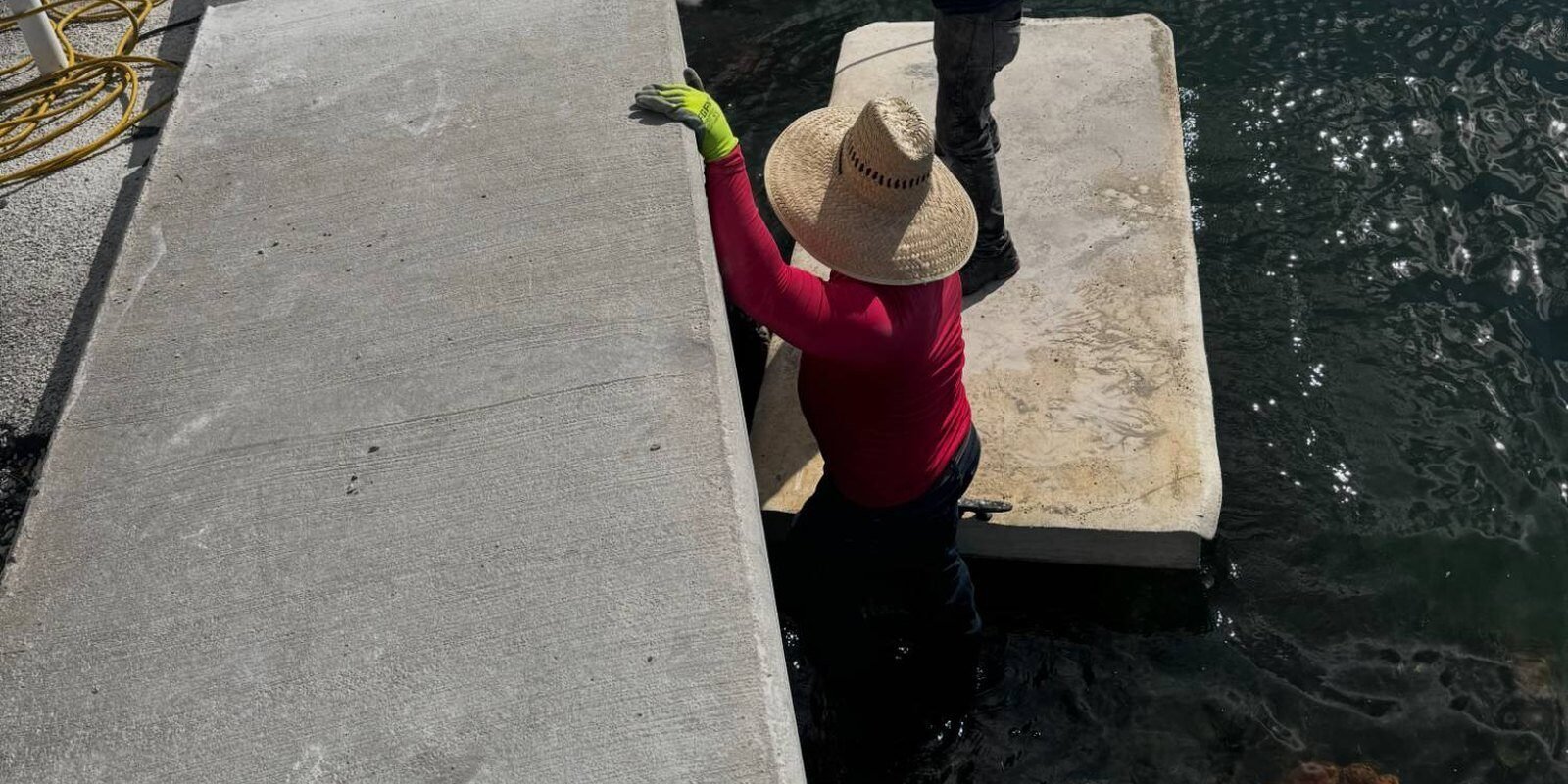
Seawall repairs in South Florida typically run $300 to $600 per linear foot, depending on the extent of damage and site conditions. Full seawall replacement — tear-out and new construction — is a different category, starting at $1,500 to $2,500 per linear foot depending on site access, demolition scope, and project complexity. Getting a licensed engineer’s written assessment before any contractor quotes you is the only reliable way to know where your job falls on that range.
Key takeaways
- Seawall repairs in South Florida typically run $300–$600 per linear foot, depending on damage extent and site conditions.
- Tieback failure — the buried anchor that holds a seawall against soil pressure — is among the most structurally complex repairs; costs fall within the confirmed $300–$600 per linear foot range depending on scope and access.
- Full seawall replacement (tear-out and new build) typically starts at $1,500–$2,500 per linear foot in South Florida, depending on site access, demolition requirements, and project complexity — significantly more than repair.
- Miami-Dade County and Broward County both require permits for seawall repair; unpermitted work creates title issues at resale.
- A single company that inspects, engineers, and repairs eliminates the conflict of interest that arises when the inspector and the contractor are separate parties.
What drives seawall repair cost in South Florida
Four variables control the final number: linear footage, damage type, material, and permitting complexity. South Florida seawalls are typically built from concrete, vinyl sheet pile, or aluminum. Concrete seawalls — the most common in Miami-Dade and Broward — tend to cost more to repair than vinyl but are more durable long-term in South Florida’s saltwater environment.
Permit complexity adds real cost. Work in Miami-Dade requires review by the Department of Environmental Resources Management (DERM). Work in navigable waters may also require authorization from the U.S. Army Corps of Engineers (USACE) and Florida DEP under a Joint Coastal Permit. These approvals take time and require engineered drawings — which is why hiring a firm that handles permitting in-house matters.
Labor rates in Miami-Dade and Broward run 20–30% above most Florida markets. Marine access, tidal work windows, and specialty subaqueous equipment add to that baseline. Budget accordingly.
Seawall repair cost ranges by damage type
The numbers below reflect current South Florida market conditions. All ranges assume water access and standard mobilization from within the region.
Surface cracking and spalling
Hairline cracks, surface spalling, and exposed rebar are the earliest signs of seawall deterioration. Repair involves epoxy injection, concrete patching, and a corrosion-inhibiting coating. Cost: $100–$200 per linear foot. This is the least expensive repair category — and the one most homeowners delay until it becomes something worse.
Erosion, undermining, and soil loss
When soil washes out from behind or beneath a seawall — a process called undermining — the structure loses lateral support. Left unaddressed, this progresses to wall rotation and eventual failure. Repair involves injecting grout or polyurethane foam to fill voids, plus addressing the source of water intrusion. Cost: $175–$350 per linear foot, depending on void volume and access conditions.
Tieback and deadman anchor failure
The tieback is the buried anchor — typically a steel rod connected to a deadman block set back in the soil — that holds the seawall against hydrostatic and soil pressure. When tiebacks corrode or pull loose, the wall begins to lean or bow toward the water. Replacing tiebacks requires excavation or directional drilling and is the most structurally complex repair category. Cost: $350–$600 per linear foot. In cases with significant forward lean, costs can exceed that range.
Cap repair and replacement
The concrete cap sits on top of the seawall panels and ties the structure together. Cracked or missing cap sections allow water intrusion that accelerates panel deterioration. Cap replacement typically runs $80–$175 per linear foot on its own, but is usually performed alongside panel or tieback work.
Full seawall replacement
When a seawall has progressed beyond repair — collapsed panels, failed tiebacks, or severe forward lean — full replacement is the only viable path. Full replacement means tearing out the failed structure and building new, which is priced the same as new seawall construction. New seawall construction in South Florida typically ranges from $1,500 to $2,500 per linear foot, depending on factors like site access, demolition requirements, and project complexity. Commercial and marina applications are scoped separately based on structural requirements and site conditions.
The cost of waiting
This is the number most property owners underestimate. A seawall in the early crack-and-spall stage costs $100–$200 per linear foot to address. The same seawall, left for two to three tidal seasons, typically progresses to erosion and tieback stress — now a $300–$500 job. Allow it to reach forward lean or panel failure, and you are looking at full replacement at $1,500–$2,500 per linear foot, plus emergency mobilization costs.
The math is straightforward. A 100-foot seawall repaired at the crack-and-spall stage costs $15,000–$20,000. The same wall at the replacement stage costs $150,000–$250,000. Early intervention is not just good maintenance — it is a financial decision with a measurable return.
Property insurance underwriters and lenders in Miami-Dade and Broward increasingly factor seawall condition into their assessments. A documented repair history with engineer-sealed reports strengthens your position at renewal or refinance. Learn more about engineer-sealed seawall reports and what they include.
Permit requirements for seawall work in Miami-Dade and Broward
Any structural seawall repair in South Florida requires a building permit. In Miami-Dade, DERM review is mandatory for work affecting a waterway. In Broward County, the process runs through the county’s Environmental Planning and Community Resilience Division. Work in navigable waters also requires coordination with the U.S. Army Corps of Engineers Jacksonville District and, in many cases, the Florida DEP.
Unpermitted seawall work is a serious problem at resale. Title companies flag it, buyers walk, and after-the-fact permitting — which requires engineering documentation of work already completed — often costs more than the original permit would have. Always verify that your contractor pulls permits in their own name with engineered drawings before work begins.
For properties in Miami, Miami Beach, Coral Gables, Fort Lauderdale, and surrounding areas, Souffront handles permitting in-house. The licensed engineer of record is on staff — there is no third-party firm or permit expediter in the middle. See our seawall repair services for a full breakdown of how that process works.
What a professional seawall assessment covers
A proper seawall assessment — the kind that informs a real repair scope and cost — goes beyond a visual walkthrough. It includes an above-waterline structural evaluation, documentation of cracking patterns and cap condition, tieback evidence, plus a below-waterline inspection of the panel toe and footing. Many structural issues in South Florida seawalls originate at or below the waterline and are not visible from the surface.
At Souffront, the seawall inspection includes an ROV (remotely operated vehicle) dive for below-waterline documentation, a written report with photographs, and a Florida-licensed structural engineer’s findings and recommendations. The report is sealed and can be used for permitting, insurance, or HOA compliance. Scheduling is typically available within the same business week.
Talk to a Florida-licensed structural engineer
If your seawall is showing cracks, leaning forward, or hasn’t been formally evaluated in the past few years, a professional assessment is the right first step. Souffront Contractors provides fixed-fee seawall inspections with a licensed engineer-sealed report, same-business-week availability, and a direct answer on whether repair or replacement is the right call for your structure. Call (877) 420-7220 or use the form below to schedule.
Frequently asked questions
How much does seawall repair cost in South Florida?
Seawall repairs in South Florida typically run $300–$600 per linear foot, depending on the extent of damage and site conditions. Full seawall replacement — tear-out and new construction — is a separate category entirely, typically ranging from $1,500 to $2,500 per linear foot depending on site access, demolition requirements, and project complexity. A licensed engineer’s assessment is the only reliable way to determine which category your structure falls into before any contractor quotes you a number.
How do I know if my seawall needs repair or full replacement?
That determination requires a structural assessment by a Florida-licensed engineer, not a surface inspection alone. Key indicators that lean toward replacement rather than repair include significant forward lean, multiple failed tiebacks, or panel cracking that runs through the full wall thickness. A below-waterline inspection is essential — many critical failure points are invisible from the surface.
Do I need a permit to repair a seawall in Miami-Dade or Broward?
Yes. Any structural seawall repair in South Florida requires a building permit, and work affecting a waterway requires DERM review in Miami-Dade. Work in navigable waters may also require U.S. Army Corps of Engineers authorization and a Florida DEP permit. Unpermitted seawall work creates title complications at resale and may affect property insurance coverage for waterfront damage.
How long does seawall repair take?
Scope and permit timing determine the timeline. Minor repairs — crack injection, cap patching, surface restoration — can be completed in one to three days once permitted. Tieback replacement on a 100-foot wall typically runs three to five days on-site. Full replacement projects, including permitting, generally run six to twelve weeks from inspection to completion in most South Florida jurisdictions.
What is a tieback and why does it fail?
A tieback is the buried steel rod or anchor system that connects a seawall to a deadman block set back in the soil behind it. Tiebacks counteract the lateral soil and water pressure pushing against the wall. In South Florida’s saltwater environment, steel tiebacks corrode over time — typically beginning to degrade meaningfully after 20–30 years in wet, saline conditions. Corrosion reduces tensile strength, which allows the wall to rotate or lean toward the water.
Can an HOA be responsible for a failing seawall?
In Florida, responsibility depends on whether the seawall is within the HOA’s common area or on an individual lot. Many HOA governing documents require the association to maintain waterfront common elements, including seawalls. Boards that defer maintenance on a known structural deficiency can face liability if failure causes property damage or a safety hazard. An engineer-sealed inspection report gives HOA boards the documentation they need to make informed decisions and demonstrate due diligence. See our HOA compliance reports for details.
How often should a seawall be inspected?
For residential seawalls in South Florida, a formal inspection every three to five years is a reasonable baseline. Seawalls adjacent to high-traffic waterways, exposed to boat wake, or in areas with significant tidal fluctuation should be evaluated more frequently. Any visible change — new cracking, forward lean, soil settlement behind the wall, or water weeping through the base — warrants an immediate inspection regardless of the last review date.
About Souffront Contractors Inc.: a Florida-licensed structural engineering and marine construction firm serving Miami-Dade, Broward, and Palm Beach counties. Partner with a full-service marine construction company for docks, seawalls, and waterfront structures — or call (877) 420-7220.
Got a seawall or structural question?
Five fields. Same business day from a Florida-licensed engineer, routed into our dispatch CRM in real time.
- Same business dayAcknowledgment from a Florida licensed engineer — Mon–Fri 8 AM–5:30 PM.
- Engineer-sealed reportAccepted by carriers, building departments, and real-estate transactions.
- Fixed-fee proposalNo hourly billing. Repair scope priced line-by-line.