
Do You Need a Permit to Repair a Seawall in Florida?
Yes — most seawall repairs in Florida require permits from FDEP, your county, and sometimes the Army Corps. Here's what each agency requires and how long it takes.
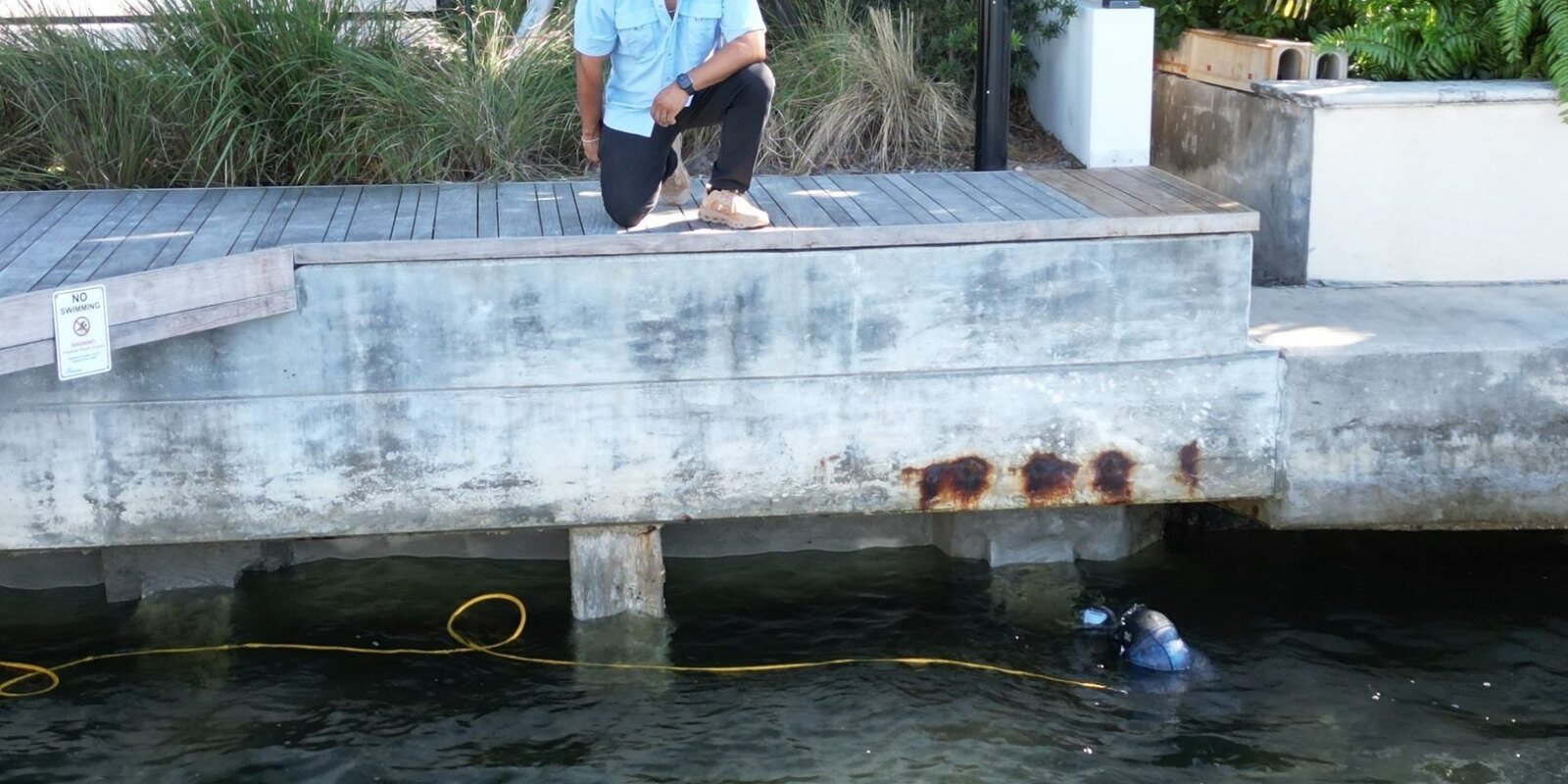
Yes — virtually every structural seawall repair in Florida requires permits, and most waterfront projects require approval from more than one agency. Skipping permits exposes property owners to stop-work orders, fines, and forced removal of completed work. Understanding the permitting process before you start saves time, money, and significant legal exposure.
Key takeaways
- Nearly all seawall repairs in Florida require at least a local building permit; most also require a Florida DEP permit.
- Work in or over navigable waters may require a U.S. Army Corps of Engineers (USACE) Section 10 or Section 404 permit — or qualify for a Nationwide Permit.
- Miami-Dade County requires separate DERM (Environmental Resources Management) review for coastal and waterway construction.
- Permit timelines range from 1–3 weeks for minor repairs to 6–18 months for major reconstruction projects.
- A Florida-licensed structural engineer prepares the drawings, calculations, and specifications every agency requires to approve the application.
Why seawall permits are not optional
Florida’s coastal and inland waterways fall under multiple layers of regulatory oversight. Local governments enforce building codes. The Florida Department of Environmental Protection regulates work along coastal construction control lines and in sovereignty submerged lands. The U.S. Army Corps of Engineers controls work in or affecting navigable waters of the United States.
Unpermitted seawall work is not just a code violation — it creates title problems that can delay or block property sales. Real estate attorneys and title companies routinely flag unpermitted waterfront work during closing. Lenders may refuse to finance a property with an open permit violation attached to it.
Beyond legal risk, permitted work is inspected by licensed professionals. Those inspection records protect property owners if a seawall fails after a storm or tidal event and a liability question arises. Documentation matters.
Which agencies issue seawall permits in South Florida
Local building department
Every seawall repair — panel replacement, cap repairs, tieback installation, weep hole restoration — requires a local building permit from Miami-Dade County, Broward County, or Palm Beach County (or the relevant municipality). The local permit triggers a structural inspection and requires signed and sealed drawings from a Florida-licensed structural engineer. Permit fees vary by jurisdiction but typically run $200–$800 for residential projects, more for commercial.
Florida Department of Environmental Protection (FDEP)
FDEP regulates coastal construction through the Coastal Construction Control Line (CCCL) Program and the Environmental Resource Permit (ERP) program. If your seawall is seaward of the CCCL — which includes most ocean-facing and many bay-facing properties — you need a CCCL permit. ERP permits are required for work that affects sovereignty submerged lands or the water quality of a coastal or wetland system.
Many routine seawall repairs qualify for FDEP’s Noticed General Permit (NGP), a streamlined approval for maintenance and minor repair work with minimal environmental impact. Your engineer determines whether your project meets the NGP criteria or requires individual permit review. The FDEP Submerged Lands and Environmental Resource Permitting program publishes current thresholds and application requirements.
U.S. Army Corps of Engineers (USACE)
Federal jurisdiction applies whenever work occurs in, over, or adjacent to navigable waters of the United States — which includes most of South Florida’s canals, bays, rivers, and tidal areas. The USACE Section 10 and Section 404 permit programs govern this work. Most straightforward seawall repairs qualify for a Nationwide Permit (NWP) rather than an individual permit. NWPs are pre-authorized for categories of low-impact work, which dramatically reduces review time. NWP 3 (maintenance) and NWP 35 (maintenance dredging) are most commonly applicable to seawall projects. Your engineer submits a Pre-Construction Notification (PCN) to the USACE Jacksonville District to confirm NWP eligibility.
Miami-Dade DERM (Environmental Resources Management)
For projects in Miami-Dade County, the Department of Environmental Resources Management (DERM) conducts an environmental review separate from the county building permit. DERM evaluates potential impacts to mangroves, seagrass, and nearshore marine habitats. If your project falls within DERM’s coastal jurisdiction, plan for a concurrent review alongside your local building permit. Broward County’s Environmental Protection and Growth Management Department (EPGMD) applies similar standards for projects in that county.
What your permit package must include
Every permit application for structural seawall work requires documentation prepared and sealed by a Florida-licensed structural engineer. Typical requirements include:
- Signed and sealed structural drawings — existing conditions, proposed repairs, cross-sections, and construction details
- Structural calculations — demonstrating the repaired wall meets applicable load requirements under the Florida Building Code
- Geotechnical data — soil borings or test data when the project involves tieback installation or uncertain soil conditions behind the wall
- Survey — a licensed boundary and topographic survey showing property lines, mean high-water line, and wall location relative to CCCL markers
- Environmental assessment — site photos and written assessment of adjacent habitat for FDEP and DERM review
Contractors who offer to pull permits without engineer-prepared drawings are cutting corners that will result in permit denials or inspection failures. The engineering package is not a formality — it is what the agencies review to approve the scope of work.
How long does seawall permitting take in South Florida
Timelines depend on the scope of work and which agencies are involved:
- Minor repairs (cap patching, weep hole restoration): Local permit only. 1–3 weeks typical review time.
- Moderate repairs (panel replacement, limited tieback work): Local permit plus FDEP NGP. 3–6 weeks if the project qualifies for NGP.
- Major reconstruction (full wall replacement, new seawall construction): Local permit plus FDEP individual ERP plus USACE individual permit. 6–18 months depending on agency workloads and environmental review complexity.
- Emergency storm damage repairs: Florida Statute 161.085 allows emergency coastal construction authorization. FDEP can issue emergency permits within 24–72 hours for storm-damaged seawalls when documentation of the damage is submitted.
Starting permitting as early as possible is critical. Owners who discover deteriorating seawalls and delay often find that conditions worsen during the permitting period. A wall that warranted repair at first inspection may require full replacement by the time permits are approved.
What happens if you skip permits
Unpermitted seawall work carries real consequences in South Florida. County code enforcement actively monitors waterfront construction — inspectors patrol by boat in Miami-Dade, Broward, and Palm Beach counties. If unpermitted work is discovered:
- A stop-work order is issued immediately
- The county may require full demolition and removal at the owner’s expense
- Daily fines accumulate until the violation is resolved
- The code violation attaches to the property and appears in title searches for future sales
- Contractors who pull permits without proper documentation face license sanctions from the Florida DBPR
Some property owners receive quotes from contractors offering to do the work without permits to reduce cost. That offer transfers all legal and financial exposure to the property owner. The contractor’s liability ends the day the check clears. The violation stays on the property for years.
How Souffront manages permitting from inspection to closeout
Souffront Contractors operates as a single point of contact for the entire project — seawall inspection, engineering, permitting, and structural repair. Our in-house Florida-licensed structural engineers prepare the permit package, manage agency submittals, respond to review comments, and schedule all required inspections. Property owners do not have to coordinate between a separate engineer, permit expediter, and contractor.
We serve waterfront properties throughout Miami, Fort Lauderdale, Boca Raton, and across Miami-Dade, Broward, and Palm Beach counties. One company. One contract. One point of accountability from first inspection through final permit closeout.
Talk to a Florida-licensed engineer
If you are planning seawall repairs and need to understand your permitting requirements before committing to a scope, contact Souffront Contractors at (877) 420-7220. We provide a fixed-fee scope, a clear permit roadmap, and an engineer-sealed inspection report before any work begins. Most inquiries receive a same-business-day response. The contact form is directly below.
Frequently asked questions
Do I need a permit to repair my seawall in Florida?
Yes, in nearly every case. Structural repairs — including panel replacement, tieback installation, and cap work — require at minimum a local building permit. Most coastal projects also require FDEP authorization, and work in or near navigable waters requires USACE review. Cosmetic patching of minor surface cracks may fall below permit thresholds in some jurisdictions, but a Florida-licensed structural engineer should confirm this before any work begins.
How long does it take to get a seawall permit in South Florida?
Minor repair permits from a local building department typically take 1–3 weeks. Projects that also require an FDEP Noticed General Permit add 2–4 weeks. Major reconstruction requiring individual FDEP Environmental Resource Permits or USACE individual permits can take 6–18 months depending on agency review workloads and environmental complexity. Starting the permitting process early — before wall conditions worsen — has a significant impact on project timeline and total cost.
What is an FDEP Noticed General Permit for seawall work?
An FDEP Noticed General Permit (NGP) is a streamlined, pre-authorized approval category for maintenance and minor repair work that meets specific environmental impact criteria. Rather than a full individual permit review, the engineer submits a notification to FDEP, and work may proceed after a defined waiting period — typically 30 days — if no agency objections are raised. Many routine seawall repair projects in South Florida qualify for NGP authorization, which materially reduces permitting time.
Does the U.S. Army Corps of Engineers need to approve seawall repairs?
USACE jurisdiction applies when work occurs in, over, or adjacent to navigable waters. In South Florida, most canals, bays, inlets, and tidal areas qualify as navigable, so USACE review is typically required. Most routine repairs qualify for a Nationwide Permit — particularly NWP 3 for maintenance — which requires a Pre-Construction Notification (PCN) rather than a full individual permit review. Your engineer prepares and submits the PCN and confirms which NWP applies to your specific project.
Can a contractor pull a seawall building permit without an engineer?
No — not for structural seawall work. The Florida Building Code requires engineer-signed and sealed drawings for structural repairs. Contractors who claim they can permit seawall work without engineering documents are proposing to skip required documentation. Permit applications submitted without a licensed engineer’s sealed package will be rejected. Any work performed without proper permits and inspections creates direct liability for the property owner.
What is the Coastal Construction Control Line (CCCL)?
The CCCL is a regulatory boundary established by FDEP landward of the predicted 100-year storm surge area along Florida’s coastline. Construction seaward of the CCCL requires a separate FDEP coastal construction permit regardless of local building permit status. Most oceanfront properties and many bay-facing properties in Miami-Dade, Broward, and Palm Beach fall partially or fully seaward of the CCCL. FDEP’s CCCL maps and permit requirements are available through its online environmental data system.
What happens if I sell a property with unpermitted seawall work?
Unpermitted construction is a material defect that Florida law requires sellers to disclose. Title searches routinely uncover code violations and open permits, and buyers, lenders, and title companies all flag them. Resolving an unpermitted seawall after the fact typically means stopping and paying fines, then either retroactively permitting the work (if the agency allows it) or demolishing and redoing it correctly. The cost of retroactive compliance is almost always higher than permitting the work correctly before it starts.
Does DERM review apply to every seawall repair in Miami-Dade?
DERM review applies to projects within Miami-Dade’s coastal and waterway jurisdiction, which covers most waterfront properties in the county. DERM evaluates potential impacts to mangroves, seagrass beds, and nearshore marine ecosystems. The review typically runs concurrently with the local building permit review. Your engineer determines DERM applicability based on the project location, wall type, and proposed scope of work — and manages the DERM submittal as part of the full permit package.
About Souffront Contractors Inc.: a Florida-licensed structural engineering and marine construction firm serving Miami-Dade, Broward, and Palm Beach counties. Learn more about engineer-led seawall repair across South Florida — or call (877) 420-7220.
Got a seawall or structural question?
Five fields. Same business day from a Florida-licensed engineer, routed into our dispatch CRM in real time.
- Same business dayAcknowledgment from a Florida licensed engineer — Mon–Fri 8 AM–5:30 PM.
- Engineer-sealed reportAccepted by carriers, building departments, and real-estate transactions.
- Fixed-fee proposalNo hourly billing. Repair scope priced line-by-line.