
Signs of Seawall Tieback Failure & What to Do About It
Learn to spot seawall tieback failure early — leaning walls, cracks, soil voids — and what steps a Florida-licensed engineer recommends before it gets worse.
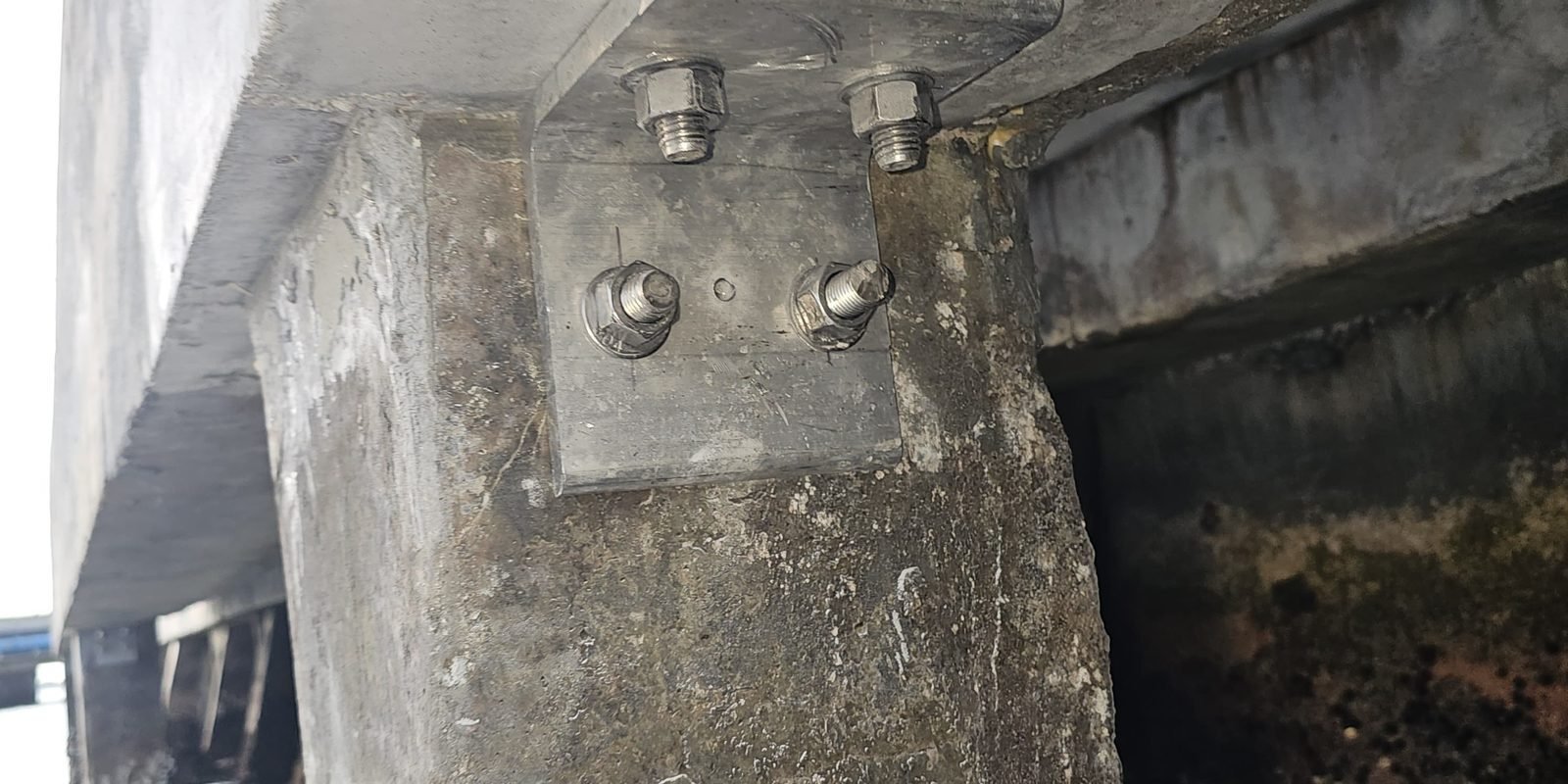
Seawall tieback failure is one of the most serious structural problems a waterfront property owner can face. A tieback — the buried steel rod or anchor that holds a seawall against the constant pressure of soil and water behind it — does not fail all at once. It gives off clear warning signs first. Recognizing those signs early can mean the difference between a targeted repair and a full wall replacement.
Key takeaways
- A tieback is the buried anchor system that resists soil pressure behind a seawall; when it corrodes or fails, the wall loses its structural backbone.
- Early warning signs include wall lean or bow, horizontal cracks, soil voids near the wall base, and sinkholes in the yard behind the wall.
- Tieback failure is progressive — once one anchor is compromised, adjacent anchors carry more load and often fail in sequence.
- A professional seawall inspection is a flat-fee service, typically $1,500–$3,000, quoted upfront before any site visit.
- Acting at the first sign of failure keeps repair costs in the moderate range ($100–$250 per linear foot); waiting until panels collapse pushes costs to $400–$600 per linear foot or more for full replacement.
What is a seawall tieback — and why does it matter?
A seawall panel is only half the system. Behind every properly built seawall is a tieback assembly: a steel rod that runs horizontally through or behind the wall and anchors to a deadman — a buried concrete block or wailer — set back into the yard. This anchor takes the lateral load of the soil and groundwater pushing against the wall’s face.
Without a functioning tieback, a seawall panel is essentially a freestanding slab resisting thousands of pounds of horizontal pressure with no backup. In South Florida, where tidal fluctuation, hurricane surge, and highly saturated soils are constants, that load is relentless. Corrosion from saltwater intrusion, physical overload, or improper original installation will eventually compromise the tieback — and when it does, the entire wall shifts.
Most residential seawalls in Miami-Dade, Broward, and Palm Beach counties are concrete panel systems with steel tieback rods. Many were installed in the 1960s through 1980s. That hardware is now 40–60 years old, and steel does not survive indefinitely in a marine environment without protective coatings or regular monitoring.
Seawall tieback failure signs to look for
You do not need an engineering degree to notice the early signs of a failing tieback. Walk your seawall at low tide on a calm day and look for the following.
1. Wall lean or bow toward the water
A seawall that tilts or bulges at its mid-section toward the water is the single most telling sign of tieback distress. When the anchor can no longer resist lateral soil pressure, the wall rotates at its base and the top kicks out. Even a few inches of lean is significant and should be measured by a licensed engineer. Do not assume a wall “has always been like that” — get documentation.
2. Horizontal cracking along the wall face
Vertical cracks in concrete panels are common and often reflect normal shrinkage or impact. Horizontal cracks — running parallel to the waterline — are different. They indicate bending stress at the point where the tieback rod attaches. A crack at or near the tieback connection zone is direct structural evidence that the wall is flexing beyond its design limit.
3. Soil voids, depressions, or sinkholes behind the wall
When a tieback fails or a seawall panel cracks, water migrates through the gap and carries fine soil particles with it into the waterway. This process, called piping or erosion, leaves voids under your yard. You may notice soft spots, sunken patio sections, cracked driveways, or actual sinkholes forming within five to fifteen feet of the seawall. Vegetation that suddenly dies in a strip near the wall can also signal subsurface water movement.
4. Separation between the cap and the panel
The concrete cap — the horizontal beam that runs along the top of the wall — should be flush and bonded to the panels below. Gaps, cracks, or vertical displacement between the cap and the panel face indicate the wall is moving as a unit away from the anchor point. This is often a late-stage sign that the tieback rod has already broken or pulled free from the deadman.
5. Exposed or corroded tieback hardware
On older walls, tieback rods sometimes become visible where concrete spalling (surface deterioration) has occurred. If you can see reddish-brown rust staining at the wall face, or actual exposed steel, the corrosion process is advanced. Steel loses tensile strength as it corrodes; a rod that looks intact from the outside may have lost a significant percentage of its load capacity.
6. Water seeping through the wall face
Active water seepage through panel joints or cracks at low tide indicates pressure differentials and compromised joints. This seepage accelerates the erosion behind the wall and worsens any existing tieback stress. In a High Velocity Hurricane Zone (HVHZ) property — which includes most of Miami-Dade and coastal Broward — a compromised seawall before storm season is a critical liability.
Why tieback failure accelerates once it starts
Tiebacks do not act independently. They are spaced along the wall at regular intervals, typically every 6–10 feet, and they share the total soil load between them. When one tieback rod corrodes through or its deadman anchor pulls free, the load it was carrying transfers to the adjacent rods. Those rods are now overloaded. They fail faster. The process is not linear — it accelerates as each anchor gives way.
This is why a wall that looks stable except for “one bad section” can deteriorate rapidly. A Florida-licensed structural engineer will assess the entire wall system, not just the visible damage, because what you see at the surface often reflects a broader failure pattern underground.
Florida’s coastal environment compounds the problem. Saltwater is highly corrosive to uncoated steel. Tidal cycling creates repetitive wet-dry conditions that accelerate chloride penetration into concrete and along the tieback rod’s path through the wall panel. The Florida Department of Environmental Protection recognizes coastal infrastructure degradation as an ongoing concern for waterfront property statewide.
What to do when you spot the signs
If you recognize one or more of the warning signs above, here is a clear sequence of steps.
- Stop loading the area. Keep heavy vehicles, equipment, and large gatherings away from the seawall and the ten-foot zone behind it. Additional surcharge load accelerates movement when the anchor is already stressed.
- Document what you see. Take dated photographs of cracks, lean, sinkholes, and any exposed hardware. Measure the gap at the cap or the degree of lean if you can do so safely. This documentation is valuable for your engineer and your insurance carrier.
- Call a Florida-licensed structural engineer — not a contractor first. A contractor’s incentive is to propose work. An engineer’s job is to diagnose. An engineer-sealed inspection report gives you an independent finding, a structural condition rating, and a scope of repair that you can then send to multiple contractors for competitive bids. It also protects you legally and with your insurer.
- Schedule a professional inspection. A seawall inspection from Souffront Contractors is a flat fee — typically $1,500–$3,000 depending on complexity — quoted upfront before the site visit. The inspection includes above-waterline structural assessment, an evaluation of the cap, panels, tieback zone, and the area behind the wall, and a written engineer-sealed report with findings and recommended action.
- Act on the engineer’s recommendations promptly. If the report identifies tieback failure or imminent risk, do not wait for a convenient season. Seawall repair in its early stages — tieback replacement, panel crack repair, soil stabilization — runs roughly $100–$250 per linear foot in moderate cases. Delaying until panels shift, collapse, or need full replacement pushes that figure to $400–$600 per linear foot or higher, and may require new seawall construction with full permitting through Miami-Dade DERM or the applicable county environmental agency.
- Pull the right permits. Seawall repair and replacement in Florida require permits from your local building department and, for work below the mean high-water line, coordination with the U.S. Army Corps of Engineers and Florida DEP. Working without permits exposes you to fines, stop-work orders, and difficulty selling the property later.
Tieback repair and replacement options
Not every failing tieback requires full wall replacement. A Florida-licensed structural engineer will evaluate which approach fits the actual condition of the wall.
Tieback rod replacement
If the panels themselves are structurally sound but the tieback rods have corroded, a licensed contractor can core through the existing cap and panels, install new high-strength steel or fiberglass composite rods, connect them to new deadman anchors set deeper in stable soil, and grout the penetrations. This approach preserves the existing wall and is significantly less expensive than full reconstruction.
Soil stabilization and void filling
Where erosion has created voids behind the wall, soil stabilization using pressure-injected grout or expanding polyurethane foam fills the voids, stops ongoing erosion, and restores bearing capacity beneath adjacent structures like patios, pool decks, and driveways.
Panel repair and partial replacement
Cracked or spalled panels can sometimes be repaired with structural epoxy injection and carbon fiber reinforcement. Panels that have moved beyond tolerable deflection or that have open separation joints typically require replacement. A licensed engineer will define the threshold in the inspection report.
Full seawall replacement
When tieback failure is widespread across the wall’s length, when the panels themselves are structurally compromised, or when the wall has already moved significantly out of plumb, full replacement is often the most cost-effective long-term answer. Modern seawall systems use vinyl composite or concrete sheet pile with factory-coated tieback hardware designed for 50+ year service life in a marine environment.
Talk to a Florida-licensed engineer
If you are seeing any of the signs described in this article — wall lean, horizontal cracking, yard sinkholes, or exposed corroded hardware — the right first step is a professional assessment, not a guess. Souffront Contractors Inc. is an engineer-led firm that inspects, engineers, permits, and builds seawall repairs and replacements under one roof in Miami-Dade, Broward, and Palm Beach. Every inspection is performed by or under the direct supervision of a Florida-licensed structural engineer, delivered as a flat fee quoted before the site visit, with a sealed written report and same-business-day response to inquiries. Use the form below to schedule your inspection or ask a question — no obligation.
Frequently asked questions
What is a seawall tieback and how does it work?
A tieback is a buried steel rod that runs horizontally from the seawall panel back through the soil to a deadman anchor — a concrete block set in stable ground behind the wall. It resists the lateral pressure of the soil and water pushing against the wall’s face. Without a functioning tieback, a seawall panel has no structural backup against that constant horizontal load.
What are the most common signs of seawall tieback failure?
The most common signs are a wall that leans or bows toward the water, horizontal cracks running parallel to the waterline on the wall face, soil voids or sinkholes forming in the yard behind the wall, separation between the cap beam and the panels below, and visible rust staining or exposed corroded steel hardware on the wall surface.
How much does a seawall inspection cost in South Florida?
A professional seawall inspection from a Florida-licensed structural engineer is a flat fee — not a per-linear-foot or hourly charge. The typical range for a residential structural inspection in Miami-Dade, Broward, or Palm Beach is $1,500–$3,000, depending on the complexity of the inspection: factors include access conditions, whether an underwater assessment is needed, the number of structural components, and the required report scope. The fee is quoted upfront before any site visit.
Is tieback failure covered by homeowner’s insurance?
Coverage depends on the specific policy and the cause of failure. Some policies cover sudden structural collapse but exclude gradual corrosion or wear. An engineer-sealed inspection report with a clear structural finding is the document most insurers require to evaluate a claim. Having that report before damage worsens puts you in a much stronger position with your carrier.
How often should a seawall be inspected?
A general industry recommendation for South Florida waterfront properties is a professional structural inspection every three to five years, or after any significant weather event — including hurricanes, tropical storms, or periods of extreme tidal surge. Properties with older walls (pre-1990 construction) or any visible signs of distress should be inspected sooner and more frequently.
Can a tieback be repaired without replacing the entire seawall?
Yes, in many cases. If the concrete panels are structurally sound but the tieback rods have corroded or the deadman anchors have failed, a licensed contractor can install replacement rods and new anchors through the existing wall. This targeted repair preserves the wall and costs significantly less than full replacement. A Florida-licensed structural engineer’s report will define whether the panels qualify for this approach or whether more extensive work is required.
Do seawall repairs in Florida require permits?
Yes. Any structural repair or replacement of a seawall in Florida requires a permit from the local building department. Work that affects or occurs below the mean high-water line also requires coordination with the Florida Department of Environmental Protection and, for navigable waterways, the U.S. Army Corps of Engineers. Working without permits can result in stop-work orders, fines, and complications when selling the property.
What happens if I ignore the signs of tieback failure?
Tieback failure is progressive. Once one anchor fails, adjacent tiebacks absorb the additional load and fail faster. A wall that has a single failing section today can deteriorate into a full structural collapse within one to two storm seasons. Beyond the cost difference — moderate repairs at $100–$250 per linear foot versus full replacement at $400–$600 or more — a collapsed seawall can damage neighboring properties, block a navigable waterway, and create legal liability for the property owner.
About Souffront Contractors Inc.: a Florida-licensed structural engineering and marine construction firm serving Miami-Dade, Broward, and Palm Beach counties. Work with a Florida-licensed seawall contractor who is also the engineer of record — or call (877) 420-7220.
Got a seawall or structural question?
Five fields. Same business day from a Florida-licensed engineer, routed into our dispatch CRM in real time.
- Same business dayAcknowledgment from a Florida licensed engineer — Mon–Fri 8 AM–5:30 PM.
- Engineer-sealed reportAccepted by carriers, building departments, and real-estate transactions.
- Fixed-fee proposalNo hourly billing. Repair scope priced line-by-line.