
How Often Should a South Florida Seawall Be Inspected?
South Florida seawall inspection frequency guide: when to inspect, what triggers an early check, and what a flat-fee engineer inspection costs. Real answers from licensed engineers.
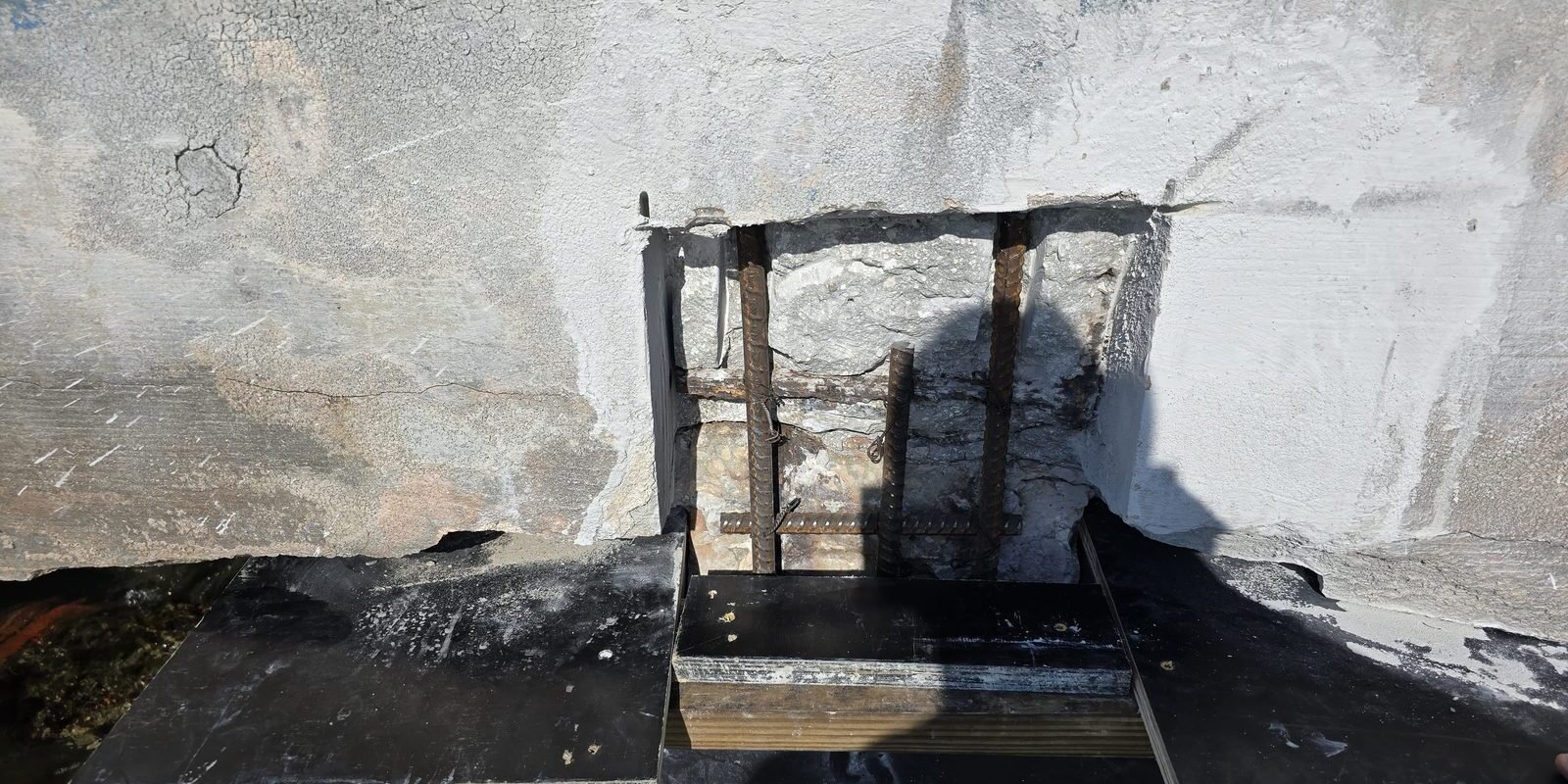
Most South Florida seawalls should be professionally inspected every 3 to 5 years under normal conditions — and every 1 to 2 years for walls older than 20 years or showing visible distress. A professional seawall inspection is a flat fee, typically $1,500–$3,000 depending on complexity, quoted upfront before any site visit. It is never priced per linear foot.
Key takeaways
- Inspect most South Florida seawalls every 3–5 years; older or damaged walls warrant annual or biennial checks.
- Tropical storms, hurricanes, or nearby dredging work are trigger events that justify an immediate inspection — regardless of the regular cycle.
- A professional seawall inspection is a flat fee — typically $1,500–$3,000 depending on complexity — quoted before the engineer arrives. Never per linear foot.
- Miami-Dade, Broward, and Palm Beach County waterfront conditions (saltwater, tidal fluctuation, soft soils) accelerate seawall wear faster than national averages.
- Catching early deterioration saves significantly more than a neglected wall that requires full panel or tieback replacement.
Why South Florida seawalls deteriorate faster than average
South Florida’s marine environment is unusually aggressive. Saltwater accelerates corrosion in steel tie rods and concrete reinforcement. Tidal fluctuation in Biscayne Bay, the Intracoastal Waterway, and coastal canals creates constant wetting and drying cycles that weaken concrete panels over time. Soft, organic soils common throughout Miami-Dade, Broward, and Palm Beach counties shift under hydrostatic pressure in ways that rigid northern soils do not.
Hurricanes and tropical storms add surge loading that can displace or crack a wall in a single event. Boat wake from heavy Intracoastal traffic — especially in areas like Fort Lauderdale, Miami Beach, and Aventura — compounds the cyclic loading. These factors together mean the national rule of thumb (“inspect every 5–10 years”) understates South Florida’s actual risk.
The recommended inspection schedule by wall age and condition
New walls (0–10 years old)
A newly constructed seawall should receive a baseline inspection roughly one year after completion to confirm proper settlement and confirm no installation defects have emerged. After that, a 5-year cycle is generally appropriate if no storm events or visible changes occur.
Walls 10–20 years old
This is the window where many South Florida seawalls begin showing early signs of corrosion, panel cracking, or tieback elongation — the tieback being the buried steel anchor that holds the wall against soil pressure. A 3-year inspection cycle is prudent. Addressing hairline cracks and minor joint erosion at this stage typically costs a fraction of a full repair.
Walls older than 20 years
Most seawalls in South Florida built before the early 2000s used materials and methods that are now considered undersized for current storm surge standards. A 1- to 2-year inspection cycle is appropriate. An engineer inspection at this stage should include an evaluation of the waler (the horizontal cap beam), the tie rods, and — where access allows — the embedment depth and condition of the toe of the wall below the waterline.
Walls of any age with visible warning signs
Do not wait for the scheduled cycle if you observe any of the following:
- Horizontal cracks running along the face of the wall, especially mid-panel
- Leaning or outward tilt visible from the waterside or landside
- Sinkholes, depressions, or soil loss in the yard near the wall
- Efflorescence (white mineral streaking) or spalling concrete
- Exposed or corroded steel tie rods or anchor hardware
- Gaps opening between panels or at the cap
- Standing water that drains slowly or not at all near the seawall base
Any one of these conditions justifies calling for an inspection immediately, not at the next scheduled interval.
Trigger events that require an immediate inspection
Beyond the regular calendar cycle, certain events should prompt an unscheduled inspection. A Florida-licensed structural engineer should evaluate the wall after:
- Any named tropical storm or hurricane that passed within 50 miles of the property — surge and wave loading can damage a wall with no surface indication.
- Nearby dredging or marine construction — vibration and changes in water table can shift wall alignment.
- A barge, vessel, or heavy equipment impact against the wall or dock.
- Significant rainfall events (12+ inches in 48 hours) that saturate the retained soil and spike hydrostatic pressure.
- A property purchase — buyers of waterfront homes or commercial properties in Miami-Dade, Broward, or Palm Beach counties should always include a seawall inspection in due diligence. An engineer-led seawall inspection before closing gives buyers a clear picture of actual structural condition, not just visual appearance.
What a professional seawall inspection actually covers
A visual walk-along is not a structural inspection. A qualified seawall inspection by a Florida-licensed structural engineer evaluates the wall as a system — not just the face you can see from the yard.
Above-waterline components
- Cap beam (waler) condition — cracking, corrosion, settlement
- Panel face — spalling, joint integrity, visible reinforcement exposure
- Deadman anchors and tie rod hardware where accessible
- Batter piles or king piles on older sheet-pile walls
- Surface drainage patterns and evidence of soil piping or scour
Below-waterline components
For walls where below-waterline conditions are a concern, the inspection may include a dive component or probe assessment to evaluate the toe of the wall, embedment depth, and underwater scour. This adds complexity to the inspection — and is one reason inspection fees vary by job rather than by a simple per-foot formula.
The engineer-sealed report
A Souffront inspection produces a written, engineer-sealed report with photographs, condition ratings, and — where issues are found — specific repair recommendations with enough detail to support permitting. That report is a legal document. It is useful not only for repair planning but for insurance documentation, HOA board records, and real estate transactions. Learn more about engineer-sealed reports and what they include.
How inspection cost is determined — and why it is never per linear foot
A professional seawall inspection at Souffront Contractors is a flat fee, quoted before the site visit. For most residential properties in South Florida, that fee falls in the range of $1,500–$3,000. The fee reflects the complexity of the inspection, not a simple multiplication of wall length.
Factors that influence the quoted fee include:
- Whether an underwater or below-waterline dive assessment is needed
- The number of structural components (panels, tiebacks, cap beams, piles)
- Site access conditions — canal-front homes typically differ from open-bay or Intracoastal properties
- Report scope — a pre-purchase due diligence report has different deliverables than a post-storm damage assessment
- Whether the wall has prior repair history that requires comparative evaluation
Wall length is one minor input among many. A 60-foot wall with complex tieback geometry and limited access may require more engineering time than a 120-foot wall with straightforward panel construction and good site access. This is why per-linear-foot pricing is not appropriate for inspections — only for repair and construction work.
For reference, repair costs in South Florida do follow linear-foot ranges: moderate repairs (crack injection, joint resealing, minor concrete restoration) generally run $100–$250 per linear foot. Full panel replacement or tieback work can reach $400–$600 per linear foot. These are general industry ranges, not a project quote. An inspection and report from a licensed engineer is the only reliable way to scope actual repair needs. See our seawall repair services for more on the repair process.
Seawall inspection requirements and South Florida regulations
Florida’s coastal and marine construction is regulated at multiple levels. The Florida Department of Environmental Protection (DEP) oversees coastal construction permitting, while Miami-Dade County’s Department of Environment and Natural Resources (DERM) has its own waterfront structure requirements for properties within its jurisdiction. Work on or near navigable waters may also require U.S. Army Corps of Engineers (USACE) coordination.
Homeowners and property managers should also be aware that Florida’s broader building safety laws have increased attention on structural assessments across all property types. While seawall-specific mandatory inspection intervals are not uniformly codified statewide, many HOA governing documents, lender requirements, and insurance carriers now require documented evidence of seawall condition as a condition of coverage or financing. A professional inspection report satisfies those requirements. HOA and condominium boards can learn more about HOA compliance reports Souffront prepares for boards that need documented structural assessments.
Talk to a Florida-licensed engineer
If your seawall is overdue for inspection, showing any warning signs, or you have a purchase or storm event driving urgency, Souffront Contractors provides flat-fee seawall inspections with engineer-sealed reports — quoted upfront, no surprises. We inspect, engineer, permit, and build as one team across Miami-Dade, Broward, and Palm Beach counties. Call (877) 420-7220 or use the form below to request a same-business-day response from a Florida-licensed structural engineer.
Frequently asked questions
How often should a seawall be inspected in South Florida?
Most South Florida seawalls should be professionally inspected every 3 to 5 years under normal conditions. Walls older than 20 years warrant an inspection every 1 to 2 years. Any named storm, visible damage, nearby marine construction, or property purchase should trigger an immediate inspection regardless of the regular schedule.
How much does a professional seawall inspection cost in South Florida?
A professional seawall inspection is a flat fee — not an hourly rate and not a per-linear-foot charge. For most residential properties in Miami-Dade, Broward, and Palm Beach counties, the fee typically falls between $1,500 and $3,000, depending on the complexity of the inspection. Souffront quotes the fee upfront before any site visit so there are no surprises.
Why is seawall inspection pricing not per linear foot?
Per-linear-foot pricing applies to repair and construction work, not inspections. An inspection fee reflects engineering time, access conditions, the number of structural components, whether a below-waterline dive is needed, and the scope of the written report — none of which are simply a function of wall length. A 60-foot wall with complex tiebacks may require more engineering work than a 120-foot wall with straightforward construction.
What are the warning signs that a seawall needs inspection now?
Inspect immediately if you see horizontal cracks on the wall face, outward leaning or tilt, soil depressions or sinkholes near the wall, exposed or corroded steel hardware, gaps between panels, white mineral streaking (efflorescence), or spalling concrete. These signs can indicate structural movement that worsens quickly without intervention.
Do I need a permit to repair a seawall in South Florida?
Most seawall repair work in South Florida requires permits from the local building department and, depending on scope and location, may also require approval from Miami-Dade DERM, the Florida DEP, or the U.S. Army Corps of Engineers for work in or near navigable waters. A Florida-licensed structural engineer can identify the required permits based on the specific repair scope and location.
What does a seawall inspection report include?
A professional seawall inspection report includes photographs, condition ratings for each structural component (cap beam, panels, tiebacks, piles), identified deficiencies, and specific repair recommendations with enough engineering detail to support permitting. Souffront reports are engineer-sealed, meaning they are legally signed and stamped documents suitable for insurance documentation, HOA records, and real estate transactions.
How long does a seawall inspection take?
On-site time for a residential seawall inspection typically ranges from 1 to 3 hours depending on the wall’s length, accessibility, and condition. Below-waterline dive assessments add time. The written engineer-sealed report is generally delivered within a few business days of the site visit.
Should I get a seawall inspection before buying waterfront property in South Florida?
Yes. A seawall inspection should be part of standard due diligence for any waterfront property purchase in Miami-Dade, Broward, or Palm Beach County. Visual condition does not reliably indicate structural integrity — a wall can look intact while having corroded tiebacks or compromised panel embedment. An engineer-sealed inspection report before closing gives buyers documented evidence of actual condition and a realistic picture of any repair costs ahead.
About Souffront Contractors Inc.: a Florida-licensed structural engineering and marine construction firm serving Miami-Dade, Broward, and Palm Beach counties. Talk to a seawall repair contractor who engineers, permits, and builds the fix — or call (877) 420-7220.
Got a seawall or structural question?
Five fields. Same business day from a Florida-licensed engineer, routed into our dispatch CRM in real time.
- Same business dayAcknowledgment from a Florida licensed engineer — Mon–Fri 8 AM–5:30 PM.
- Engineer-sealed reportAccepted by carriers, building departments, and real-estate transactions.
- Fixed-fee proposalNo hourly billing. Repair scope priced line-by-line.