
How Saltwater Corrosion Destroys Concrete Seawalls
Saltwater corrosion silently weakens Florida concrete seawalls from the inside out. Learn how it works, the warning signs, and when to call a licensed engineer.
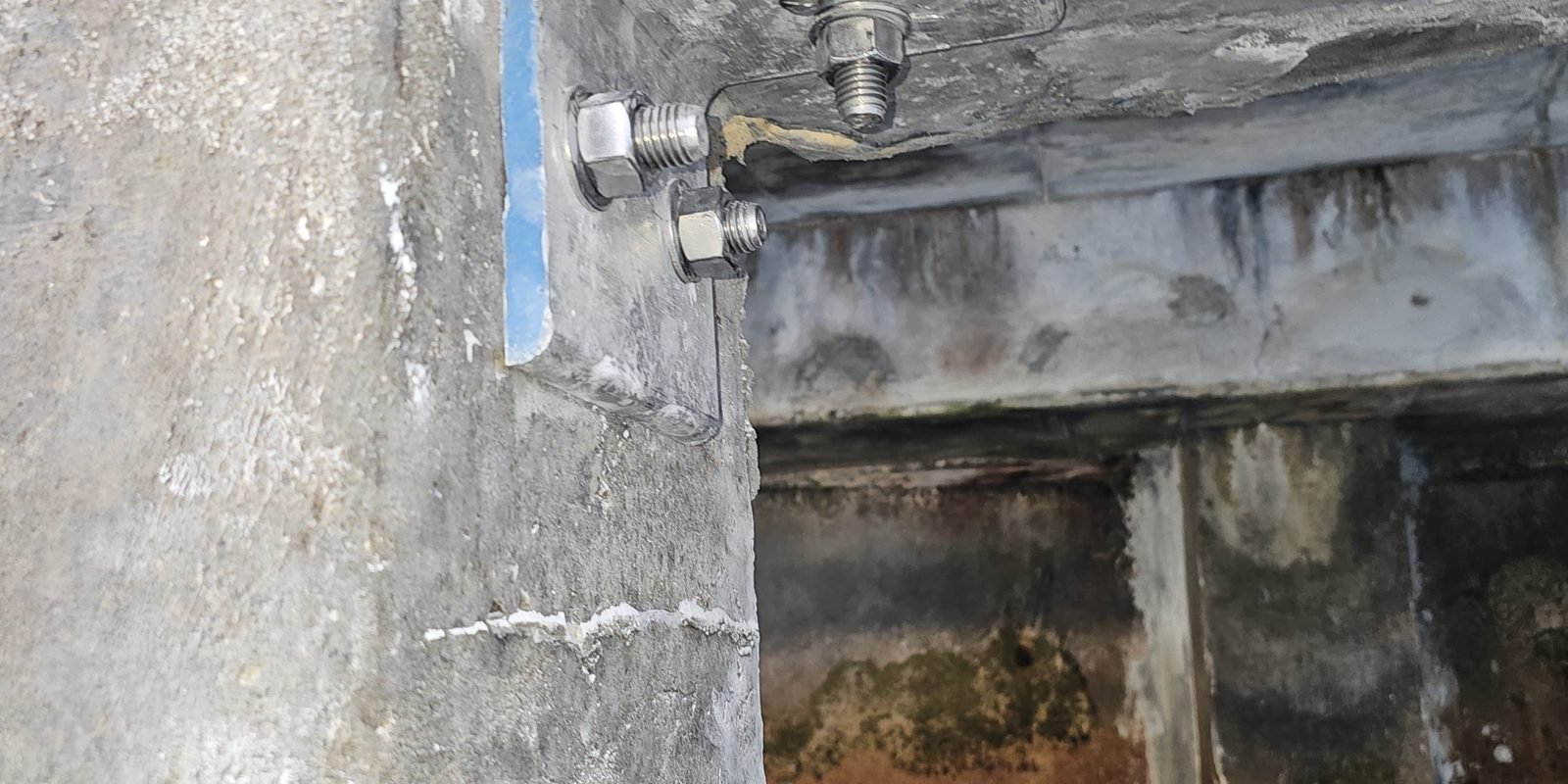
Saltwater corrosion is the leading cause of concrete seawall failure in Florida. It attacks the steel reinforcement hidden inside the wall, expanding it until the concrete cracks, spalls, and loses structural capacity — often before any visible damage appears on the surface. Understanding how this process works helps waterfront property owners catch problems early, before a repair becomes a full replacement.
Key takeaways
- Chloride ions from saltwater penetrate concrete and trigger rust in embedded steel rebar — this is called chloride-induced corrosion.
- Rust expands up to seven times the volume of the original steel, fracturing concrete from the inside out.
- Florida’s warm water, tidal fluctuation, and high humidity accelerate corrosion faster than in most other coastal states.
- Surface cracks and spalling are late-stage symptoms — the damage typically begins years before it becomes visible.
- A Florida-licensed structural engineer can identify active corrosion before it reaches the failure stage, when repair costs are still manageable.
The chemistry behind saltwater corrosion in concrete seawalls
Concrete is not waterproof. It is porous, and over time saltwater moves through those pores by a process called diffusion. The critical element in seawater is the chloride ion — the same ion that makes salt salty.
When chloride ions reach the steel rebar embedded inside a concrete seawall, they break down the thin protective oxide layer that normally keeps the steel stable. Once that layer is compromised, the steel begins to oxidize — it rusts. This is called chloride-induced depassivation, and it is the starting point of almost every corrosion failure in South Florida marine structures.
The rust that forms is not just a surface blemish. Iron oxide occupies roughly four to seven times more volume than the original steel. That expansion creates enormous internal pressure — far more than the surrounding concrete can withstand. The result is cracking, delamination, and eventually spalling, where chunks of concrete break away from the face of the wall.
Why Florida accelerates the process
Corrosion happens in concrete seawalls everywhere there is saltwater, but Florida’s environment makes it happen faster than almost anywhere else in the country.
High chloride concentration
South Florida’s coastal waters — Biscayne Bay, the Intracoastal Waterway, Port Everglades, and the canals that connect to them — carry high chloride concentrations year-round. Unlike northern states where ocean water is seasonal, Florida seawalls are in constant contact with corrosive water.
Tidal and splash zones
The most aggressive corrosion does not happen fully underwater. It happens in the tidal zone and splash zone — the area of the wall that alternately wets and dries with each tide cycle. When saltwater evaporates, it leaves concentrated chloride deposits in the concrete’s pores. The next wave wets those deposits and drives them deeper. This wet-dry cycling repeats thousands of times per year and is far more damaging than continuous immersion.
Heat and humidity
Electrochemical reactions — including corrosion — speed up as temperature rises. Florida’s average water temperatures range from roughly 72°F in winter to 88°F in summer. Higher temperatures mean faster chloride diffusion and faster oxidation. The region’s humidity also keeps concrete surfaces moist even above the waterline, extending the corrosion zone upward into what would otherwise be a dry section of the wall.
Carbonation
Carbon dioxide in the atmosphere reacts with moisture and concrete to form carbonic acid in a process called carbonation. This gradually lowers the pH of the concrete. High pH is part of what protects embedded steel; as pH drops, the steel becomes more vulnerable to chloride attack. In humid, warm environments like South Florida, carbonation penetrates concrete faster than in dry or cold climates.
How the damage progresses: four stages
Corrosion-related seawall failure follows a predictable sequence. Knowing where a wall sits in that sequence determines how urgent the repair is and what it will cost.
- Initiation: Chloride ions diffuse through the concrete cover and reach the rebar. No visible damage yet. This phase can last years, depending on the quality of the original concrete mix and the thickness of the cover over the steel.
- Propagation: Active corrosion begins. Rust starts to form and expand. Hairline cracks may appear along rebar lines. The wall still performs structurally, but internal pressure is building.
- Acceleration: Cracks widen, allowing seawater direct access to the rebar. Corrosion rate increases sharply. Delamination — where a layer of concrete separates from the mass of the wall — becomes visible or detectable by tapping.
- Failure: Large sections of concrete spall off, exposing bare steel. The rebar itself loses cross-sectional area from corrosion. The wall’s ability to resist soil and water pressure is compromised. At this stage, collapse is a real risk.
Most property owners do not become aware of a problem until Stage 3. By that point, repair costs are substantially higher than they would have been at Stage 2. An engineer-led seawall inspection is specifically designed to catch problems at Stage 2, when intervention is still straightforward.
Warning signs visible to a property owner
You do not need engineering training to recognize the late-stage signs of corrosion damage. Walk your seawall regularly and look for these conditions:
- Rust staining: Brown or orange streaks running down the face of the wall, originating from a crack or a construction joint. This is rust leaching out from corroding rebar inside the concrete.
- Longitudinal cracking: Cracks that run parallel to the face of the wall and roughly parallel to the ground often follow the line of embedded rebar. This pattern is a strong indicator of internal corrosion pressure.
- Spalling: Chunks or flakes of concrete breaking away from the wall face, sometimes exposing dark or pitted steel underneath.
- Hollow sound: Tap the wall surface with a hammer or even your knuckles. A hollow or drum-like sound indicates delamination — the concrete has separated internally and no longer bonds to the layer behind it.
- Efflorescence: White, chalky deposits on the wall surface. This indicates water is migrating through the concrete, carrying dissolved salts to the surface. It is not a structural failure by itself, but it confirms active water movement through the wall.
- Wall lean or displacement: Any visible tilt toward the water or horizontal displacement at the top of the wall suggests the wall’s structural capacity — not just the concrete surface — is compromised.
A single one of these signs warrants a professional evaluation. Multiple signs together indicate the wall may be in the acceleration or failure stage.
What a structural engineer looks for that you cannot see
Visual inspection from the top of a seawall is useful but limited. A Florida-licensed structural engineer assessing a concrete seawall for corrosion damage goes considerably further.
Below-waterline evaluation
A significant portion of most seawalls sits below the waterline. Spalling, joint deterioration, and section loss in the submerged zone are often more advanced than on the visible face, because the submerged zone has been exposed to chlorides the longest. An underwater assessment — either by diver or by underwater camera — is frequently part of a complete inspection for older walls.
Sounding and delamination mapping
Systematic hammer sounding across the wall face maps delaminated areas that are not yet visually obvious. This tells the engineer how much of the wall face has lost bond with the structural core, which directly affects the repair scope.
Structural component review
A concrete seawall is a system. The panels are only one component. Engineers also evaluate the tieback (the buried anchor rod or deadman anchor that resists horizontal soil pressure), the cap beam, and any anchor blocks. Corrosion in a tieback — which is often steel — can cause wall failure even when the visible concrete panels look relatively intact.
Assessment of the original concrete quality
Older South Florida seawalls — particularly those built before the 1980s — were often constructed with concrete mixes that are more permeable than current standards require. The Florida Building Code now specifies minimum chloride resistance requirements for marine concrete, but walls built under older codes lack those protections. The engineer considers the wall’s age and original construction quality when assessing remaining service life.
Repair options when corrosion is caught early versus late
Early-stage corrosion damage — before significant section loss — can often be addressed with targeted repairs: removing deteriorated concrete, treating exposed rebar, and applying a chloride-resistant repair mortar with a protective coating. These repairs, handled correctly, restore the wall’s surface integrity and slow further chloride ingress.
Moderate repairs to concrete seawalls in South Florida generally run in the range of $100–$250 per linear foot, depending on the extent of concrete removal needed and the number of panels involved. These are general industry ranges for repair work, not a project quote.
When corrosion has reached the failure stage — with structural section loss, compromised tiebacks, or wall displacement — the scope expands to panel replacement, tieback replacement, or full reconstruction. Full panel and tieback replacement work can run $400–$600 per linear foot or higher for complex conditions. The difference in cost between catching a problem at Stage 2 versus Stage 4 is often the difference between a manageable repair and a six-figure reconstruction.
Learn more about what different repair scopes involve on our seawall repair services page.
Permitting requirements for seawall repair in South Florida
Any structural repair to a seawall in Florida typically requires permits from the local building department, and work in or near navigable waters also involves environmental agencies. In Miami-Dade County, the Department of Regulatory and Economic Resources (DERM) reviews seawall work for environmental compliance. The U.S. Army Corps of Engineers (USACE) has jurisdiction over work in navigable waters under Section 404 and Section 10 of the Rivers and Harbors Act.
Working without permits exposes property owners to stop-work orders, fines, and mandatory removal of unpermitted work. An engineer-led firm that handles both the engineering drawings and the permit applications eliminates this risk and keeps projects on schedule. Our violation response services also help owners resolve existing code issues.
How often should a Florida concrete seawall be inspected?
For concrete seawalls in South Florida’s marine environment, a professional structural inspection every three to five years is a reasonable baseline for walls in good condition. Walls older than 25 years, walls that show any of the warning signs listed above, or walls that have never been professionally evaluated should be inspected promptly — not on a scheduled cycle.
After a named storm or significant wave event, an inspection is warranted regardless of the last inspection date. Storms can accelerate existing corrosion damage and dislodge previously stable sections.
Talk to a Florida-licensed engineer
If your concrete seawall shows rust staining, cracking, spalling, or has simply never been professionally evaluated, the right first step is a flat-fee structural inspection by a Florida-licensed structural engineer — not a contractor estimate. Souffront Contractors delivers a fixed inspection fee quoted before any site visit, a written engineer-sealed report, and same-business-day response to new inquiries. We inspect, engineer, permit, and build — one firm, no handoffs. Use the form below to schedule your inspection.
Frequently asked questions
How does saltwater corrode a concrete seawall?
Saltwater contains chloride ions that diffuse through the pores in concrete and reach the embedded steel rebar. The chlorides break down the protective oxide layer on the steel, triggering rust. Rust occupies four to seven times more volume than the original steel, creating internal pressure that cracks and eventually fractures the concrete from the inside out.
What are the first visible signs of corrosion damage in a concrete seawall?
Early visible signs include rust-colored staining running down the wall face, hairline cracks that follow the line of rebar, and white chalky deposits (efflorescence) on the surface. A hollow sound when you tap the wall indicates internal delamination — often a sign that corrosion damage is more advanced than the surface appearance suggests.
Why do Florida seawalls corrode faster than seawalls in other states?
Florida’s combination of year-round high chloride concentrations, warm water temperatures, constant tidal cycling, and high humidity accelerates every phase of the corrosion process. The tidal and splash zones — where the wall alternately wets and dries — are particularly aggressive because salt concentrates in the concrete pores each time water evaporates.
How much does it cost to repair a corroded concrete seawall in South Florida?
Moderate concrete repair work — removing deteriorated material, treating rebar, and applying protective repair mortar — generally runs $100–$250 per linear foot as a general industry range. Structural panel replacement or full tieback replacement work can run $400–$600 per linear foot or more. The earlier corrosion is caught, the lower the repair cost. These are general ranges, not project quotes; actual scope and pricing depend on a site inspection.
Does a seawall inspection cost more for a longer wall?
A seawall inspection from Souffront Contractors is a flat fee, not a per-linear-foot charge. The fee — typically $1,500–$3,000 for a residential structural inspection — reflects the overall complexity of the inspection: number of structural components, whether an underwater evaluation is needed, access conditions, and report scope. The flat fee is quoted upfront before any site visit.
Do I need a permit to repair corrosion damage on my seawall in Florida?
Yes, in almost all cases. Structural repairs to seawalls require a building permit from the local jurisdiction, and work near navigable water also involves review by agencies such as Miami-Dade DERM or the U.S. Army Corps of Engineers. Working without permits can result in stop-work orders, fines, and mandatory removal of completed work.
How often should a concrete seawall in South Florida be professionally inspected?
A structural inspection every three to five years is a reasonable interval for walls in good condition. Walls older than 25 years, walls showing any corrosion symptoms, or walls that have never been professionally evaluated should be inspected promptly. After a named storm, an inspection is warranted regardless of the last inspection date.
Can a corroded seawall be repaired, or does it need to be fully replaced?
It depends on the stage of corrosion and the extent of structural section loss. Early to moderate corrosion damage — before significant rebar section loss or tieback failure — is typically repairable with
About Souffront Contractors Inc.: a Florida-licensed structural engineering and marine construction firm serving Miami-Dade, Broward, and Palm Beach counties. Book a seawall inspection in Miami or anywhere on the South Florida waterfront — or call (877) 420-7220.
Got a seawall or structural question?
Five fields. Same business day from a Florida-licensed engineer, routed into our dispatch CRM in real time.
- Same business dayAcknowledgment from a Florida licensed engineer — Mon–Fri 8 AM–5:30 PM.
- Engineer-sealed reportAccepted by carriers, building departments, and real-estate transactions.
- Fixed-fee proposalNo hourly billing. Repair scope priced line-by-line.