
Soil Loss Behind a Seawall: Causes & Fixes in Miami
Soil loss behind a seawall causes sinkholes and sunken pavers. Learn why it happens, warning signs, and how a licensed engineer fixes it.
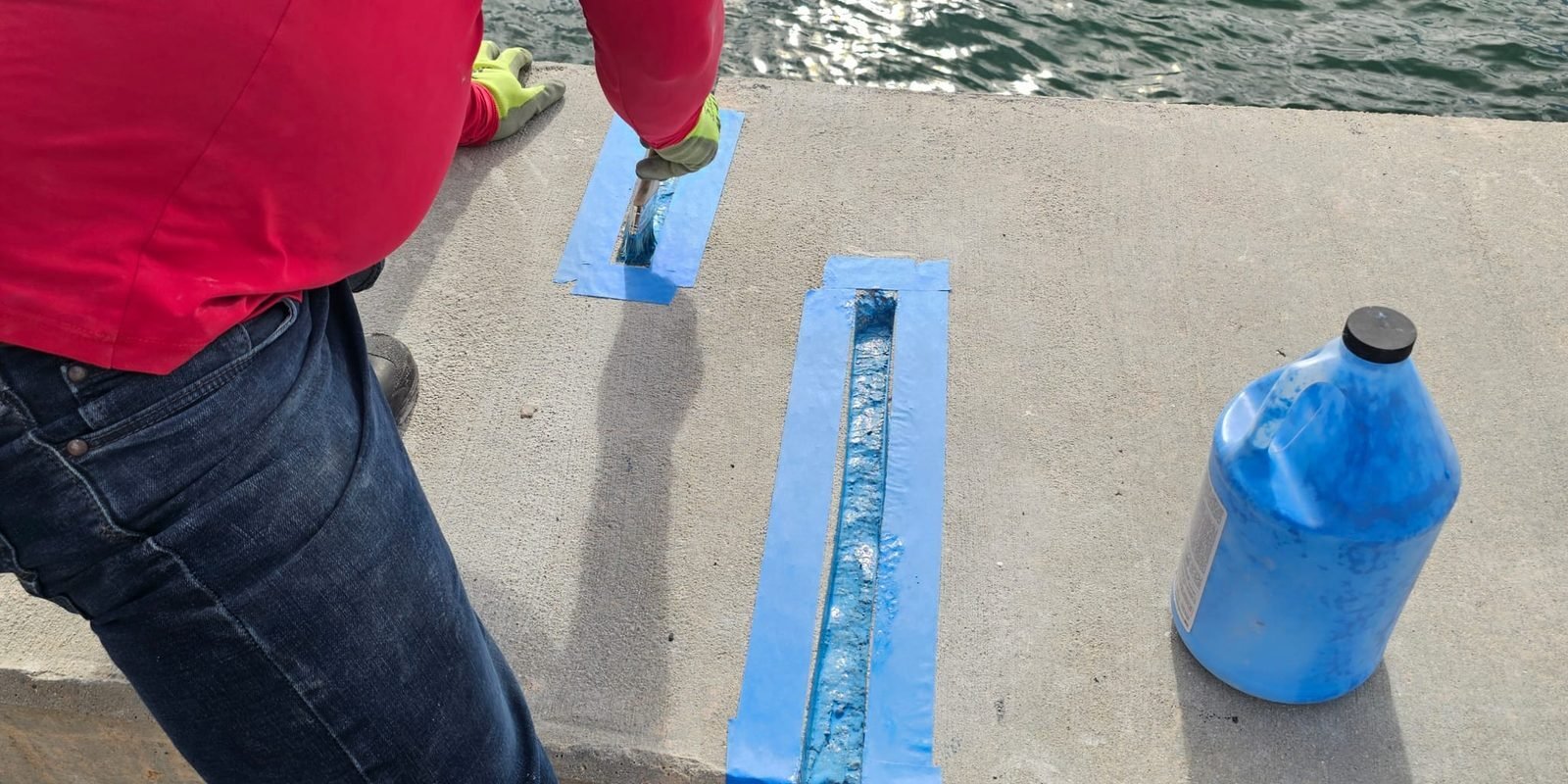
Soil loss behind a seawall happens when water escapes through cracks, gaps, or failed joints in the wall and carries backfill soil with it, leaving a hidden void that eventually collapses into a sinkhole. The most common causes are cracked panels, deteriorated tiebacks, missing filter fabric, and undersized or clogged drainage. Left unaddressed, this process — called erosion piping — can undermine a pool deck, seawall cap, or dock foundation.
Key takeaways
- Soil loss (erosion piping) occurs when water moves through seawall defects and washes backfill out with it, creating a void behind the wall.
- Warning signs include sunken pavers, cracked pool decks, a hollow sound when tapped, and visible gaps at the seawall cap.
- Common causes: cracked or spalled panels, corroded/failed tiebacks, missing or torn filter fabric, and drainage that lets water escape uncontrolled.
- Fixes range from soil grouting and void filling to panel repair, tieback replacement, or full seawall reconstruction depending on severity.
- A structural seawall inspection identifies voids and their cause before they surface as a sinkhole — typically $1,500–$3,000 depending on complexity, quoted upfront.
What causes soil loss behind a seawall
A seawall’s job is to hold back backfill soil while still allowing some water to pass through in a controlled way. When that balance breaks down, soil escapes faster than it should, and a void forms behind the wall. Four conditions drive most of the soil loss Souffront finds during seawall inspections in South Florida:
Cracked or spalled panels
Concrete seawall panels crack from age, impact, corroding rebar, or hydrostatic pressure. Once a crack opens, it becomes a pathway — tidal water pushes in and out twice a day, and each cycle carries a small amount of fine sand and soil through the gap. Over months or years, that steady loss hollows out a void.
Deteriorated or failed tiebacks
Tiebacks are the buried anchors that hold a seawall against soil pressure from behind. When a tieback corrodes or snaps, the wall can shift or lean, opening gaps at the panel joints and the cap. This is one of the more serious causes, because a failed tieback threatens the wall’s structural stability, not just its watertightness.
Missing or torn filter fabric
Properly built seawalls include a geotextile filter fabric behind the panels that lets water pass through while holding soil in place. Older seawalls were often built without it, and even where it exists, it can tear during construction, boat wakes, or age. Without intact fabric, joints and weep holes become direct exits for backfill.
Poor or clogged drainage
Weep holes and drain pipes are supposed to relieve water pressure behind the wall in a controlled way. When they’re undersized, clogged with debris, or absent entirely, water finds its own path — usually through a crack — and takes soil with it every time.
How to recognize soil loss before it becomes a sinkhole
Soil loss is invisible until the void collapses, but there are surface clues:
- Sunken, uneven, or cracked pavers near the seawall cap
- A pool deck or patio slab that has dropped or tilted at one edge
- A hollow or drum-like sound when the ground near the wall is tapped
- Visible gaps or separation between the seawall cap and the adjacent slab
- Standing water or a wet patch in the yard that doesn’t drain normally
- A seawall panel or cap that looks like it has shifted, tilted, or dropped
Any one of these is a reason to schedule an inspection. In Miami-Dade and Broward, sandy backfill soils move quickly once a void starts, so a small sinkhole can widen within weeks of the first visible sign.
How engineers assess the extent of soil loss
A Florida-licensed structural engineer evaluates soil loss through a combination of visual inspection, sounding (tapping the deck and cap to detect hollow areas), and, where warranted, subsurface investigation such as ground-penetrating radar or probing. The goal is to map the size and location of the void, identify which seawall defect is causing it, and determine whether the wall itself is still structurally sound or has been compromised. This assessment is documented in an engineer-sealed report that lays out findings and next steps.
How soil loss and sinkholes get fixed
The right fix depends on how far the problem has progressed:
- Void filling / soil grouting: For voids caught early, a lightweight structural grout or flowable fill is pumped into the void to stabilize the soil without excavation. This is the least disruptive option and works when the seawall itself is still sound.
- Panel and joint repair: If the cause is a specific cracked panel or open joint, sealing and structurally repairing that section stops further loss and lets the void behind it be filled.
- Tieback replacement: When a tieback has failed, it needs to be replaced or supplemented before any cosmetic repair, since the wall’s stability depends on it.
- Filter fabric and drainage retrofit: Adding or repairing filter fabric and weep holes addresses the root cause so soil loss doesn’t restart after other repairs are complete.
- Full seawall reconstruction: If the wall has multiple failure points, has shifted structurally, or the soil loss is extensive, replacing the seawall section is often more cost-effective long-term than repeated patch repairs.
Repair costs are priced by the linear foot of wall, not as a flat fee. Moderate repairs — panel and joint work, targeted grouting — typically run $100–$250 per linear foot. Full panel or tieback replacement runs roughly $400–$600 per linear foot. These are general South Florida industry ranges; every property gets a specific written scope and price after inspection.
Why this matters for pools, decks, and HOA liability
A void behind a seawall doesn’t stay contained to the waterline. As soil continues to wash out, the loss migrates inland under pool decks, patios, and sometimes structural foundations. For HOA and condominium boards, an undetected void near a shared amenity like a pool deck or seawall walkway is a liability exposure — a sudden collapse creates both a safety incident and a costly emergency repair instead of a planned one. Regular inspection catches this while it is still a controlled repair.
Talk to a Florida-licensed engineer
If you’re seeing sunken pavers, a cracked pool deck, or gaps at your seawall cap, don’t wait for the void to surface on its own. Souffront Contractors inspects, diagnoses, and repairs seawall soil loss as one company — a Florida-licensed structural engineer assesses the wall and any voids behind it, and you get a fixed-fee inspection with a same-business-day response and a clear written scope for any repair. Schedule an inspection using the form below.
Frequently asked questions
What causes soil loss behind a seawall?
Soil loss happens when water escapes through cracks, failed joints, or missing filter fabric in a seawall and carries backfill soil out with it. Common contributing factors include deteriorated tiebacks, spalled concrete panels, and drainage that isn’t controlled through proper weep holes.
How do I know if I have a sinkhole forming behind my seawall?
Look for sunken or uneven pavers near the seawall cap, cracks in a pool deck or patio, a hollow sound when the ground is tapped, or visible gaps between the cap and adjacent slab. Any of these signs warrants a professional inspection.
Is soil loss behind a seawall dangerous?
Yes. An undetected void can grow until the ground above it collapses without warning, which is a safety hazard for anyone standing on a pool deck, walkway, or dock above it. It can also undermine the structural support for nearby foundations.
How much does it cost to fix soil loss behind a seawall?
Repairs are priced per linear foot of wall based on scope. Moderate repairs, such as void grouting and panel or joint work, typically run $100–$250 per linear foot. Full panel or tieback replacement runs roughly $400–$600 per linear foot. An inspection determines the exact scope and price for your property.
Can soil loss be fixed without replacing the whole seawall?
Often, yes. If the wall structure itself is sound and the cause is isolated — a single cracked panel or missing filter fabric — targeted grouting and repair can resolve it. Full reconstruction is reserved for walls with multiple failure points or significant structural shift.
How often should a seawall be inspected for soil loss?
An annual visual check is reasonable for most waterfront properties, but any sign of sunken pavers, deck cracking, or a shifted cap should trigger an inspection immediately rather than waiting for the next scheduled check.
Does homeowners or HOA insurance cover seawall soil loss repair?
Coverage varies significantly by policy and cause, and most standard policies exclude gradual deterioration. Property owners and HOA boards should review their specific policy language and consult their insurer, since an engineer-sealed report documenting the cause is often required for any claim.
What is erosion piping?
Erosion piping is the technical term for the process where water moving through a defect in a seawall — a crack, open joint, or gap — carries soil particles out with it, gradually forming a void behind the wall. It’s the underlying mechanism behind most seawall-related sinkholes.
About Souffront Contractors Inc.: a Florida-licensed structural engineering and marine construction firm serving Miami-Dade, Broward, and Palm Beach counties. Arrange a seawall inspection in Broward County with same-week scheduling — or call (877) 420-7220.
Got a seawall or structural question?
Five fields. Same business day from a Florida-licensed engineer, routed into our dispatch CRM in real time.
- Same business dayAcknowledgment from a Florida licensed engineer — Mon–Fri 8 AM–5:30 PM.
- Engineer-sealed reportAccepted by carriers, building departments, and real-estate transactions.
- Fixed-fee proposalNo hourly billing. Repair scope priced line-by-line.