
Vinyl vs. Concrete Seawall Caps: Which Holds Up in HVHZ
Vinyl or concrete seawall cap — which lasts longer in South Florida's HVHZ? A Florida-licensed engineer breaks down durability, cost, and code compliance.
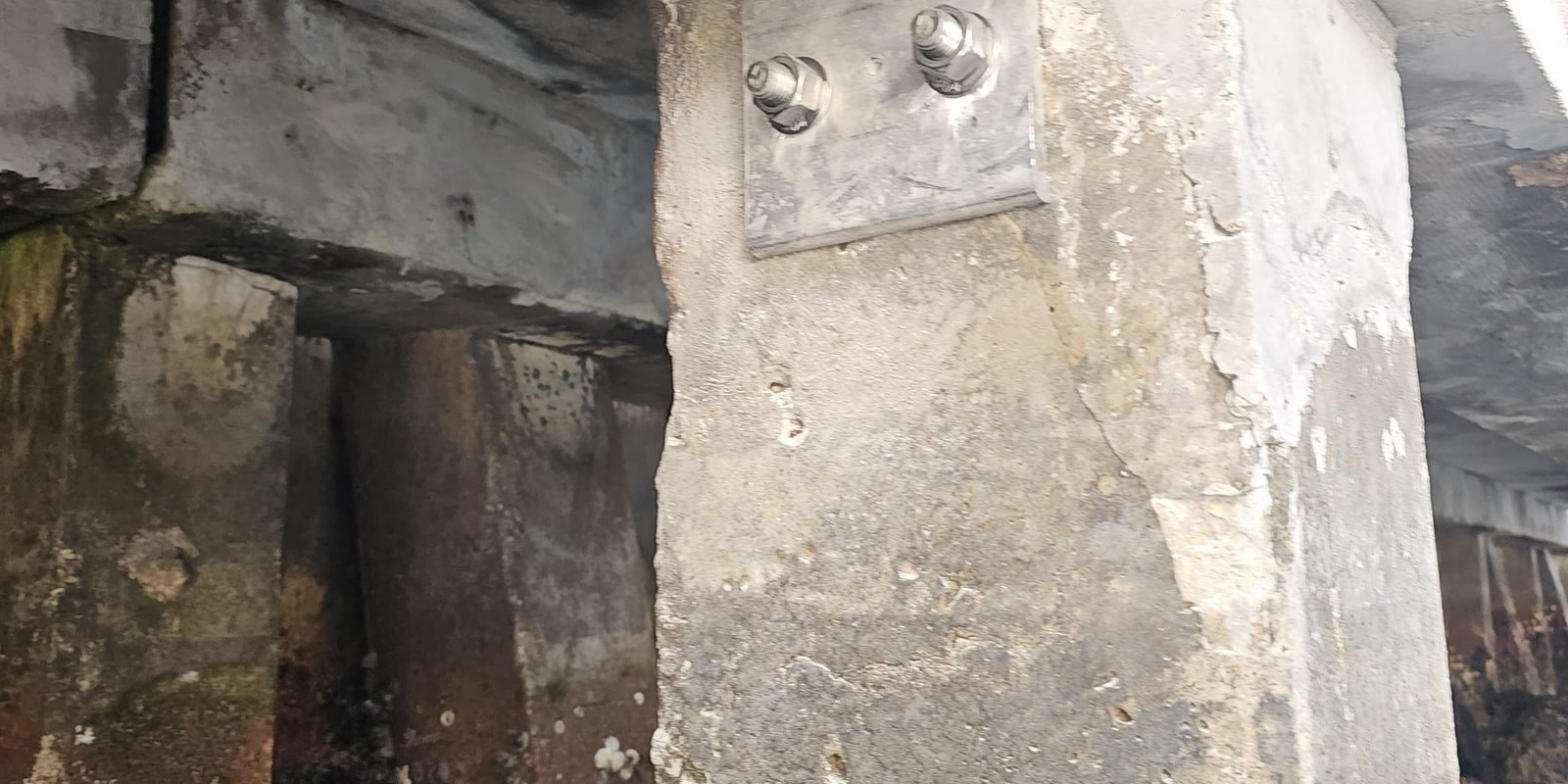
In South Florida’s High Velocity Hurricane Zone (HVHZ), concrete seawall caps generally outperform vinyl in structural durability and wind-load resistance — but the right choice depends on your wall type, exposure, and what you’re trying to protect. Both materials are used in Miami-Dade, Broward, and Palm Beach counties, and both have real trade-offs a waterfront owner should understand before committing to either.
Key takeaways
- Concrete caps are the standard for structural seawall systems in HVHZ — they tie into tiebacks and deadman anchors and resist wind uplift better than vinyl.
- Vinyl caps work on vinyl sheet-pile walls as a protective cover and aesthetic finish, but they are not a structural replacement for a properly poured concrete cap.
- The Florida Building Code’s HVHZ provisions (Miami-Dade and Broward) require engineered details for any seawall cap repair or replacement — a permit is typically required.
- Cap failure — cracked, separated, or missing — is one of the most common findings in a professional seawall inspection and often the first visible sign of deeper structural problems.
- Material choice should be confirmed by a Florida-licensed structural engineer who can assess your specific wall system, soil conditions, and tidal exposure.
What a seawall cap actually does
The cap is the horizontal concrete or capped-vinyl beam that runs along the top of a seawall. It does several things at once. It locks the tops of the wall panels together, distributes lateral soil loads, anchors the tieback rods (the buried steel anchors that hold the wall against earth pressure), and protects the panel heads from wave splash and UV degradation.
Because the cap ties directly into the tieback system, it is a structural element — not just a cosmetic one. A compromised cap means the tieback connection is compromised. That matters enormously in a hurricane, when storm surge and wave action put the wall under maximum stress.
In South Florida’s saltwater environment, the cap also takes the most punishment: daily tidal splash, UV exposure, boat wake, and the occasional hurricane-force wind load. Material selection is not trivial here.
What HVHZ means for seawall construction
The High Velocity Hurricane Zone covers all of Miami-Dade and Broward counties. It is defined in the Florida Building Code (8th Edition) and carries stricter requirements than the rest of the state for wind loads, connection details, and material standards.
For marine structures, HVHZ means:
- Engineered drawings are required for seawall construction, major repair, and cap replacement in most jurisdictions.
- Concrete mixes must meet minimum compressive strength requirements — typically 4,000 psi or higher with low water-cement ratios for marine exposure.
- Reinforcing steel must be epoxy-coated or stainless in saltwater splash zones to resist corrosion-driven spalling.
- Tieback and deadman connections at the cap must be detailed to handle design wind and surge loads.
- Permits are pulled through the local building department — Miami-Dade DERM may also require a coastal construction permit depending on the waterway.
Palm Beach County falls in a Wind-Borne Debris Region with similarly stringent standards, though it is outside the formal HVHZ boundary. The practical engineering requirements for marine structures are comparable.
Concrete seawall caps: strengths and weaknesses
Why concrete is the structural standard
Poured-in-place reinforced concrete is the default cap material for concrete panel and steel sheet-pile seawall systems throughout South Florida. When properly mixed, reinforced, and poured, a concrete cap integrates structurally with the tieback anchor rods, creating a continuous load path from the soil behind the wall to the anchoring system. That integration is what HVHZ-compliant engineering details are designed around.
Concrete also has high compressive strength, good mass (which helps resist wave uplift), and a long service life when the reinforcing steel is protected. A well-built concrete cap on a properly anchored wall can last 30–50 years in South Florida conditions.
Where concrete caps fail
Concrete’s vulnerability in a saltwater environment is its reinforcing steel. When salt penetrates the concrete cover — through cracks, low-quality mix, or inadequate cover depth — it initiates chloride-induced corrosion. Corroding rebar expands and fractures the concrete from the inside, a process called spalling. In South Florida, this is the most common reason concrete caps fail prematurely.
Other common failure modes include:
- Cracking and separation — caused by differential settlement, tieback movement, or thermal cycling.
- Delamination at the panel head — water infiltrates the joint between cap and panel, freeze-thaw isn’t a factor in Florida but tidal cycling and wave impact are.
- Insufficient cover over rebar — older walls were often built with 1–1.5 inches of cover; modern marine standards call for 3 inches minimum in saltwater splash zones.
- Undersized or uncapped tieback pockets — allowing water intrusion directly to the tieback rod anchorage.
Concrete cap repair or replacement is a permitted activity in Miami-Dade, Broward, and Palm Beach. Learn more about what the seawall repair process involves on structural systems like these.
Vinyl seawall caps: where they work and where they don’t
The appropriate use case
Vinyl caps — typically extruded PVC or vinyl profiles — are designed as a finishing and protective cover for vinyl sheet-pile seawall systems. They snap or slide over the top of the vinyl sheeting to seal the panel heads, prevent debris intrusion, and give the wall a clean finish. On a vinyl sheet-pile wall, they are the correct material and the manufacturer typically specifies them.
Vinyl caps are also used in some residential applications as a cosmetic upgrade over an existing concrete cap — essentially a sleeve that fits over the top. This can protect the concrete surface from UV and direct splash exposure, and it gives the wall a uniform appearance.
Structural limitations in HVHZ
Vinyl is not a structural cap material for concrete or steel panel seawall systems. It cannot accept tieback rod connections in the same way reinforced concrete can. It does not have the compressive strength or mass to redistribute lateral loads along the cap beam. In a storm-surge event, a vinyl cover over a deteriorating concrete cap provides no structural benefit.
Key limitations to understand:
- Vinyl degrades under prolonged UV exposure — South Florida’s sun is intense year-round, and even UV-stabilized PVC will eventually chalk, crack, and become brittle.
- Vinyl has low thermal mass — it expands and contracts significantly with temperature changes, which can open gaps at joints and fastener points over time.
- Vinyl cap profiles designed as cosmetic covers do not mechanically tie the panel heads together the way a reinforced concrete cap does.
- If vinyl is used as a sleeve over a failing concrete cap, it can hide active deterioration — making it harder to catch problems before they become failures.
When vinyl makes sense
On a vinyl sheet-pile wall — common in residential canals, interior waterways, and areas where lighter loading is appropriate — a manufacturer-specified vinyl cap is the right call. It matches the wall system’s design intent, avoids the corrosion issues associated with reinforcing steel, and requires less maintenance than concrete in low-impact environments.
For a new vinyl sheet-pile seawall installation or evaluation of an existing one, see what’s involved in seawall construction in South Florida.
Side-by-side comparison for South Florida conditions
- Structural load capacity: Concrete — high (integrates tieback system). Vinyl — low (finishing/cover only).
- Wind/surge resistance: Concrete — designed to HVHZ loads with proper engineering. Vinyl — not a structural wind-load element.
- Corrosion resistance: Concrete — vulnerable if rebar cover is insufficient or cracked. Vinyl — no corrosion, but UV and impact degradation over time.
- Service life in HVHZ: Concrete (properly built) — 30–50 years. Vinyl cap on vinyl wall — 20–35 years depending on UV exposure and impact. Vinyl cosmetic sleeve over concrete — variable, masks underlying condition.
- Maintenance: Concrete — periodic inspection, crack sealing, cathodic protection if specified. Vinyl — inspect for UV crazing, joint separation, fastener failure.
- Permit requirement: Both require permits in HVHZ for replacement or major repair.
- Cost (repair/replacement, general industry range): Concrete cap reconstruction typically falls within moderate seawall repair ranges of $100–$250 per linear foot for cap work alone; full structural panel and cap replacement can reach $400–$600 per linear foot. Vinyl cap replacement on a vinyl wall is generally less expensive.
How a licensed engineer evaluates cap condition
A proper seawall inspection looks at the cap as a structural component, not just a surface. A Florida-licensed engineer seawall inspection will assess:
- Crack pattern and width — hairline cracks are different from structural cracks that expose rebar.
- Spalling depth — whether the deterioration has reached the rebar layer.
- Cap-to-panel joint integrity — separation here indicates movement in the wall system.
- Tieback pocket condition — are anchor rod connections visible, corroded, or improperly grouted?
- Evidence of lateral movement — a cap that has shifted seaward is a warning sign of tieback failure or deadman pullout.
- On vinyl systems — UV degradation, joint separation, fastener condition, and any buckling or displacement of the panel heads.
The inspection result is documented in an engineer-sealed report that can be used for permitting, insurance documentation, or HOA compliance purposes. Inspection fees are a flat fee — typically $1,500–$3,000 depending on complexity — quoted upfront before any site visit.
Talk to a Florida-licensed engineer
Choosing the wrong cap material — or delaying repair of a failing one — can compromise an entire seawall system in the next storm event. Souffront Contractors inspects, engineers, permits, and rebuilds seawall caps throughout Miami-Dade, Broward, and Palm Beach counties. Every project starts with an engineer-sealed assessment, a fixed-fee quote, and a same-business-day response. Use the form below to describe your wall and we’ll get back to you promptly — or call us directly at (877) 420-7220.
Frequently asked questions
Can I put a vinyl cap over an existing concrete seawall cap in Miami-Dade?
Yes, vinyl cosmetic sleeves are sometimes installed over concrete caps as a protective and aesthetic cover. However, this approach hides the concrete surface from view, making it harder to detect ongoing corrosion or cracking. A Florida-licensed structural engineer should evaluate the concrete cap’s condition before any cover is installed — if active deterioration is present, covering it will accelerate hidden damage.
Does HVHZ require a permit to replace a seawall cap?
In most Miami-Dade and Broward jurisdictions, cap replacement is a permitted structural repair requiring engineered drawings. Miami-Dade DERM may also require a coastal construction or dredge-and-fill permit depending on the waterway. Skipping the permit exposes the property owner to stop-work orders, fines, and title issues at resale.
How long does a concrete seawall cap last in South Florida?
A properly engineered and constructed concrete cap with adequate rebar cover (minimum 3 inches in saltwater splash zones) and quality marine-grade concrete can last 30–50 years. Older caps built with thinner cover, lower-grade concrete, or no epoxy-coated rebar often show significant deterioration within 15–25 years in South Florida’s saltwater environment.
What are the signs that a seawall cap needs repair or replacement?
Key warning signs include: visible cracks running along or across the cap, rust staining on the cap surface (indicating corroding rebar below), chunks of concrete spalling off, the cap separating from the seawall panels below it, or any horizontal displacement of the cap toward the water. Any of these findings warrants a professional structural inspection before the next storm season.
Is vinyl sheet-pile with a vinyl cap appropriate for HVHZ waterfront properties?
Vinyl sheet-pile systems with manufacturer-specified vinyl caps are used in South Florida on interior canals, residential waterways, and lower-impact shoreline applications. They are not typically specified for high-energy ocean-facing or bay-facing exposures where wave action and surge loading are significant. A Florida-licensed structural engineer should determine whether a vinyl system is appropriate for a specific site’s exposure and loading conditions.
How much does it cost to replace a seawall cap in South Florida?
Cap reconstruction as part of a seawall repair project generally falls in the range of moderate seawall repair costs — roughly $100–$250 per linear foot for cap work in combination with other repairs. If full panel replacement and cap reconstruction are required together, costs can range $400–$600 per linear foot. These are general industry ranges, not a Souffront quote; actual costs depend on wall condition, access, permitting, and engineering complexity. A fixed-fee inspection gives you an accurate scope before any repair estimate is generated.
Who do I call to inspect my seawall cap in Broward or Miami-Dade?
You want a Florida-licensed structural engineer with marine construction experience — not a general home inspector. Souffront Contractors provides engineer-led seawall inspections throughout Miami-Dade, Broward, and Palm Beach counties. Inspections are flat-fee, quoted upfront, and result in a sealed engineering report. Call (877) 420-7220 or use the contact form on this page to schedule.
Does a seawall cap inspection cost more for a longer wall?
Seawall inspections at Souffront are priced as a flat fee — typically $1,500–$3,000 depending on the overall complexity of the inspection, not the linear footage of the wall. Complexity factors include whether an underwater or below-waterline dive inspection is needed, the number of structural components, site access conditions, and the scope of the sealed report required. The fee is quoted clearly
About Souffront Contractors Inc.: a Florida-licensed structural engineering and marine construction firm serving Miami-Dade, Broward, and Palm Beach counties. Get seawall repair in Coral Gables and across Miami-Dade County — or call (877) 420-7220.
Got a seawall or structural question?
Five fields. Same business day from a Florida-licensed engineer, routed into our dispatch CRM in real time.
- Same business dayAcknowledgment from a Florida licensed engineer — Mon–Fri 8 AM–5:30 PM.
- Engineer-sealed reportAccepted by carriers, building departments, and real-estate transactions.
- Fixed-fee proposalNo hourly billing. Repair scope priced line-by-line.