
What a Seawall Inspection Checks, Step by Step (2026)
See exactly what a Florida-licensed engineer checks during a seawall inspection — from cap to footing, tiebacks to soil — and why each step matters.
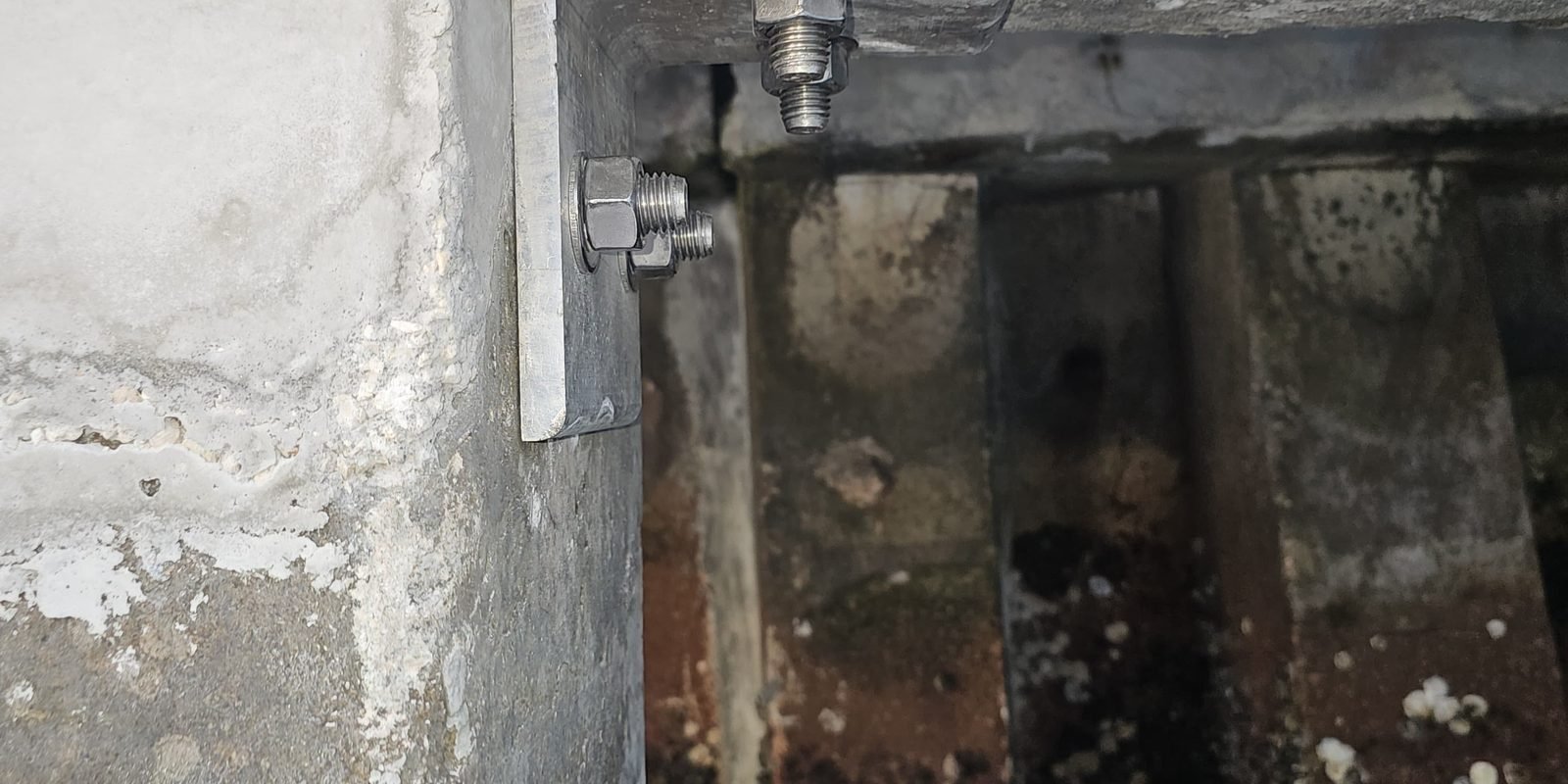
A seawall inspection checks every structural component of the wall — from the concrete cap at the top to the panels, tiebacks, deadman anchors, and soil conditions below the waterline. A Florida-licensed structural engineer follows a systematic sequence so nothing is missed. Most residential inspections in South Florida take two to four hours on site and result in a written, engineer-sealed report.
Key takeaways
- A thorough seawall inspection covers the cap, wall panels, tiebacks, deadman anchors, weep holes, and the soil on both sides of the wall.
- Below-waterline conditions — often the first place failure begins — require a visual dive inspection or underwater assessment when access allows.
- The inspection produces an engineer-sealed report with findings, photos, and recommended repairs ranked by urgency.
- Flat-fee pricing — typically $1,500–$3,000 depending on complexity — is quoted upfront before any site visit.
- In South Florida, Miami-Dade DERM and Florida DEP both have jurisdiction over coastal structures; an engineer’s report documents compliance or deficiencies for permitting purposes.
Why a step-by-step inspection matters for your seawall
Seawalls fail progressively, not all at once. A crack in the cap looks minor; the same crack letting saltwater reach the rebar inside the wall can hollow out a panel in three to five years. Missing one defect early means a $150-per-linear-foot repair turns into a $500-per-linear-foot replacement.
A structured, component-by-component inspection creates a documented baseline. You know exactly what condition the wall is in today, which problems are urgent, and which can be monitored. That record also protects you legally and supports insurance or lender documentation.
For condominium boards and HOA properties, an engineer-sealed compliance report is often required before waterfront repairs can be approved by the association or financed. The step-by-step process below is how that report gets built.
Step 1 — Pre-visit review and site research
Before arriving on site, the engineer reviews any available records: prior inspection reports, permitted repair drawings, original construction documents, or notices from Miami-Dade DERM or the Florida Department of Environmental Protection (DEP). This background shapes where to look first.
The engineer also notes the wall’s approximate age, material type (concrete panel, concrete block, vinyl sheet pile, or steel sheet pile), and tidal exposure. South Florida seawalls face conditions — salt air, boat wakes, tropical storms, and active marine organisms — that age them faster than walls in lower-salinity environments.
Step 2 — The concrete cap (top of wall)
The cap is the continuous concrete beam running along the top of the seawall. It ties the panels together and transfers load to the tiebacks. The engineer looks for:
- Longitudinal cracks — cracks running the length of the cap, which can indicate tieback movement or soil settlement behind the wall.
- Transverse (cross) cracks — often a sign of differential settlement or impact damage.
- Spalling — chunks of concrete breaking away, usually caused by corroding rebar expanding inside the cap.
- Rebar exposure — visible steel that is now corroding, which accelerates structural loss.
- Settlement or tilt — the cap should be level; any drop or lean toward the water signals movement in the wall or anchor system.
Cracks are measured and photographed. An engineer distinguishes between cosmetic surface cracks (less than 0.01 inches wide, stable) and structural cracks that need immediate attention.
Step 3 — The wall panels or sheet piles
The vertical panels are the primary barrier holding back soil and water. For concrete-panel walls — the most common type in Miami-Dade and Broward — the engineer inspects both the land side and the water side of each panel.
Above-waterline panel inspection
The engineer checks every accessible panel face for cracking, spalling, honeycombing (voids in the concrete), and signs of lateral bowing. Bowing toward the water is critical — it means the wall is moving under soil pressure and the anchor system may be failing.
Panel-to-panel joints are checked for separation, erosion of joint sealant, and any gaps that allow soil to migrate through the wall (a process called piping, which hollows out the land behind the wall over time).
Below-waterline panel inspection
Marine growth, siltation, and scour hide damage below the waterline. When water clarity and access allow, the inspection includes an underwater visual assessment of the submerged panel face and toe. The engineer or diver looks for:
- Scour — erosion of the seabed at the base of the wall that removes the bearing surface.
- Undermining — voids beneath the wall’s footing or toe caused by tidal current and wave action.
- Cracking or spalling below the waterline, which progresses faster than above-water damage due to constant wet-dry cycling and chloride penetration.
Below-waterline findings are among the most common surprises in South Florida seawall inspections — and the most expensive to ignore.
Step 4 — Tiebacks and deadman anchors
The tieback is a buried rod or cable that connects the seawall cap to a deadman anchor — a buried concrete block or plate set back into the land. This system resists the outward soil pressure trying to push the wall into the water. It is the most structurally critical component of most residential seawalls.
Tiebacks and deadman anchors are buried, so they cannot be directly observed without excavation. The engineer evaluates them indirectly through:
- Cap movement or tilt — visible displacement suggests a broken or corroded tieback.
- Tension rod penetrations — the point where the rod passes through the cap is inspected for cracking, rust staining, or missing hardware.
- Ground-penetrating radar (GPR) or probing — where indicated, subsurface investigation can locate the deadman position and check for voids.
- Soil conditions behind the cap — soft, saturated, or settled soil reduces the deadman’s holding capacity even if the anchor itself is intact.
A failed tieback is one of the most common causes of sudden seawall collapse in South Florida. When a wall shows signs of tieback failure, the engineer typically recommends seawall repair or full replacement depending on the extent of the damage.
Step 5 — Weep holes and drainage
Weep holes are small openings near the base of the wall that relieve hydrostatic pressure — the pressure of groundwater trapped behind the wall. A functioning weep-hole system prevents the wall from being pushed outward by water pressure during heavy rain or high tides.
The engineer checks whether weep holes are present, open, and correctly positioned. Blocked weep holes are a common finding in older walls and a frequent contributor to cracking and bowing.
Step 6 — Soil conditions and land side assessment
The land side of the seawall is inspected for:
- Settlement or sinkholes near the wall — depressions indicate soil has migrated through cracks or joints into the water (piping).
- Erosion channels — paths where stormwater is undercutting the fill behind the wall.
- Vegetation damage — tree roots can crack panels and displace the cap over time.
- Seawall setback encroachments — structures, pavement, or fill placed too close to the wall add unexpected load.
In some cases the engineer recommends soil stabilization behind the wall to restore bearing capacity before or alongside structural repairs.
Step 7 — Connections to docks, boat lifts, and adjacent structures
Where a dock, boat lift, or seawall return wall ties into the main seawall, the engineer inspects the connection points for cracking, displacement, and differential settlement. A dock that has pulled away from the seawall cap, or a boat lift that has shifted in its mount, often signals movement in the seawall itself.
These connections are governed in Florida by both the Florida Building Code and, for work on navigable waters, by the U.S. Army Corps of Engineers (USACE) permit requirements. The inspection report documents any conditions that would affect a future permit application.
Step 8 — The engineer-sealed report
After the field inspection, the engineer compiles findings into a written, engineer-sealed report. A professional report includes:
- Property and wall description — address, wall length, material, approximate age, and tidal exposure.
- Photographic documentation — labeled photos of every significant finding.
- Condition rating by component — cap, panels, tiebacks, drainage, soil, and connections each rated separately.
- Prioritized repair recommendations — immediate, near-term, and monitor categories so the owner knows what is urgent.
- Estimated repair scope — a description of the work indicated (not a contractor bid, but a technical scope that contractors can price from).
- Engineer’s seal and signature — required for permitting in Miami-Dade, Broward, and Palm Beach counties.
The engineer-sealed report is the document your contractor, your HOA board, your insurer, and your county building department will all rely on. It should be produced by a Florida-licensed structural engineer, not a general contractor or a home inspector.
How long a seawall inspection takes and what it costs
Most residential seawall inspections in South Florida take two to four hours on site. Complex properties — longer walls, multiple returns, dock structures, or conditions requiring an underwater assessment — take longer. The report is typically delivered within five to seven business days.
Inspection pricing is a flat fee, quoted upfront before any site visit. For a residential structural seawall inspection (C1 classification), the typical range is $1,500–$3,000 depending on complexity — factors like wall length, access conditions, whether an underwater dive is needed, and the number of structural components all affect the fee. The price is never calculated per linear foot; that is a repair metric, not an inspection metric.
For context, general industry repair costs run roughly $100–$250 per linear foot for moderate repairs and $400–$600 per linear foot for full panel or tieback replacement. A timely inspection that catches a problem early is almost always less expensive than the repairs that result from delaying it.
Talk to a Florida-licensed engineer
Souffront Contractors Inc. is an engineer-led firm that inspects, engineers, permits, and builds seawall repairs under one roof — no hand-off between separate inspection and construction companies. We serve Miami-Dade, Broward, and Palm Beach counties. Call (877) 420-7220 or use the form below to request a flat-fee quote for your seawall inspection. We respond the same business day, and your fee is confirmed before we ever set foot on site.
Frequently asked questions
What does a seawall inspection actually check?
A seawall inspection checks every structural component: the concrete cap, the wall panels or sheet piles above and below the waterline, the tiebacks and deadman anchors, the weep holes, the soil conditions on the land side, and all connections to docks or adjacent structures. The engineer follows a systematic sequence and documents findings with photographs in a written, sealed report.
How much does a seawall inspection cost in South Florida?
A residential seawall inspection is priced as a flat fee — typically $1,500–$3,000 depending on the complexity of the inspection. The fee is quoted upfront before any site visit. Complexity factors include access conditions, whether an underwater assessment is needed, the number of structural components, and the report scope. Inspection pricing is never calculated per linear foot.
How long does a seawall inspection take?
Most residential seawall inspections take two to four hours on site. More complex properties — longer walls, multiple dock connections, or conditions requiring an underwater dive — may take longer. The written engineer-sealed report is typically delivered within five to seven business days of the site visit.
Do I need a licensed engineer to inspect my seawall, or can a contractor do it?
For a structural assessment that can be used for permitting, insurance, or HOA compliance, you need an inspection performed and sealed by a Florida-licensed structural engineer. A general contractor can observe surface conditions, but only a licensed engineer can certify structural findings, sign and seal a report, and provide the documentation that Miami-Dade DERM, Broward, or Palm Beach county building departments will accept for permitted repair work.
How often should a seawall be inspected in Florida?
For most South Florida waterfront properties, a professional structural inspection every three to five years is a reasonable baseline. Walls older than 25 years, walls that have experienced storm surge or vessel impact, or walls showing visible cracking or movement should be inspected sooner. After any major hurricane affecting the property, an inspection before the next storm season is strongly advisable.
What are the signs that a seawall needs immediate inspection?
Seek an inspection promptly if you notice: visible cracks or spalling in the cap or panels, the cap tilting or pulling away from the wall, soil settling or sinking near the back of the wall, water pooling behind the wall after tides recede, or the wall visibly leaning toward the water. These signs can indicate tieback failure or active panel cracking — conditions that worsen quickly under tidal loading.
Does the inspection include below-waterline assessment?
It depends on site conditions and what the inspection scope requires. When water clarity and access allow, the inspection includes an underwater visual assessment of the submerged panel face, toe, and base. Scour, undermining, and below-waterline cracking are among the most consequential findings in South Florida seawall inspections and are often invisible from the surface. Your inspection quote will specify whether an underwater component is included.
What happens after the inspection report is delivered?
The report categorizes findings by urgency — immediate repairs, near-term repairs, and items to monitor. If repairs are needed, the engineer-sealed report provides the technical scope required to obtain permits from Miami-Dade, Broward, or Palm Beach county. At Souffront,
About Souffront Contractors Inc.: a Florida-licensed structural engineering and marine construction firm serving Miami-Dade, Broward, and Palm Beach counties. Book a seawall inspection in Miami or anywhere on the South Florida waterfront — or call (877) 420-7220.
Got a seawall or structural question?
Five fields. Same business day from a Florida-licensed engineer, routed into our dispatch CRM in real time.
- Same business dayAcknowledgment from a Florida licensed engineer — Mon–Fri 8 AM–5:30 PM.
- Engineer-sealed reportAccepted by carriers, building departments, and real-estate transactions.
- Fixed-fee proposalNo hourly billing. Repair scope priced line-by-line.