
What Rust Streaks and Tidal Stains on a Seawall Mean
Rust streaks and tidal staining on a seawall can signal rebar corrosion or normal weathering. Learn how a licensed engineer tells the difference.
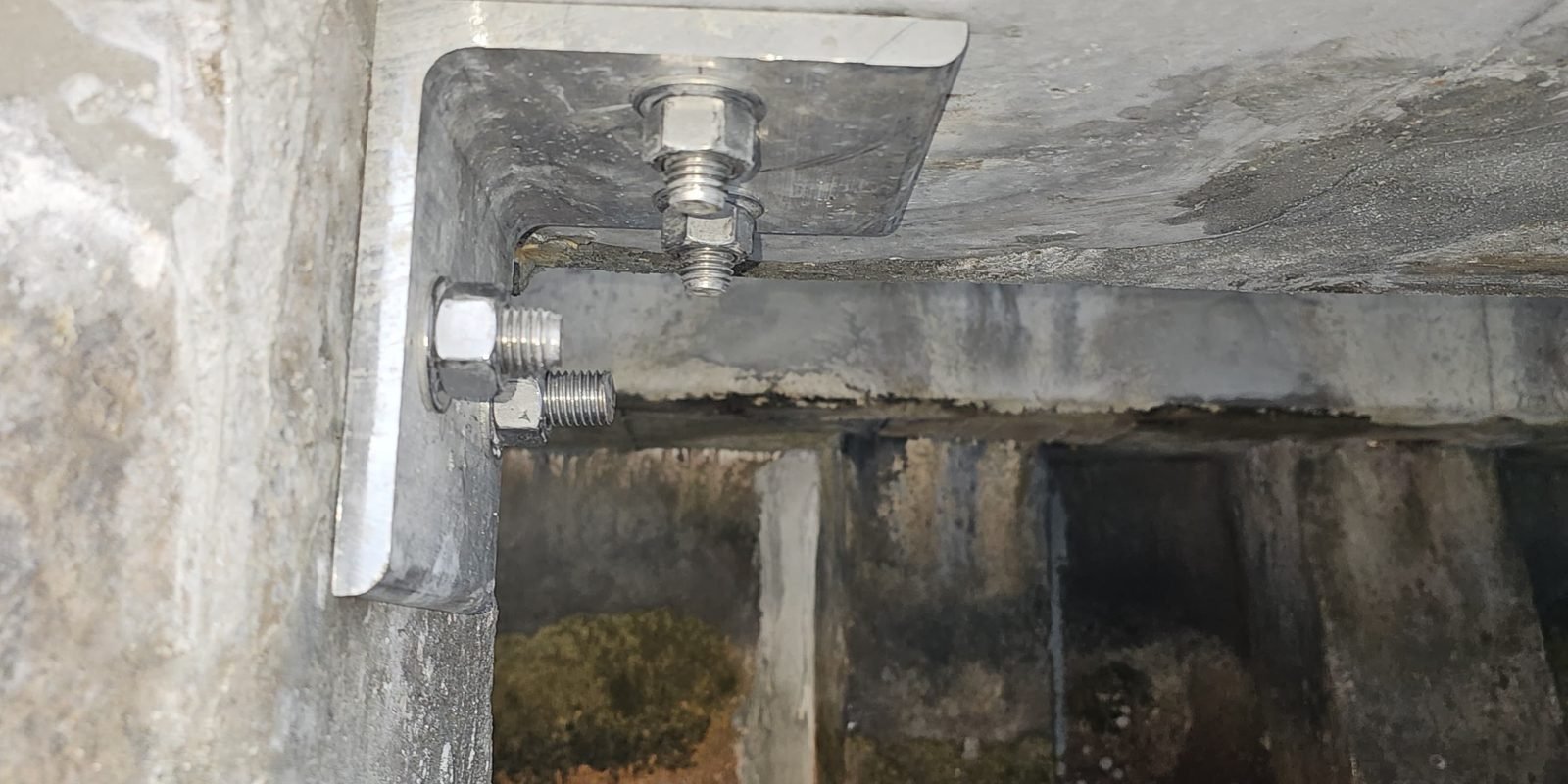
Rust stains on a seawall usually mean water is reaching the steel reinforcement inside the concrete, either through cracks or through the wall’s natural porosity. Tidal staining — the horizontal bands left by rising and falling water — is often just cosmetic, but when it overlaps with rust bleeding, it can point to corrosion working from the inside out. Souffront Contractors inspects both signs together, because the pattern tells an engineer more than either one alone.
Key takeaways
- Rust streaks on a seawall almost always trace back to corroding steel reinforcement (rebar) inside the concrete panel or cap.
- Tidal staining alone — flat gray, white, or greenish bands at the waterline — is typically mineral deposits and marine growth, not a structural warning sign.
- Rust streaks that run vertically downward from a crack are a stronger signal than surface discoloration alone.
- Once rebar starts corroding, it expands and can crack or spall the surrounding concrete, which is why early detection matters.
- A Florida-licensed structural engineer can tell the difference between weathering and active corrosion with a hands-on, fixed-fee inspection.
What causes rust streaks on a seawall
Concrete seawalls are reinforced with steel rebar to carry tension loads that concrete alone can’t handle. As long as the rebar stays embedded in dense, uncracked concrete, it’s protected from oxygen and moisture by a naturally alkaline layer around the steel. Rust streaks appear when that protection breaks down and water starts reaching the steel directly.
In South Florida, three conditions accelerate this:
- Chloride exposure. Saltwater carries chloride ions that penetrate concrete over time and break down the steel’s protective layer faster than fresh water would.
- Insufficient concrete cover. Older seawalls, especially those built before modern coastal codes, sometimes have rebar set too close to the surface.
- Existing cracks. Even hairline cracks give saltwater a direct path to the steel, which is why a crack with a rust trail below it is more significant than the same crack alone.
Once rebar starts corroding, it forms rust — iron oxide — which occupies more volume than the original steel. That expansion pushes outward on the surrounding concrete, which is what eventually causes spalling and delamination.
What tidal staining tells you about a seawall
Tidal staining is the horizontal discoloration you see at the waterline where the wall is regularly wetted and exposed as tides move. It’s usually caused by a mix of mineral deposits, algae, salt crystallization, and marine growth — barnacles, oysters, and biofilm that colonize the tidal zone. On its own, tidal staining is a normal part of a seawall’s life in a marine environment and doesn’t indicate a structural problem.
What matters is what’s underneath it. An inspector will look past the surface staining for:
- Whether the tidal zone concrete has lost its smooth surface (a sign of erosion or “sugaring”)
- Whether rust streaks pass through the tidal band rather than stopping at it
- Whether the cap or panel above the tidal zone shows cracking that could be feeding water down into the wet zone
This is one reason a proper seawall inspection includes both an above-water walk of the cap and panels and, when access allows, a review of the wall at and below the waterline. Staining patterns read differently depending on where they sit relative to mean high water.
Reading the difference: cosmetic vs. structural signs
Likely cosmetic
- Flat gray or white mineral staining confined to the tidal band
- Green or brown algae film that wipes or pressure-washes off
- Barnacle or oyster growth with no visible cracking underneath
Worth a closer look
- Orange or reddish-brown streaks running vertically down the wall face, especially from a crack, joint, or exposed rebar tip
- Rust stains paired with a hollow sound when the surface is tapped (a sign of delamination)
- Rust bleeding from the underside of the cap, where rebar is often set closer to the surface
- Any staining that has visibly worsened or spread since the last time you looked at it
The color and direction of the streak matter. Tidal staining tends to sit in a horizontal band that follows the water line. Corrosion staining tends to run vertically, following gravity, from the point where water is entering the concrete.
When rust and staining signal a bigger problem
Corrosion is progressive. Left alone, it moves through a predictable sequence: rust forms on the rebar, the rebar expands, the surrounding concrete cracks or spalls, more water reaches more steel, and the cycle accelerates. In advanced cases, enough section loss in the rebar can reduce the wall’s structural capacity, particularly at the cap-to-panel connections and at tieback locations that hold the wall against soil pressure behind it.
Tieback — the buried anchor rod or system that holds a seawall against the pressure of the soil behind it — corrosion is a specific concern because tieback failure can allow the wall to lean or shift even if the visible face looks intact. Rust staining near deadmen, tieback rods, or turnbuckles at the top of the wall is one of the signs an engineer weighs most heavily during an inspection.
Agencies like the U.S. American Society of Civil Engineers (ASCE) publish inspection guidance for coastal structures precisely because corrosion-driven deterioration is one of the leading causes of seawall failure in marine environments — and it’s often invisible until concrete has already started to crack or spall.
What to do if you see these signs
If you notice rust streaks, especially ones tracing down from a crack or from under the cap, don’t wait for the concrete to spall before addressing it. A few practical steps:
- Photograph the staining now, and again in 3–6 months, to track whether it’s spreading.
- Note whether the streak follows a crack, a construction joint, or an area where rebar may be exposed.
- Avoid pressure-washing aggressively over active rust streaks — it can dislodge already-loosened concrete.
- Have a Florida-licensed structural engineer assess the wall before deciding on repair scope.
Many South Florida HOA and condominium boards also use this kind of documented staining history to support budget planning for future seawall work, since it establishes a clear before/after record.
Talk to a Florida-licensed engineer
If your seawall is showing rust streaks, staining that’s spreading, or cracks near the tidal zone, get it looked at before it becomes a repair instead of a maintenance item. Souffront Contractors provides engineer-sealed seawall inspections across Miami-Dade, Broward, and Palm Beach for a fixed fee, quoted upfront, with a same-business-day response. The form below gets you started.
Frequently asked questions
Are rust stains on a seawall always a sign of a serious problem?
Not always, but they’re worth investigating. Light surface rust from an isolated exposed tie wire is different from streaks tracing down from a crack, which usually means water has reached the main rebar. An inspection is the only reliable way to tell them apart.
What’s the difference between tidal staining and rust staining?
Tidal staining is horizontal discoloration at the waterline from minerals, salt, and marine growth, and it’s usually cosmetic. Rust staining is typically orange-to-reddish brown, runs vertically from a crack or joint, and points to corroding steel reinforcement inside the concrete.
Can rust streaks mean the seawall is failing?
Rust streaks alone don’t mean failure, but they can be an early indicator of rebar corrosion, which weakens concrete over time if untreated. Failure risk depends on how far the corrosion has progressed and whether it’s reached structural elements like tiebacks or cap connections.
How often should I check my seawall for staining or rust?
A visual check every few months is reasonable for most homeowners, especially after storms. A professional structural inspection every few years — or sooner if staining is spreading — gives you an engineer’s read on what’s happening beneath the surface.
Does tidal staining need to be cleaned off?
Cleaning is optional for appearance, but avoid aggressive pressure-washing over areas with active rust streaks or hollow-sounding concrete, since it can knock loose material that’s already deteriorating.
What causes rebar to corrode inside a seawall in the first place?
Saltwater chloride exposure, cracks that let water reach the steel, and insufficient concrete cover over the rebar are the three most common causes in South Florida’s marine environment.
How much does a seawall inspection cost if I’m worried about staining or rust?
A typical residential structural seawall inspection runs $1,500–$3,000, depending on the complexity of the inspection — access, whether an underwater review is needed, and the number of structural components assessed. The fee is quoted upfront before any site visit, not billed by wall length.
Who regulates seawall repair work in Miami-Dade?
Seawall repair and construction along tidal waterways in Miami-Dade typically require review from Miami-Dade DERM and, depending on scope, coordination with the Florida Department of Environmental Protection or the U.S. Army Corps of Engineers for work affecting navigable waters.
About Souffront Contractors Inc.: a Florida-licensed structural engineering and marine construction firm serving Miami-Dade, Broward, and Palm Beach counties. Schedule a professional seawall inspection with a licensed structural engineer — or call (877) 420-7220.
Got a seawall or structural question?
Five fields. Same business day from a Florida-licensed engineer, routed into our dispatch CRM in real time.
- Same business dayAcknowledgment from a Florida licensed engineer — Mon–Fri 8 AM–5:30 PM.
- Engineer-sealed reportAccepted by carriers, building departments, and real-estate transactions.
- Fixed-fee proposalNo hourly billing. Repair scope priced line-by-line.