
Seawall Drainage & Hydrostatic Pressure: Why It Matters
How seawall drainage systems relieve hydrostatic pressure, the warning signs of failure, and what a Florida-licensed engineer checks during inspection.
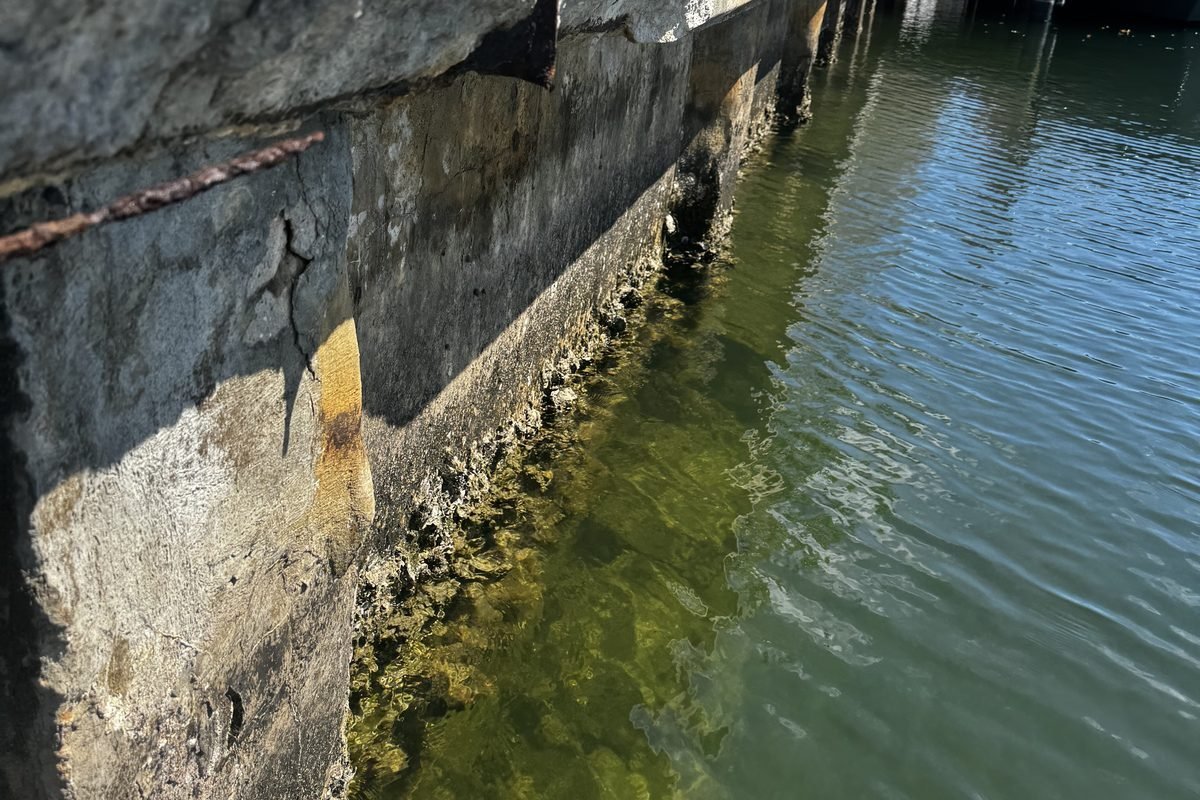
Seawall drainage systems exist to relieve hydrostatic pressure — the buildup of water trapped behind a seawall panel — before it pushes the wall out of alignment or cracks it apart. When weep holes, French drains, or filter fabric fail, water and soil pressure have nowhere to go, and that trapped pressure is one of the most common causes of seawall bulging, cracking, and collapse in South Florida. Souffront Contractors sees this failure pattern constantly on canal and Intracoastal properties across Miami-Dade, Broward, and Palm Beach.
Key takeaways
- Hydrostatic pressure is the force of trapped groundwater and tidal water pushing against the land side of a seawall panel.
- Weep holes and French drains exist to let that water escape instead of building up behind the wall.
- Clogged or missing drainage is a leading cause of seawall bulging, panel cracking, and soil loss behind the cap.
- Tidal cycles and heavy rain both raise hydrostatic pressure — South Florida’s daily tide swings make drainage maintenance an ongoing need, not a one-time fix.
- A standard seawall inspection checks every weep hole and drainage point as part of the structural assessment, not as a separate add-on.
What is hydrostatic pressure on a seawall?
Hydrostatic pressure is the force water exerts when it’s trapped against a structure. Behind a seawall, the water table on the land side rises and falls with rain and tide. If that water can’t drain back toward the canal or waterway, it pushes laterally against the back of the seawall panel around the clock.
Concrete and vinyl seawall panels are built to resist soil pressure, not sustained water pressure. Over months and years, unrelieved hydrostatic pressure bows panels outward, opens horizontal cracks, and works soil loose behind the wall — the soil loss then shows up as sinkholes or settling near the seawall cap.
Why South Florida seawalls are especially exposed
Miami-Dade and Broward properties sit on porous limestone with a high water table and daily tidal exchange. That combination means hydrostatic pressure behind a seawall changes constantly — it isn’t a static load engineers can design around once and forget. Drainage has to keep working, season after season.
How seawall drainage systems relieve that pressure
A properly functioning drainage system gives trapped water a controlled path out, instead of letting it push against the panel. The three components used most often on South Florida seawalls:
- Weep holes — small drilled openings through the seawall panel, usually near the base, that let groundwater seep through into the canal instead of building up behind the wall.
- Filter fabric — a geotextile liner placed behind the weep holes that lets water pass through while holding soil particles back, so the wall drains without washing the backfill away.
- French drains / drainage swales — perforated pipe or gravel-filled trenches on the land side that collect stormwater runoff and redirect it away from the seawall before it can saturate the backfill.
When all three are intact, hydrostatic pressure stays low and even along the wall. When any one of them clogs or fails, pressure concentrates at that point — which is exactly where cracking and bulging tend to start.
Signs your seawall drainage has failed
Drainage failure rarely announces itself with a dramatic event. It shows up as a pattern of smaller signs that add up over months:
- Weep holes that are dry at low tide when neighboring walls are actively draining — a sign they’re blocked, not that there’s no water to drain.
- Soil settling, small sinkholes, or a sunken strip of lawn running parallel to the seawall cap.
- Horizontal or stair-step cracking in seawall panels, especially near the waterline.
- A seawall cap or panel that looks slightly bowed or pushed toward the water compared to the rest of the wall.
- Standing water on the property side after rain that used to drain within hours.
Any one of these on its own is worth a call. Two or more together usually mean hydrostatic pressure has already started reshaping the wall.
What a drainage assessment involves
A seawall inspection from Souffront checks drainage as a core part of the structural assessment — not as a separate line item. That includes checking every visible weep hole for flow, probing the soil line behind the cap for voids or settling, and reviewing panel alignment for the early bulging that signals trapped pressure. The inspection is a flat fee, typically $1,500–$3,000 depending on the complexity of the property, quoted upfront before any site visit — never priced by the linear foot of wall.
If drainage is found to be compromised, the engineer’s report documents exactly which weep holes are blocked, where filter fabric has failed, and whether soil loss behind the wall has already started — with recommendations split into immediate, short-term, and long-term priorities.
Repairing a failed drainage system
Drainage repairs range from simple to extensive depending on how long the problem went unaddressed:
- Clearing and re-drilling weep holes — the least invasive fix, often enough if caught early.
- Replacing filter fabric and backfilling voids — needed once soil has already migrated out through failed weep holes.
- Installing a new French drain system — addresses chronic standing water and redirects runoff before it reaches the wall at all.
- Panel or tieback repair — required if trapped pressure has already cracked or bowed panels; these repairs run roughly $100–$250 per linear foot for moderate damage, and $400–$600 per linear foot for full panel or tieback replacement (general industry ranges, not a per-project quote).
Catching a drainage problem before it reaches the panel-repair stage is almost always the cheaper outcome.
Drainage matters for HOAs and commercial waterfront property too
For condominium associations and commercial waterfront owners, seawall drainage failure is a liability issue as much as a structural one — soil loss behind a common-area seawall can undermine adjacent hardscape, pool decks, or dock foundations. An HOA compliance report documents drainage condition alongside structural findings, giving boards a clear, engineer-sealed record for reserve planning and insurance discussions. Properties in Fort Lauderdale, Coral Gables, and other canal-front communities across South Florida see this pattern regularly given the region’s tidal exposure.
Miami-Dade’s DERM and the Florida Department of Environmental Protection both regulate work along tidal shorelines, including drainage and backfill repairs that disturb the waterway — permitting requirements a licensed engineer accounts for before repair work begins.
Talk to a Florida-licensed engineer
If your seawall shows dry weep holes, settling soil, or hairline cracks near the waterline, don’t wait for the next king tide to find out how far it’s progressed. Souffront Contractors inspects, engineers, permits, and repairs seawalls as one company, with a fixed-fee, engineer-sealed report and same-business-day response. Fill out the form below to schedule an inspection.
Frequently asked questions
What is hydrostatic pressure on a seawall?
Hydrostatic pressure is the force of groundwater and tidal water trapped behind a seawall panel, pushing laterally against it. It builds when drainage components like weep holes or French drains can’t move water through fast enough, and over time it can bow panels, crack concrete, and pull soil out from behind the wall.
What are weep holes and why does my seawall need them?
Weep holes are small drilled openings through a seawall panel, usually near the base, that let trapped groundwater drain into the canal instead of building up behind the wall. Without them, hydrostatic pressure has no outlet and concentrates against the panel, which is a common cause of bulging and cracking.
How do I know if my seawall’s drainage system has failed?
Look for weep holes that stay dry at low tide, sunken or settling soil along the seawall cap, horizontal cracking in panels, standing water after rain that used to clear quickly, and a wall that appears slightly bowed toward the water. Any of these warrants an inspection.
Can clogged weep holes really cause a seawall to collapse?
Yes. When weep holes clog, hydrostatic pressure has no relief path and pushes continuously against the panel. Left unaddressed, this pressure causes soil loss, panel cracking, and eventually structural failure — clogged drainage is one of the most common root causes engineers find in failed seawalls.
How much does it cost to repair a seawall drainage system?
Clearing and re-drilling weep holes is the least expensive fix. Replacing filter fabric and backfilling voids costs more, and full panel or tieback replacement — needed if pressure has already damaged the wall — typically runs $400–$600 per linear foot. These are repair costs; the inspection that identifies the problem is a separate flat fee, typically $1,500–$3,000.
Does every seawall need a French drain?
Not necessarily. Properties with good natural drainage and functioning weep holes may not need one, but properties with chronic standing water, poor grading, or repeated soil settling behind the cap usually benefit from a French drain to intercept runoff before it reaches the wall.
How often should seawall drainage be inspected?
An annual visual check is reasonable for most residential seawalls, with a full structural inspection every few years or sooner after a major storm. Properties showing any of the warning signs above should be inspected immediately rather than waiting for a scheduled interval.
Is drainage checked during a standard seawall inspection?
Yes. A seawall inspection from a Florida-licensed structural engineer includes checking weep holes, probing for soil voids behind the cap, and reviewing panel alignment as part of the standard structural assessment — it isn’t billed as a separate service.
About Souffront Contractors Inc.: a Florida-licensed structural engineering and marine construction firm serving Miami-Dade, Broward, and Palm Beach counties. Explore our seawall construction and marine construction capabilities — or call (877) 420-7220.
Got a seawall or structural question?
Five fields. Same business day from a Florida-licensed engineer, routed into our dispatch CRM in real time.
- Same business dayAcknowledgment from a Florida licensed engineer — Mon–Fri 8 AM–5:30 PM.
- Engineer-sealed reportAccepted by carriers, building departments, and real-estate transactions.
- Fixed-fee proposalNo hourly billing. Repair scope priced line-by-line.