
What Coconut Grove Seawalls Face — and When to Act
Coconut Grove waterfront seawalls face unique stress from Biscayne Bay tides and canal currents. A Florida-licensed structural engineer explains what to watch for and when to call.
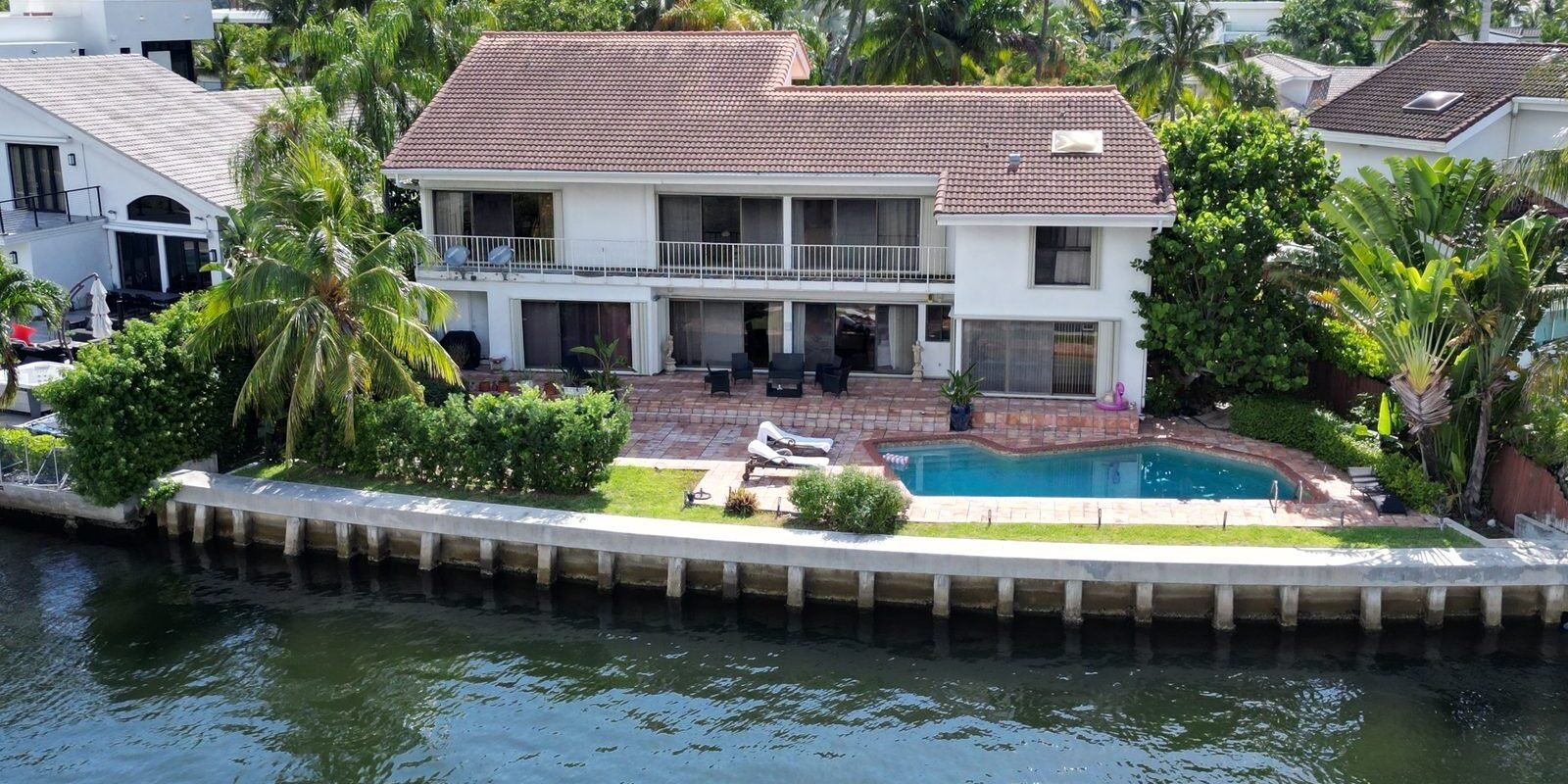
Coconut Grove waterfront seawalls take a different kind of beating than walls elsewhere in Miami-Dade. From the exposed Biscayne Bay shoreline near Dinner Key to the narrow residential canals off South Bayshore Drive, each stretch has its own tidal pattern, soil condition, and structural history — and most walls in the neighborhood were built well before current standards. A seawall inspection by a Florida-licensed structural engineer is the only way to know what you actually have before a problem becomes a bill.
Souffront Contractors works throughout the Biscayne Bay corridor — Coconut Grove, Key Biscayne, Coral Gables, Miami — engineering, permitting, and building seawall repairs for waterfront homeowners and condo and HOA boards. One firm, one point of contact, from inspection through closeout.
Key takeaways
- Coconut Grove seawalls range from bay-front concrete cap-and-panel walls at Dinner Key to older timber and concrete block walls on residential canals — each fails differently.
- Biscayne Bay tidal fluctuation and wake energy from Dinner Key Marina accelerate soil loss behind panels and under seawall caps.
- A structural seawall inspection is a flat fee — typically $1,500–$3,000 depending on complexity — quoted upfront before any site visit. It is never priced by the linear foot.
- Moderate seawall repairs run roughly $100–$250 per linear foot; full panel and tieback replacement can reach $400–$600 per linear foot. These are repair costs, not inspection costs.
- Miami-Dade DERM and the City of Miami both have jurisdiction over most Coconut Grove waterfront work — permits are required before any wall replacement or major repair begins.
Why Coconut Grove seawalls are their own problem
Stand on a dock in Dinner Key on a Saturday morning and count the powerboats going past. Every one of them sends wake into the seawall. Multiply that by thirty years and the picture gets clear: the soil behind the wall is slowly being pumped out through every crack and joint. By the time a homeowner notices the depression in the lawn behind the cap, several cubic yards of fill are already gone.
The bay-front walls along the Grove waterfront face open-water fetch and tidal energy that canal walls do not. But the canal walls — the ones behind older estates off Aviation Avenue, Glencoe Road, and the Coconut Grove side streets that dead-end at the water — carry their own risk. Many were built with hollow concrete block or timber, materials that were acceptable decades ago and are now at or past their service life. Tiebacks — the buried anchors that hold a wall against the pressure of the soil behind it — corrode in saltwater environments. Once a tieback loses tension, the wall starts to rotate outward. That rotation is rarely visible from the surface until it is already significant.
Canal-front walls also deal with freshwater intrusion after heavy rain events. South Florida’s wet season pushes groundwater levels up sharply, and the differential pressure between the waterlogged soil side and the canal side spikes. Older walls were not engineered for that load cycling.
What you actually see before a wall fails
Most of the warning signs are easy to miss or easy to rationalize. Here is what a Florida-licensed structural engineer looks for on a Coconut Grove seawall walkdown:
- Cracks along the seawall cap. Hairline cracks in concrete are common. Horizontal cracks that run the length of the cap, or cracks that open and close with the tide, are structural — they signal bending stress the wall was not designed to carry.
- Efflorescence and rust staining. White mineral deposits and orange rust streaks on the face of the wall mean water is moving through the concrete and the reinforcing steel inside is corroding. Once rebar corrodes, it expands and splits the concrete from the inside.
- Settlement or voids behind the cap. Probe the soil within two feet of the back of the wall. Soft spots, depressions, or hollow sounds when you tap the cap mean fill has migrated into the water. This is not a landscaping problem — it is a structural one.
- Outward rotation or bowing. Stand at one end of the wall and sight down it. Any visible bow or lean toward the water means the tiebacks are failing or the wall base has lost lateral support.
- Damaged or missing weep holes. Weep holes relieve hydrostatic pressure behind the wall. Blocked weep holes turn a moderate pressure load into an extreme one.
- Deteriorated seawall cap. A crumbling or spalled cap is not just cosmetic. The cap ties the top of the panels together and anchors the tiebacks. If the cap is compromised, the whole assembly is weaker.
None of these signs appear in isolation on a healthy wall. If you see two or more, schedule an inspection before the next rainy season.
What a seawall inspection in Coconut Grove actually covers
A structural seawall inspection is a flat fee — typically $1,500–$3,000, depending on complexity — quoted in writing before the engineer arrives. The fee is not calculated by the linear foot. It reflects the scope: how many structural components the wall has, whether an underwater or below-waterline dive observation is needed, the difficulty of access, and the depth of reporting required.
On a Coconut Grove property, a thorough inspection covers:
- Visual and physical survey of the cap, face panels, and any visible tie rods or anchor plates. The engineer looks for cracking patterns, corrosion staining, displacement, and material deterioration.
- Probing behind the wall to identify voids and assess fill loss.
- Waterline and below-waterline observation. The most critical damage on older walls happens at and just below the waterline, where concrete is alternately wet and dry. If conditions warrant, an underwater inspection adds detail that a surface walkdown cannot provide.
- Assessment of the tieback system — whether anchor plates are exposed, whether the cap shows signs of tieback failure, and whether the wall shows measurable rotation.
- A written engineer-sealed report with findings, photos, recommended action, and a priority ranking. This is the document a board needs to make a defensible decision, a property manager needs to give a contractor scope, and a seller or buyer needs at closing.
Learn more about what is included in a Florida-licensed engineer-sealed structural report and how it differs from a contractor’s opinion letter.
Repair or replace? How the math works on Grove seawalls
Not every Coconut Grove seawall needs full replacement. The decision comes down to what the inspection finds and what the repair cost trajectory looks like over the next ten years.
Repairs that make sense:
- Seawall cap replacement or partial cap repair when panels are still structurally sound: generally the lower end of the moderate-repair range.
- Void filling and grouting behind panels to stop ongoing soil loss.
- Tieback supplementation when the existing system has partial capacity remaining.
- Concrete restoration on the face panels to stop rebar corrosion from progressing.
Replacement indicators:
- Panels that have rotated more than one to two inches out of plumb and cannot be pulled back without risk of collapse.
- Hollow concrete block or unreinforced masonry construction — these materials are not repairable to modern standards in a marine environment.
- Tieback systems that have lost tension across most of the wall length, requiring full re-anchoring anyway.
- Panels with through-cracks or severe spalling where the cross-section is compromised.
As a general industry reference: moderate seawall repairs in South Florida run roughly $100–$250 per linear foot. Full panel and tieback replacement work runs roughly $400–$600 per linear foot. These are repair and construction cost ranges — not inspection costs, and not a Souffront quote. Actual project cost depends on wall height, soil conditions, access, materials, and permitting. A seawall repair scoped by a licensed engineer before bids go out produces numbers that are actually comparable.
Permits, DERM, and the City of Miami — what Coconut Grove owners face
Seawall work in Coconut Grove requires permits from at least two agencies, and sometimes three. Most waterfront properties in the Grove fall under City of Miami Building Department jurisdiction for the structural permit, and under Miami-Dade DERM (Department of Regulatory and Economic Resources) for the environmental and coastal construction permit. Properties that involve work in navigable waters may also require coordination with the U.S. Army Corps of Engineers Jacksonville District.
Skipping permits is not a shortcut — it is a title problem. Unpermitted seawall work shows up in title searches and can delay or kill a sale. It can also void the warranty on new construction if the work was never inspected. Every seawall construction project Souffront manages goes through full permitting, with the engineer of record on file at the building department.
What happens when a board runs a seawall project without an engineer on their side
This is where things go wrong most often — not on small residential properties, but on condo and HOA waterfront in Coconut Grove, where boards are managing $300,000 to $800,000 seawall projects with volunteer directors and a property manager who has a hundred other buildings to think about.
The scenario repeats: the association’s engineering report identifies the problem. The report engineer moves on. The board sends the report to three seawall contractors and gets three bids that are not remotely comparable because each contractor read the scope differently. The low bid wins. Six weeks into construction, a $140,000 change order arrives because “the tiebacks we found are in worse shape than the report described.” The board has no one to call who can tell them whether that change order is legitimate.
Engineer-led construction management for condo and HOA seawall projects — also called owner’s representative work — puts a Florida-licensed structural engineer on the board’s side from the day bids go out to the day the project closes. That engineer writes the bid documents so competing prices are actually comparable. They attend the critical site observations — tieback installation, cap pour, backfill — not as the contractor’s inspector, but as the board’s eyes. They review every pay application and every change order before the board signs. When the contractor says the change order is legitimate, the board’s engineer either confirms it or pushes back with documentation.
Construction management for a seawall project is scoped and quoted upfront, before the project starts. Any interest Souffront has in bidding the repair work itself is disclosed in writing at the outset — a board can engage Souffront for oversight only, and that is a real option.
Talk to a Florida-licensed structural engineer
If you own waterfront property in Coconut Grove — or you manage a condo or HOA association with bay-front or canal-front seawall — the right next step is a flat-fee inspection by a Florida-licensed structural engineer who will give you a sealed written report, not a verbal opinion. Souffront quotes every inspection upfront, typically responds to new inquiries the same business day, and covers the full Biscayne Bay corridor. Fill out the form below or call (877) 420-7220.
Frequently asked questions
How much does a seawall inspection cost in Coconut Grove?
A structural seawall inspection is a flat fee — typically $1,500–$3,000 depending on the complexity of the inspection — quoted in writing before the engineer visits the property. Complexity factors include the number of structural components, whether an underwater observation is needed, site access, and the scope of the written report. The inspection fee is never calculated by the linear foot; per-linear-foot pricing applies only to repair and construction work.
How often should a Coconut Grove waterfront seawall be inspected?
Most Florida-licensed engineers recommend a professional seawall inspection every three to five years for walls in good condition, and annually for walls showing early signs of deterioration — cracking, staining, or soil settlement behind the cap. Coconut Grove bay-front walls exposed to Dinner Key Marina wake and open Biscayne Bay tidal energy tend to age faster than protected canal walls and warrant closer attention.
Do I need a permit to repair my seawall in Coconut Grove?
Yes. Seawall repair and replacement in Coconut Grove requires a City of Miami structural permit and a Miami-Dade DERM coastal construction permit at minimum. Work in or near navigable waters may also require U.S. Army Corps of Engineers coordination. Unpermitted seawall work creates title issues and can void warranties on new construction. Souffront handles full permitting — structural engineering, drawings, and agency submissions — as part of every project.
What is the difference between a seawall cap repair and full seawall replacement?
A seawall cap is the horizontal concrete beam that runs along the top of the wall, tying the panels together and anchoring the tiebacks. Cap repair or replacement addresses deterioration at the top of the wall when the panels below are still structurally sound. Full replacement involves removing and replacing the vertical panels, tieback system, and cap — required when panels have rotated significantly, the tieback system has failed across most of the wall, or the original material (hollow block, unreinforced masonry, timber) cannot be repaired to current standards.
What is an owner’s representative on a seawall project, and does a condo board need one?
An owner’s representative — sometimes called a construction manager or the board’s engineer — is a licensed engineer engaged by the association to represent the owner’s interests during a seawall repair or replacement project. They write the bid documents, review submittals, observe construction at critical milestones, review pay applications, and evaluate change orders. A board running a seawall project worth $200,000 or more without an owner’s representative is making engineering and financial decisions without the technical background to catch contractor errors or inflated change orders. The cost of construction management is scoped and quoted upfront per project.
How do I know if my Coconut Grove seawall needs repair or full replacement?
A Florida-licensed structural engineer makes that determination based on the inspection findings — not a contractor’s visual estimate. Key indicators that lean toward replacement include wall rotation greater than one to two inches, hollow-block or unreinforced masonry construction, full-length tieback failure, and through-cracked or severely spalled panels. Early-stage cracking, localized void fill loss, or cap deterioration on a wall with structurally sound panels typically supports repair rather than replacement.
What seawall contractors near me work in Coconut Grove?
<p
Related from Souffront Contractors: HOA and condo board compliance reports — all delivered by the same Florida-licensed structural engineering and marine construction team. Call (877) 420-7220.
About Souffront Contractors Inc.: a Florida-licensed structural engineering and marine construction firm serving Miami-Dade, Broward, and Palm Beach counties. Explore our seawall construction and marine construction capabilities — see our seawall contractors page or call (877) 420-7220.
Got a seawall or structural question?
Five fields. Same business day from a Florida-licensed engineer, routed into our dispatch CRM in real time.
- Same business dayAcknowledgment from a Florida licensed engineer — Mon–Fri 8 AM–5:30 PM.
- Engineer-sealed reportAccepted by carriers, building departments, and real-estate transactions.
- Fixed-fee proposalNo hourly billing. Repair scope priced line-by-line.