
Why Small-City Seawalls Get Overlooked in Miami Shores
A field look at seawall inspection in Miami Shores and Bay Harbor Islands — what small-city permitting misses, real cost ranges, and signs to check now.
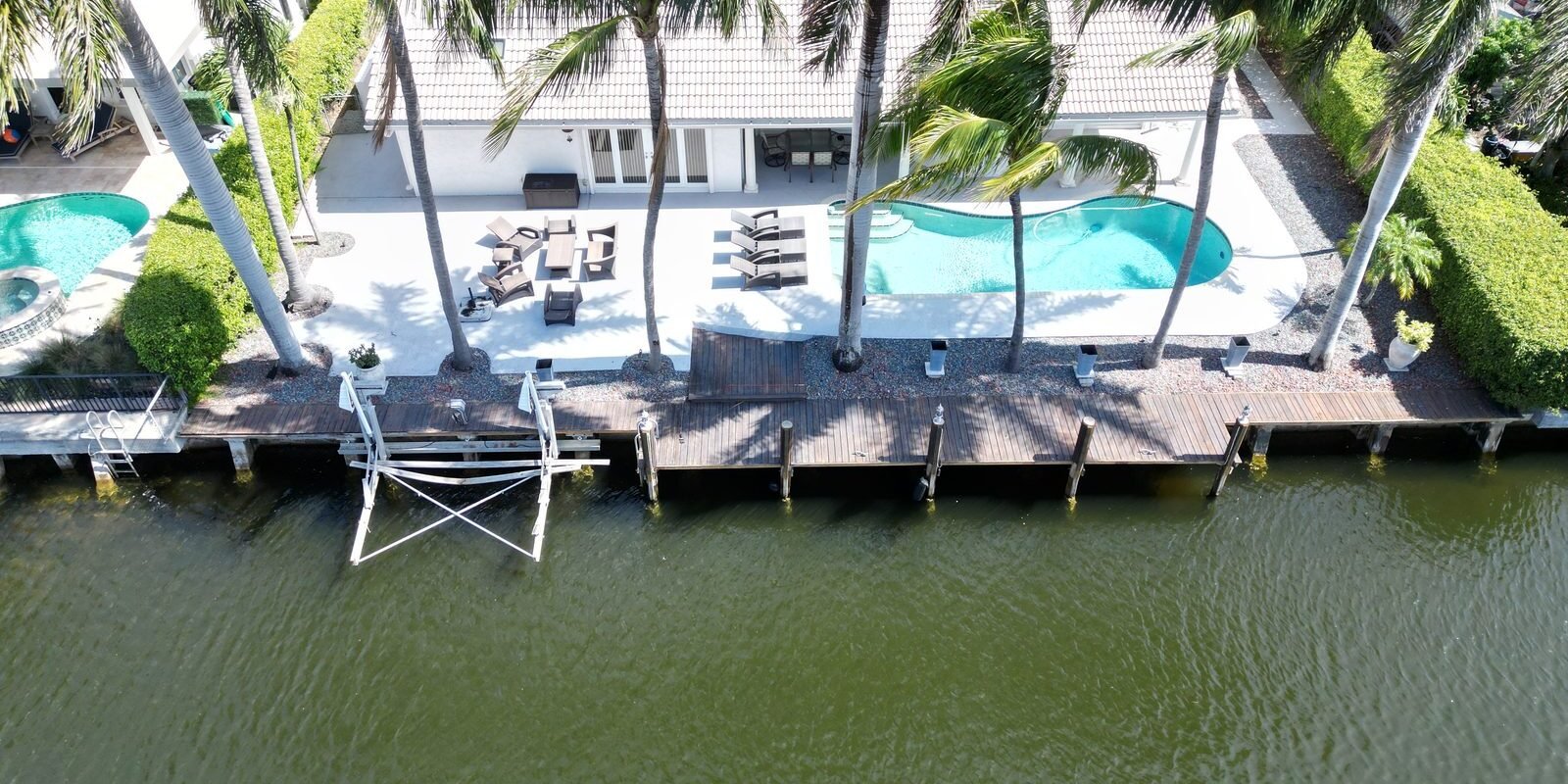
A seawall inspection in Miami Shores or Bay Harbor Islands turns up problems bigger cities catch faster — because these are small municipalities with their own building departments, their own permit queues, and, in a lot of cases, seawalls that have gone decades without a structural engineer inspection. Souffront Contractors has walked canal-front lots on both sides of this stretch of Biscayne Bay, and the pattern repeats: older wall, no permit history on file, and an owner who assumed “no visible damage” meant “no problem.”
Key takeaways
- Miami Shores and Bay Harbor Islands each run their own building department, separate from unincorporated Miami-Dade — permit history is easy to miss if you only check the county.
- Most seawalls on these canals date to the 1950s–1970s and were built to standards that predate current Florida Building Code wind and load requirements.
- A residential structural (C1) seawall inspection is a flat fee, typically $1,500–$3,000 depending on complexity, quoted before any site visit — never priced per linear foot.
- Small lots and narrow canals mean a failing wall threatens the neighbor’s yard too, not just yours — boundary disputes over shared seawalls are common here.
- King tide flooding along this corridor of Biscayne Bay accelerates soil loss behind the cap faster than owners expect.
What we actually find on Miami Shores and Bay Harbor Islands seawalls
Both cities sit directly on Biscayne Bay canals — Miami Shores along the Little River and its finger canals, Bay Harbor Islands wrapped by Indian Creek. The walls are old. On a typical site visit we’re looking at a cap poured decades ago, panels that have never been re-pointed, and a tieback system nobody has records for.
The recurring finds:
- Cap cracking with rust bleed — the rebar inside the cap has started corroding and is pushing the concrete apart from the inside.
- Voids behind the panel — soil has washed out through gaps at the panel joints, leaving a hollow space you can hear when you tap the wall.
- Panel rotation — a section leaning bay-ward a few degrees, usually the first visible sign a tieback has failed or corroded through.
- No weep holes or jets — older walls built before drainage requirements trap water behind the panel and speed up soil loss.
None of this shows up from the seawall’s top edge on a casual walk-by. It shows up when someone gets down at grade, checks the cap-to-panel joint, and — where warranted — puts eyes below the waterline.
Why small-city permitting changes the process here
Miami Shores and Bay Harbor Islands each issue their own building permits — they are not part of unincorporated Miami-Dade’s permitting system, even though environmental review for seawall work still runs through Miami-Dade DERM. That split matters in practice: a repair permit that clears DERM environmental review still has to be pulled separately at the small city’s own building counter, and the two departments don’t always talk to each other on timeline.
It also means permit history research takes two lookups instead of one. If a previous owner replaced panels or added a tieback system, that record lives with the city — not the county — and an inspection that skips it is working blind on prior repairs.
What a seawall inspection actually covers
A proper structural engineer inspection is not a walk-by. It documents the cap, the panels, the piles or tiebacks, and drainage, and rates each component’s condition — Good, Fair, Poor, Critical, or Very Poor — with photos tied to each finding. Depending on wall type and visible risk, it can include:
- Above-water visual assessment of cap, panels, and any batter or king piles
- Below-waterline inspection where soil loss or panel movement is suspected
- Elevation data — NOAA tidal datums and FEMA base flood elevation for the property
- A written, sealed report with immediate, short-term, and long-term recommendations
This is different work from seawall repair itself — the inspection tells you what’s wrong and how urgent it is before anyone starts pricing a fix.
What it costs
A residential seawall inspection in this corridor typically runs $1,500–$3,000, quoted as a flat fee before the site visit — never billed per linear foot of wall. Complexity drives the price: whether a below-waterline dive is needed, how many structural components are involved, and the scope of the written report. If repairs turn out to be needed, those are priced separately and typically run per linear foot — moderate panel or cap repairs in the general range of $100–$250 per linear foot, full panel and tieback replacement more like $400–$600 per linear foot. That’s industry-general pricing, not a quote; any actual repair number comes from the inspection findings.
Signs you shouldn’t wait on
- A visible gap or dark seam where the cap meets the panel
- Soil settling or a sinkhole forming near the seawall in the yard
- A section of wall that looks like it’s leaning toward the water
- Rust staining running down the face of the cap or panels
- Standing water pooling near the wall after normal high tide, not just during a storm
Any one of these is worth a call. Two or more together usually means the wall needs attention sooner than a routine inspection cycle would catch it.
Talk to a Florida-licensed engineer
If you own waterfront property in Miami Shores or Bay Harbor Islands and haven’t had the seawall looked at by a Florida-licensed structural engineer, that’s the first call to make — before a repair contractor, not after. Souffront inspects, engineers, permits, and builds under one roof, so the report you get reflects what’s actually buildable, not a generic checklist. Fees are quoted upfront, and most inspection requests get a same-business-day response. The form below goes straight to our office.
Frequently asked questions
How much does a seawall inspection cost in Miami Shores or Bay Harbor Islands?
A typical residential structural seawall inspection runs $1,500–$3,000 as a flat fee, quoted before the site visit. The fee depends on complexity — wall length, whether a below-waterline dive is needed, and how many structural components are assessed — not on price per linear foot.
Do Miami Shores and Bay Harbor Islands have their own permitting rules for seawalls?
Yes. Both are independent municipalities with their own building departments, separate from unincorporated Miami-Dade County. Environmental review for seawall work still runs through Miami-Dade DERM, but the construction permit itself is pulled at the city’s own building counter.
How old are most seawalls in this area?
Most seawalls along the Miami Shores and Bay Harbor Islands canals were built between the 1950s and 1970s, before current Florida Building Code load and wind requirements existed. Age alone doesn’t mean a wall is failing, but it means an inspection can’t assume the wall meets today’s standards.
What’s the difference between a seawall inspection and a seawall repair?
An inspection is a diagnostic step — a licensed structural engineer documents the wall’s condition and issues a sealed report with findings and recommendations. Seawall repair is the construction work that follows, priced separately based on what the inspection finds.
Can a neighbor’s failing seawall affect my property?
Yes. On the narrow canals in this corridor, a failing seawall can cause soil loss that undermines the adjacent property’s yard, even if the wall itself sits on the neighbor’s side of the property line. This is a common source of boundary disputes and one reason to document conditions early with a written report.
How often should a seawall be inspected?
There’s no blanket rule, but a wall over 20 years old with no inspection history, or any property showing cracking, leaning, or soil loss, should be inspected now rather than on a fixed schedule. After that, most owners in this area re-inspect every 3-5 years or after a major storm event.
Does king tide flooding damage seawalls in Miami Shores and Bay Harbor Islands?
Repeated king tide flooding accelerates soil loss behind an aging cap and panel system, especially where drainage jets or weep holes are missing or clogged. It’s a slower failure mode than storm damage, but it compounds year over year along this stretch of Biscayne Bay.
Who do I call for a seawall inspection in this area?
Souffront Contractors is a Florida-licensed engineering and marine construction firm serving Miami Shores, Bay Harbor Islands, and the surrounding Biscayne Bay corridor, including North Miami and Aventura. The same firm that inspects can also engineer, permit, and build the repair if one is needed — call (877) 420-7220.
Related from Souffront Contractors: engineer-sealed reports — all delivered by the same Florida-licensed structural engineering and marine construction team. Call (877) 420-7220.
About Souffront Contractors Inc.: a Florida-licensed structural engineering and marine construction firm serving Miami-Dade, Broward, and Palm Beach counties. Book a seawall inspection in Miami or anywhere on the South Florida waterfront — see our seawall contractors page or call (877) 420-7220.
Got a seawall or structural question?
Five fields. Same business day from a Florida-licensed engineer, routed into our dispatch CRM in real time.
- Same business dayAcknowledgment from a Florida licensed engineer — Mon–Fri 8 AM–5:30 PM.
- Engineer-sealed reportAccepted by carriers, building departments, and real-estate transactions.
- Fixed-fee proposalNo hourly billing. Repair scope priced line-by-line.