
How Coral Gables Property Managers Oversee Seawall Jobs
A property manager doesn't need to read structural drawings to run a seawall project in Coral Gables. Here's how engineer-led oversight protects your board.
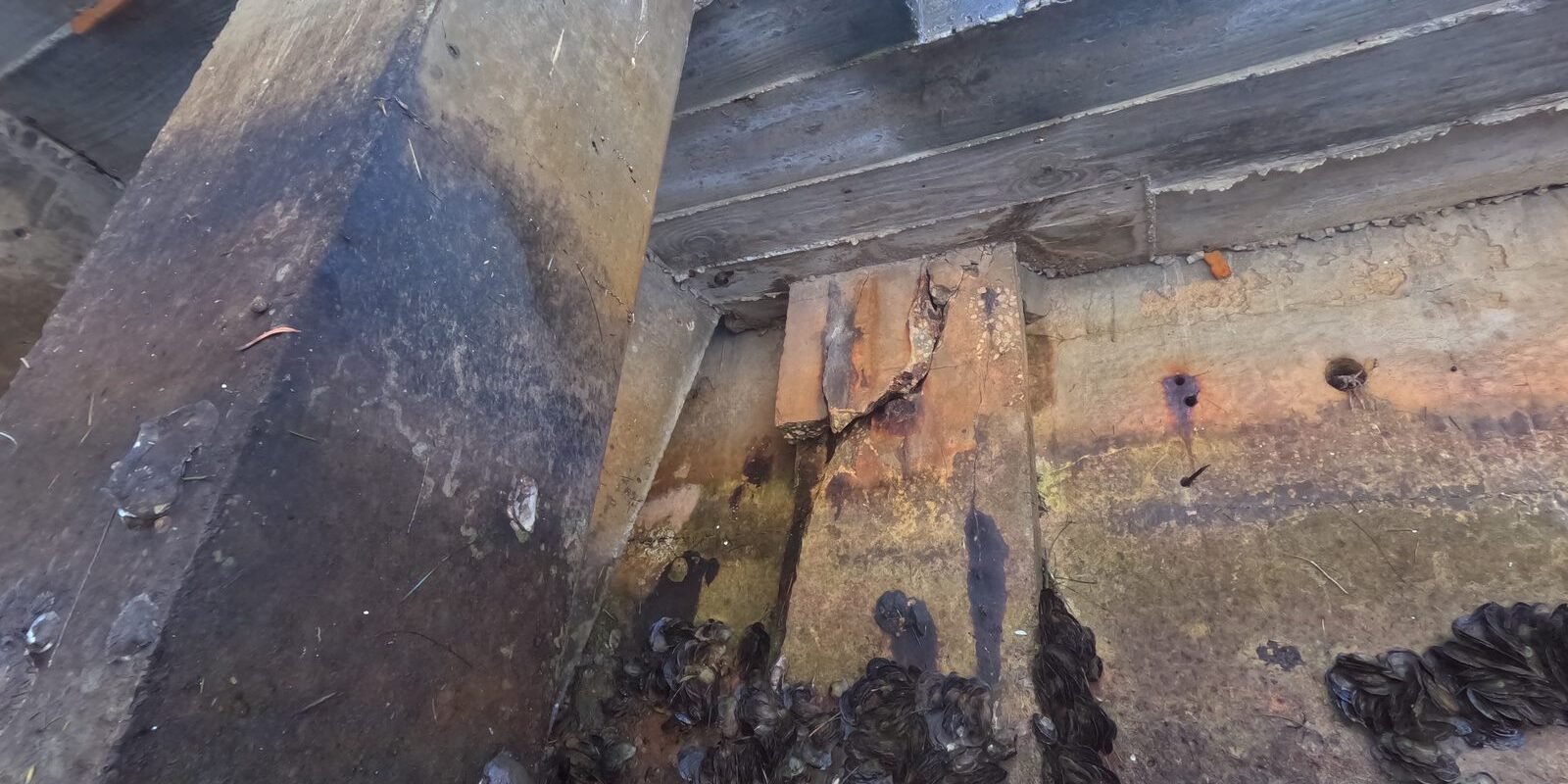
A property manager running a seawall project in Coral Gables doesn’t need to become a structural engineer to do it well. Property manager seawall project oversight works because someone else does the reading of drawings, submittals, and pay applications — a Florida-licensed structural engineer sitting between the board and the contractor, checking the paperwork before the board has to sign anything. Souffront Contractors runs this role on waterfront association jobs from Cocoplum to the canals off Old Cutler Road.
That role has a name: engineer-led construction management, also called owner’s representative or owner’s agent work. On a seawall job, it means one construction manager — not the board president, not the treasurer, not whoever answers the phone that week — is the single point of contact from the first bid package to the final punch list.
Key takeaways
- A property manager doesn’t need engineering knowledge to run a seawall project — an owner’s representative reads the drawings so the board doesn’t have to.
- The most common failure on association seawall jobs is a change order nobody on the board can evaluate, arriving after work is already underway.
- Construction management on a seawall project covers scope writing, bid comparison, submittal review, site observation at key milestones, pay application checks, change order evaluation, permit coordination, and closeout.
- Souffront is a Florida-licensed structural engineering and marine construction firm, so pricing for construction management is scoped and quoted per project — never a flat inspection fee.
- If a firm both oversees a project and could bid the repair work, that dual role should be disclosed in writing before the board signs anything.
What actually goes wrong without someone reading the drawings
Here’s the scenario that shows up again and again on Biscayne Bay corridor properties. A board hires a structural engineer to write the inspection report, gets a set of repair recommendations, then hires a contractor to build it. The engineer who wrote the report isn’t retained for construction. The contractor now answers to no one but himself.
Three months in, a change order lands for $180,000 — “differing subsurface conditions.” Is that a real, unforeseeable condition, or a gap the low bid never priced in the first place? The property manager doesn’t know. The board doesn’t know. Nobody on either side has read a structural drawing since school, if ever. The board approves it because there’s no one qualified to say no.
On canal-front and island properties around Coral Gables — Cocoplum, Gables Estates, the finger canals off Sunset Islands — this gets worse because access is tight and tidal windows matter. A contractor who backfills before tiebacks are torqued to spec, with no one there to see it, has built a wall that looks finished and isn’t. Nobody catches that from a pay application. Somebody has to be standing on the seawall when it happens.
What construction management covers on a seawall job
This is the actual scope of work, not a marketing summary. An owner’s representative on a seawall or bulkhead project handles:
- Scope and bid documents — writing the scope so three contractors are bidding the same job, not three different jobs.
- Bid review — telling the board what the low bid actually left out before it becomes a change order.
- Submittal and shop drawing review — confirming what’s delivered (sheet pile, tieback rod, cap rebar) matches what’s specified.
- Site observation at the milestones that matter — tieback installation and torque testing, cap pour and cure, backfill and compaction. Not daily supervision. The moments where a mistake becomes permanent and invisible.
- Pay application review — confirming the percentage billed matches the percentage actually built before a check goes out.
- Change order evaluation — separating a real differing condition from a bid gap the board is now being asked to cover.
- Permit and agency coordination — Miami-Dade DERM and the applicable city building department, plus the Florida DEP where the work touches state waters.
- Closeout — as-builts, warranties, and a documentation file the next board can actually use.
Some of these milestones — tieback load testing in particular — call for a special inspector under the Florida Building Code, a separate credentialed role from general site observation. A firm that does both marine construction and inspection work knows when that trigger applies and builds it into the schedule instead of discovering it mid-project.
What this role is not
An owner’s representative does not supervise the contractor’s crew, does not take on the contractor’s safety liability, and does not guarantee the contractor’s workmanship. The role is oversight on the board’s behalf: observe, review, verify, advise, document. The contractor still carries responsibility for means, methods, and jobsite safety. A construction manager who tells a board otherwise is overselling the job.
How to tell if a change order is legitimate
A property manager can ask four questions before forwarding any change order to the board, even without an engineer on retainer yet:
- Is there photo or field documentation of the condition being claimed, dated before the change order was written?
- Does the original scope of work or geotechnical report already account for this condition?
- Did the contractor flag this as a possibility during bidding, or is it appearing for the first time now?
- Is the cost itemized by labor and material, or is it a single lump number with no backup?
If the answer to any of these is “I don’t know,” that’s the moment to bring in a structural engineer to review the change order before the board votes — not after the check clears.
The dual-role question, answered directly
Souffront both provides construction management oversight and performs seawall construction and repair work. That’s a real overlap, and boards are right to ask about it. A board can engage Souffront for oversight only, with no obligation to also hire Souffront for the repair. If Souffront has any interest in bidding the construction on a project it’s also overseeing, that interest is disclosed to the board in writing before any contract is signed — not buried in a proposal. Handled that way, having one firm that inspects, engineers, permits, and builds is an advantage: the person reviewing the tieback submittal has actually installed tiebacks. Hidden, the same overlap is the first thing a competitor will point at.
What it costs and how it’s quoted
Construction management on a seawall project is scoped and quoted per project, before work starts — there’s no flat industry rate because a 60-foot residential bulkhead and a 400-foot HOA seawall with a dock and boat lift involved are not the same job. This is separate from inspection pricing: a standalone structural inspection typically runs $1,500–$3,000 as a flat fee, quoted before any site visit, but that number applies only to inspections, never to ongoing project oversight.
Talk to a Florida-licensed engineer
If your association is heading into a seawall repair or replacement and no one on the board has a way to check the contractor’s numbers, that’s the conversation to have before the bid package goes out, not after the first change order. Souffront provides engineer-sealed reports and fixed-fee inspections, and typically responds to a new inquiry the same business day. The contact form below reaches the office directly.
Frequently asked questions
Does a property manager need construction or engineering experience to hire an owner’s representative?
No. The entire point of engaging an owner’s representative is that the property manager and board don’t need to read structural drawings themselves. The representative — a Florida-licensed structural engineer in Souffront’s case — handles the technical review and reports findings to the board in plain language.
How is construction management different from just hiring a general contractor?
A general contractor is hired to build the project and is paid based on the work they perform. An owner’s representative works for the board, not the contractor, and is paid to review the contractor’s bids, submittals, pay applications, and change orders on the board’s behalf. Without that separation, the only person checking the contractor’s work is the contractor.
What does construction management cost for a seawall project?
It’s scoped and quoted per project before work begins, based on the size and complexity of the job. There’s no standard flat rate, unlike a standalone seawall inspection, which typically runs $1,500–$3,000.
Can Souffront oversee a project and also bid the repair work?
Yes, and that dual role is disclosed to the board in writing before any contract is signed. A board can also choose to engage Souffront for oversight only, with no obligation to hire Souffront for construction.
What site visits actually happen during construction, and how often?
Site observation is scheduled around the milestones where a mistake becomes permanent and hard to detect later — tieback installation and load testing, cap pour, and backfill — rather than as daily supervision. The schedule is set with the contractor’s timeline before work starts.
What happens if the contractor submits a change order the board can’t evaluate?
The owner’s representative reviews the documentation, compares it against the original scope and geotechnical information, and tells the board whether it reflects a genuine differing condition or a gap in the original bid. The board then decides with that information in hand instead of approving it blind.
Does this service apply to HOAs outside Coral Gables?
Yes. Souffront provides construction management and oversight on seawall and marine-structural projects across Miami-Dade, Broward, and Palm Beach counties, including canal-front and island communities along the Biscayne Bay corridor.
Who actually signs and seals the engineering documents on the project?
The Florida-licensed structural engineer of record signs and seals any calculations, drawings, or reports requiring a seal. The owner’s representative role — reviewing bids, submittals, and pay applications — doesn’t require a separate seal, but on Souffront-managed projects it’s performed by the same licensed engineering team.
Related from Souffront Contractors: HOA and condo board compliance reports — all delivered by the same Florida-licensed structural engineering and marine construction team. Call (877) 420-7220.
Souffront works directly with the HOA board, the condo association and the property manager or CAM, delivering the documentation a board needs to act and to show it acted.
About Souffront Contractors Inc.: a Florida-licensed structural engineering and marine construction firm serving Miami-Dade, Broward, and Palm Beach counties. Get seawall repair in Coral Gables and across Miami-Dade County — see our seawall contractors page or call (877) 420-7220.
Got a seawall or structural question?
Five fields. Same business day from a Florida-licensed engineer, routed into our dispatch CRM in real time.
- Same business dayAcknowledgment from a Florida licensed engineer — Mon–Fri 8 AM–5:30 PM.
- Engineer-sealed reportAccepted by carriers, building departments, and real-estate transactions.
- Fixed-fee proposalNo hourly billing. Repair scope priced line-by-line.