
When Does Seawall Cap Repair Stop Working?
A field guide to seawall cap repair in Coral Gables and South Florida: when a patch holds, when it's wasted money, and real replacement cost ranges.
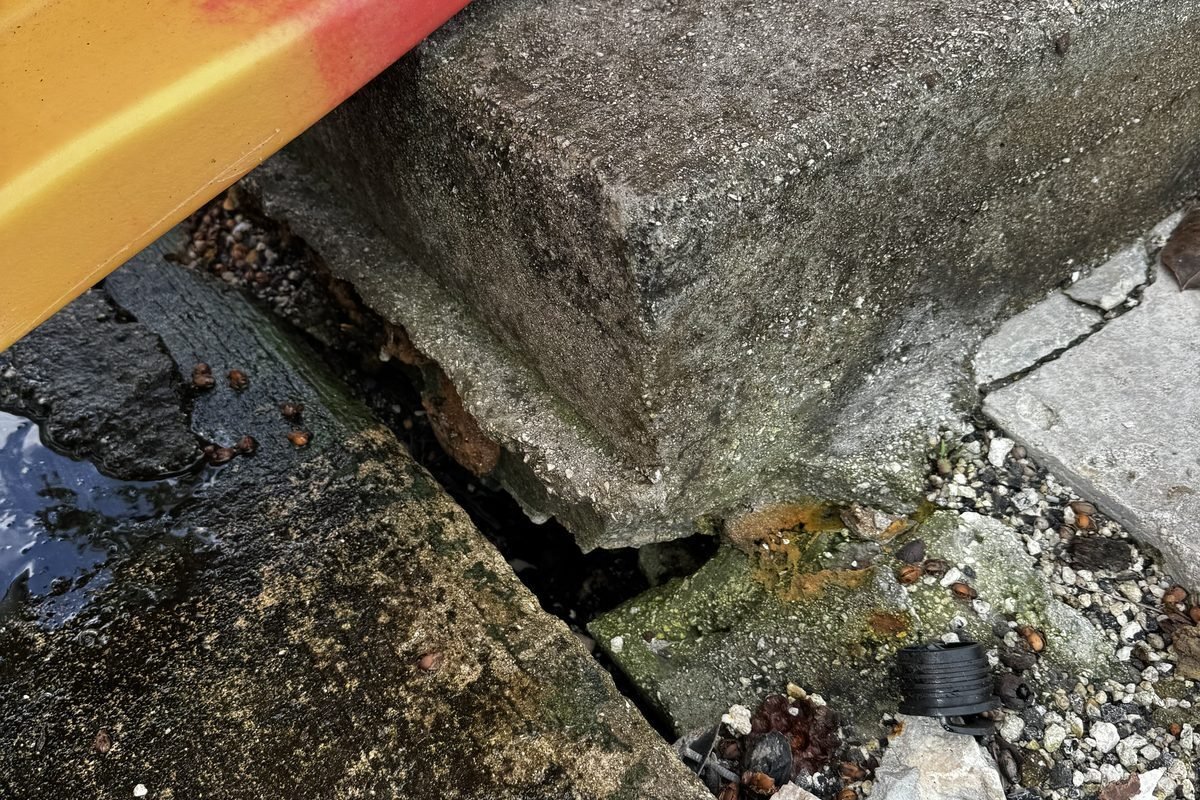
Seawall cap repair works when the crack is cosmetic and the concrete underneath is still sound. It stops working once the cap is disconnected from the panels below it, or once water has gotten behind it long enough to wash out the soil the wall depends on. Souffront Contractors gets called out on a lot of Coral Gables and Biscayne Bay canal-front properties where a homeowner has patched the same stretch of cap two or three times, and the crack always comes back in the same spot.
That’s usually the tell. A patch that fails once might be a bad pour. A patch that fails on the same line every year is telling you the cap is moving, and no amount of hydraulic cement fixes a wall that’s still moving underneath it.
Key takeaways
- A hairline crack in a cap with no vertical offset is usually a surface patch — a few hundred dollars, done in a day.
- A crack that runs the same line after a prior patch, or shows a vertical step where one side has dropped, means the panel or soil behind it has moved. Patching won’t hold.
- Full seawall cap replacement in South Florida typically runs $400–$600 per linear foot; moderate repair work runs $100–$250 per linear foot. These are repair costs, never inspection costs.
- Rust staining bleeding through the cap means the rebar inside it is corroding — patching over active corrosion just traps moisture against the steel.
- The only reliable way to know which situation you’re in is a structural engineer inspection, not a visual guess from the seawall.
What’s actually happening when a cap cracks
The cap is the concrete beam that runs along the top of the seawall, tying the panels together and holding the top of the wall in a straight line. On a canal-front lot in Coral Gables or along the Biscayne Bay corridor, that cap takes two kinds of abuse at once: tidal salt cycling through the concrete pores, and the weight of anything built on top of it — pool decks, seawalls with a dock tied into the cap, landscaping right at the edge.
A crack in the cap can mean one of three things, and they’re not equally serious:
- Shrinkage cracking — a fine surface crack from the original pour curing. Cosmetic, doesn’t move, patches and stays patched.
- Corrosion cracking — the rebar inside the cap has started to rust, and rust expands. The concrete cracks from the inside out along the line of the steel. You’ll often see reddish-brown staining bleeding out of the crack. This gets worse under a patch, not better, because the patch seals moisture in with the steel.
- Structural movement — the panel or pile the cap sits on has shifted, rotated, or lost soil support behind it. The cap crack is a symptom, not the problem. No cap repair fixes a wall that’s moving.
Seawall repair vs. cap replacement: reading the signs
Most owners can tell a lot from the seawall itself before anyone brings out a chisel. Here’s what separates a patch job from a job that needs full seawall repair:
Signs a patch will hold
- Crack is hairline (under 1/8 inch), no vertical offset between the two sides
- No rust staining at the crack
- The wall behind the cap hasn’t settled — no depression in the yard within a few feet of the seawall
- This is the first time this section has cracked
Signs patching is wasted money
- The same section has been patched before and the crack came back
- There’s a visible step where one side of the crack sits lower than the other — the panel has rotated or dropped
- Rust staining runs along the crack line
- Soil is missing or sunken directly behind the cap, sometimes visible as a void you can push a rod into
- The cap sounds hollow when tapped with a hammer over a wider area than the visible crack
That last one catches people off guard. A cap can look fine on the surface for two or three feet past where the crack ends and still be delaminated underneath — separated from the panel it’s supposed to be tied to. Patching the visible crack does nothing for the hollow section next to it.
What full cap replacement actually involves
Replacing a cap isn’t just re-pouring concrete on top. Done right, it means saw-cutting out the failed section, exposing and evaluating the rebar and the top of the panels or piles underneath, replacing any corroded steel, and forming and pouring a new cap that ties back into sound concrete on both sides. If the panels themselves have rotated or the soil behind the wall has voided out, cap work alone won’t stop the problem from coming back — that’s seawall construction territory: tieback repair or replacement, soil backfill, and a new cap poured over structurally sound panels.
This is where working with one seawall contractor who also holds the engineering license matters. The person deciding whether you need a patch or a rebuild is the same person who’d be doing the rebuild — so get a second, independent read on the scope before signing a repair contract, ideally from a report that isn’t trying to sell you the fix.
What it costs
Cap and wall repair costs in South Florida track linear footage of wall, not the size of the crack. As general ranges for the region:
- Moderate repairs (localized cap patching, minor panel repair, spot tieback work): roughly $100–$250 per linear foot
- Full cap replacement with panel or tieback work: roughly $400–$600 per linear foot
These are general industry ranges for repair and replacement work, not a Souffront quote — every wall gets a project-specific number after inspection. A structural engineer inspection is priced separately and as a flat fee, typically $1,500–$3,000 depending on complexity, quoted before anyone steps on site. That fee doesn’t scale with wall length — it depends on access, whether a below-waterline dive is needed, and how many structural components (panels, cap, piles, drainage) get evaluated.
Why canal-front walls in Coral Gables and the Bay corridor fail this way
Properties along the Coral Gables waterway, Biscayne Bay islands, and the broader Key Biscayne and Coconut Grove corridor share a specific failure pattern: older seawalls, many original to construction from decades ago, sitting under decks, pool equipment pads, and mature landscaping that adds load the wall wasn’t designed to carry. Add daily tidal cycling and the salt exposure that comes with it, and a cap that would last decades inland can start showing corrosion cracking in half that time. The fix isn’t different engineering — it’s catching the corrosion stage before it becomes the movement stage, which is a matter of inspecting the wall on a schedule instead of only when a crack finally shows.
Talk to a Florida-licensed structural engineer
If a cap on your property has been patched more than once, or you’re seeing rust staining or a step in the crack line, that’s worth a proper look before the next patch goes on. Souffront sends a Florida-licensed structural engineer to the site, not a salesman, and prices the inspection as a fixed fee quoted before the visit — with same-business-day response. The form below gets you on the schedule.
Frequently asked questions
Can a cracked seawall cap be repaired without replacing the whole wall?
Yes, if the crack is limited to the cap itself and the panels and soil behind the wall are still sound. A hairline crack with no rust staining and no vertical offset is usually a straightforward patch. Once the crack keeps returning or shows movement, the repair needs to go deeper than the cap.
How do I know if my seawall cap crack is serious?
Look for three things: rust staining bleeding from the crack, a visible step where one side sits lower than the other, and whether the crack has come back after a prior patch. Any of those means the issue is structural, not cosmetic, and needs a structural engineer inspection rather than another tube of hydraulic cement.
How much does seawall cap replacement cost?
Full cap replacement with associated panel or tieback work typically runs $400–$600 per linear foot in South Florida. Simpler moderate repairs run $100–$250 per linear foot. The exact number depends on wall condition, access, and how much of the structure behind the cap needs work, so it’s priced per project after inspection.
Why does my seawall cap keep cracking in the same spot?
A crack that reopens in the same place after being patched almost always means the concrete on either side of the crack is moving independently — the panel underneath has rotated, or soil behind the wall has washed out, and the cap is just following that movement. Patching the surface doesn’t stop the cause.
Does rust staining on a seawall cap mean I need a new wall?
Not necessarily a new wall, but it does mean the rebar inside the cap is actively corroding, and that section of concrete needs to be opened up, the steel assessed, and the cap rebuilt around sound reinforcement. Left alone, corrosion cracking spreads along the rebar line and gets more expensive to fix every season it’s ignored.
Is a seawall inspection the same thing as a repair estimate?
No. A seawall inspection is an engineer’s assessment of the wall’s condition, priced as a flat fee regardless of what repairs it turns up. A repair estimate is priced per linear foot of actual work once the scope is known. Get the inspection first — it’s what determines whether you need a patch, a cap replacement, or nothing at all.
How often should a seawall cap be checked for cracking?
For canal-front and bayfront properties in the Coral Gables and Biscayne Bay corridor, an annual visual check plus a full structural engineer inspection every few years catches corrosion cracking before it becomes a movement problem. Older walls, or walls carrying a dock or pool deck load, warrant closer attention.
Can I patch a seawall cap myself?
A homeowner can seal a hairline surface crack with hydraulic cement as a stopgap, but that doesn’t tell you what’s happening beneath the surface — whether there’s rebar corrosion or panel movement under an otherwise fine-looking patch. For anything beyond a cosmetic hairline crack, get the wall evaluated by a licensed engineer before spending money on repeat patching.
Related from Souffront Contractors: dock repair — all delivered by the same Florida-licensed structural engineering and marine construction team. Call (877) 420-7220.
About Souffront Contractors Inc.: a Florida-licensed structural engineering and marine construction firm serving Miami-Dade, Broward, and Palm Beach counties. Choose a seawall inspection company whose reports are signed and sealed by a licensed structural engineer — see our seawall contractors page or call (877) 420-7220.
Got a seawall or structural question?
Five fields. Same business day from a Florida-licensed engineer, routed into our dispatch CRM in real time.
- Same business dayAcknowledgment from a Florida licensed engineer — Mon–Fri 8 AM–5:30 PM.
- Engineer-sealed reportAccepted by carriers, building departments, and real-estate transactions.
- Fixed-fee proposalNo hourly billing. Repair scope priced line-by-line.