
Should You Fix Your Dock and Seawall Together?
On Biscayne Bay canals, a failing seawall usually takes the dock down with it. Here's how to tell, and what a combined repair actually saves.
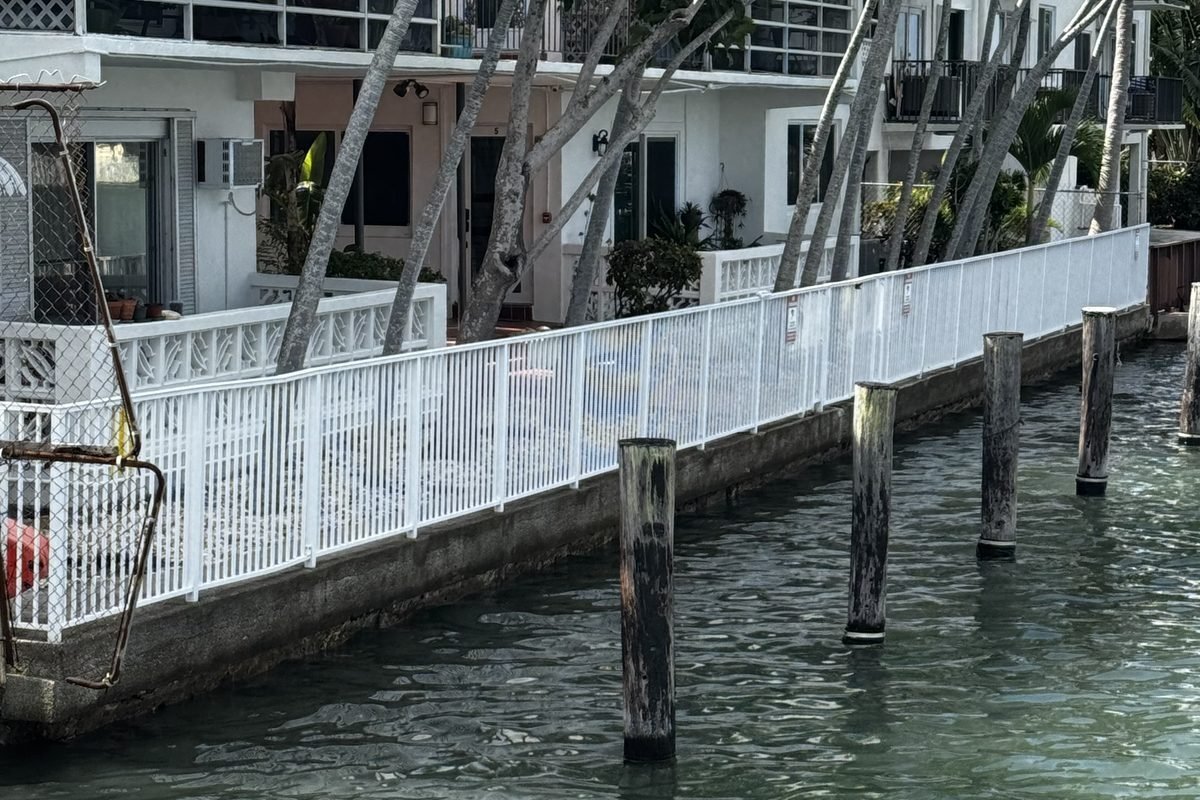
If your dock pilings are cracking near the waterline and your seawall cap has a gap behind it, they are usually the same problem, not two problems. On canal-front lots in Coconut Grove and Key Biscayne, soil loss behind a failing wall travels straight to the dock footings tied into it — and repairing one without the other is often money spent twice.
Key takeaways
- A dock tied into or built off a failing seawall almost always needs to be assessed at the same time as the wall — not after.
- The tell is soil movement: a void behind the cap, a settling dock deck, or a piling that has drifted are usually one shared cause.
- Combining the two scopes into one mobilization typically saves 10–20% versus two separate contractors and two separate barge or crane setups.
- A Florida-licensed structural engineer should inspect both structures before either gets a repair proposal, not after.
- Permitting is usually easier combined — Miami-Dade DERM reviews shoreline work as one project when the dock and wall share a permit application.
What we actually see on a combined seawall and dock
Most South Florida docks on canal or bay lots are structurally connected to the seawall — either bolted to the cap, or supported on pilings driven right next to it. That connection is exactly why a wall problem doesn’t stay a wall problem for long.
On a typical site visit, the pattern looks like this:
- The seawall cap has a hairline crack or a visible void where soil has washed out from behind it.
- The dock’s shore-end pilings, driven into that same soil, have started to lean or settle.
- The dock decking near the wall has a slight downward pitch that wasn’t there when it was built.
- Marine growth and rust staining show up at the same tide line on both structures — same exposure, same age, same deterioration curve.
None of this means the dock is unsafe today. It means the two structures are failing on the same timeline, and a seawall repair scoped without the dock in mind will get undermined again within a few years.
Signs the two should be scoped together
- Any dock piling within 5–10 feet of the seawall showing lean, rot, or spalling concrete.
- A void or hollow sound behind the cap when tapped, especially near a dock tie-in point.
- Dock cleats or the gangway ramp pulling away from the cap.
- Visible soil loss or a sinkhole-like depression in the yard near the shoreline.
Why separate contractors usually cost more
A dock builder and a seawall crew both need a barge or crane on the water, both need the same DERM and county permits, and both need to disturb the same section of shoreline. Run them as two projects and you pay for two mobilizations, two permit applications, and two disruptions to your yard and dock access.
Run it as one scope with a single marine contractor who handles both trades, and the crane sets up once, the permit covers both structures, and the sequencing is planned so the dock isn’t rebuilt on top of soil that’s about to be re-driven with tiebacks. That sequencing detail matters more than the discount — rebuilding a dock before the seawall’s soil work is finished is the single most common rework we get called back for.
What a combined structural engineer inspection covers
Before any proposal, both structures get evaluated by the same engineer in one visit. A proper structural engineer inspection for a combined project checks:
- Seawall cap, panels, and tiebacks — cracking, displacement, and corrosion at the waterline.
- Soil condition behind the wall — voids, settlement, and how far the loss extends toward the dock.
- Dock pilings, stringers, and decking — especially any piling sharing a footprint with the wall’s tieback zone.
- Whether the dock’s shore-end connection can be reused or needs to be rebuilt as part of the wall repair.
The output is one written scope covering both structures, so a board or homeowner is pricing one project instead of guessing how two separate bids overlap.
What a combined repair typically includes
Depending on what the inspection finds, a combined project can include:
- Seawall cap replacement or partial cap repair where cracking has let water reach the rebar.
- New or supplemental tiebacks to stop ongoing soil migration.
- Piling wrap repair on dock pilings with surface spalling, rather than full replacement, where the piling core is still sound.
- Backfill and soil compaction behind the wall before the dock’s shore-end structure is reset.
- Reattaching or rebuilding the dock’s gangway and cleat connections to the new cap.
Full dock repair costs vary with material and scope, but a shore-end piling and decking repair tied into a seawall project is usually priced as one line item inside the combined scope rather than a stand-alone bid — which is part of why sequencing it with the wall saves money.
Permitting: one application, not two
Work below the mean high-water line on a canal or bay lot needs a permit from Miami-Dade DERM, and often coordination with the Florida Building Code’s coastal construction provisions where the lot falls in a high-velocity hurricane zone. DERM reviews shoreline disturbance as a single project footprint — a wall-and-dock application moves through review once, rather than twice on overlapping timelines with two different applicants.
Talk to a Florida-licensed engineer before you get two bids
If your dock and seawall are both showing age on the same section of canal or bay frontage, get one engineer to look at both before separate contractors bid separate scopes. Souffront inspects, engineers, permits, and builds seawalls and docks as one company, with a fixed-fee inspection quoted upfront and a same-business-day response. The scheduling form is right below.
Frequently asked questions
Do I need one contractor or two if my dock and seawall are both failing?
One is almost always better. A single marine contractor who handles both the seawall repair and the dock work can mobilize a crane or barge once, sequence the soil and tieback work before the dock is rebuilt on top of it, and move through permitting as one application instead of two.
How do I know if my dock’s problem is actually a seawall problem?
Check the pilings closest to the wall. If they lean, if the ground near the wall has settled or has a soft depression, or if the seawall cap has a visible crack or hollow sound when tapped, the dock’s movement is very likely soil loss from a failing wall, not a dock-specific defect.
Does repairing them together actually cost less?
Yes, in most cases. Combining scopes typically saves 10–20% compared to two separate projects, because the crane or barge mobilization, the DERM permit, and the site access disruption are shared instead of duplicated.
Can my existing dock be saved if the seawall behind it needs full replacement?
Sometimes. If the dock’s pilings and structure are sound and only the shore-end connection is affected, the dock can often be temporarily detached, the wall rebuilt, and the dock reattached to the new cap. A structural engineer inspection during scoping is what determines this — it’s not a guess made after demolition starts.
What permits are needed for a combined dock and seawall repair in Miami-Dade?
Work at or below the mean high-water line needs a Miami-Dade DERM permit, and the project may need to meet Florida Building Code coastal construction requirements in high-velocity hurricane zones. Filing the dock and seawall work as one application, rather than two separate permits, is standard practice for a combined scope.
How long does a combined seawall and dock repair take?
A typical residential combined repair runs several weeks to a few months once permitted, depending on tieback and cap work extent and whether full dock piling replacement is needed. Permitting time with DERM is usually the longer variable, not the construction itself.
What does a seawall and dock structural engineer inspection cost?
A standard residential seawall inspection is a flat fee, typically $1,500–$3,000 depending on complexity, quoted upfront before any site visit. Adding a connected dock to the same inspection is scoped as part of that same visit rather than as a separate charge in most cases.
My dock looks fine — do I still need to check the seawall behind it?
If the dock is tied into or sits adjacent to a seawall showing any cracking, staining, or cap displacement, yes. Dock damage from soil loss often shows up months or years after the seawall problem starts, so a sound-looking dock today doesn’t rule out shared soil movement already underway.
About Souffront Contractors Inc.: a Florida-licensed structural engineering and marine construction firm serving Miami-Dade, Broward, and Palm Beach counties. Reach a licensed seawall contractor in Boca Raton and across Palm Beach County — see our seawall contractors page or call (877) 420-7220.
Got a seawall or structural question?
Five fields. Same business day from a Florida-licensed engineer, routed into our dispatch CRM in real time.
- Same business dayAcknowledgment from a Florida licensed engineer — Mon–Fri 8 AM–5:30 PM.
- Engineer-sealed reportAccepted by carriers, building departments, and real-estate transactions.
- Fixed-fee proposalNo hourly billing. Repair scope priced line-by-line.