
Seawall Scour: How Moving Water Undermines Foundations
Seawall scour erodes soil beneath a wall until it fails. Learn the warning signs, causes, and how a Florida-licensed engineer diagnoses scour damage.
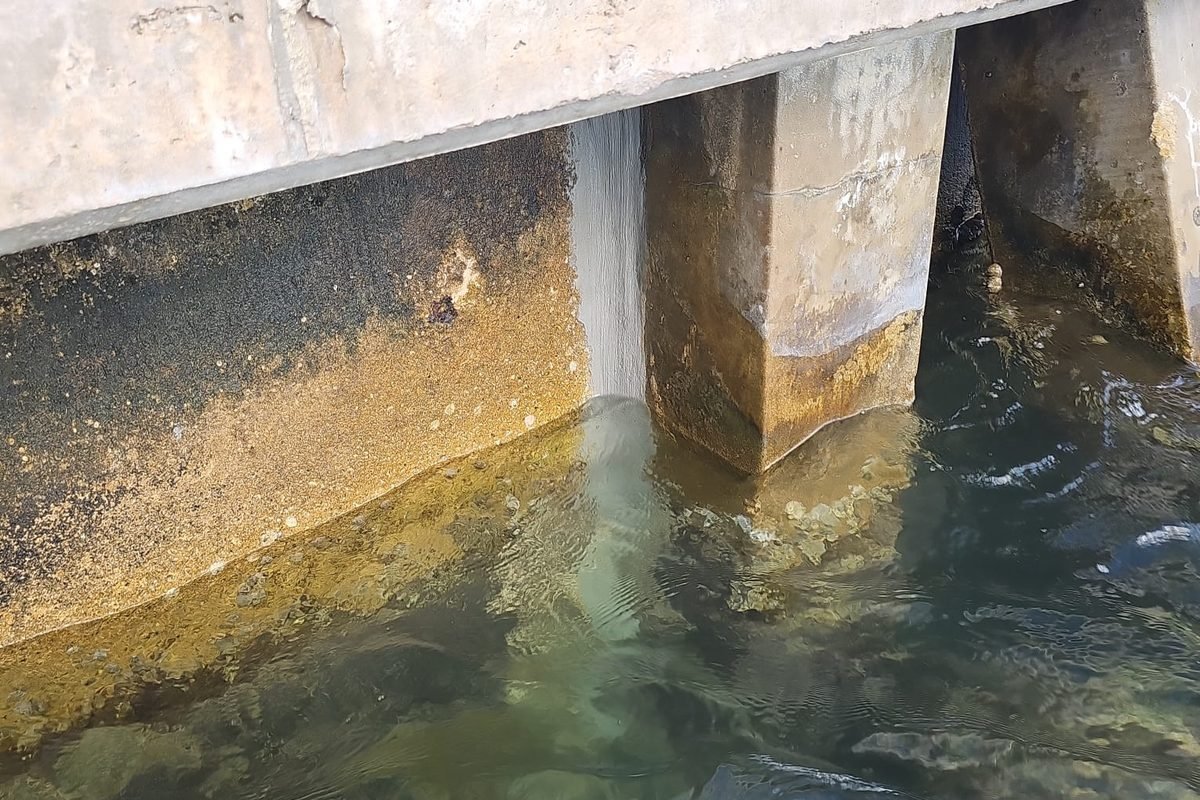
Seawall scour is the erosion of soil and sediment from beneath or behind a seawall caused by moving water, tidal action, or boat wake. Left unaddressed, scour hollows out the foundation supporting the wall until the structure loses lateral support and cracks, leans, or collapses. A Florida-licensed structural engineer identifies scour through inspection and instrumentation before it becomes a structural emergency.
Key takeaways
- Scour is soil loss caused by water movement — tidal flow, wave action, boat wake, or stormwater discharge — not a defect in the wall material itself.
- Scour typically starts below the waterline and is invisible from the shoreline until secondary symptoms appear: cap cracking, panel leaning, or sinkholes forming behind the wall.
- Boat wake and outfall pipes discharging directly at the wall base are two of the most common accelerants in South Florida canals.
- Voids from scour can undermine a seawall even when the wall panels themselves show no visible cracking.
- A structural inspection that includes a below-waterline dive is the only reliable way to confirm scour and measure void depth.
What causes seawall scour
Scour happens when water moves fast enough, or repeatedly enough, to carry soil particles away from around a structure. In South Florida canals and waterways, several forces combine to create scour conditions:
- Tidal exchange — the twice-daily rise and fall of tide pulls water past the wall face, gradually loosening fine sediment.
- Boat wake — repeated wave action from passing vessels is one of the most common scour accelerants in residential canals, especially at wall sections near turning basins or narrow channels.
- Stormwater outfalls — pipes that discharge directly against or near a seawall concentrate flow at a single point, digging out soil faster than surrounding areas erode.
- Prop wash — boats maneuvering close to a dock or seawall direct thrust downward and outward, which can excavate soil at the toe of the wall over time.
- Storm surge and heavy rain events — short bursts of high water velocity during storms can cause more scour in hours than years of normal tidal cycling.
How scour undermines a foundation
A seawall depends on the soil behind and beneath it for lateral support. Panels and piles are engineered to resist earth pressure, not to stand freestanding. When scour removes soil from the wall’s base or from behind the panels, it creates a void — a hidden gap where supporting material used to be.
As the void grows, the wall loses the resistance that was keeping it upright. The remaining soil above the void has nothing to bear on and eventually settles or collapses into the gap. That settlement transmits to the surface as a sinkhole, a low spot in the yard, or a section of pavers pulling away from the seawall cap.
Why scour is hard to see from land
Because scour starts below the waterline, it can progress for months or years before any sign appears above grade. By the time a homeowner notices a crack in the cap or a soft spot in the lawn, the void underneath may already be significant. This is why a structural seawall inspection that includes a below-waterline component is critical — surface observation alone will miss early-stage scour.
Warning signs of scour damage
Property owners should watch for these indicators, especially after storms or periods of heavy boat traffic:
- Sinkholes or depressions in the yard near the seawall
- Pavers, concrete decking, or a pool deck separating from the seawall cap
- A visible gap or void where the cap meets the panels
- Leaning or bulging panels with no obvious surface crack
- Cloudy or discolored water near the wall base during rain events, which can indicate active soil loss
- A hollow sound when the cap is tapped, suggesting a void beneath
Any one of these on its own is worth a look. Several together usually mean active scour is undermining the structure.
How engineers diagnose scour
Diagnosing scour requires more than a visual walk of the property. A thorough assessment typically includes:
- Above-water visual inspection of the cap, panels, and surrounding grade for settlement or displacement.
- Below-waterline dive inspection to physically locate and measure voids, exposed piles, or undermined footings.
- Probing along the base of the wall to map the extent of soil loss.
- Review of drainage and outfall locations to identify point sources accelerating erosion.
- Documentation with photos and measurements that support an engineer-sealed report and inform repair scope.
This is the same process used in a Florida-licensed engineer’s structural assessment, and it’s why a scour diagnosis should come from a licensed engineer rather than a visual-only contractor estimate.
Repair options for scour damage
The right fix depends on how much soil has been lost and whether the wall structure itself has been compromised.
- Void filling / soil stabilization — grout or engineered fill injected to replace lost material behind or beneath the wall, appropriate for early-stage scour with minimal structural movement.
- Rip-rap or scour protection — placing stone or armor at the toe of the wall to dissipate wave and current energy and prevent further erosion.
- Tieback and anchor repair — if soil loss has affected the anchoring system, tiebacks may need to be reset or replaced to restore lateral capacity.
- Panel or full wall replacement — reserved for cases where scour has progressed long enough to compromise panel integrity or pile embedment.
Repair costs vary by scope: moderate repairs generally run $100–$250 per linear foot, while full panel or tieback replacement can run $400–$600 per linear foot. These are general industry ranges for repair and replacement work, not inspection fees — inspection is priced separately as a flat fee. Learn more about seawall repair and soil stabilization approaches.
Preventing scour before it starts
Owners can reduce scour risk with a few practical steps:
- Route stormwater discharge away from the wall face rather than directly against it.
- Post and enforce no-wake zones near vulnerable wall sections where boat traffic is heavy.
- Schedule periodic structural inspections rather than waiting for visible damage — scour is far cheaper to address at the void stage than after settlement.
- Maintain proper drainage grading in the yard so surface water doesn’t concentrate at the seawall.
Miami-Dade DERM and Florida DEP both regulate work along tidal waterways, so any scour repair involving fill, rip-rap, or structural modification will typically require permitting through Miami-Dade DERM.
Talk to a Florida-licensed engineer
Scour is easy to miss and expensive to ignore. If you’ve noticed a sinkhole, a separating deck, or a leaning section of wall, get a structural inspection that includes a below-waterline assessment before the damage spreads. Souffront Contractors provides engineer-sealed reports with a fixed-fee inspection, quoted upfront, and typically responds the same business day. Serving Miami-Dade, Broward, and Palm Beach. Call (877) 420-7220 or use the form below to schedule.
Frequently asked questions
What is seawall scour?
Seawall scour is the erosion of soil from beneath or behind a seawall caused by moving water — tidal flow, boat wake, prop wash, or stormwater discharge. It creates hidden voids that remove the lateral support a wall depends on to stay upright.
How do I know if my seawall has scour damage?
Common warning signs include sinkholes or soft spots in the yard near the wall, pavers or decking pulling away from the cap, a hollow sound when tapping the cap, and leaning panels without visible surface cracks. Because scour starts below the waterline, a professional inspection is the only reliable way to confirm it.
Can scour damage a seawall even if the panels look fine?
Yes. Scour removes soil, not concrete, so panels can appear structurally sound from above while a significant void has formed beneath them. This is why a below-waterline dive inspection matters — surface inspection alone can miss active scour.
What causes scour in South Florida canals specifically?
Boat wake and prop wash from vessel traffic are among the most common causes in residential canals, along with stormwater outfall pipes that discharge directly at the wall base and normal tidal exchange over time.
How much does it cost to repair scour damage?
Repair cost depends on severity. Moderate repairs, such as void filling or scour protection, generally run $100–$250 per linear foot. More extensive damage requiring tieback or panel replacement can run $400–$600 per linear foot. An engineer’s inspection determines which scope applies to your wall.
Does a seawall inspection include checking for scour?
A thorough structural inspection should include a below-waterline component specifically to check for scour, voids, and exposed footings — not just an above-water visual review. Ask whether a dive inspection is included before scheduling.
Do I need a permit to repair scour damage?
Most scour repairs involving fill, rip-rap, or structural work along a tidal waterway require permitting through Miami-Dade DERM or Florida DEP. An engineer-sealed report is typically required as part of that permit application.
How often should I have my seawall checked for scour?
Periodic structural inspections, especially after major storm events or noticeable changes in boat traffic patterns, catch scour while it’s still a void rather than a settled sinkhole. Addressing it early is significantly less expensive than replacing a compromised wall section.
About Souffront Contractors Inc.: a Florida-licensed structural engineering and marine construction firm serving Miami-Dade, Broward, and Palm Beach counties. Work with a Florida-licensed seawall contractor who is also the engineer of record — or call (877) 420-7220.
Got a seawall or structural question?
Five fields. Same business day from a Florida-licensed engineer, routed into our dispatch CRM in real time.
- Same business dayAcknowledgment from a Florida licensed engineer — Mon–Fri 8 AM–5:30 PM.
- Engineer-sealed reportAccepted by carriers, building departments, and real-estate transactions.
- Fixed-fee proposalNo hourly billing. Repair scope priced line-by-line.