
Hiring a Seawall Contractor in Fort Lauderdale: 8 Questions
Questions to ask before hiring a seawall contractor in Fort Lauderdale — licensing, permits, pricing, and warranty red flags to check first.
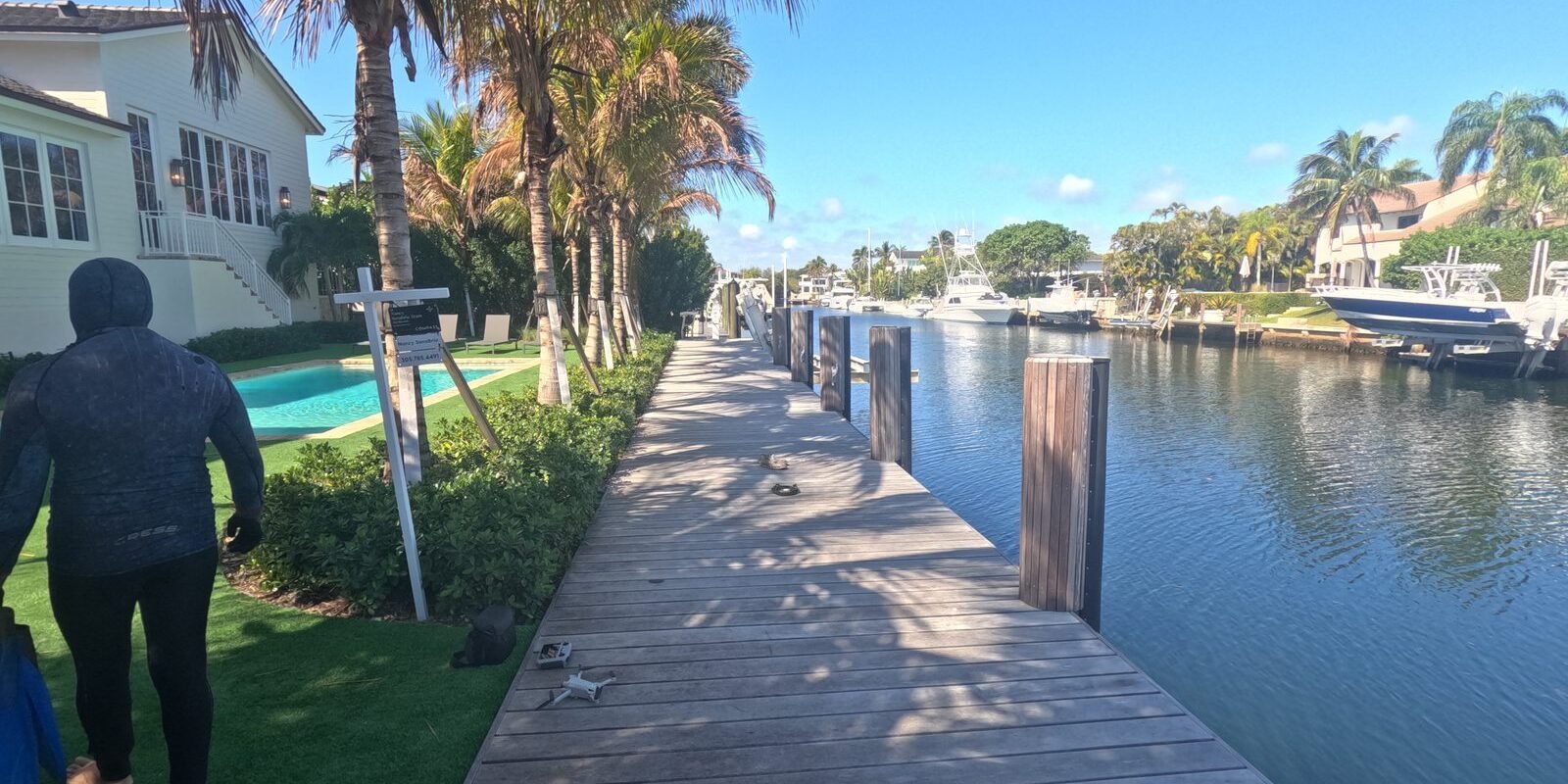
Before hiring a seawall contractor in Fort Lauderdale, ask about their Florida engineering license, their permitting experience with Broward County waterways, how they price inspections versus repairs, and what warranty backs their work. Souffront Contractors answers these questions the same way for every waterfront property owner: in writing, before any contract is signed. Getting clear answers up front protects your seawall, your budget, and your permit timeline.
Key takeaways
- Confirm the contractor works with a Florida-licensed structural engineer who seals inspection and repair drawings — not just a field crew.
- A seawall inspection should be a flat fee, typically $1,500–$3,000 depending on complexity, quoted before the site visit — never priced per linear foot.
- Repair and replacement pricing is different: moderate repairs run roughly $100–$250 per linear foot, and full panel or tieback replacement can reach $400–$600 per linear foot.
- Fort Lauderdale seawall work along the New River, Intracoastal, and finger canals typically requires permits from Broward County and, in some cases, the Florida Department of Environmental Protection (FDEP).
- Ask for a written warranty period and whether a post-construction inspection report is included.
1. Are you working with a Florida-licensed structural engineer?
A seawall is a structural element, not a cosmetic feature. Ask whether the company has a Florida-licensed structural engineer on staff or under direct contract — someone who inspects the wall, seals the repair drawings, and signs off on the finished work. A contractor who only offers a verbal estimate with no engineer involvement is guessing at a wall’s real condition, especially below the waterline.
Ask to see the engineer’s Florida license number and confirm it’s active with the Florida Board of Professional Engineers. A company that inspects, engineers, permits, and builds under one roof — like Souffront Contractors’ seawall inspection service — removes the gap between “what we found” and “what we’re licensed to fix.”
Define the terms first
Tieback — the buried anchor rod or cable that holds a seawall panel against soil pressure from the land side. Cap — the concrete beam along the top of the wall that ties the panels together. A contractor should use these terms accurately when describing your wall’s condition.
2. How do you price the inspection, and how do you price repairs?
These are two different pricing models, and a contractor who blurs them is a red flag. A structural seawall inspection should be a flat fee — for most residential properties, $1,500–$3,000 depending on the complexity of the inspection (wall length is one minor factor among several, along with access and whether a below-waterline dive is needed). That fee should be quoted before the contractor sets foot on your property, not estimated per linear foot of seawall.
Repair and replacement work is priced differently, by linear foot, because material and labor quantities scale with wall length. General industry ranges run roughly $100–$250 per linear foot for moderate repairs (crack injection, spot panel repair, cap resurfacing) and $400–$600 per linear foot for full panel and tieback replacement. Ask for these numbers in writing, broken out by scope, before you sign anything.
3. What is your permitting experience in Broward County?
Seawall work on Fort Lauderdale’s canals, the New River, and the Intracoastal Waterway is regulated. Depending on the scope and location, a project may need permits from Broward County’s environmental review process, the Florida Department of Environmental Protection, and in navigable federal waters, the U.S. Army Corps of Engineers. Ask the contractor to name the specific permits your project needs and who is responsible for filing them.
A contractor who can’t describe the permitting path for your address hasn’t done this work in Fort Lauderdale before. Souffront’s Fort Lauderdale service area page outlines the local permitting process the company follows on every project.
4. What materials and construction methods will you use?
Ask what the wall is made of now (concrete panel, vinyl sheet pile, rock revetment) and what the contractor proposes for repair or replacement. Materials should meet Florida Building Code requirements for the coastal, high-velocity hurricane zone. A qualified contractor explains trade-offs plainly — for example, why a concrete panel wall with new tiebacks may outlast a patch repair, and what each option costs and how long it takes.
- Ask what warranty applies to the specific materials used.
- Ask how tiebacks and anchors are sized for your soil type.
- Ask whether the cap will be replaced or only resurfaced, and why.
5. Can you provide references and completed projects in this area?
Ask for two or three completed Fort Lauderdale or Broward County projects you can drive by or call the owner about. A contractor with real local experience should have no hesitation sharing addresses of finished work, especially on canal-front or Intracoastal properties similar to yours. Be cautious of a company that can only offer photos with no way to verify the project or its location.
6. What warranty and post-construction documentation do you provide?
Ask for the warranty period in writing before work begins, not after. Also ask whether the project concludes with a post-construction engineer-sealed report confirming the finished work matches the approved plans. That report matters if you sell the property, file an insurance claim, or need proof of compliance for an HOA or condo association board.
7. Who is on-site during construction, and how is progress communicated?
Waterfront construction involves barges, marine equipment, and work that depends on tides. Ask who supervises the crew day-to-day, how often you’ll get updates, and how the contractor handles unexpected findings once the old wall is opened up — for example, more soil loss or corrosion than the inspection could see from the surface.
8. Is the inspection, engineering, permitting, and construction all handled by one company?
Many seawall problems in Fort Lauderdale get slowed down by handoffs — one company inspects, a separate engineer draws plans, a separate contractor builds, and a permit runner ties it together. Each handoff adds time and cost. Ask directly whether the company you’re hiring handles inspection, engineering, permitting, and construction under one contract, or whether you’ll be coordinating multiple vendors yourself.
Talk to a Florida-licensed engineer
If you’re comparing seawall contractors in Fort Lauderdale, start with a structural inspection from a Florida-licensed engineer, not a sales estimate. Souffront Contractors quotes every inspection as a flat fee before the visit and provides an engineer-sealed report with clear repair recommendations — no per-linear-foot inspection pricing and no pressure to sign a repair contract on the spot. Call (877) 420-7220 or use the form below to schedule.
Frequently asked questions
How much does it cost to hire a seawall contractor in Fort Lauderdale?
The inspection itself is a flat fee, typically $1,500–$3,000 depending on complexity, quoted before the site visit. Repair or replacement costs are separate and priced by linear foot — roughly $100–$250 per linear foot for moderate repairs and $400–$600 per linear foot for full panel and tieback replacement.
Do I need a permit to repair my seawall in Fort Lauderdale?
In most cases, yes. Seawall repair and replacement on Broward County waterways, including the New River and Intracoastal Waterway, typically requires county-level environmental review and sometimes state or federal permits depending on the scope and location. A qualified contractor identifies which permits apply and manages the filing.
What questions should I ask before signing a seawall repair contract?
Ask about the contractor’s Florida engineering license, how the inspection and repair are priced separately, their specific permitting experience in your city, the materials and warranty they’re proposing, and whether they can provide local references you can verify.
How do I know if my seawall needs repair or full replacement?
A structural inspection determines this. An engineer evaluates the cap, panels, and tiebacks, checks for soil loss behind the wall, and, when needed, inspects below the waterline. Cracking and minor spalling often mean repair; significant tieback failure, panel displacement, or soil voids usually point to replacement.
Should I hire a separate engineer and contractor, or one company for both?
Either can work, but using one company for inspection, engineering, permitting, and construction removes the coordination gap between vendors and typically moves faster, since the team that diagnosed the problem is the same team building the fix.
How long does a seawall repair project take in Fort Lauderdale?
Timelines vary with scope and permitting. A localized repair may take days once permitted; full replacement of a longer section can take several weeks, and permitting review time is often the longest single step in the schedule.
What’s the difference between a seawall inspection and a seawall estimate?
An inspection is a structural evaluation performed and documented by a licensed engineer, resulting in a sealed report on the wall’s actual condition. An estimate is a contractor’s price for a scope of work, which should be based on the inspection findings — not a substitute for one.
About Souffront Contractors Inc.: a Florida-licensed structural engineering and marine construction firm serving Miami-Dade, Broward, and Palm Beach counties. Arrange a seawall inspection in Broward County with same-week scheduling — or call (877) 420-7220.
Got a seawall or structural question?
Five fields. Same business day from a Florida-licensed engineer, routed into our dispatch CRM in real time.
- Same business dayAcknowledgment from a Florida licensed engineer — Mon–Fri 8 AM–5:30 PM.
- Engineer-sealed reportAccepted by carriers, building departments, and real-estate transactions.
- Fixed-fee proposalNo hourly billing. Repair scope priced line-by-line.