
What Happens During a Seawall Inspection After a Hurricane
What a post-hurricane seawall inspection covers, how long it takes, and what a Florida-licensed engineer checks first. Real process, real timelines.
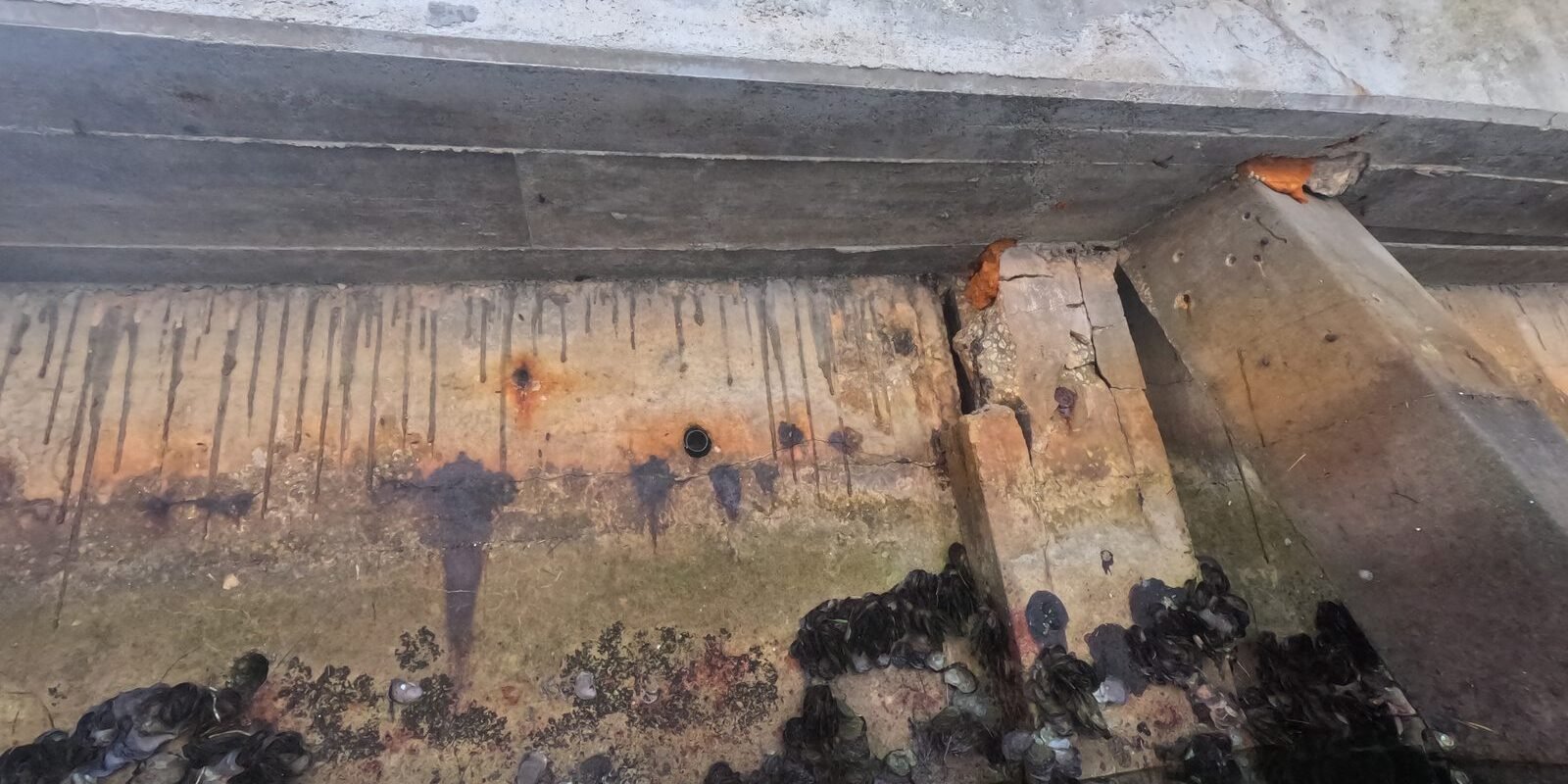
A seawall inspection after a hurricane starts with a visual survey of the cap, panels, and soil line, followed by a structural check of piles, tiebacks, and drainage, and ends with an engineer-sealed report ranking urgency. Souffront Contractors performs these inspections as a flat fee, typically completed within days of a storm passing, with priority scheduling for walls showing visible movement or soil loss.
Key takeaways
- Post-storm seawall inspections check the cap, panels, piles, tiebacks, drainage, and adjacent soil for movement, cracking, or voids.
- A Florida-licensed structural engineer inspects in person — this is not a drone flyover or a phone consultation.
- Soil loss behind the wall (not the wall itself cracking) is often the first sign of hidden failure after a hurricane.
- Inspection cost is a flat fee, typically $1,500–$3,000 depending on complexity, quoted before the site visit — never priced per linear foot.
- Insurance claims for storm damage generally require a dated, engineer-sealed report as supporting documentation.
Why seawalls need inspection after a hurricane
Storm surge, wave action, and rapid water-level swings put enormous lateral pressure on a seawall that normal daily tides never produce. A wall can survive a hurricane visually intact and still have lost soil behind it, sheared a tieback, or developed a hairline crack that will widen over the following months. Waiting until damage is obvious on the surface often means the structural problem has already progressed.
Any seawall contractor who has worked hurricane season in South Florida will tell you the same thing: the walls that fail catastrophically are rarely the ones that failed suddenly. They are the ones nobody inspected after the last storm.
What the inspection actually covers
1. Visual survey of the cap and panels
The engineer walks the full length of the wall looking for new cracking, spalling, displacement, or separation at the panel joints. Any deviation from the wall’s pre-storm condition — even a fraction of an inch — gets documented and measured.
2. Soil line and voids
This is the step homeowners most often skip on their own. The engineer checks the ground immediately behind the wall for depressions, sinkholes, or soft spots — signs that soil has washed through gaps in the panels or under the cap during storm surge. A sunken paver or a soft patch of lawn near the wall is frequently the first visible clue of a much larger problem below grade.
3. Piles and tiebacks
Pile-supported seawalls get checked for leaning, cracking, or exposed rebar at the king and batter piles. Cast-in-place bulkheads don’t have piles, but they do rely on buried tiebacks — the anchor rods that hold the wall against soil pressure — and those get checked for tension loss or corrosion at any accessible point.
4. Drainage
Weep holes and drainage jets need to be clear. If storm debris or silt has clogged them, hydrostatic pressure builds up behind the wall between rain events, which accelerates the next failure.
5. Below-waterline review, if needed
Walls with visible surface damage or a history of prior repairs may need a dive inspection to check the toe of the wall and any submerged panel sections that can’t be assessed from the cap.
Who should do a seawall inspection and why it matters
A licensed engineer isn’t just checking boxes — a sealed report is what insurance carriers, HOA boards, and county permitting offices actually rely on. Someone without an engineering license can tell you a wall “looks fine,” but that opinion carries no legal or technical weight if you later need to file a claim, apply for a repair permit, or defend a decision to a board. A special inspector credential matters here too, since certain repair and permitting processes in Miami-Dade and Broward require sign-off from someone holding that specific designation.
Timeline: how soon after a storm should you schedule
- Within 1–2 weeks: ideal window for a visual and structural check while storm evidence (soil disturbance, debris lines, fresh cracking) is still easy to identify.
- Within 30 days: still valuable, especially for insurance documentation, but some fresh evidence may have eroded or been cleaned up.
- Before hurricane season closes: if you missed the early window, get it done before the next named storm adds new stress to an already-weakened wall.
What a homeowner or HOA should have ready
- Any prior inspection or repair reports for the same wall
- Photos taken immediately before and after the storm, if available
- Insurance policy details, if the inspection is being used to support a claim
- Access arrangements for neighboring properties if the wall is shared or continuous
What happens after the inspection
The engineer delivers a sealed report ranking each finding by urgency — immediate, short-term, or long-term — along with photos and a plain-language explanation of what was found. If seawall repair is warranted, that report becomes the basis for a repair scope and, where applicable, the permit application. Property managers overseeing multiple waterfront parcels, particularly in Fort Lauderdale and along Miami-Dade’s coastline, often use this same documentation to satisfy HOA board reporting requirements after a storm event.
Talk to a Florida-licensed engineer
If a hurricane has passed through your area and your seawall hasn’t been checked, don’t wait for visible cracking to confirm there’s a problem. Souffront Contractors inspects, engineers, permits, and builds as one company, with a fixed-fee inspection quoted upfront and a sealed report delivered fast. Schedule below or call (877) 420-7220.
Frequently asked questions
How soon after a hurricane should I get my seawall inspected?
Within one to two weeks is ideal, while storm evidence like soil disturbance and fresh cracking is still visible. If you miss that window, an inspection within 30 days is still valuable, especially for insurance documentation.
What does a seawall inspection after a hurricane cost?
A residential seawall inspection is a flat fee, typically $1,500–$3,000 depending on the complexity of the inspection, including whether a below-waterline dive is needed. It is quoted before the site visit and is never priced per linear foot.
Can I just look at my seawall myself instead of hiring an inspector?
A visual check can catch obvious cracking, but most post-storm failures start with soil loss behind the wall or tieback damage below grade — neither is visible without a trained eye, and neither carries any weight with insurers or permitting offices without an engineer’s seal.
What are the warning signs a seawall was damaged in a storm?
Watch for new cracks or gaps at panel joints, a sunken or soft area of lawn near the wall, leaning or visibly displaced sections, and standing water that used to drain normally.
Do I need a permit to repair storm damage to my seawall?
In most cases, yes. Miami-Dade and Broward both require permitting for seawall repair work, and the inspection report is typically the document that supports the permit application.
Will my insurance cover seawall damage from a hurricane?
Coverage depends on your specific policy and whether the damage is classified as storm-related versus pre-existing wear. A dated, engineer-sealed inspection report is generally the documentation insurers require to evaluate a claim.
Is a pile-supported seawall inspected differently than a bulkhead?
Yes. Pile-supported walls get checked for leaning or cracked king and batter piles, while cast-in-place bulkheads have no piles but rely on buried tiebacks, which get checked for tension loss or corrosion instead.
What happens if the inspection finds a problem?
The engineer’s report ranks findings by urgency — immediate, short-term, or long-term — and that scope becomes the basis for repair planning and permit submission if repair work is needed.
About Souffront Contractors Inc.: a Florida-licensed structural engineering and marine construction firm serving Miami-Dade, Broward, and Palm Beach counties. Arrange a seawall inspection in Broward County with same-week scheduling — see our seawall contractors page or call (877) 420-7220.
Got a seawall or structural question?
Five fields. Same business day from a Florida-licensed engineer, routed into our dispatch CRM in real time.
- Same business dayAcknowledgment from a Florida licensed engineer — Mon–Fri 8 AM–5:30 PM.
- Engineer-sealed reportAccepted by carriers, building departments, and real-estate transactions.
- Fixed-fee proposalNo hourly billing. Repair scope priced line-by-line.