
Sheet Pile vs. Panel-and-Pile Seawalls: How Each Fails
Compare sheet pile and panel-and-pile seawall failure modes in South Florida. Learn the warning signs a licensed structural engineer looks for first.
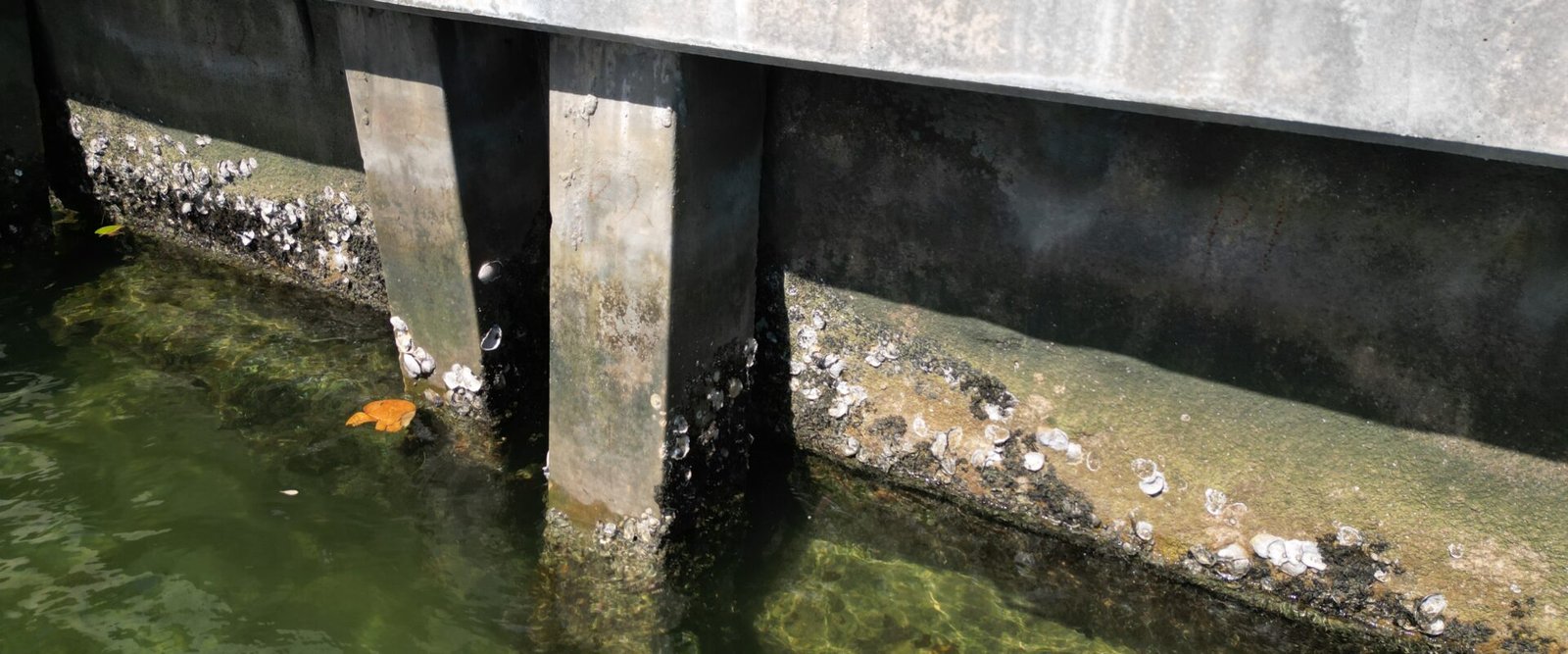
Sheet pile seawalls and panel-and-pile seawalls fail in different ways because they carry soil pressure differently. Sheet pile walls fail through corrosion thinning, wall rotation, and interlock separation; panel-and-pile walls fail through panel cracking, king pile deterioration, and tieback corrosion. Along the Souffront Contractors service corridor from Coral Gables to Key Biscayne, both systems are common, and a Biscayne Bay property’s tidal exposure and canal salinity determine which failure mode shows up first.
Key takeaways
- Sheet pile seawalls are continuous interlocking sections; panel-and-pile seawalls are concrete panels slotted between vertical king piles.
- Sheet pile walls typically fail from corrosion (steel) or UV/impact damage (vinyl), leading to bowing, rotation, or interlock separation.
- Panel-and-pile walls typically fail from concrete spalling on the panels or king piles, and from corroding steel tiebacks that lose their grip on the wall.
- In Biscayne Bay corridor canals, brackish water and tidal cycling accelerate both corrosion and concrete deterioration compared to dry-land structures.
- A soil-side void behind a leaning or bowing wall is a structural emergency on either system — it means the wall is actively losing what it was built to hold back.
Sheet pile seawalls: how they’re built
A sheet pile seawall is a continuous run of interlocking sections — steel, vinyl, or concrete sheet piles — driven side by side into the seabed to form one solid wall. There is no separate cap-and-panel system; the sheet itself is the structure, usually tied back with a horizontal wale and anchor rods to a deadman anchor buried in the upland soil. Sheet pile is common on narrower canal lots in Coral Gables, North Bay Village, and Belle Isle, where a continuous wall fits the property line cleanly.
Panel-and-pile seawalls: how they’re built
A panel-and-pile seawall uses vertical king piles (concrete or steel) driven at regular intervals, with precast concrete panels slotted between them to hold back the soil. A cast concrete cap ties the tops of the piles and panels together, and steel tiebacks anchor the wall to a deadman or continuous anchor system inland. This is the more common configuration on older Miami-Dade waterfront property, including much of the Biscayne Bay island and mainland corridor.
How sheet pile seawalls fail
- Corrosion thinning (steel sheet pile): Saltwater and brackish canal water corrode steel sheet pile from both the water side and the buried soil side. As the steel thins, it loses the strength to resist soil pressure, and the wall begins to bow outward.
- Interlock separation: The joints between adjacent sheet pile sections can pull apart from corrosion or from repeated wave and boat-wake loading, opening a gap that lets soil wash out behind the wall.
- Wall rotation: Loss of toe embedment — the sheet driven below the mudline — lets the whole wall rotate forward at its base, even if the visible portion above the waterline still looks straight.
- Anchor rod failure: The steel tie rods connecting the wall to its deadman anchor corrode over time. When a rod fails, the wall loses a restraint point and localized bulging follows.
- UV and impact cracking (vinyl sheet pile): Vinyl sheets resist corrosion but are vulnerable to UV embrittlement above the waterline and impact cracking from boat contact or debris during storms.
How panel-and-pile seawalls fail
- Panel cracking and spalling: Rebar inside the precast panels corrodes and expands, cracking the surrounding concrete. Rust staining bleeding through a panel face is the visible signal that this process has already started.
- King pile deterioration: The vertical piles carry the structural load of the whole panel system. Cracking, exposed rebar, or spalling at a king pile is more serious than the same damage on a panel, because the pile is load-bearing for multiple panel spans.
- Tieback corrosion and loss: The steel rods anchoring the cap to the deadman system corrode in the same soil and groundwater conditions that attack rebar. A failed tieback shows up as forward lean or bulging concentrated near the cap.
- Cap separation: The cast concrete cap ties the whole system together. Cracking or separation at the cap-to-panel joint lets water intrude behind the wall and accelerates every other failure mode on this list.
- Panel-to-pile gap: Where a panel has shifted or a king pile has moved, a visible gap opens between panel and pile, giving soil a direct path to wash out with every tide cycle.
Why the failure mode matters for your repair
The failure mode determines the repair, not the other way around. A corroding steel tieback on a panel-and-pile wall can sometimes be replaced without touching the panels themselves. A rotated sheet pile wall with lost toe embedment usually needs a new sheet driven in front of or behind the existing one, because the original sheet no longer has the embedment to resist soil pressure on its own. Diagnosing which failure mode is active — and how far it has progressed — is what a seawall inspection is for. Guessing from the cap line alone misses failures that are happening below the mudline, out of view.
Biscayne Bay corridor conditions accelerate both systems
Salinity, tidal cycling, and canal water chemistry in the Coral Gables, Coconut Grove, and Key Biscayne corridor are harder on both sheet pile and panel-and-pile systems than dry-land concrete structures ever see. The wet-dry cycle at the tide line is where corrosion and spalling both concentrate, which is why the visible damage on most South Florida seawalls clusters in a band right at or just above mean high water. A wall built to Florida Building Code HVHZ standards resists this better than an older wall built before current code, but no seawall material is immune to decades of saltwater exposure.
Talk to a Florida-licensed engineer
If your wall is bowing, cracking, or showing rust staining, the fastest way to know what’s actually happening below the waterline is a licensed structural engineer’s inspection, not a guess from the seawall repair companies who also bid the work. Souffront Contractors is a Florida-licensed structural engineer inspecting your seawall repair needs and, where the wall is compromised, the same firm that can carry the project through seawall construction. Inspections are a flat fee, typically $1,500–$3,000 depending on complexity, quoted upfront before any site visit, with a same-business-day response. The form below gets you started.
Frequently asked questions
Which fails faster, a sheet pile seawall or a panel-and-pile seawall?
Neither system inherently fails faster — it depends on material, age, and exposure. A steel sheet pile wall in a high-salinity canal can corrode through in 25-35 years, while a well-built panel-and-pile wall with intact tiebacks can last 40-50 years or more. The deciding factor is usually maintenance history and water chemistry, not which system was chosen originally.
Can I tell which type of seawall I have just by looking at it?
Usually, yes. A panel-and-pile wall shows visible seams where individual concrete panels meet, with a cap running along the top and vertical pile lines at regular intervals. A sheet pile wall is a continuous, mostly seamless surface — corrugated steel, flat vinyl, or continuous concrete — with no repeating panel joints.
What is a tieback and why does it matter?
A tieback is the buried steel rod that anchors a seawall to a deadman anchor set back in the upland soil, resisting the outward push of soil and water pressure. When a tieback corrodes and fails, the wall loses a critical restraint and typically starts to bulge or lean near where that tieback was connected.
Is rust staining on a seawall panel always a serious problem?
Rust staining means the rebar inside the concrete has started corroding and expanding, which will eventually crack the panel from the inside out. It is not always an emergency, but it should never be ignored — a licensed engineer can assess how far the corrosion has progressed and whether the wall needs monitoring or immediate repair.
Does a bowing seawall mean it’s about to collapse?
Not necessarily, but bowing means the wall is actively deflecting under soil pressure it was not designed to carry in its current condition, and that condition typically worsens over time. A structural engineer inspection can determine whether the bowing is early-stage and monitorable or has progressed to the point where repair or replacement is urgent.
Can a panel-and-pile seawall be repaired without replacing the whole wall?
Often, yes. Localized panel replacement, king pile repair, or tieback replacement can address isolated failures without rebuilding the full wall, provided the damage hasn’t progressed to widespread structural loss. An inspection determines whether targeted repair is still an option or full replacement is the safer path.
How often should a seawall be inspected in the Biscayne Bay corridor?
Most waterfront properties in Miami-Dade’s canal and bay corridor benefit from a structural inspection every 3-5 years, or sooner after a major storm, visible cracking, or a noticeable change in wall alignment. Properties with older seawalls approaching 30-40 years of age should inspect more frequently as material fatigue accelerates.
Do HOA and condo boards need to know which seawall type they have before bidding a repair?
Yes. Bids that don’t specify the seawall system and its actual failure mode are difficult to compare fairly, since sheet pile repair and panel-and-pile repair use different materials, equipment, and labor. An engineer-sealed inspection report that identifies the system and the specific failure mode gives a board a scope every contractor can bid against equally.
Related from Souffront Contractors: HOA and condo board compliance reports — all delivered by the same Florida-licensed structural engineering and marine construction team. Call (877) 420-7220.
About Souffront Contractors Inc.: a Florida-licensed structural engineering and marine construction firm serving Miami-Dade, Broward, and Palm Beach counties. Partner with a full-service marine construction company for docks, seawalls, and waterfront structures — see our seawall contractors page or call (877) 420-7220.
Got a seawall or structural question?
Five fields. Same business day from a Florida-licensed engineer, routed into our dispatch CRM in real time.
- Same business dayAcknowledgment from a Florida licensed engineer — Mon–Fri 8 AM–5:30 PM.
- Engineer-sealed reportAccepted by carriers, building departments, and real-estate transactions.
- Fixed-fee proposalNo hourly billing. Repair scope priced line-by-line.