
What’s Inside a Seawall Permit Submittal in Florida?
A Florida seawall permit submittal requires more than drawings. See exactly what Miami-Dade and Broward require — and why incomplete packages stall projects for months.
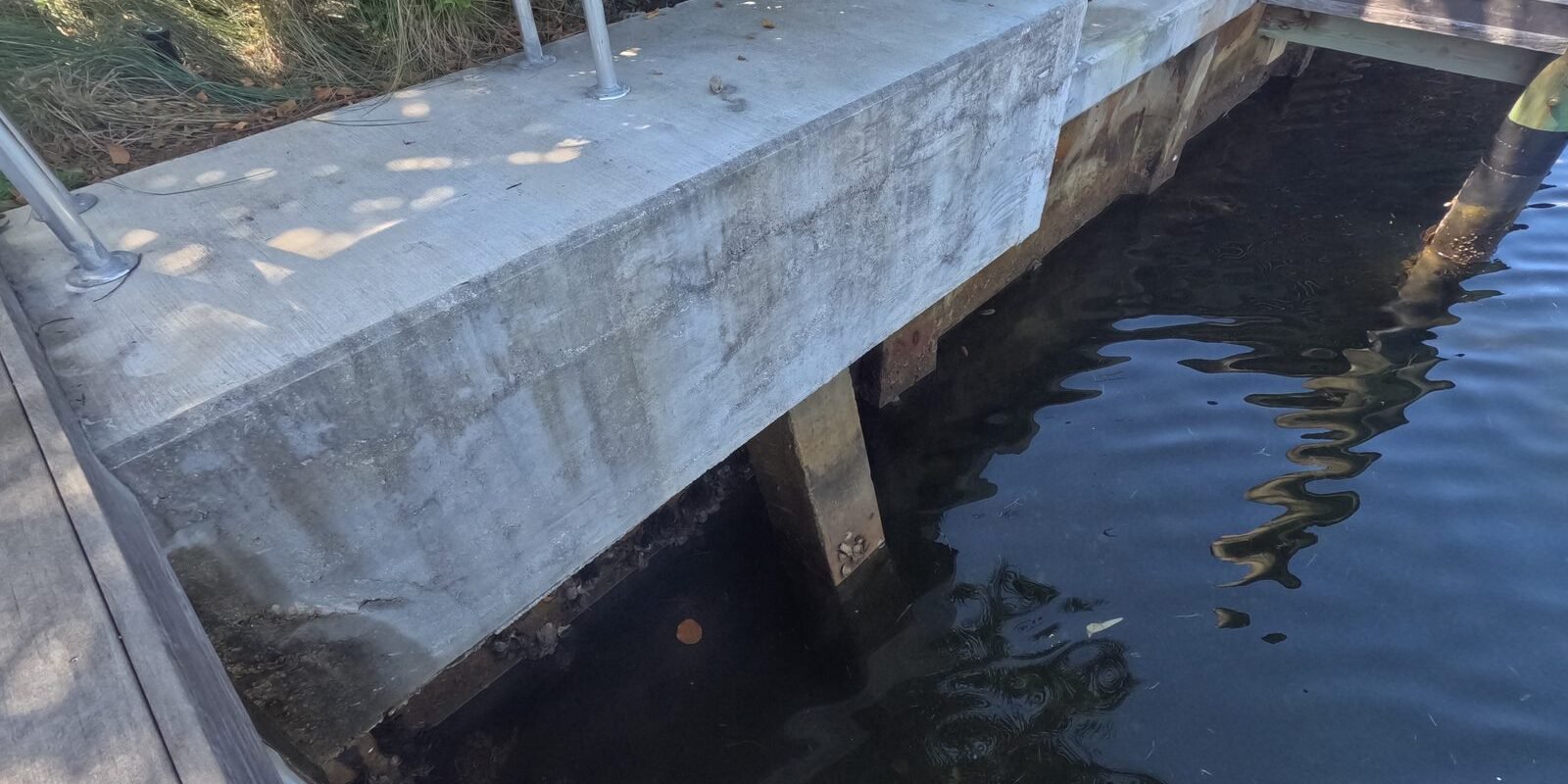
A seawall permit submittal in Florida is a package of engineering documents, agency approvals, and legal forms — not just a set of drawings. In Miami-Dade and Broward, an incomplete submittal gets rejected on intake, and every correction cycle adds weeks or months to a project timeline. Souffront Contractors, a Florida-licensed structural engineering and marine construction firm, assembles and coordinates these submittals every week across the Biscayne Bay corridor — and the gaps we see in rejected packages are almost always the same ones.
Key takeaways
- A seawall permit submittal is a multi-document package: engineering drawings, calculations, geotechnical data, agency sign-offs, and property records — not a single set of plans.
- Miami-Dade DERM and the city building department are separate reviewers; a seawall near navigable water may also require a U.S. Army Corps of Engineers permit or a Florida DEP consent of use.
- Missing one document — a signed and sealed calculation package, a survey, a DERM pre-application clearance — stops the review clock entirely.
- Tieback walls, anchored sheet-pile walls, and concrete panel systems each require different structural calculations and details; the submittal must match the actual scope.
- A construction management engagement covers permit coordination from the first pre-application meeting through the issued permit — one point of contact for the board, not a relay race between consultants.
Why seawall permits in South Florida are more complex than most owners expect
A seawall is not a fence. It sits at the edge of a state water body, it affects neighboring properties, and it is subject to overlapping jurisdictions that do not talk to each other. The building department reviews structural safety. Miami-Dade DERM reviews environmental impact and setbacks. The Florida DEP may require a consent of use if the work touches sovereignty submerged lands. The U.S. Army Corps of Engineers has its own review if the waterway is navigable.
Every one of those agencies wants different documents in different formats, and they review in parallel — not sequentially. If you send the building department a package missing the DERM pre-approval reference number, the structural review still runs, but the permit will not issue until the environmental piece closes. Boards and property managers often do not know which agency is the bottleneck until months have passed.
In Coral Gables, Key Biscayne, Coconut Grove, and along the canal-front neighborhoods of Miami, most seawall projects touch at least three of these review layers. Island properties — Star, Palm, Hibiscus, the Venetian Islands — frequently require all four.
The core documents every seawall permit submittal must include
The exact list varies by municipality and wall type, but the following are required in virtually every Miami-Dade and Broward seawall project. Missing any one of them causes a rejection or a request for additional information (RAI) that resets the clock.
1. Signed and sealed structural drawings
These are the construction documents prepared and signed by a Florida-licensed structural engineer. They must show plan views, cross-sections, elevations, and details for every structural component: the wall panels or sheet pile, the tieback system (the buried anchor rod and deadman or anchor wall that resists soil pressure), the waler (the horizontal beam connecting tiebacks along the wall face), and the cap beam. Generic manufacturer details stapled to an old survey are not sufficient — the drawings must be project-specific and bear the engineer’s seal and signature.
2. Structural calculations
The drawings show what gets built. The calculations prove why it is adequate. The calculation package must address active and passive soil pressures, tieback loads and spacing, cap beam sizing, and — for concrete panel systems — panel section modulus and embedment depth. Reviewers check that the design assumptions match site conditions. If the geotechnical report shows different soil than what the calculations assumed, the package comes back.
3. Geotechnical report
The building department and the structural engineer both need to know what is actually in the ground. A geotechnical report for a seawall project typically includes Standard Penetration Test (SPT) borings near the wall alignment, soil classification by layer, and bearing capacity data. For Biscayne Bay canal-front sites, it is common to find soft organic material or loose shell fill behind the existing wall — data the calculations must account for. A report from five years ago on a different section of the property is rarely acceptable to the reviewer.
4. Boundary survey
A current boundary survey — prepared and sealed by a Florida-licensed surveyor — establishes the seawall’s position relative to the property line, the mean high water line, the right-of-way, and neighboring structures. DERM uses the survey to confirm setbacks. The building department uses it to locate the work on the site. An outdated survey or one that does not show the existing seawall’s location will trigger an RAI immediately.
5. DERM pre-application review or environmental clearance
In Miami-Dade, seawall work within or adjacent to a canal or bay generally requires a DERM environmental resource permit or at minimum a clearance letter confirming the project qualifies for an exemption. This is a separate filing from the building permit — it has its own application, its own fee, and its own review timeline. Many boards do not know it exists until the building department asks for it. Starting the DERM process concurrently with the structural design is the only way to avoid losing two or three months waiting for it after the drawings are finished.
6. Florida DEP consent of use or coastal permit (where applicable)
If the project involves sovereignty submerged lands — the bay bottom owned by the state — a DEP consent of use is required before any construction begins. This applies to projects that extend or relocate a seawall waterward, add a new structure over water, or disturb the bottom. The Florida DEP review is independent of the building department, and the consent of use must be in hand before the permit issues.
7. USACE permit or nationwide permit verification
In-kind seawall repair on navigable waters often qualifies for a U.S. Army Corps of Engineers Nationwide Permit (NWP 3 for maintenance, NWP 13 for bank stabilization). The submittal package should include documentation confirming which NWP applies and that the project meets its conditions, or an Individual Permit application if the scope does not qualify. Reviewers expect to see this resolved — not left as “to be determined.”
8. Contractor license documentation
The permit must be pulled by a licensed contractor. The submittal includes a copy of the contractor’s Florida license, the contractor’s insurance certificates (general liability and workers’ compensation at the limits the municipality requires), and a notarized Owner Authorization form if the contractor is not the property owner. For condominiums and HOAs, the authorization must be signed by an authorized officer of the association — not just a board member acting individually.
9. Notice of Commencement (NOC)
Florida law requires a Notice of Commencement to be recorded with the county before construction begins on a permitted project above a threshold cost. The NOC protects the owner against mechanic’s liens from subcontractors and suppliers the owner may not know about. It must name the owner, the contractor, the lender (if any), and the surety (if any). It is recorded, not just filed — a copy of the recorded NOC goes to the building department before the first inspection.
10. Product approvals (Florida Product Approval or HVHZ)
South Florida sits in the High Velocity Hurricane Zone (HVHZ). Any prefabricated structural component — vinyl sheet pile, composite panel systems, hardware — must carry a Florida Product Approval or a Miami-Dade Notice of Acceptance (NOA). The submittal must reference the approval number for each product. A contractor who switches to a different product in the field without updating the permit is creating an unpermitted condition — a problem the board discovers at closeout when the inspector flags it.
What a rejected submittal actually costs a board
Each correction cycle at Miami-Dade typically costs four to eight weeks. In practice, boards dealing with a seawall that is actively failing — one with soil loss behind the cap, or panels that have begun to rotate — cannot afford that delay. A single RAI round on a missing DERM reference can push a project from a spring start into hurricane season.
The less obvious cost is the change orders that follow. When a contractor is waiting on a permit, they reprice. Material costs shift. Subcontractors move to other jobs. The board that assembled a tight competitive bid in January is negotiating from weakness by May. A complete, first-pass submittal is not a paperwork exercise — it is schedule protection and cost protection.
How Souffront handles permit coordination for boards and property managers
The engineer-led construction management service covers the entire permit path: pre-application meetings with DERM and the building department, assembly of the full submittal package, tracking RAI responses, and coordinating with the DEP or USACE where required. The board’s property manager gets one point of contact — a Florida-licensed structural engineer who knows what every agency wants — rather than chasing a designer, a permit runner, and a contractor who each own one piece of the process.
Because Souffront Contractors both engineers and builds seawall repair and seawall construction projects, the engineer preparing the submittal has actually installed tieback systems, poured caps, and stood in front of a building department reviewer asking why a panel detail does not match the cross-section. That experience shows in the package — and in the first-pass approval rate. If a board engages Souffront for oversight only and a separate contractor performs the work, that arrangement is disclosed in writing before the engagement starts.
As a seawall contractor and engineering firm operating across Miami-Dade, Broward, and Palm Beach, we pull permits in these jurisdictions regularly. The requirements listed above reflect what reviewers are actually asking for in 2025 and 2026 — not what the code says in isolation.
Talk to a Florida-licensed structural engineer
If your association is planning a seawall project and you are not sure whether you have the full permit package — or why a previous submittal came back — call us at (877) 420-7220 or use the form below. We review your existing documents, identify what is missing, and give you a plain-language answer the same business day. Permit coordination and construction management are scoped and quoted upfront, before the project starts.
Frequently asked questions
What is a seawall permit submittal in Florida?
A seawall permit submittal is the complete package of documents a property owner or contractor submits to the local building department — and to any relevant environmental agencies — before seawall construction or major repair can begin. In South Florida it typically includes sealed structural drawings, structural calculations, a geotechnical report, a boundary survey, environmental agency clearances (DERM, DEP), contractor license documents, and product approvals. All documents must be current and project-specific; missing one stops the review.
Does a seawall repair in Miami require a permit?
Yes, in virtually all cases. Miami-Dade and most municipalities in Broward require a building permit for any structural seawall repair — including tieback replacement, cap removal and replacement, or panel repair. Cosmetic patching of minor surface cracks may be exempt, but any work that touches the structural system requires a permit. Unpermitted seawall work creates title and insurance problems that surface at the next property sale or financing event.
What is Miami-Dade DERM and why does it matter for a seawall permit?
Miami-Dade DERM (Department of Regulatory and Economic Resources, Division of Environmental Resources Management) is the county agency that regulates work in and adjacent to Miami-Dade’s coastal and inland waterways. For a seawall project, DERM reviews whether the work complies with environmental setbacks, affects mangroves or seagrass, or requires an environmental resource permit. The building department will not issue a final permit for work in DERM’s jurisdiction without DERM clearance or an approved environmental resource permit.
How long does a seawall permit take in Miami-Dade or Broward?
A complete first-pass submittal in Miami-Dade typically takes eight to fourteen weeks from intake to issued permit — longer if DERM or DEP review is required in parallel. Each Request for Additional Information (RAI) cycle adds four to eight weeks. Broward municipalities vary; some are faster, some are slower. Projects on navigable water that require a USACE permit can add several additional months if an Individual Permit (rather than a Nationwide Permit) is required. Starting the permitting process while designs are still being finalized — rather than after — is the only way to compress the timeline.
What is a Notice of Commencement and do I need one for a seawall?
A Notice of Commencement (NOC) is a legal document recorded with the county before construction begins on a permitted project above Florida’s threshold cost (currently $2,500). For seawall projects — which routinely exceed $50,000 — the NOC is required. It identifies the owner, contractor, lender, and surety, and it is the mechanism Florida uses to protect property owners from mechanic’s liens filed by subcontractors or suppliers they may never have met. A copy of the recorded NOC must be posted at the job site and submitted to the building department before the first inspection.
What USACE permit is needed for seawall work on a navigable waterway?
Most in-kind seawall repair and replacement on navigable waters in South Florida qualifies for a U.S. Army Corps of Engineers Nationwide Permit — typically NWP 3 (maintenance) or NWP 13 (bank stabilization). These are general permits with specific conditions the project must meet. Work that changes the footprint of the structure, adds new fill waterward of the existing wall, or affects special aquatic sites may require an Individual Permit, which carries a much longer review timeline. The engineer of record should confirm which permit category applies before the submittal is assembled.
Can an HOA or condo association pull the permit, or does the contractor do it?
In Florida, the building permit for seawall construction or major repair must be pulled by a licensed contractor — not by the association directly. The contractor takes responsibility for performing the work in accordance with the permitted drawings. The association’s role is to authorize the contractor (via a signed Owner Authorization form) and to ensure the contractor’s license and insurance are current before the permit application is submitted. Boards should request copies of the issued permit, inspection records, and the final certificate of completion for their records.
What is a seawall submittal rejected for most often?
The most common rejection reasons we see across Miami-Dade and Broward are: structural drawings that do not match the geotechnical conditions on site, a missing or outdated boundary survey, no DERM clearance reference in the building department application, product approval numbers missing for HVHZ-rated components, and contractor insurance certificates that are expired or below
Related from Souffront Contractors: HOA and condo board compliance reports — all delivered by the same Florida-licensed structural engineering and marine construction team. Call (877) 420-7220.
On a seawall or marine project, construction management is also called owner’s representative or owner’s agent work: the construction manager is the board’s single point of contact, reviewing bids, submittals, pay applications and change orders on the owner’s behalf rather than the contractor’s.
About Souffront Contractors Inc.: a Florida-licensed structural engineering and marine construction firm serving Miami-Dade, Broward, and Palm Beach counties. Work with a Florida-licensed seawall contractor who is also the engineer of record — see our seawall contractors page or call (877) 420-7220.
Got a seawall or structural question?
Five fields. Same business day from a Florida-licensed engineer, routed into our dispatch CRM in real time.
- Same business dayAcknowledgment from a Florida licensed engineer — Mon–Fri 8 AM–5:30 PM.
- Engineer-sealed reportAccepted by carriers, building departments, and real-estate transactions.
- Fixed-fee proposalNo hourly billing. Repair scope priced line-by-line.