
What to Check Before Approving a Seawall Pay Application
What Miami condo boards should verify before signing a seawall pay application: schedule of values, lien waivers, and site checks that protect reserves.
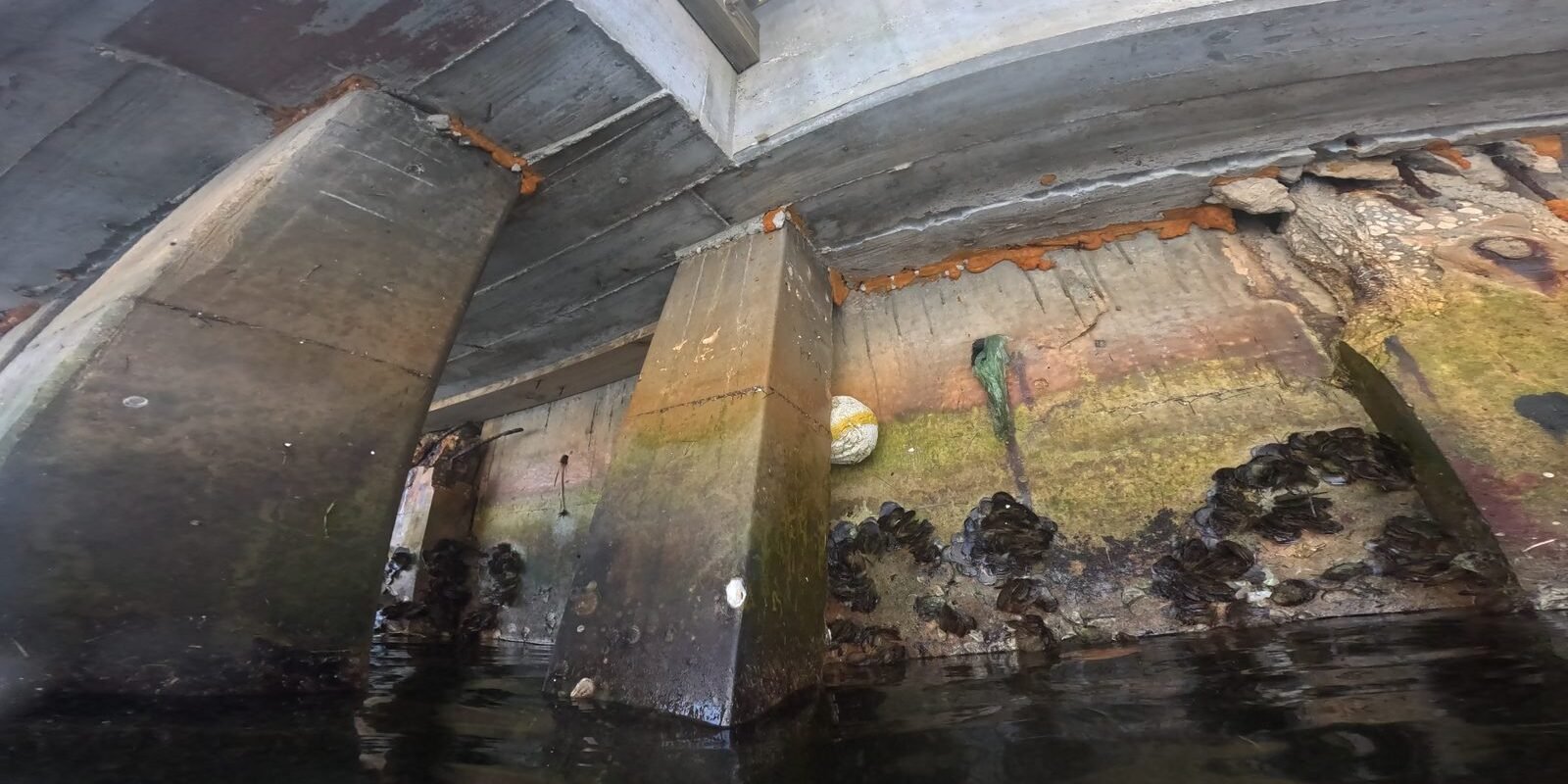
Before your board approves a seawall pay application, require three things: a schedule of values that matches what was bid, a signed conditional lien waiver from the contractor and every sub, and confirmation from someone who has actually walked the site that the work billed is the work in the ground. Boards in Coral Gables, Key Biscayne, and along the rest of Biscayne Bay sign six-figure pay applications every season based on a one-page invoice and a phone call — and by the time a shortfall shows up, the money is already spent. An engineer-led construction management review, done by a Florida-licensed structural engineer before each payment, is what closes that gap.
Souffront Contractors gets called into these projects two ways: as the seawall contractor building the wall, or as the board’s owner’s representative overseeing someone else’s crew. Both roles use the same pay application checklist below. If your board wants an engineer on your side of the table only, say so up front — a legitimate firm will put that in writing and disclose any interest in bidding the work itself.
Key takeaways
- Never approve a seawall pay application on the contractor’s invoice alone — match it against the schedule of values line by line.
- Require a signed conditional lien waiver from the general contractor and every sub before releasing payment, under Florida’s construction lien law.
- Hold retainage — typically 10 percent — until substantial completion and a clean punch list, not before.
- Someone who reads structural drawings should confirm percent-complete in the field, not just on paper.
- A structural engineer inspection at pour, tieback, and backfill milestones catches problems a pay application alone will not.
Why a pay application needs more than a signature
A pay application is a request for money, not proof of work. The contractor fills it out, states a percent complete for each line item, and sends it to the board for signature. Nothing about the form requires anyone to have set foot on the seawall that week.
We’ve walked seawalls where the pay application listed 70 percent complete on cap concrete, and the cap forms were still stripped and empty. We’ve seen backfill placed over tiebacks before proof-load testing was documented — work billed as done, with no clean way to verify the anchor was ever tightened to spec once the soil covers it. The pay application doesn’t know any of that. Only someone standing on site does.
Match the application to the schedule of values and the submittals
Before your board signs, three documents should already exist and should agree with each other:
- The schedule of values — the dollar breakdown of the contract, agreed at signing, that every future pay application gets measured against.
- The approved submittals — the actual specified materials (panel thickness, tieback rod diameter, cap reinforcing) the contractor is supposed to be installing.
- Field photos or a site log tied to specific dates, ideally from an independent reviewer rather than the contractor’s own progress photos.
If a pay application claims 100 percent on “seawall cap installation” and the schedule of values allocated $180,000 to that line, that number should track hours and material actually delivered, not a percentage someone typed into a spreadsheet. A seawall project management engineer checks the math and the field condition together, before the number goes to the board.
Retainage and lien waivers protect the association’s money
Retainage. Most Florida construction contracts hold back 10 percent of each payment until substantial completion. That reserve is what gives the board a real reason to make sure punch-list items get finished before the final dollar goes out. Releasing full retainage early removes that reason — it happens more often than boards realize, usually because no one on the board is tracking it against the contract.
Lien waivers. Under Florida’s construction lien law, a subcontractor or supplier who isn’t paid can file a claim of lien against the property — even if the association already paid the general contractor in full. A conditional waiver, signed by the general contractor and every sub who worked that pay period, should arrive with each application before the board releases funds. Without it, the board has no proof the money is reaching the people who did the work.
What should happen on site before the board signs
A pay application should never be the first time anyone independent of the contractor looks at the work. At minimum, someone should confirm, in person, at these points:
- Tieback installation and proof-load testing, before backfill covers the anchors
- Reinforcing steel placement and cover, before the cap or panel pour
- The concrete pour itself, with cylinder samples pulled for strength testing
- Backfill and compaction behind the new wall
- Final grade, drainage, and cap finish at substantial completion
Some of these — proof-load testing on tiebacks, reinforcing steel placement, embedment depth — fall under Florida Building Code requirements for special inspection on structural work. A special inspector documents that the work matches the engineered drawings at the exact moment it’s still visible, which is the only window that documentation exists in.
Change orders: a real differing condition, or a bid gap the board now pays for
Change orders arrive on almost every seawall project — soil conditions differ from the geotechnical report, an existing structure interferes with the new one, permitting adds a requirement no one bid. Some of that is legitimate. Some of it is a contractor recovering margin left on the table at bid time, relabeled as a “differing condition” after the fact.
Before approving a change order tied to a pay application, the board should get a written answer to two questions: what specifically changed from the bid documents, and where’s the field evidence — photos, soil logs, an engineer’s note — that it actually happened. A change order with no evidence attached is a number, not a fact.
Who reviews the pay application — and why that person’s role matters
The person checking a seawall pay application against the schedule of values, the submittals, and the field condition should be someone who reads structural drawings and has no financial stake in approving it quickly. On many association projects, that’s nobody — the treasurer signs what the contractor sends, because no one else on the board is qualified to question it.
That’s the actual job of an owner’s representative: one Florida-licensed structural engineer working for the association, not the contractor, reviewing submittals, standing on site at the milestones that matter, and telling the board plainly whether a pay application matches reality. If a firm offering that service also performs seawall repair or new construction, any interest in bidding that specific project should be disclosed to the board in writing before the engagement starts — not discovered later. A board is free to hire that firm strictly for oversight, with no construction role at all.
Talk to a Florida-licensed engineer
If your board is signing seawall pay applications with no independent check against the schedule of values, submittals, and field condition, that’s a fixable gap. Souffront Contractors reviews pay applications, change orders, and site progress for HOA and condo boards across Miami-Dade and Broward, scoped and quoted upfront before the project starts. Call (877) 420-7220 or use the form below to get a Florida-licensed structural engineer on your side of the table.
Frequently asked questions
What is a seawall pay application?
A pay application is the contractor’s periodic request for payment on a construction contract. It lists each line item from the schedule of values, states a percent complete for that period, and asks the owner — in this case, the condo or HOA association — to release the corresponding amount.
Who should review a pay application before the board signs it?
Someone who reads structural drawings and has no financial interest in approving it, ideally a Florida-licensed structural engineer acting as the board’s owner’s representative. That person checks the pay application against the schedule of values, the approved submittals, and what’s actually visible on site.
How much retainage should a condo board hold on a seawall project?
Most Florida construction contracts hold 10 percent retainage on each payment until substantial completion and a clean punch list. Releasing retainage early, or in full before the project is substantially complete, removes the board’s main reason to get outstanding items finished.
What is a lien waiver, and why does the board need one with every payment?
A lien waiver is a document signed by a contractor or subcontractor confirming they’ve been paid and waiving their right to file a construction lien for that amount. Under Florida’s construction lien law, a subcontractor who isn’t paid can lien the property even if the association already paid the general contractor in full, so a conditional waiver should arrive with every pay application, before funds go out.
What should trigger the board to question a change order?
Any change order with no field evidence attached — no photos, no soil report, no engineer’s note explaining what specifically differed from the bid documents. A legitimate differing-condition change order can be documented; a bid gap dressed up as one usually can’t.
Does hiring an owner’s representative mean the association can’t also hire that firm to build the wall?
No. A board can hire a firm strictly for oversight, with no construction role at all. If a firm offers both seawall construction and owner’s representative services, any interest in bidding a specific project should be disclosed to the board in writing before the engagement starts.
What does construction management cost on a seawall project?
It’s scoped and quoted per project, based on the size of the job and how many site visits and reviews it requires — there’s no flat industry rate. A board should get that number in writing before the project starts, not as a percentage tacked on after the fact.
Why does tieback verification need to happen before backfill?
Once soil covers a tieback, confirming it was installed to the specified tension is difficult and often requires excavation to check. Proof-load testing and inspection have to happen while the anchor is still exposed — it’s one of the site checks that can’t be done after the fact from a pay application alone.
Related from Souffront Contractors: HOA and condo board compliance reports — all delivered by the same Florida-licensed structural engineering and marine construction team. Call (877) 420-7220.
On a seawall or marine project, construction management is also called owner’s representative or owner’s agent work: the construction manager is the board’s single point of contact, reviewing bids, submittals, pay applications and change orders on the owner’s behalf rather than the contractor’s.
About Souffront Contractors Inc.: a Florida-licensed structural engineering and marine construction firm serving Miami-Dade, Broward, and Palm Beach counties. Reach a licensed seawall contractor in Boca Raton and across Palm Beach County — see our seawall contractors page or call (877) 420-7220.
Got a seawall or structural question?
Five fields. Same business day from a Florida-licensed engineer, routed into our dispatch CRM in real time.
- Same business dayAcknowledgment from a Florida licensed engineer — Mon–Fri 8 AM–5:30 PM.
- Engineer-sealed reportAccepted by carriers, building departments, and real-estate transactions.
- Fixed-fee proposalNo hourly billing. Repair scope priced line-by-line.