
What Is a DERM Class I Permit? A Miami Owner’s Guide
What a Miami-Dade DERM Class I permit covers, how it differs from Class II, what documents you need, and how long approval takes for seawall work.
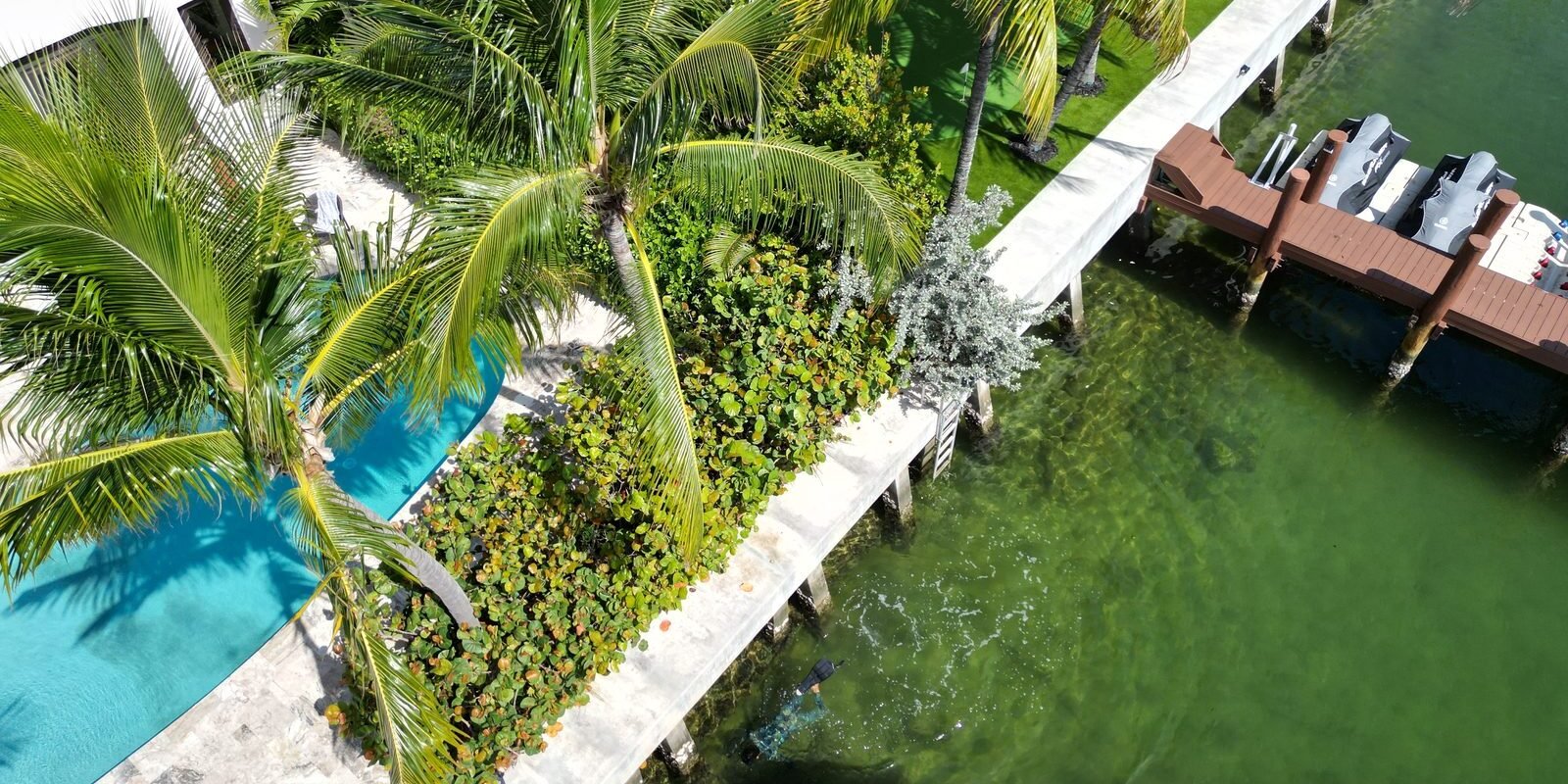
A Miami-Dade DERM Class I permit covers minor, in-kind work on an existing seawall or dock — patching a spalled panel, repairing a cracked cap, replacing rotted decking — without triggering the longer public-notice review that new construction requires. Souffront Contractors pulls these permits regularly for waterfront properties from Coconut Grove to Belle Meade along Biscayne Bay, and the mistake we see most often is an owner assuming “small job” and “no permit needed” mean the same thing in Miami-Dade County. They don’t. Any work in, on, or over tidal water needs DERM sign-off, even a repair you could finish in an afternoon.
Key takeaways
- DERM Class I permits cover minor, in-kind repair work on an existing seawall, dock, or bulkhead — not new construction or footprint expansion.
- Class II (and higher) permits apply to new seawalls, dock additions, or any project that changes the structure’s size, location, or use.
- Class I review is faster because it skips the public-notice period Class II projects require.
- Starting work without a permit — even a “quick fix” — can trigger a stop-work order and a DERM violation with its own fine and correction deadline.
- A complete Class I application needs a scope description, site plan or sketch, photos of existing conditions, and often a sealed drawing from a Florida-licensed structural engineer.
What DERM actually regulates on your seawall
Miami-Dade DERM has jurisdiction over any work that touches tidal water or the land immediately adjacent to it — seawalls, bulkheads, docks, boat lifts, riprap, and shoreline stabilization all fall under its review, regardless of city. A seawall repair on a canal in Coral Gables goes through the same county-level review as one on open Biscayne Bay. The city may issue a separate building permit on top of DERM’s, but DERM’s environmental review is the one owners most often overlook, because it isn’t the permit counter they’re used to dealing with for interior renovations.
DERM’s core question for every application is the same: does this work change the structure, or does it restore it? Restoring what was already there, in the same footprint, with the same materials or a like-for-like equivalent, is the profile of a Class I permit.
Class I vs. Class II — where the line is drawn
Class I is the administrative track. It’s for repair and maintenance work that keeps a structure in its existing footprint and doesn’t add capacity — recapping an existing wall, replacing a section of panel that failed, swapping out corroded tiebacks in the same location, or repairing a dock’s decking and pilings in kind. Because the scope doesn’t change the structure’s size or use, DERM can process it without the public comment period that larger projects require.
Class II and higher apply once a project stops being a repair. New seawall construction, extending a dock, adding a boat lift where none existed, or any expansion of footprint moves the application into a review track that takes longer and may involve additional agencies — Florida DEP or the U.S. Army Corps of Engineers, depending on the water body. If your seawall has failed to the point that full replacement is the honest recommendation rather than repair, expect the permit to move to the Class II track, and plan your timeline around that from day one.
What you need before you apply
A complete Class I package typically includes:
- A written scope of work describing exactly what will be repaired and how, in DERM’s terms — not “fix the wall,” but “remove and replace 24 linear feet of failed cap, in kind.”
- A site plan or sketch showing the work location relative to the property line and the water.
- Current photos documenting the existing condition being repaired.
- A sealed drawing or letter from a Florida-licensed structural engineer describing the repair method, particularly for cap, panel, or tieback work — DERM reviewers want to see that the repair was designed, not just described.
- Proof of property ownership or authorization from the association, if the seawall serves a condo or HOA.
An incomplete application doesn’t get rejected outright — it gets a request for additional information, and the clock effectively resets while you gather it. Submitting a complete package the first time is the single biggest lever an owner has over how fast this moves.
How long it actually takes
Class I review moves faster than Class II precisely because it skips public notice, but “faster” doesn’t mean instant. Straightforward repair applications with a complete package and no outstanding code violations on the property tend to move through administrative review in weeks, not months. Projects that touch a seawall with prior DERM history — an old unpermitted repair, an open violation, or a structure near a seagrass bed or other protected resource — take longer, because the reviewer has more to check before signing off. Hurricane season backlog is real too: DERM’s queue slows every year between June and November as storm-damage repair applications spike.
What happens if you skip the permit
Unpermitted seawall work is one of the more common findings we run into during pre-purchase and post-storm inspections in Miami-Dade. It usually surfaces one of two ways: a neighbor or inspector reports visible construction activity, or it turns up during a title search or refinance when the county’s permit history doesn’t match what’s physically on the property. Either way, the outcome is a DERM violation — a notice requiring the owner to either obtain an after-the-fact permit (with its own fee and, often, a requirement to prove the work meets current standards) or remove the unpermitted work. Selling a waterfront property with an open DERM violation attached is its own problem: buyers’ lenders and title companies flag it, and it routinely delays or kills closings until it’s resolved.
Talk to a Florida-licensed engineer
If you’re staring at a cracked cap or a leaning panel and don’t know whether it’s a Class I repair or something bigger, that’s the first question a Florida-licensed structural engineer should answer — before you talk to DERM, not after. Souffront inspects the wall, tells you honestly which track the repair falls under, and prepares the sealed drawings the permit application needs, all under one fixed fee quoted before the site visit. Fill out the form below and we’ll get a licensed engineer out to your property.
Frequently asked questions
Do I need a DERM permit to repair a small section of my seawall?
Yes. Any work on a seawall touching tidal water in Miami-Dade County requires a DERM permit, regardless of the size of the repair. Small, in-kind repairs typically qualify for the faster Class I review track rather than exempting the work from permitting entirely.
How is a DERM Class I permit different from a Class II permit?
Class I covers minor, in-kind repair and maintenance that keeps a structure in its existing footprint. Class II and higher apply to new construction, footprint expansion, or any change in the structure’s size or use, and require a longer review process that includes public notice.
How long does a DERM Class I permit take to approve?
A complete, straightforward application with no prior violations on the property typically clears administrative review within weeks. Missing documents, prior unpermitted work, or hurricane-season application volume can extend that timeline.
What documents does a DERM Class I application require?
A written scope of work, a site plan or sketch, photos of existing conditions, and usually a sealed engineering drawing describing the repair method. HOA-owned seawalls also need proof of the association’s authorization to apply.
Can I do the seawall repair before the permit is approved?
No. Starting work before DERM issues the permit exposes the property to a stop-work order and a violation notice, which typically costs more time and money than waiting for approval would have.
What happens if I find unpermitted seawall work when I buy a waterfront property?
You inherit the violation. Title companies and lenders routinely catch mismatches between visible construction and county permit history, and resolving an open DERM violation — either through an after-the-fact permit or removal — is usually required before or immediately after closing.
Does a DERM Class I permit cover dock repairs too?
Yes. DERM’s Class I track applies to in-kind repair of docks and boat lifts as well as seawalls — replacing decking, pilings, or hardware in the same location and configuration. Adding a new dock or expanding an existing one moves the application to Class II.
Who do I hire to prepare the engineering drawings for a DERM permit?
A Florida-licensed structural engineer who can inspect the existing condition, determine whether the scope fits Class I or requires Class II review, and seal the repair drawings DERM requires as part of a complete application.
Related from Souffront Contractors: dock repair — all delivered by the same Florida-licensed structural engineering and marine construction team. Call (877) 420-7220.
Seawall permitting in South Florida runs through the municipal building department plus Miami-Dade DERM or Broward County environmental licensing, and the Florida DEP and Army Corps where the work reaches the water.
About Souffront Contractors Inc.: a Florida-licensed structural engineering and marine construction firm serving Miami-Dade, Broward, and Palm Beach counties. Arrange a seawall inspection in Broward County with same-week scheduling — see our seawall contractors page or call (877) 420-7220.
Got a seawall or structural question?
Five fields. Same business day from a Florida-licensed engineer, routed into our dispatch CRM in real time.
- Same business dayAcknowledgment from a Florida licensed engineer — Mon–Fri 8 AM–5:30 PM.
- Engineer-sealed reportAccepted by carriers, building departments, and real-estate transactions.
- Fixed-fee proposalNo hourly billing. Repair scope priced line-by-line.