
What a Geotechnical Report Tells You Before Seawall Work
What a geotechnical report reveals before seawall replacement in Miami — soil bearing capacity, groundwater, pile depth, and why skipping it costs more later.
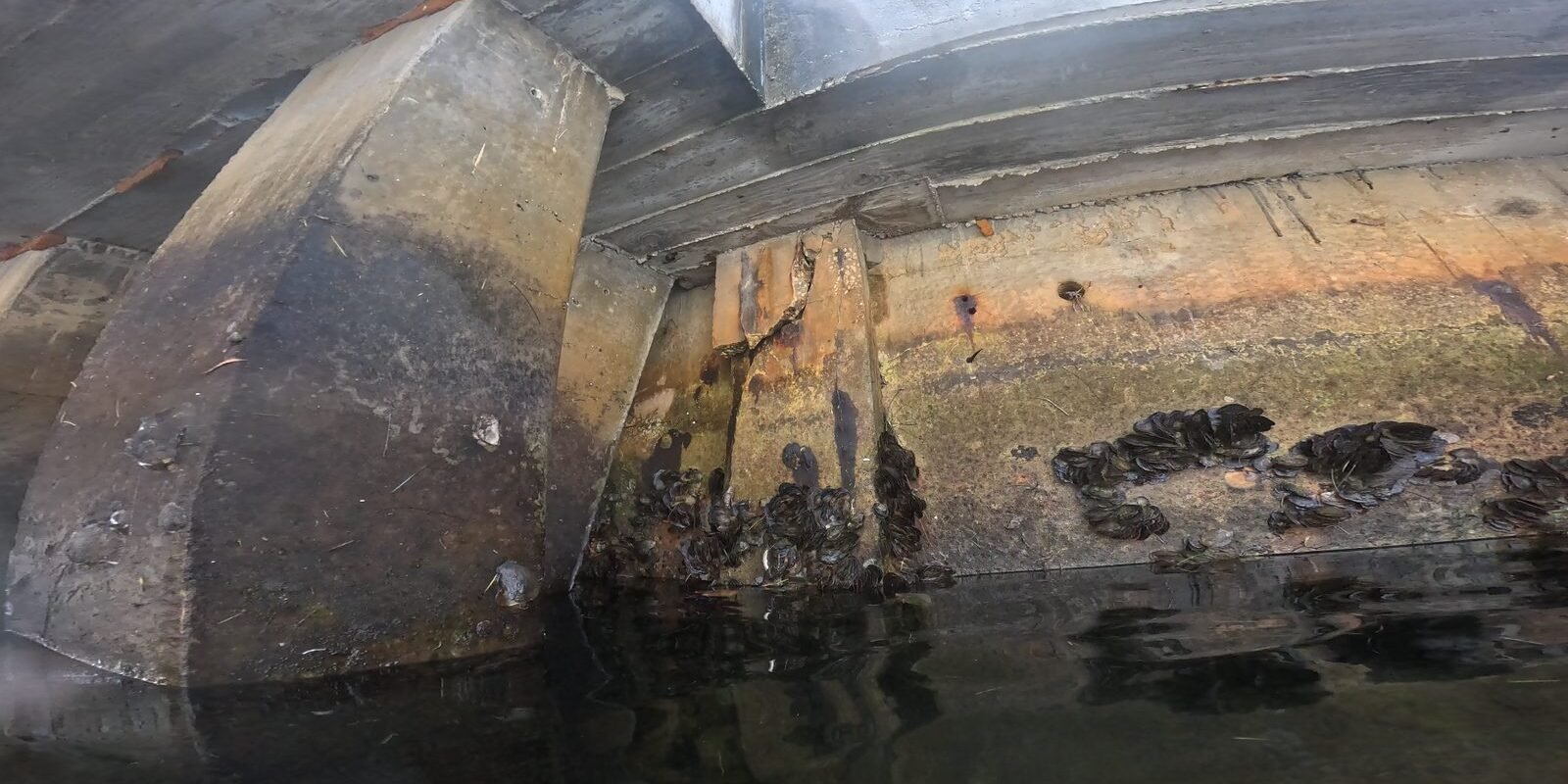
A geotechnical report tells your structural engineer what’s actually holding your property up before any seawall replacement design begins — soil type, bearing capacity, groundwater depth, and how far a new pile has to go to find solid ground. Skip it, and a contractor is guessing at pile length and tieback depth on a canal-front lot in Coral Gables or along Biscayne Bay, where soil conditions can change dramatically from one property to the next. Souffront Contractors orders a geotechnical investigation before designing any seawall replacement, because the design only works if it’s built on real subsurface data, not an assumption.
Key takeaways
- A geotechnical report identifies soil type, bearing capacity, groundwater elevation, and soil corrosivity at the specific property — not a neighborhood average.
- It directly sets the new seawall’s pile length, tieback depth, and panel design; without it, an engineer is designing on assumptions.
- Soft, organic, or loose sandy soils near Biscayne Bay and the Intracoastal often require deeper or more closely spaced piles than a standard design.
- A typical residential geotechnical investigation takes one to two weeks from boring to report, and should happen before a seawall replacement bid, not after.
- Skipping it doesn’t save money — it shifts the risk of pile refusal, wall movement, or a mid-project redesign onto the homeowner or association.
What a geotechnical report actually is
A geotechnical report documents what’s beneath your property before anyone designs a structure on top of it. For a seawall replacement, that means one or more soil borings — a drilled sample column pulled from the ground near the wall — analyzed for soil type, density, and strength at each depth. A geotechnical engineer logs the findings and issues a report that Souffront’s engineer-sealed report and design then build on.
The report typically covers:
- Soil stratigraphy — the layers of sand, muck, limestone, or fill beneath the site, and their depth.
- Bearing capacity — how much load each soil layer can carry before it deforms or gives way.
- Groundwater elevation — how close water sits to the surface, which affects both construction method and long-term wall performance.
- Soil corrosivity and chloride content — relevant to whether steel reinforcement or tiebacks need extra corrosion protection.
Why the investigation comes before design, not after
A seawall replacement is a structural design problem before it’s a construction problem. The wall has to resist the lateral pressure of the soil and water behind it, and that pressure depends on what the soil actually is — loose sand behaves differently than dense sand, and both behave differently than the muck found in parts of Coconut Grove and older canal-front subdivisions around Biscayne Bay. An engineer designing without soil data is choosing standard pile lengths and hoping the ground cooperates. When it doesn’t, the crew hits refusal mid-pour, the schedule slips, and the redesign happens on the fly — usually at the owner’s cost.
This is also where a seawall inspection and a geotechnical investigation do different jobs. The inspection tells you the condition of the existing wall — cracking, corrosion, tieback failure. The geotechnical report tells you what the replacement wall needs to be designed for. Both feed the same engineer’s decision, but neither substitutes for the other.
How the findings change the seawall design
Pile length and embedment depth
If borings show soft or loose soil extending deep below the mudline, piles have to extend further down to reach material that can actually carry the wall’s load. In parts of Miami-Dade with organic muck layers, that can mean piles significantly longer than a standard residential design would assume.
Tieback design and spacing
Tiebacks anchor the wall against the soil pressure pushing from behind it. The geotechnical report’s data on soil density and internal friction angle determines how deep the anchor has to be set and how closely tiebacks need to be spaced to hold.
Panel and cap specification
Groundwater elevation and soil corrosivity findings inform whether standard reinforcement is adequate or whether the concrete mix and steel protection need to be upgraded for a more aggressive soil environment.
Where soil conditions are unusually soft, the report may point toward soil stabilization ahead of or alongside the seawall replacement, rather than relying on the wall design alone to compensate.
What it costs and how long it takes
For most residential seawall replacements, a geotechnical investigation involves one to three soil borings near the property and runs one to two weeks from field work to final report, depending on lab turnaround. It’s a fraction of the total project cost, and it’s ordered once — the same report typically supports both the structural engineer’s design and the permit application to Miami-Dade DERM or the local building department.
Trying to save that cost by skipping the investigation almost always costs more later: a design based on assumed soil conditions that turns out wrong mid-construction forces a change order, a schedule delay, or in the worst case, a wall that underperforms once it’s built.
Signs your Biscayne Bay property needs one now
If your property sits on the Intracoastal, a canal in Coral Gables, Key Biscayne, or elsewhere along Biscayne Bay, and your seawall repair conversation has turned into a full replacement conversation, a geotechnical investigation should be one of the first calls made — before a contractor quotes linear-foot pricing on a design that hasn’t been engineered yet. It’s also worth ordering when a neighboring property’s replacement revealed unexpectedly soft or organic soil, since conditions can shift from lot to lot along the same stretch of shoreline.
Talk to a Florida-licensed engineer
Souffront Contractors is a seawall contractor that inspects, engineers, permits, and builds under one roof, so the geotechnical findings go directly into a structural engineer’s design rather than getting handed off between separate firms. If your seawall replacement is still in the planning stage, request a geotechnical investigation and inspection together — Souffront responds the same business day, with a fixed-fee inspection quoted before any site visit. The contact form below gets you started.
Frequently asked questions
Do I need a geotechnical report for every seawall replacement?
Yes, for a properly engineered replacement. Any new seawall design that will be sealed by a Florida-licensed structural engineer needs actual soil data to size piles, tiebacks, and the cap correctly. Reusing a neighbor’s soil assumptions or a generic design is a common source of mid-construction problems.
How is a geotechnical report different from a seawall inspection?
A seawall inspection assesses the condition of the existing wall — cracking, corrosion, panel displacement. A geotechnical report assesses the soil the new wall will be built into. Both are usually needed before a full replacement: the inspection determines whether replacement is warranted, and the geotechnical report informs how the replacement is designed.
How long does a geotechnical investigation take?
Most residential investigations take one to two weeks from the soil boring to the final report, depending on the number of borings and lab analysis time. It should be scheduled early, since the structural engineer’s design depends on it.
What happens if a contractor skips the geotechnical report?
The design is based on assumed rather than measured soil conditions. If the actual soil is softer or contains more organic material than assumed, piles can hit refusal during installation, forcing a redesign mid-project — usually at extra cost and on a delayed schedule.
Does soil condition affect seawall replacement cost?
Yes. Soft or organic soils that require longer piles, closer tieback spacing, or soil stabilization increase the linear-foot cost of construction. The geotechnical report is what allows an accurate bid instead of a rough estimate.
Can the same geotechnical report be used for permitting?
In most cases, yes. The report that supports the structural engineer’s design is typically also submitted as part of the permit package to Miami-Dade DERM or the applicable city building department, so it doesn’t need to be duplicated.
What soil conditions are common along Biscayne Bay and the Intracoastal?
Conditions vary by lot, but many older canal-front properties in Miami-Dade sit on layers of sand over softer organic muck, with groundwater close to the surface. That variability is exactly why a site-specific investigation matters more than a neighborhood assumption.
Who performs the geotechnical investigation — the contractor or a separate firm?
A licensed geotechnical engineer performs the soil borings and analysis. On a Souffront project, that data feeds directly into the structural engineer’s seawall construction design, keeping the investigation, the engineering, and the build coordinated under one firm rather than handed between separate companies.
Related from Souffront Contractors: foundation repair — all delivered by the same Florida-licensed structural engineering and marine construction team. Call (877) 420-7220.
About Souffront Contractors Inc.: a Florida-licensed structural engineering and marine construction firm serving Miami-Dade, Broward, and Palm Beach counties. Reach a licensed seawall contractor in Boca Raton and across Palm Beach County — see our seawall contractors page or call (877) 420-7220.
Got a seawall or structural question?
Five fields. Same business day from a Florida-licensed engineer, routed into our dispatch CRM in real time.
- Same business dayAcknowledgment from a Florida licensed engineer — Mon–Fri 8 AM–5:30 PM.
- Engineer-sealed reportAccepted by carriers, building departments, and real-estate transactions.
- Fixed-fee proposalNo hourly billing. Repair scope priced line-by-line.