
Why a Key Biscayne Seawall Inspection Looks Different
A Key Biscayne seawall inspection often turns up damage a canal-front wall doesn't have. What open-bay exposure causes, and what it costs to fix.
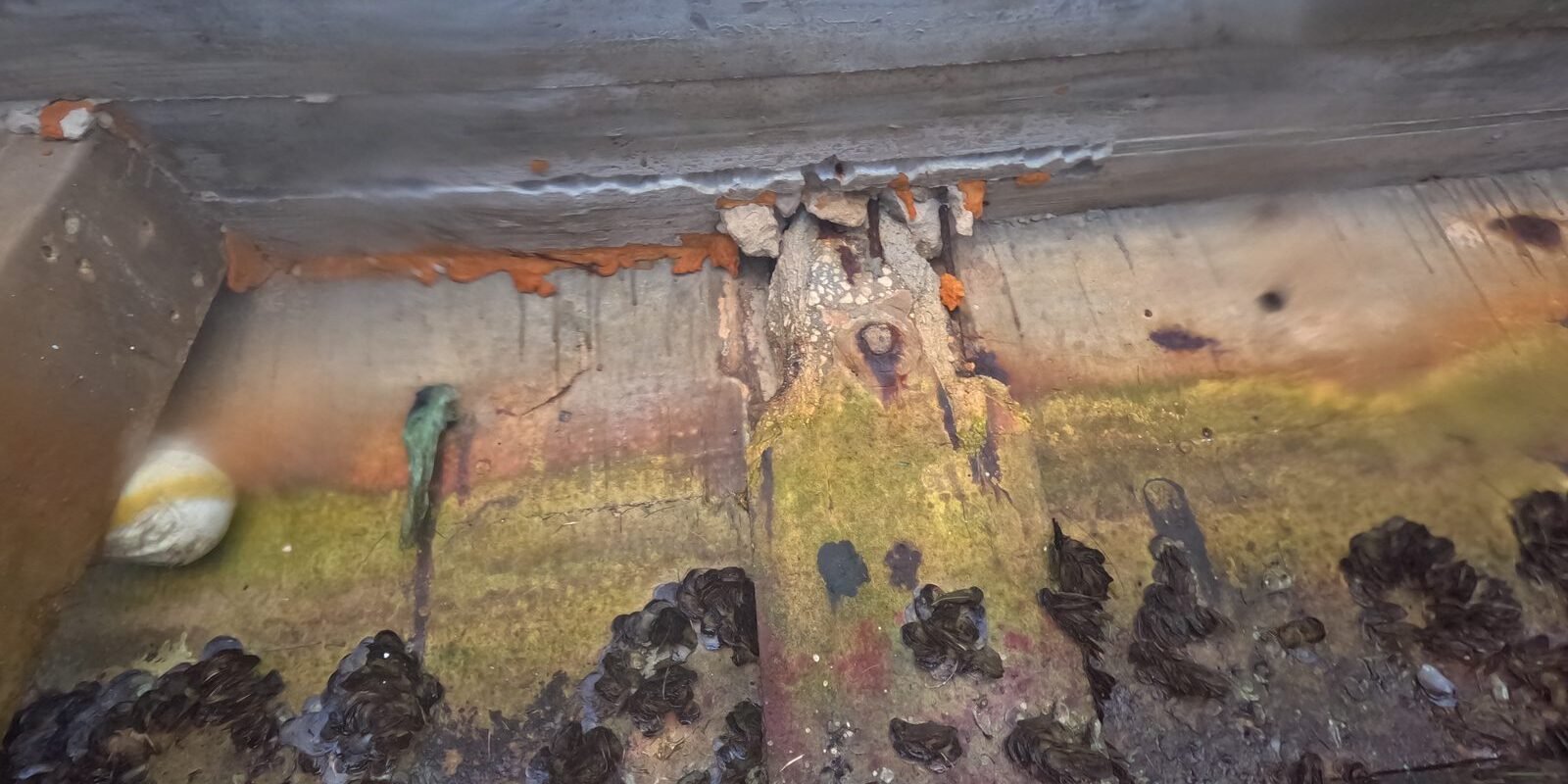
A Key Biscayne seawall inspection usually turns up different damage than the same wall, same age, would show three miles inland on a canal. Key Biscayne sits directly on open Biscayne Bay — no mangrove buffer, no canal walls, no barrier island cutting the wave energy before it reaches the cap. Souffront Contractors inspects open-bay seawalls across the island, and the pattern repeats every time: faster cap spalling, heavier chloride-driven rebar corrosion, and toe scour from wave and wake action that a sheltered canal wall almost never sees.
Key takeaways
- Open-bay walls face constant wave and wake loading that canal-front walls are sheltered from, and they age faster because of it.
- Salt spray reaches higher on the cap and landward face on open water, speeding up rebar corrosion inside the concrete.
- Toe scour and voids behind panels are the two findings we catch most often on Key Biscayne that inland walls rarely show at the same age.
- A seawall inspection on open water should include a below-waterline check of the toe and footing, not just a walk of the cap.
- A residential seawall inspection is a flat fee, typically $1,500–$3,000 depending on complexity, quoted before any site visit — never priced per linear foot.
What a Key Biscayne seawall inspection should check
An open-bay wall needs a different inspection scope than a canal wall, because the failure points show up in different places. A thorough seawall inspection on Key Biscayne covers:
- The cap, above and below the splash zone. Salt spray on open water reaches higher than it does on a canal, so cracking and spalling often start well above the tide line, not just at it.
- The panel face, checked for bulging or rotation. Repeated wave loading pushes on the wall in a way still water never does.
- The toe and footing, below the waterline. This is where open-water walls lose ground first, and it’s invisible from the seawall or the dock above it.
- Tieback and deadman anchors, where accessible. Wave-driven soil movement behind the wall puts more strain on these than a canal setting does.
- Drainage — weep holes and jets. On open water, wave action can pack these with sediment faster than tidal exchange alone would.
Skipping the underwater portion on an open-bay wall is the most common gap we find in older inspection reports. A wall can look sound from the cap and still be losing soil at the toe.
Why open-bay exposure changes how a wall ages
Engineers describe the distance wind travels over open water as “fetch” — the longer the fetch, the more wave energy builds before it hits a structure. A canal has almost none. Key Biscayne faces open Biscayne Bay and, on its ocean side, direct Atlantic influence, so the fetch is long and the wave energy hitting the wall is real, not occasional.
Two things follow from that:
Wave and wake loading
Every passing boat wake and every wind-driven chop is a small load cycle on the panel and the cap joint. On a canal, that load is minor. On open water, it repeats thousands of times a year, and it’s the mechanism behind the panel rotation and joint separation we see more often on island and bayfront properties than on canal-front lots a mile away.
Salt spray and chloride penetration
Open water throws more salt spray onto the cap and the landward face of the wall than a calm canal does. Chlorides in that spray work into the concrete and eventually reach the embedded rebar. Once chlorides reach the steel, corrosion starts, and corroding rebar expands — that’s what cracks a cap from the inside out, well before it looks bad from a distance.
What we actually find in the field
On open-bay properties, the same handful of issues show up more often and earlier than they do inland:
- Cap cracking and spalling starting above the waterline, in the splash zone, not just at the tide line.
- Rust staining bleeding through hairline cracks — visible evidence that corrosion has already reached the rebar.
- Panel rotation or a visible outward lean where wave energy has worked on the tieback zone over years.
- Soil loss and voids at the toe, found on a below-waterline check, with no visible sign from above.
- Voids behind the panel from wave “pumping” — water forced in and out through cracks by wave action, which loosens backfill a little more with every cycle.
None of these are unique to Key Biscayne. They’re just further along, sooner, than the same defects on a sheltered canal wall of the same age.
What it costs to fix wave-damaged seawall sections
A structural engineer inspection tells you which of these findings are present and how urgent each one is — that’s a flat fee, typically $1,500–$3,000 depending on complexity, quoted before any site visit. Repair pricing is separate and priced per linear foot, not as a flat fee: moderate cap and joint repairs generally run $100–$250 per linear foot, and full panel or tieback replacement on a compromised wall generally runs $400–$600 per linear foot. Those are general South Florida ranges, not a Souffront quote — an actual number depends on wall length, access, and how much of the toe and backfill needs rebuilding. Any repair scope on Key Biscayne should also account for Miami-Dade permitting through DERM, since work below the mean high water line typically needs environmental review before a building permit is issued.
When you’re comparing bids, ask each seawall contractor whether their scope includes toe repair and backfill, not just cap and panel work above the waterline. On an open-bay wall, a repair that skips the toe often needs to be redone within a few years, because the mechanism that caused the original damage — wave and wake loading — hasn’t gone anywhere.
Talk to a Florida-licensed engineer
If your seawall faces open water on Key Biscayne, the fastest way to know what you’re dealing with is a documented seawall repair assessment from a Florida-licensed structural engineer — not a verbal walk-through from a contractor. Souffront inspects, engineers, permits, and builds under one roof, so the report you get reflects what it actually takes to fix the wall, not just what it takes to sell you a job. Fixed-fee, engineer-sealed, and scheduled same business day in most cases. The inspection request form is right below.
Frequently asked questions
Why do Key Biscayne seawalls deteriorate faster than canal seawalls?
Key Biscayne sits on open Biscayne Bay with no canal, mangrove, or barrier island to reduce wave energy before it reaches the wall. That constant wave and wake loading, combined with heavier salt spray on the cap, accelerates cap spalling, rebar corrosion, and toe scour compared to a sheltered canal-front wall of the same age.
What does a seawall inspection on Key Biscayne actually check?
It covers the cap above and below the splash zone, the panel face for bulging or rotation, the toe and footing below the waterline, accessible tieback anchors, and the drainage weep holes or jets. On open water, the below-waterline toe check matters more than it does on a canal, since that’s where soil loss shows up first.
How much does a seawall inspection cost in Key Biscayne?
A residential structural seawall inspection typically runs $1,500–$3,000 as a flat fee, quoted upfront before any site visit. The price depends on the complexity of the inspection — access, whether an underwater dive is needed, and the number of structural components — not on the wall’s length.
What are the warning signs of a failing seawall on open water?
Watch for cracking or spalling on the cap, rust staining bleeding through hairline cracks, a visible outward lean or bulge in the panels, soil settling or a sinkhole forming behind the wall, and a soft or spongy feel to the ground near the cap. Any of these on an open-bay property warrants an inspection sooner than the same signs on a canal.
Do open-bay seawalls need an underwater inspection?
Generally yes. Wave and wake action erodes the toe and footing below the waterline on open-water walls more than on sheltered canal walls, and that damage is invisible from the cap or a dock above it. An inspection that skips the underwater component can miss the most active failure point on the wall.
How often should a Key Biscayne seawall be inspected?
As a general guideline, inspect an open-bay seawall every two to three years, and immediately after a major storm or hurricane. Walls already showing cracking, staining, or lean should be inspected annually until repairs are made.
What does it cost to repair a seawall damaged by wave exposure?
Moderate cap and joint repairs generally run $100–$250 per linear foot. Full panel or tieback replacement on a heavily compromised wall generally runs $400–$600 per linear foot. These are general South Florida ranges — an actual quote depends on wall length, access, and how much toe and backfill work is needed.
Who do I call for a seawall inspection or repair on Key Biscayne?
Call a firm that inspects, engineers, permits, and builds under one roof, so the person assessing the wall has actually built repairs like it. Souffront Contractors serves Key Biscayne and the rest of the Biscayne Bay corridor at (877) 420-7220, with a Florida-licensed structural engineer producing every inspection report.
Related from Souffront Contractors: concrete restoration and dock repair — all delivered by the same Florida-licensed structural engineering and marine construction team. Call (877) 420-7220.
About Souffront Contractors Inc.: a Florida-licensed structural engineering and marine construction firm serving Miami-Dade, Broward, and Palm Beach counties. Get seawall repair in Coral Gables and across Miami-Dade County — see our seawall contractors page or call (877) 420-7220.
Got a seawall or structural question?
Five fields. Same business day from a Florida-licensed engineer, routed into our dispatch CRM in real time.
- Same business dayAcknowledgment from a Florida licensed engineer — Mon–Fri 8 AM–5:30 PM.
- Engineer-sealed reportAccepted by carriers, building departments, and real-estate transactions.
- Fixed-fee proposalNo hourly billing. Repair scope priced line-by-line.