
What Sunny Isles Beach Condo Boards Miss on Seawalls
What Sunny Isles Beach condo boards should watch on shared seawalls — staining, cap cracks, tieback loss — and when to call a structural engineer.
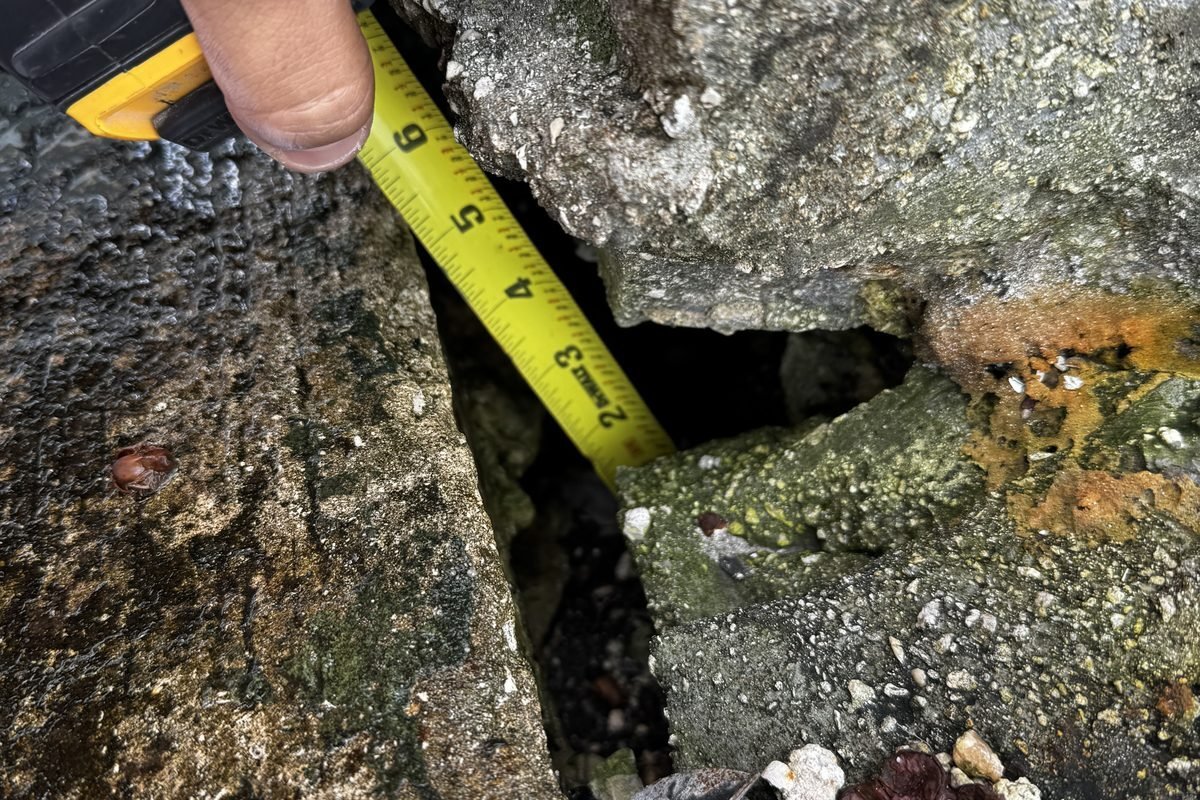
Most seawall damage on a Sunny Isles Beach condo property doesn’t show up in the lobby. It shows up at the waterline, at low tide, on a wall that dozens of owners share and nobody individually watches. A Souffront Contractors field visit almost always finds the same handful of warning signs before a board ever calls — and by the time a unit owner notices, the repair bill is usually bigger than it needed to be.
This is a walk-through of what to actually look for on a Sunny Isles Beach seawall, in plain terms, and when it’s time to bring in a structural engineer for a seawall inspection instead of waiting for the annual walk-through.
Key takeaways
- Sunny Isles Beach seawalls sit on Intracoastal and canal frontage with daily tidal cycling — that constant wet-dry swing accelerates corrosion faster than a static freshwater edge would.
- The three signs that move a wall from “watch it” to “call someone”: a hollow-sounding cap, rust staining bleeding through concrete, and visible soil loss or a sinkhole forming behind the wall.
- A seawall inspection is a flat fee, typically $1,500–$3,000 depending on complexity, quoted before anyone steps on site — never priced by the linear foot.
- Repair costs, by contrast, do scale with wall length: moderate panel or tieback work often runs $100–$250 a linear foot, and full panel-and-anchor replacement can reach $400–$600 a linear foot.
- Condo boards on shared waterfront should request a written, sealed report — not a verbal opinion — before any board vote on repair funding.
Why Sunny Isles Beach seawalls fail differently than inland structures
Sunny Isles Beach sits on a barrier island between the Atlantic and the Intracoastal Waterway. Most condo seawalls here face the bay side — canal-front and Intracoastal-front property with tidal movement twice a day, every day. That cycle matters more than people think: the section of wall that sits right at mean high water gets wet, dries out, gets wet again, hundreds of times a year. That’s the band where rebar corrosion and concrete spalling start first, and it’s usually below the eye line from a pool deck or a dock.
Add in salt-laden air blowing off the Atlantic, boat wake from Intracoastal traffic, and the soil types common to reclaimed island fill, and you get a wall that ages faster than the building behind it. A cap that looks fine from a fourth-floor balcony can already have voids underneath it.
What we actually look for on site
A structural engineer inspection isn’t a glance from the seawall walk. It’s a methodical pass across the whole run of wall, above and below the waterline where access allows. Here’s what moves the needle on a condo seawall specifically:
- Cap condition — hairline cracking is common and usually cosmetic; a hollow sound when tapped, or a section that’s visibly lifted, means water and air have gotten underneath the concrete.
- Rust staining — orange-brown streaks running down the face of a panel almost always mean the rebar inside is corroding and expanding, which cracks the concrete from the inside out.
- Panel rotation or bulging — a panel that leans outward or bows toward the water is losing its grip on the soil behind it, or the tieback anchoring it has weakened.
- Soil loss behind the wall — voids, small sinkholes, or a sunken strip of lawn near the wall’s landward edge mean fill material is escaping through gaps in the panels — often before the wall itself shows obvious damage.
- Weep holes and drainage — missing or blocked weep holes trap hydrostatic pressure behind the wall, which is one of the more common reasons a healthy-looking wall fails suddenly during a heavy rain event.
Signs a board should not wait on
Most of the items above can be monitored for a season. Three cannot: a hollow or drummy-sounding cap over more than a few feet, active soil loss with a visible void, and any section of wall that has visibly shifted or rotated since the last look. Those are the calls where waiting turns a repair into a replacement.
What it costs, and why the pricing model matters
A condo board evaluating a seawall inspection cost in Sunny Isles Beach should expect a flat, quoted fee — typically $1,500 to $3,000 depending on the wall’s complexity, the number of structural components involved, and whether a below-waterline dive assessment is needed. That number is set and communicated before the engineer sets foot on the property. It does not scale with how many linear feet of wall the association owns.
Repair pricing works differently, because repair work is priced by the amount of material and labor going into the wall itself. In this market, moderate panel or tieback repairs commonly run $100 to $250 a linear foot, and a full panel-and-anchor replacement can run $400 to $600 a linear foot. Those are general South Florida ranges, not a quote — every project gets a project-specific number after the engineer has actually seen the wall.
Getting the association ready for the conversation
Boards run into trouble less because the wall failed and more because nobody had documentation ready when it did. A few things worth having on file before there’s a problem:
- A current, sealed seawall inspection report — not a verbal walk-through from a vendor.
- Photos with dates, especially of any cap cracking, staining, or soil movement an owner has already reported.
- A copy of the original construction or repair plans if the association has them — they tell an engineer what’s behind the wall before digging or diving.
- A named point of contact on the board who fields owner questions, so the answer doesn’t turn into forty separate phone calls.
When repairs get funded, hiring a seawall contractor who also wrote the inspection report has one real advantage: the person overseeing the fix already knows what’s wrong and doesn’t need to re-diagnose it before quoting work.
Talk to a Florida-licensed engineer
If your Sunny Isles Beach association hasn’t had a seawall looked at in the last few years, or an owner has already flagged staining or a soft spot on the cap, get it documented now. Souffront provides a sealed engineering report at a fixed, quoted fee, with same-business-day response to set up the visit. The scheduling form is right below.
Frequently asked questions
How often should a Sunny Isles Beach condo association inspect its seawall?
Most waterfront associations in this market benefit from a structural look every two to three years, and sooner if an owner reports staining, cracking, or a soft spot on the cap. Properties with older seawalls or a history of repairs should shorten that interval.
How much does a seawall inspection cost for a condo association?
A residential or condo-scale seawall inspection typically runs $1,500 to $3,000 as a flat fee, depending on wall complexity and whether a below-waterline assessment is needed. The fee is quoted before the site visit and does not change based on how long the wall is.
What’s the difference between inspection cost and repair cost?
Inspection is a fixed, one-time fee for the engineering assessment itself. Repair work is priced separately, by the linear foot of wall being fixed — moderate repairs commonly run $100 to $250 a foot, and full replacement can reach $400 to $600 a foot.
Can a condo board get sued for ignoring a known seawall problem?
Boards carry a fiduciary duty to maintain common-element property, which typically includes a shared seawall. A documented, ignored defect that later causes damage or a safety issue puts the board’s liability exposure in a much worse position than one that acted on a written engineering report.
Does a seawall on the Intracoastal fail differently than one on a canal?
Both see daily tidal cycling, but Intracoastal-facing walls also take boat wake and more direct wave energy, which accelerates cap and joint wear. Canal-front walls tend to show more soil-loss issues from tighter, slower-moving water and nearby dock or seawall-adjacent construction.
Who should a board call first — a contractor or an engineer?
Start with a structural engineer inspection, not a repair quote from a contractor. An independent, sealed report gives the board a documented scope of the actual problem before any repair pricing comes in, which makes it much easier to compare bids fairly.
What does “special inspector” mean for a seawall project?
A special inspector verifies that specific phases of construction — like tieback installation or a cap pour — were done to plan and code before they’re covered up or backfilled. On a seawall project with any government permitting involved, that documentation is often required, not optional.
Does Souffront work on seawalls outside Sunny Isles Beach?
Yes. Souffront serves waterfront properties across the Biscayne Bay corridor — including Miami, Miami Beach, Aventura, Bal Harbour, and North Miami Beach — as well as Broward and Palm Beach counties.
Related from Souffront Contractors: HOA and condo board compliance reports, seawall repair and engineer-sealed reports — all delivered by the same Florida-licensed structural engineering and marine construction team. Call (877) 420-7220.
Souffront works directly with the HOA board, the condo association and the property manager or CAM, delivering the documentation a board needs to act and to show it acted.
About Souffront Contractors Inc.: a Florida-licensed structural engineering and marine construction firm serving Miami-Dade, Broward, and Palm Beach counties. Learn more about engineer-led seawall repair across South Florida — see our seawall contractors page or call (877) 420-7220.
Got a seawall or structural question?
Five fields. Same business day from a Florida-licensed engineer, routed into our dispatch CRM in real time.
- Same business dayAcknowledgment from a Florida licensed engineer — Mon–Fri 8 AM–5:30 PM.
- Engineer-sealed reportAccepted by carriers, building departments, and real-estate transactions.
- Fixed-fee proposalNo hourly billing. Repair scope priced line-by-line.