
Will Your Broward Seawall Pass the 2035 Permit Deadline?
Broward's new seawall permit rule sets a 4-ft NAVD88 cap elevation with a 2035 compliance horizon. What it means for your permit, your wall, and your budget.
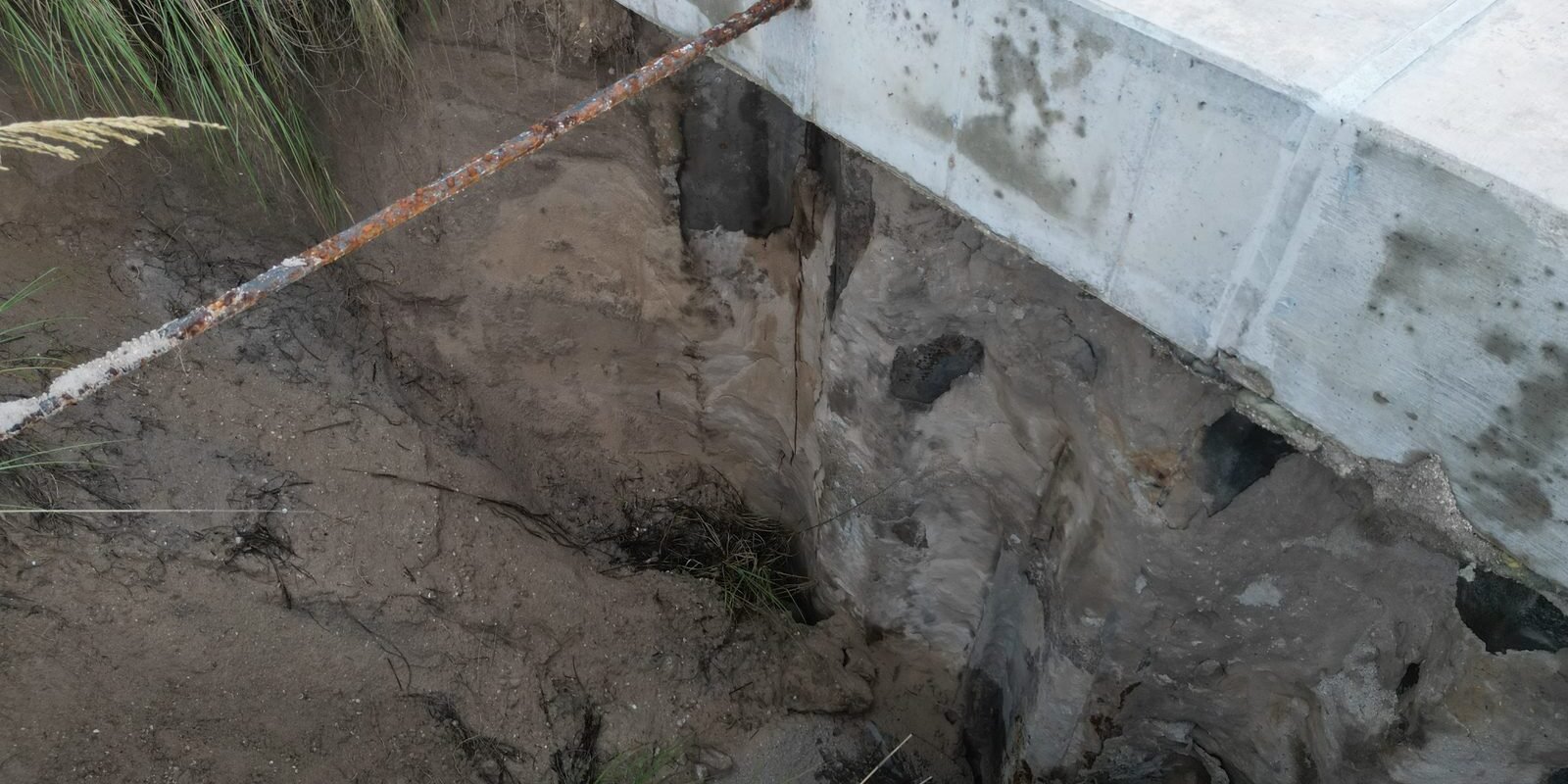
If your seawall’s cap sits lower than 4 feet NAVD88, several Broward County cities will not approve a new seawall permit — and more than one has set 2035 as the horizon for bringing older, lower walls up to that line. That is the short version of Broward’s seawall permit standard. Souffront Contractors pulls permit files on Broward waterfront properties every month, and the cap elevation is the first number a plan reviewer checks before reading anything else.
Key takeaways
- A growing number of Broward waterfront cities — Fort Lauderdale, Hollywood, Dania Beach and Pompano Beach among them — require new or substantially repaired seawalls to be built with a cap elevation at or above 4 feet NAVD88.
- NAVD88 (North American Vertical Datum of 1988) is the current surveyed elevation benchmark on permit plans. Many older walls were built to the previous NGVD29 datum, which can read roughly a foot lower for the same physical height.
- Cities tied the 4-ft benchmark to a longer compliance window — 2035 in several local resilience plans — for walls that are not currently being touched, but a permit application for new work triggers the standard immediately.
- “Substantial improvement” generally means repair or replacement work valued at more than 50% of the wall’s value. That threshold, not the calendar, is what usually forces the elevation issue.
- Building or repairing without meeting the standard does not just risk a denied permit — it can turn into a code violation if the work goes in unpermitted.
Why Broward set a 4-ft NAVD88 standard
Broward’s barrier island and Intracoastal properties sit low to begin with, and the county’s sea-level-rise projections pushed cities to update their seawall and marine-structure codes after the 2017-2018 round of post-Irma rebuilding exposed how many walls were still built to decades-old survey data. The Florida Building Code sets statewide minimums for coastal construction, and local governments layer resilience requirements on top of it for marine structures in their jurisdiction. You can read the statewide baseline at Florida Building Code, and the state’s coastal program context at Florida DEP.
The practical effect on site: a wall built in the 1980s or 90s to a 2.5- or 3-foot cap elevation under the old datum can be close to a foot short of today’s 4-ft NAVD88 line once you re-survey it. That gap is exactly what shows up in a permit review.
Which Broward cities are enforcing it, and when
Each city administers its own building department and sets its own timeline, so the rule is not uniform countywide. Fort Lauderdale, Hollywood, Dania Beach, Pompano Beach and Hallandale Beach have each moved toward the 4-ft NAVD88 benchmark for new seawall construction in some form. Several of these cities’ resilience plans reference 2035 as the point by which older, non-conforming walls should be brought into compliance — but the exact deadline, and whether it applies to walls that aren’t otherwise being touched, varies by city. Before you file anything, confirm the current standard with the specific building department for your address.
Souffront also works waterfront permits across Miami-Dade — Key Biscayne, Coral Gables and Miami each run their own version of this same elevation conversation — so the pattern isn’t unique to Broward. It’s the direction every South Florida coastal building department is heading.
What “substantial improvement” means for your permit
This is the term that actually triggers the new standard for most homeowners and boards. If the scope of repair costs more than roughly 50% of the structure’s value, the building department treats it as substantial improvement — and substantial improvement has to meet current code, not the code the wall was originally built under. A full panel and tieback replacement almost always crosses that line. A localized cap patch usually does not.
That’s why two neighbors with visually similar seawalls can get two different answers from the same building department: one is filing for a repair, the other is filing for what the code treats as a rebuild.
What happens if your wall is already below 4 ft NAVD88
If you’re not applying for a permit, most cities aren’t going to show up and measure your cap. The exposure shows up the moment you need a permit — for a new dock, a boat lift, a seawall repair, or a sale that triggers a buyer’s due-diligence inspection. At that point the reviewer pulls the survey, sees the elevation, and either requires a cap raise as a condition of approval or routes you toward full seawall construction instead of a simple repair.
Unpermitted work carries its own risk independent of the elevation question. A wall that was raised or rebuilt without a permit can get flagged during a routine inspection or a neighbor’s complaint, and resolving that after the fact is slower and more expensive than doing it right the first time — see our violation response page for how that process runs.
What a Broward seawall permit review actually checks
- NAVD88 survey elevation at the top of the cap, not an estimate — a licensed surveyor ties this to the current datum.
- Engineer-sealed drawings showing panel, tieback and cap details, since Broward building departments require a Florida-licensed engineer’s seal on seawall permit submittals. See our engineer-sealed reports page for what that package includes.
- Tieback and deadman specifications — spacing, embedment depth, and corrosion protection on the anchor rods.
- Scope classification — whether the building department is treating the filing as repair or substantial improvement, which decides which elevation rule applies.
What it costs to bring a wall up to standard
A cap raise or partial repair on an otherwise sound wall typically runs in the $100–$250 per linear foot range. Full panel and tieback replacement — the scope that usually comes with hitting the substantial-improvement threshold — typically runs $400–$600 per linear foot. These are general South Florida industry ranges for repair and construction work, not a quoted price; every project gets scoped and priced after a site visit. A seawall inspection to determine which category your wall falls into is a separate, flat fee — typically $1,500–$3,000 depending on complexity, quoted before any site visit, and never priced by linear foot.
If you’re working with a seawall contractor who also holds the engineering license, the survey, the sealed drawings and the permit filing come from one source instead of three separate consultants trading files back and forth.
Talk to a Florida-licensed structural engineer
If you don’t know where your seawall’s cap sits relative to NAVD88, that’s the first thing to find out — before you’re mid-permit on a dock or repair and the answer surprises you. Souffront provides an engineer-sealed seawall repair assessment with a clear elevation reading, a scope classification, and a fixed-fee path forward, with same-business-day response. The form below gets that process started.
Frequently asked questions
What is NAVD88 and why does it matter for a seawall permit?
NAVD88 (North American Vertical Datum of 1988) is the current surveyed elevation reference used on Florida permit plans. It replaced the older NGVD29 datum, and the two can differ by roughly a foot at the same physical point. A wall that looked compliant under the old datum can read as short once it’s re-surveyed to NAVD88, which is why building departments require a current survey, not the original one from decades ago.
Does every Broward seawall need to be 4 feet NAVD88 right now?
No. The standard applies to new seawall construction and to repairs the building department classifies as substantial improvement. A wall that isn’t being permitted for new work generally isn’t forced into compliance immediately, though several cities have flagged 2035 as the horizon for bringing older, non-conforming walls up to standard.
What counts as “substantial improvement” that triggers the new elevation rule?
Most Broward building departments use roughly 50% of the structure’s value as the threshold. Repair work above that line gets treated as a rebuild and has to meet current code, including the elevation standard. Work below that line is often treated as maintenance repair and may not trigger it.
What is the 2035 deadline for Broward seawalls?
Several Broward cities’ resilience and building-code updates reference 2035 as the target date for non-conforming, low-elevation seawalls to be brought up to current standard, independent of whether an owner is doing other work. The exact deadline and scope differ by city, so confirm the current requirement with your specific building department.
How much does it cost to raise a seawall cap to meet the new standard?
A partial cap raise on a structurally sound wall generally runs $100–$250 per linear foot. Full replacement with new panels and tiebacks generally runs $400–$600 per linear foot. These are general ranges, not a quote — every project is priced after an engineer evaluates the specific wall.
Can I get a permit if my existing wall is below 4 ft NAVD88 and I’m not touching the wall itself?
Often yes, for unrelated work like a dock or boat lift, as long as the seawall itself isn’t part of the permitted scope. But if the reviewer determines the new structure depends on or affects the seawall, the elevation question can get pulled into that permit. Each case depends on the specific building department’s reading of the plans.
Who surveys my seawall’s NAVD88 elevation?
A licensed land surveyor takes the measurement and certifies it to current datum. An engineer then uses that survey, along with a site inspection, to determine the wall’s condition and whether the scope of any planned work counts as repair or substantial improvement under the local code.
What happens if I build or repair a seawall without meeting the current permit standard?
The building department can deny the permit outright, or require the design to be revised before approval. If work goes in without a permit at all, it’s exposed to a stop-work order and a code violation that typically costs more time and money to resolve than getting the permit right the first time.
Related from Souffront Contractors: dock repair — all delivered by the same Florida-licensed structural engineering and marine construction team. Call (877) 420-7220.
Seawall permitting in South Florida runs through the municipal building department plus Miami-Dade DERM or Broward County environmental licensing, and the Florida DEP and Army Corps where the work reaches the water.
About Souffront Contractors Inc.: a Florida-licensed structural engineering and marine construction firm serving Miami-Dade, Broward, and Palm Beach counties. Get seawall repair in Coral Gables and across Miami-Dade County — see our seawall contractors page or call (877) 420-7220.
Got a seawall or structural question?
Five fields. Same business day from a Florida-licensed engineer, routed into our dispatch CRM in real time.
- Same business dayAcknowledgment from a Florida licensed engineer — Mon–Fri 8 AM–5:30 PM.
- Engineer-sealed reportAccepted by carriers, building departments, and real-estate transactions.
- Fixed-fee proposalNo hourly billing. Repair scope priced line-by-line.