
What Happens If Your Seawall Was Built Without a Permit?
A seawall built without a permit in Miami-Dade or Broward can still be closed out legally with an after-the-fact permit. Here is what that process requires.
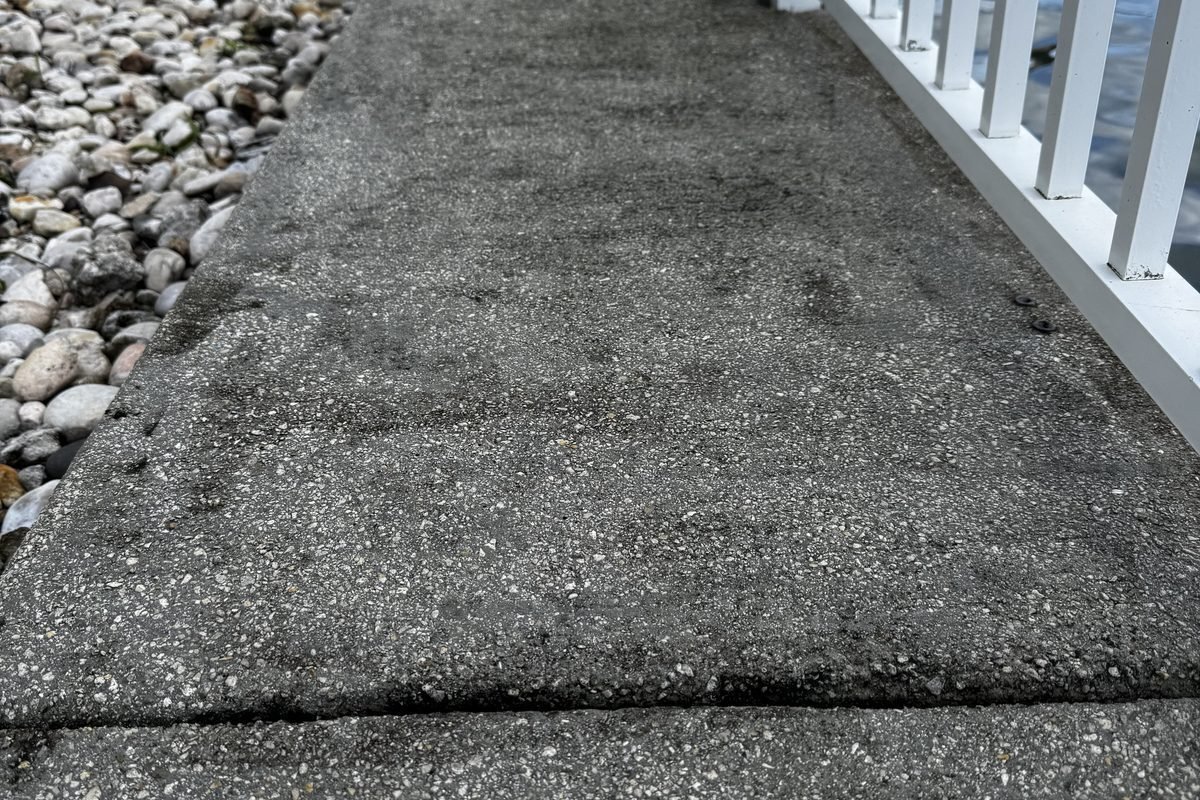
A seawall built without a permit doesn’t have to stay that way. Miami-Dade and Broward both allow an after-the-fact permit that brings unpermitted work into compliance, but the wall has to pass a structural review first. We see this constantly on canal lots in Coral Gables and on the bay side of Key Biscayne — a seawall went in during a storm, or a handyman poured a cap ten years ago, and nobody pulled a permit. Souffront Contractors gets called in after the fact more often than before it, usually when a sale or a refinance surfaces the gap.
Key takeaways
- Miami-Dade and Broward both offer an after-the-fact permit (AFP) process for seawall work completed without one.
- AFP fees typically run double the standard permit fee, on top of any code compliance fine already issued.
- The county will not approve an AFP without current drawings and a field inspection confirming what was actually built.
- A Florida-licensed structural engineer has to document the as-built condition and certify it meets code — the county won’t take the original contractor’s word for it.
- Unresolved, an unpermitted seawall shows up as an open violation on a title search and can stall or kill a closing.
How a seawall ends up unpermitted
It’s rarely one bad actor. Most of the unpermitted walls we inspect fall into three buckets:
- Emergency repair after a storm. A section slumps or a panel blows out during a named storm, someone hires a crew the next week to stop the bleeding, and the permit application never happens.
- A prior owner’s handyman job. A cap gets re-poured, a few panels get patched, tiebacks get added — done by someone without a contractor’s license, with no inspection card ever posted.
- Scope creep on a permitted job. The original permit covered 40 linear feet of panel replacement. The crew ended up doing 65 feet because the rest looked just as bad once they opened it up, and the permit was never amended.
In all three, the wall might be structurally fine. The problem isn’t the concrete — it’s that the county has no record it was ever reviewed.
What triggers the county finding out
Three things surface an unpermitted seawall almost every time: a neighbor complaint, a code enforcement sweep after a storm, or a title search during a sale. Miami-Dade DERM runs active environmental and coastal permitting enforcement, and seawall work along navigable water is one of the categories they flag fastest, because it touches submerged land and drainage, not just the structure itself. If you get a notice of violation, the clock on a response is usually short — read it the day it arrives, not the week it’s due.
The after-the-fact permit process
Closing out unpermitted seawall work means going through violation response the same way you’d apply for the permit originally, with two differences: the county charges more, and someone has to document what’s already in the ground. The typical sequence:
- As-built documentation. A survey and engineering assessment of exactly what exists today — wall height, cap elevation, panel condition, tieback spacing, materials used.
- Structural engineer inspection. A Florida-licensed structural engineer inspects the wall and certifies, in a sealed report, whether the as-built condition meets current code. This is the step that determines everything after it.
- AFP application. The engineer’s drawings and report go in with the after-the-fact permit application to the county or city building department, plus DERM if the work affects the shoreline or adjacent submerged land.
- Corrections, if needed. If the wall doesn’t meet code as built — undersized tiebacks, missing weep holes, cap below required elevation — the engineer specifies the fix before the county will sign off.
- Final inspection and closeout. Once corrections are done (or the as-built passes outright), the county closes the permit and the violation clears.
Step two is where most unpermitted walls stall. An as-built survey only tells you what’s there. It takes a structural engineer inspection to tell you whether what’s there is adequate — and the county won’t accept a contractor’s self-certification for that.
What it costs and how long it takes
Expect the AFP fee itself to run roughly double the standard permit fee that would have applied originally — that’s standard across most South Florida jurisdictions, not a penalty unique to any one county. On top of that there’s often a separate code compliance fine for the violation itself, which is negotiable in some cases if you move quickly to resolve it. The engineering piece — inspection, as-built documentation, and a sealed report — is quoted upfront before any site visit, the same way a standard seawall inspection is priced, typically in the same $1,500–$3,000 range depending on wall length, access, and whether a below-waterline dive is needed to confirm what’s actually there underwater. If the as-built condition needs real corrective work — new tiebacks, cap replacement — that gets priced separately as repair, typically $100–$250 per linear foot for moderate work and $400–$600 per linear foot for full panel or tieback replacement. Timeline for the paperwork alone usually runs four to eight weeks; add corrective construction and it’s longer.
Why you can’t skip the engineering step
We’ve inspected unpermitted walls that were fine and unpermitted walls that weren’t — there’s no way to tell from the street. A wall can look straight and still have tiebacks that were never torqued, a cap poured without rebar continuity, or soil loss behind panels that hasn’t shown up yet. The AFP process exists specifically because the county has no inspection record to rely on, so the burden shifts to documenting the actual condition now. That’s also why a special inspector is sometimes required on top of the AFP engineer, depending on the scope the county assigns to the file.
What happens if you don’t close it out
An open seawall violation attaches to the property, not the person who did the work. It shows up in a title search, and most buyers’ attorneys will stop a closing cold until it’s resolved — we’ve seen deals in Coconut Grove and on the barrier islands get pushed 60 days or more over exactly this. Lenders ask the same question. If you’re selling, resolving it before listing is almost always cheaper and faster than negotiating it as a credit at closing.
Talk to a Florida-licensed engineer
If you’ve got a notice of violation, a sale that just surfaced an old permit gap, or a seawall nobody can find paperwork for, get it looked at before you respond to the county. Souffront Contractors inspects, engineers, permits, and builds under one roof, so the same engineer who certifies the as-built condition can also carry the repair through to closeout if one’s needed. Reports are sealed, fees are fixed and quoted before any site visit, and we respond the same business day. The contact form below gets you started.
Frequently asked questions
Can you get a permit for a seawall that’s already built?
Yes. Miami-Dade and Broward both allow an after-the-fact permit (AFP) for seawall work that was completed without one. The process requires as-built documentation and a structural engineer’s inspection confirming the wall meets current code, then follows the standard permit review before the county closes it out.
How much more does an after-the-fact permit cost?
The AFP fee itself typically runs about double the standard permit fee that would have applied if the permit had been pulled before construction. A separate code compliance fine may also apply depending on the violation. The engineering inspection and documentation are priced separately, usually $1,500–$3,000 depending on complexity.
Will the county make me tear out a seawall that doesn’t meet code?
Not usually. If a structural engineer inspection finds the as-built wall doesn’t meet current code, the engineer specifies corrective work — often additional tiebacks, cap repair, or drainage fixes — rather than full removal. Full replacement is only required when the structure is genuinely compromised.
What happens if I ignore a seawall violation notice?
The violation stays attached to the property and can escalate to daily fines the longer it’s unresolved. It also surfaces during any future title search, which routinely stalls or kills a sale or refinance until it’s cleared. Responding promptly, before deadlines pass, keeps the options and the costs smaller.
Do I need a structural engineer or just a contractor to close out an unpermitted seawall?
You need both, but the engineer comes first. The county requires a Florida-licensed structural engineer to certify the as-built condition before it will approve the after-the-fact permit. A contractor only gets involved if the engineer’s report calls for corrective construction work.
How long does closing out an unpermitted seawall take?
The documentation and permitting side usually takes four to eight weeks from inspection to county approval, assuming the wall needs no corrective work. If the engineer’s report calls for repairs — new tiebacks or cap work, for example — add the construction timeline on top of that.
Does an after-the-fact permit apply to work a previous owner did?
Yes. The violation and the permit requirement attach to the property, not to whoever did the original work. Current owners are responsible for resolving it regardless of who built the seawall or when, which is why the issue so often surfaces during a sale.
Can an unpermitted seawall stop a real estate closing?
It can, and often does. An open violation or missing permit on a title search typically triggers a hold from the buyer’s attorney or lender until it’s resolved. Sellers in Miami-Dade and Broward waterfront markets generally save time by resolving it before listing rather than during escrow.
Related from Souffront Contractors: seawall repair — all delivered by the same Florida-licensed structural engineering and marine construction team. Call (877) 420-7220.
Seawall permitting in South Florida runs through the municipal building department plus Miami-Dade DERM or Broward County environmental licensing, and the Florida DEP and Army Corps where the work reaches the water.
About Souffront Contractors Inc.: a Florida-licensed structural engineering and marine construction firm serving Miami-Dade, Broward, and Palm Beach counties. Arrange a seawall inspection in Broward County with same-week scheduling — see our seawall contractors page or call (877) 420-7220.
Got a seawall or structural question?
Five fields. Same business day from a Florida-licensed engineer, routed into our dispatch CRM in real time.
- Same business dayAcknowledgment from a Florida licensed engineer — Mon–Fri 8 AM–5:30 PM.
- Engineer-sealed reportAccepted by carriers, building departments, and real-estate transactions.
- Fixed-fee proposalNo hourly billing. Repair scope priced line-by-line.