
What’s Actually in an Engineer-Sealed Seawall Report?
A Fort Lauderdale and Boca Raton structural engineer explains what belongs in an engineer-sealed seawall report, and what a thin one quietly leaves out.
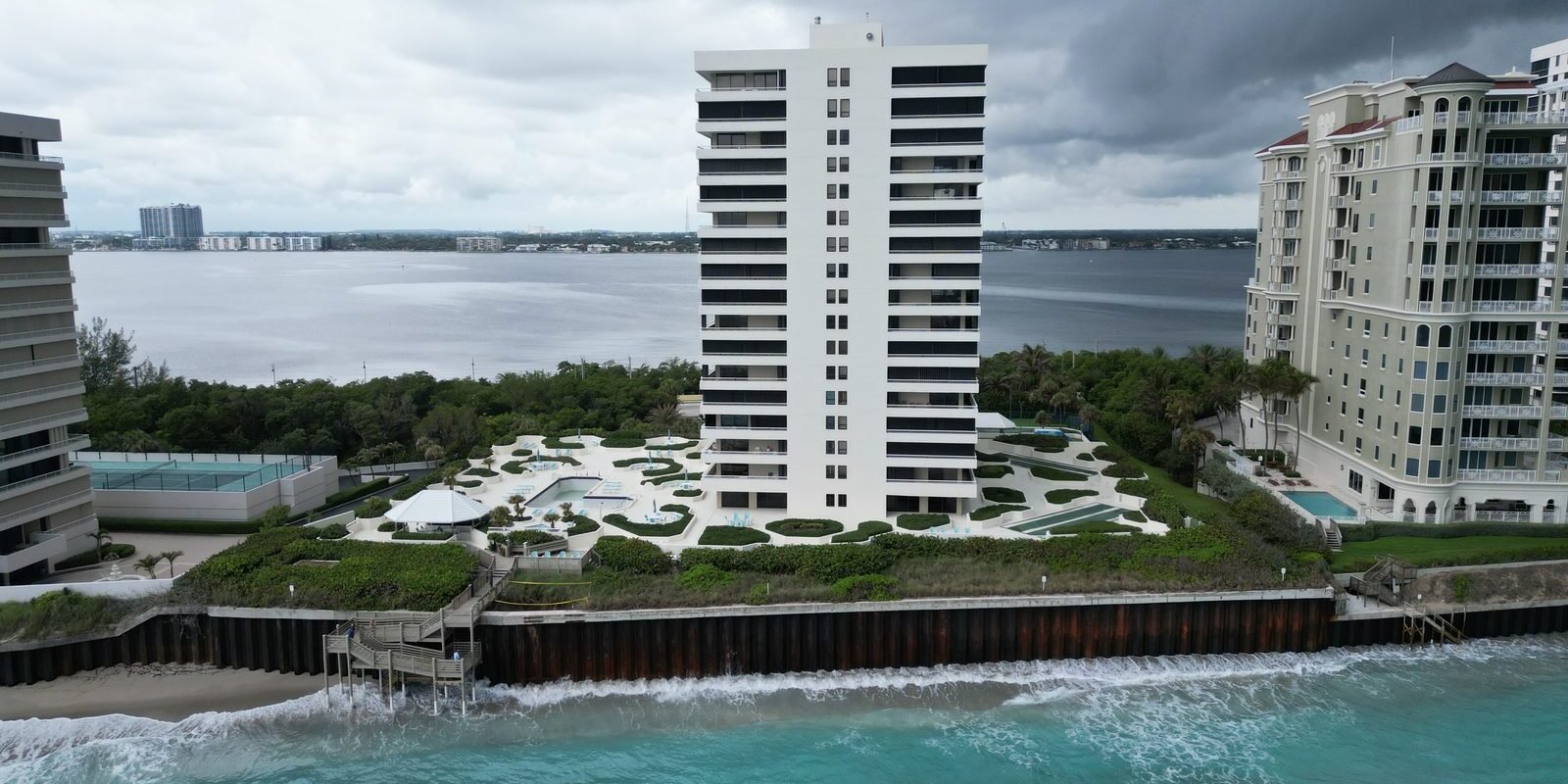
An engineer-sealed seawall report from Souffront Contractors documents the condition of a seawall’s cap, panels, piles and soil, backed by a Florida-licensed structural engineer’s signature and seal — not a sales estimate dressed up to look official. In Fort Lauderdale and Boca Raton, where canal-front and Intracoastal seawalls have been sitting in saltwater since the 1960s and 1970s, that report is usually the document an insurer, a buyer’s attorney, or a city permit reviewer actually reads before anyone signs off on anything. This article breaks down what a real one contains, what Fort Lauderdale and Boca Raton conditions typically show up in it, and what a thin report quietly skips.
Key takeaways
- An engineer-sealed seawall report carries a Florida-licensed structural engineer’s signature and seal, making it admissible to insurers, lenders and permitting offices — a sales quote does not.
- A complete report documents four structural zones: the cap, the panels, the pile system (king piles, batter piles or tiebacks), and the soil and toe condition behind and below the wall.
- Fort Lauderdale and Boca Raton seawalls built in the 1960s through 1980s commonly show tieback corrosion, cap spalling and soil loss at the toe from tidal exchange on the Intracoastal and finger canals.
- A seawall inspection in this market is priced as a flat fee, typically $1,500-$3,000 depending on complexity, quoted before the site visit — never by the linear foot.
- Thin reports often skip below-waterline observation and a written repair timeline, leaving buyers and boards without the two things they actually need.
What “engineer-sealed” actually means
In Florida, a seal is a structural engineer’s personal certification that they examined the structure and are putting their license behind the findings. When Souffront performs an engineer-sealed seawall report, a Florida-licensed structural engineer inspects the wall in person, writes the findings, and signs and seals the final document. That seal is what turns a contractor’s opinion into a document an insurance underwriter, a title company, or a city building department can actually rely on.
This matters more in Fort Lauderdale and Boca Raton than people expect. Both cities sit inside the High-Velocity Hurricane Zone, and both have dense networks of canal-front single-family lots and HOA common-area seawalls built decades ago. A structural engineer inspection catches what a visual walk-through from a contractor doesn’t: whether the cap is still doing its job, whether the piles behind it are holding, and whether the soil the wall depends on is still there.
What belongs in an engineer-sealed seawall report
A complete report walks four structural zones, in order, with a condition rating for each:
- The cap. The poured concrete top of the wall. Cracking, spalling, exposed rebar and rust staining here usually mean water and chlorides have already reached the steel inside.
- The panels. The vertical face of the wall holding back the yard. Bowing, rotation, or visible gaps at the joints point to pressure the wall isn’t built to handle anymore.
- The pile system. King piles, batter piles, or buried tiebacks, depending on how the wall was built. This is where a structural engineer inspection earns its fee — piles and tiebacks are often the first thing to fail and the hardest to see without getting in the water.
- The soil and toe. Voids, scour, or soil loss at the base of the wall, usually found by probing or by checking the toe below the waterline. A wall with a clean cap can still be failing here.
Each zone gets a condition rating — Good, Fair, Poor, Critical or Very Poor — plus dated, labeled photographs. That kind of structured condition rating follows the coastal structure inspection approach published by the American Society of Civil Engineers. The report closes with a written opinion: what needs attention now, what can wait, and what the engineer recommends doing about it. A Florida-licensed structural engineer signs and seals the final page. If a report skips the rating system or the dated photos, it’s a summary, not an engineering document.
What shows up in Fort Lauderdale and Boca Raton seawalls
Fort Lauderdale’s finger-canal neighborhoods — Las Olas Isles, Rio Vista, Coral Ridge — and Boca Raton’s Intracoastal and canal-front lots share a common problem: most of these seawalls went in between the 1960s and the 1980s, and the tieback rods and rebar inside them were never designed to last past 50-60 years in saltwater. The reports Souffront writes in this corridor consistently turn up the same findings:
- Tieback corrosion where the rod meets the cap, from decades of tidal wetting and drying
- Cap spalling and rust staining on the water side, where chloride exposure is constant
- Soil loss at the toe on canals with strong tidal exchange or boat-wake erosion
- Marine growth masking cracking below the waterline, which is why a below-waterline look matters on anything over 15-20 years old
A seawall repair contractor working without an engineer’s report is guessing at scope from what’s visible above the waterline. An engineer-sealed report tells a board or homeowner what’s actually happening at the pile and toe level before anyone signs a repair contract.
What a thin report leaves out
Two things separate a real engineer-sealed report from a quick write-up:
- Below-waterline observation. A visual check from a dock or a seawall cap misses the piles, tiebacks and toe condition — the parts of the wall most likely to be failing first. If a report has no record of underwater observation on a wall with any history of settling, cracking, or age over 20 years, ask why.
- A written timeline. “Monitor” is not a plan. A complete report separates findings into immediate, short-term (within 12 months), and long-term items, so a board or buyer knows what has to happen and by when — not just that something is wrong.
Both gaps matter at the exact moments this report gets used: an insurance renewal, a sale closing, or a city permit application.
Who actually relies on this report
An engineer-sealed seawall inspection report gets read by more people than the owner who ordered it:
- Insurance underwriters use it to decide whether a waterfront policy renews, and at what premium.
- Title companies and buyer’s attorneys use it during due diligence on waterfront sales in Fort Lauderdale and Boca Raton, where an undisclosed seawall problem can unwind a deal at the closing table.
- HOA and condo boards use it to justify a special assessment to owners who are going to ask hard questions about where the money is going.
- City building departments require a sealed report to support a seawall repair or replacement permit application in both Fort Lauderdale and Boca Raton.
On larger or more complex projects, a special inspector may also be required under the Florida Building Code to verify work during construction — a separate role from the inspection report, but one that follows the same documentation standard.
What an engineer-sealed seawall report costs
A standard residential seawall inspection and report is a flat fee, typically $1,500 to $3,000, depending on the complexity of the inspection — wall length is one minor factor among several, including site access, whether a below-waterline dive is needed, and how many structural components are involved. It is never priced per linear foot. That’s a repair-and-construction pricing model, not an inspection one. The fee is quoted before the site visit, so there’s no surprise invoice after the engineer shows up.
If the report leads to repair work, that scope is priced separately and specifically — moderate repairs generally run $100-$250 per linear foot, full panel or tieback replacement $400-$600 per linear foot, as general industry ranges. Those numbers describe construction, not the inspection that identifies the need for it.
Talk to a Florida-licensed structural engineer
If a Fort Lauderdale or Boca Raton seawall hasn’t had a structural engineer inspection in the last few years — or the last report skipped the below-waterline check — Souffront can schedule one. The report comes signed and sealed by a Florida-licensed structural engineer, priced as a flat fee quoted before the visit, with same-business-day scheduling response. The request form is right below.
Frequently asked questions
What does “engineer-sealed” mean on a seawall report?
It means a Florida-licensed structural engineer personally inspected the seawall and signed and sealed the final report, certifying the findings under their professional license. This carries legal and professional weight that a contractor’s written estimate does not, which is why insurers, title companies and permitting offices rely on sealed reports rather than informal write-ups.
How much does an engineer-sealed seawall report cost in Fort Lauderdale or Boca Raton?
Most residential seawall inspection reports run $1,500 to $3,000 as a flat fee, quoted before the site visit. The price depends on access, whether a below-waterline dive is needed, and the number of structural components involved — not on the length of the wall.
Does the report include a below-waterline inspection?
It should on any wall with visible deterioration, a history of settling, or age over roughly 15-20 years, since piles, tiebacks and the toe of the wall sit below the waterline and are often the first components to fail. Ask specifically whether underwater observation was performed before accepting a report on an older wall.
Do I need this report to sell a waterfront home?
Not legally in every case, but title companies and buyer’s attorneys in Fort Lauderdale and Boca Raton increasingly request one during due diligence, since an undisclosed seawall issue can delay or unwind a closing. Having a current sealed report in hand before listing avoids that problem.
How is this different from hiring a seawall repair contractor to look at the wall?
A seawall repair contractor is scoping a job they may also bid on; an independent engineer-sealed inspection gives a homeowner or board a professional opinion before any repair contract is signed. Souffront performs both inspection and construction, and discloses that plainly whenever repair work comes up as part of the same project.
How often should a Fort Lauderdale or Boca Raton seawall be inspected?
Every 3-5 years for a wall in fair-to-good condition, and annually once a wall shows cap cracking, rust staining, or any sign of movement. Insurance renewals and hurricane season are also natural triggers to schedule one.
What happens if the report finds a critical issue?
The report separates findings into immediate, short-term (within 12 months) and long-term recommendations, so there’s a clear answer to what has to happen first. A critical rating means the engineer is recommending action now, not at the next renewal cycle.
Related from Souffront Contractors: HOA and condo board compliance reports — all delivered by the same Florida-licensed structural engineering and marine construction team. Call (877) 420-7220.
About Souffront Contractors Inc.: a Florida-licensed structural engineering and marine construction firm serving Miami-Dade, Broward, and Palm Beach counties. Get seawall repair in Coral Gables and across Miami-Dade County — see our seawall contractors page or call (877) 420-7220.
Got a seawall or structural question?
Five fields. Same business day from a Florida-licensed engineer, routed into our dispatch CRM in real time.
- Same business dayAcknowledgment from a Florida licensed engineer — Mon–Fri 8 AM–5:30 PM.
- Engineer-sealed reportAccepted by carriers, building departments, and real-estate transactions.
- Fixed-fee proposalNo hourly billing. Repair scope priced line-by-line.