
How to Know if Your Seawall Needs Replacing
A Florida-licensed structural engineer explains the four field tests that separate a seawall repair from a full replacement — before you pay for a quote.
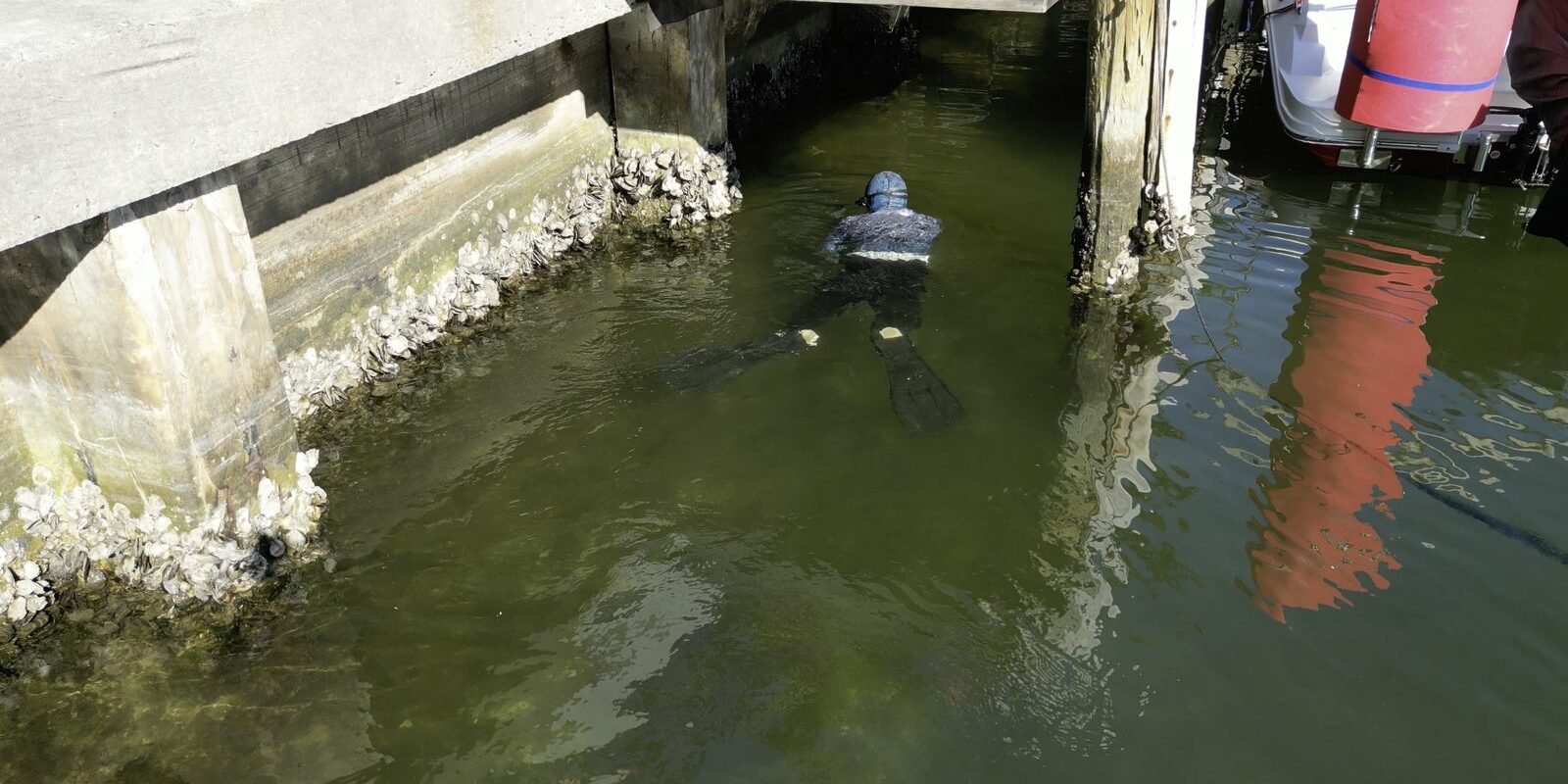
You know if a seawall needs to be replaced by what four field tests show, not by how the wall looks from the yard. On a recent walk-through on a canal lot in Coral Gables, the cap looked fine from the patio — hairline cracks, a little staining. A deflection reading at the same spot showed the panel had already rotated two inches out of plane. That reading, not the crack, is what put the project in the replace column instead of the repair column.
This is the work Souffront Contractors does before writing a scope of work: four measurements that turn “it looks bad” into a number a contractor can bid against and a permit reviewer can approve.
Key takeaways
- Repair-or-replace comes down to four measurements: panel deflection, tieback tension, soil void depth behind the cap, and concrete core condition.
- A panel deflected more than roughly 1.5–2 inches out of plane is generally past the point where patching holds.
- A tieback that pulls loose under test load, rather than resisting it, means the anchor system has failed — not just the visible panel.
- A seawall inspection that includes these tests is a flat fee, typically $1,500–$3,000 depending on complexity, quoted before any site visit.
- Miami-Dade and Coral Gables permit reviewers ask for this data on the permit application — a visual-only report gets kicked back for more information.
Why a visual look isn’t the test
A seawall can look rough and still be structurally sound, and it can look clean and already be failing. Staining, hairline cracking, and marine growth are cosmetic. What actually decides repair versus replacement is whether the wall’s structural system — the panel, the cap, and the tiebacks holding it against the soil behind it — is still doing its job. That requires measurement, not a walk-by.
The four tests that decide repair or replace
1. Panel deflection measurement
A structural engineer sets a string line or laser level along the face of the cap and measures how far each panel has bowed or rotated out of its original plane. A fraction of an inch is normal movement over decades. Once a panel has moved roughly 1.5 to 2 inches, the concrete has usually already cracked internally in ways you can’t see from the yard, and patching the face won’t stop the movement from continuing.
2. Tieback tension (pull) test
A tieback is the buried rod or cable that anchors the top of the wall back into the soil, resisting the push of earth and water behind the panel. The engineer applies a measured load to a sample of tiebacks and checks whether they hold or slip. A tieback that slips under test load has already lost its grip in the soil — which means the wall is being held up by less than it was designed with, even if the panel face looks intact.
3. Soil void probing behind the cap
Using a probe rod or a small bore along the landward side of the cap, the engineer checks for voids — gaps where soil has washed out behind the wall, usually through a cracked panel or a failed weep hole. A void under a few inches is monitored. A void that runs several feet back, especially near a dock or pool deck, means the ground above it is unsupported and the slab or structure sitting on it is at risk, not just the wall.
4. Concrete core sample (carbonation and chloride)
A small core taken from the panel or cap tells the engineer how far saltwater has penetrated the concrete and whether the rebar inside is actively corroding. Surface rust on exposed steel is a repair. Rebar that’s already lost significant cross-section to corrosion throughout the core sample is a replacement, because the steel — not the concrete — is what’s actually failing.
Reading the results together
No single test makes the call alone. A wall can pass the deflection check and still fail on tieback tension; a wall with a clean core sample can still have a void big enough to undermine a seawall cap. A seawall repair scope gets written when the structural system is sound and the damage is localized. Full replacement gets recommended when two or more of these tests show the wall’s core support — not just its finish — has failed.
Why the permit office cares which answer you get
Miami-Dade and most municipal building departments require supporting data on a seawall permit application, not just a narrative opinion. A permit reviewer who sees “cracking observed, recommend repair” with no deflection or tieback numbers behind it will send the application back for more information. Submitting the test data up front — the same data that decided repair versus replace — is what gets a permit application through review without a round of resubmittals. This applies whether the work is a seawall construction project or a smaller panel repair.
What it costs to find out
These four tests are part of a standard structural seawall inspection, priced as a flat fee — typically $1,500–$3,000 depending on the complexity of the inspection (wall length, whether a below-waterline dive is needed, number of structural components, report scope). It is never priced per linear foot, and the fee is quoted before any site visit. Repair costs, once the scope is known, generally run $100–$250 per linear foot for moderate panel and cap work, and $400–$600 per linear foot where tieback and panel replacement is required — general South Florida ranges, not a quote for your property.
Talk to a Florida-licensed engineer
If your cap is cracking, your dock has started to tilt, or you’re staring at a contractor’s bid and don’t know if it’s solving the right problem, get the four tests run before you spend on repairs or a replacement. Souffront inspects, engineers, permits, and builds under one roof, so the engineer-sealed report you get is written by the same firm that can carry the fix through permitting and construction. Fill out the form below for a fixed-fee inspection quote, usually answered the same business day.
Frequently asked questions
How do I know if my seawall needs to be repaired or replaced?
A structural engineer measures panel deflection, tests tieback tension, probes for soil voids behind the cap, and takes a concrete core sample. Localized damage with a sound structural system points to repair; significant deflection, failed tiebacks, or deep voids point to replacement.
Can a seawall look fine and still need replacing?
Yes. Staining and surface cracking are cosmetic and don’t indicate structural failure on their own. A wall can look clean from the yard while a tieback has already slipped loose underground, which only shows up under a measured pull test.
How much does a seawall inspection cost?
A standard residential structural seawall inspection in South Florida typically runs $1,500–$3,000 as a flat fee, quoted before any site visit. It is priced by the complexity of the inspection, not by the wall’s linear footage.
How much does seawall repair cost per linear foot?
Moderate repairs — panel patching, cap resurfacing, drainage fixes — generally run $100–$250 per linear foot. Full panel and tieback replacement typically runs $400–$600 per linear foot. These are general South Florida industry ranges, not a fixed quote.
Do I need a permit to repair a seawall in Miami-Dade?
Most seawall repair and replacement work requires a permit through the local building department, and often coordination with Miami-Dade DERM for work affecting the waterway. Supporting engineering data, including deflection and tieback test results, speeds up permit review.
What is a tieback on a seawall?
A tieback is the buried rod or cable anchoring the top of a seawall panel back into the soil behind it, resisting the lateral push of earth and water. A failed tieback is one of the most common reasons a wall that looks intact is actually unsafe.
Who should I hire to inspect a seawall — an engineer or a contractor?
A seawall contractor can tell you what a repair would cost, but only a Florida-licensed structural engineer can measure deflection, test tiebacks, and issue a sealed report establishing whether repair or replacement is structurally appropriate — which is also what the permit office requires.
How often should a seawall be tested, not just looked at?
Most South Florida seawalls benefit from a full structural inspection, including these field tests, every 3–5 years, or sooner after a major storm, visible new cracking, or before buying or selling a waterfront property.
Related from Souffront Contractors: engineer-sealed reports — all delivered by the same Florida-licensed structural engineering and marine construction team. Call (877) 420-7220.
About Souffront Contractors Inc.: a Florida-licensed structural engineering and marine construction firm serving Miami-Dade, Broward, and Palm Beach counties. Reach a licensed seawall contractor in Boca Raton and across Palm Beach County — see our seawall contractors page or call (877) 420-7220.
Got a seawall or structural question?
Five fields. Same business day from a Florida-licensed engineer, routed into our dispatch CRM in real time.
- Same business dayAcknowledgment from a Florida licensed engineer — Mon–Fri 8 AM–5:30 PM.
- Engineer-sealed reportAccepted by carriers, building departments, and real-estate transactions.
- Fixed-fee proposalNo hourly billing. Repair scope priced line-by-line.