
Seawall Panel Repair vs. Replacement Guide
When does a seawall panel need repair versus full replacement? Structural warning signs, cost factors, and how a licensed engineer decides.
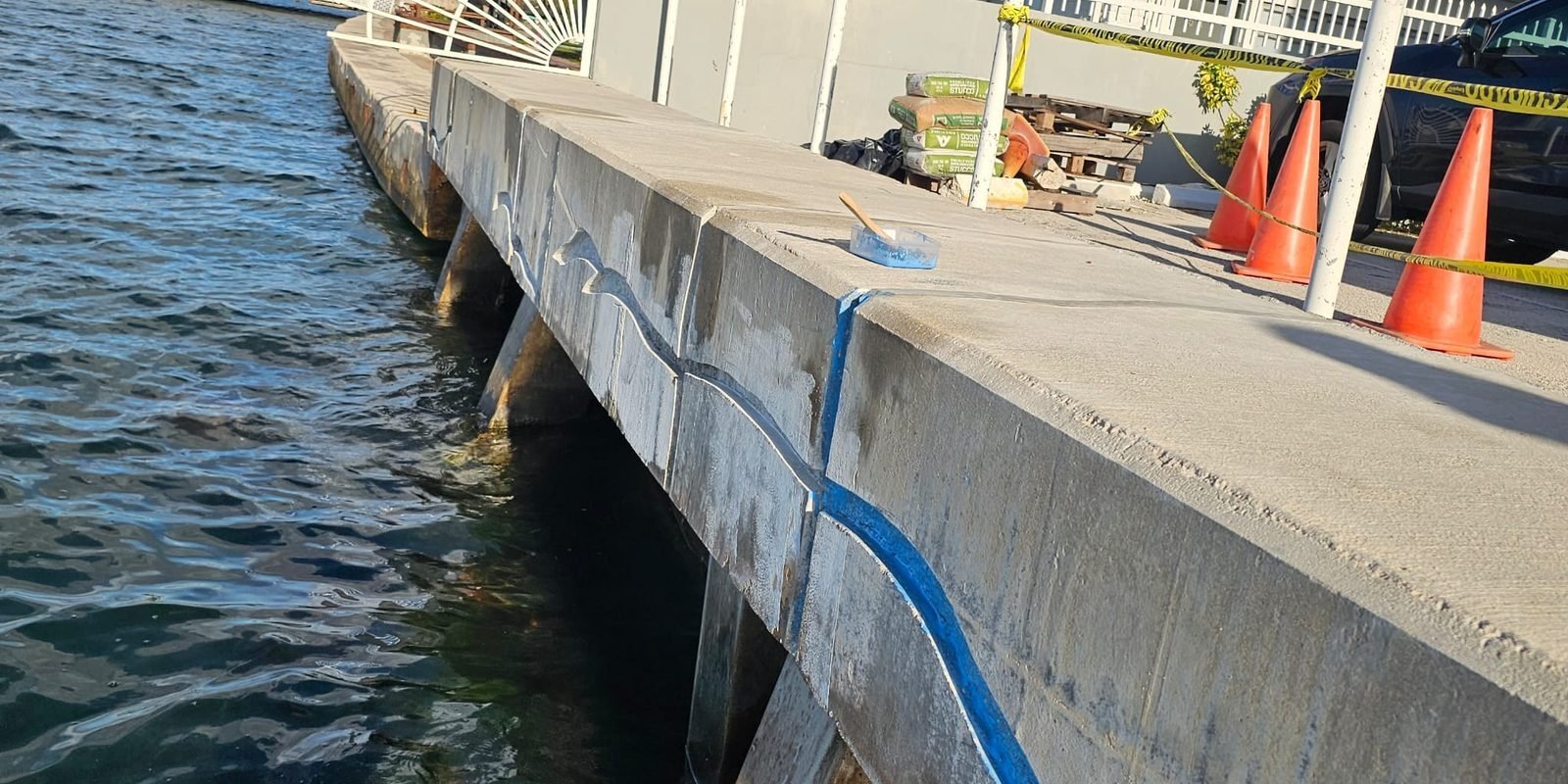
A seawall panel usually needs repair, not replacement, if the damage is limited to surface cracking, minor spalling, or a single failed section with the cap and tiebacks still intact. Full replacement becomes necessary when the panel has rotated, bowed, or separated from its footing, or when soil loss behind the wall has progressed enough that patching would only mask a deeper structural failure. A Florida-licensed structural engineer makes this call based on a hands-on and, when needed, below-waterline inspection — not a guess from the seawall or dock.
Key takeaways
- Surface cracking, minor spalling, and isolated cap damage are usually repairable.
- Panel rotation, bowing, or visible separation from the footing signals replacement, not repair.
- Soil or sand loss on the land side (voids, sinkholes near the wall) means the wall is already failing structurally, even if the panel face looks intact.
- Repairs typically run $100–$250 per linear foot; full panel and tieback replacement typically runs $400–$600 per linear foot — these are general industry ranges, not fixed quotes.
- The only way to know which category a wall falls into is a structural inspection, priced as a flat fee ($1,500–$3,000 depending on complexity) and quoted before any site visit.
How a seawall panel is built — and where it fails
Most South Florida residential seawalls use precast or cast-in-place concrete panels tied back into the yard with a buried anchor system. Understanding the parts helps explain why some damage is cosmetic and some is structural.
- Panel — the vertical concrete face holding back soil and water.
- Cap — the horizontal concrete beam across the top of the panels, often where cracking first appears.
- Tieback — a steel rod running from the panel or cap back into the yard, anchoring the wall against soil pressure.
- Deadman anchor — the buried concrete or timber block at the far end of the tieback that holds it in place.
- King pile / batter pile — vertical or angled piles that reinforce panel joints and add lateral support in pile-supported walls.
Failure almost always starts below the visible waterline or underground, at the tieback, deadman, or panel toe, long before it shows up as a crack on the surface. That is why a below-waterline or below-grade review matters more than what the wall looks like from the dock.
Signs a seawall panel can likely be repaired
These conditions are typically addressed with targeted repair rather than replacing the whole wall:
- Hairline to moderate cracking in the cap or panel face with no active leaking of soil through the crack.
- Surface spalling (concrete flaking away, often exposing rebar) limited to a small section.
- Rust staining on the panel face from corroding rebar, caught before the panel has lost structural section.
- One or two isolated panel sections showing distress while the rest of the wall tests sound.
- Minor cap settlement with the panels below still plumb and stable.
In these cases, repair options include epoxy injection, patching with a structural repair mortar, jacketing the panel in new reinforced concrete, or adding supplemental tiebacks to relieve load on an aging anchor system.
Signs a seawall panel needs full replacement
Replacement — removing the panel and rebuilding that section of wall — is the right call when an engineer finds any of the following:
- Panel rotation or bowing. A panel that has visibly tilted or bulged outward has already lost its structural connection to the tieback system.
- Soil voids behind the wall. Sinkholes, soft spots, or settling in the yard near the seawall mean fill material is migrating through a gap in the wall — the damage is almost always worse than what shows on the surface.
- Broken or corroded tiebacks. A snapped tieback rod leaves the panel unrestrained; it is only a matter of time before it fails.
- Extensive rebar loss. When corrosion has eaten away enough steel that the panel can no longer carry its design load, patching the surface does not restore capacity.
- Panel separation at the joints. Gaps opening between adjacent panels indicate the whole section is moving, not just one unit.
When these conditions are present, repair is a temporary and often expensive delay of an inevitable full seawall replacement.
Why “it still looks fine” isn’t a reliable test
A seawall panel can look structurally sound above the waterline while the tieback system has already failed below grade. That mismatch is the most common reason property owners are surprised by a replacement recommendation after expecting a simple patch. Structural assessment, not visual impression from the yard, is what determines the category.
Cost factors: repair vs. replacement
Repair and replacement are priced differently, and neither is priced like an inspection:
- Moderate repairs — patching, jacketing, tieback supplementation — typically run in the $100–$250 per linear foot range, depending on access and materials.
- Full panel and tieback replacement — removing the failed section and rebuilding it — typically runs $400–$600 per linear foot, depending on wall height, soil conditions, and permitting requirements.
- The inspection itself is a flat fee, not linear-foot pricing — generally $1,500–$3,000 for a standard residential inspection, quoted upfront based on wall length as one factor among several (access, whether a below-waterline dive is needed, number of structural components, and report scope).
Any contractor who prices an inspection by the linear foot before actually assessing the wall is guessing, not engineering.
Regulatory and permitting considerations
Seawall work in Miami-Dade, Broward, and Palm Beach counties generally requires permitting through the local building department and, depending on scope, coordination with Miami-Dade DERM for work affecting tidal waters. Larger replacement projects that extend into navigable waters may also fall under U.S. Army Corps of Engineers jurisdiction. Repairs that stay within the existing wall footprint typically face a lighter permitting path than full replacement, which is one more reason the repair-versus-replacement decision matters early, before a contract is signed. Florida’s building code, including High-Velocity Hurricane Zone (HVHZ) provisions where applicable, sets minimum standards for how replacement sections must be designed and inspected.
Getting an engineer’s opinion instead of a contractor’s estimate
A contractor bidding a repair job has an incentive to recommend the smaller, cheaper scope. A contractor bidding a replacement job has the opposite incentive. Neither is positioned to give a neutral answer. An engineer-sealed inspection report documents the actual condition of the panels, cap, and tieback system, and states plainly whether the wall needs repair, partial replacement, or full replacement — independent of who ends up doing the work.
Talk to a Florida-licensed engineer
If a seawall panel is cracking, bowing, or the yard behind it is settling, get a structural opinion before hiring anyone to repair or rebuild it. Souffront Contractors inspects, engineers, permits, and builds under one roof, with a fixed-fee inspection quoted before any site visit and a same-business-day response. Reach us at (877) 420-7220, or use the form below to schedule an inspection in Miami-Dade, Broward, or Palm Beach County.
Frequently asked questions
How do I know if my seawall panel needs repair or full replacement?
A structural inspection is the only reliable way to know. Surface cracking and isolated spalling are usually repairable, while panel rotation, bowing, broken tiebacks, or soil voids behind the wall indicate the section needs full replacement. A Florida-licensed structural engineer inspects the panel, cap, and tieback system, including below the waterline when needed, before making a recommendation.
Can a leaning or bowed seawall panel be repaired instead of replaced?
Generally, no. Rotation or bowing means the panel has already lost its structural connection to the anchor system behind it. At that point, repair only addresses the surface and does not restore the wall’s ability to hold back soil and water, so replacement of that section is typically required.
What does it cost to repair a seawall panel versus replace it?
Moderate repairs, such as patching and tieback supplementation, generally run $100–$250 per linear foot. Full panel and tieback replacement generally runs $400–$600 per linear foot. Both figures are general industry ranges and vary with access, soil conditions, and wall height — a site-specific quote follows the inspection.
Does a seawall inspection cost more if the wall needs replacement?
No. The inspection itself is a flat fee, typically $1,500–$3,000 depending on the complexity of the inspection — not the outcome. It is quoted before the site visit regardless of whether the wall turns out to need minor repair or full replacement.
What are the earliest warning signs of seawall panel failure?
Common early signs include cracking or settlement in the cap, rust staining on the panel face from corroding rebar, small voids or soft spots in the yard near the wall, and visible gaps opening between panel joints. Any of these warrants a structural inspection before the condition worsens.
Do I need a permit to repair or replace a seawall panel in South Florida?
Yes. Seawall work in Miami-Dade, Broward, and Palm Beach counties typically requires a building permit, and work affecting tidal waters may require coordination with Miami-Dade DERM or, for larger projects, the U.S. Army Corps of Engineers. Repairs within the existing footprint generally face a lighter permitting path than full replacement.
How long does seawall panel repair or replacement take?
Repair work on a limited section can often be completed within days once permitted. Full replacement takes longer, since it involves removing the failed panel, addressing the tieback and deadman anchor system, and rebuilding to current code — timelines depend on permitting review and site access.
Is soil or sand loss behind my seawall a sign the panel needs replacing?
Yes. Voids, sinkholes, or settling soil near a seawall usually mean fill material is migrating through a gap in the wall, which is a structural failure even if the panel face looks intact. This condition typically points toward replacement rather than surface repair, and should be inspected promptly.
About Souffront Contractors Inc.: a Florida-licensed structural engineering and marine construction firm serving Miami-Dade, Broward, and Palm Beach counties. Book a seawall inspection in Miami or anywhere on the South Florida waterfront — or call (877) 420-7220.
Got a seawall or structural question?
Five fields. Same business day from a Florida-licensed engineer, routed into our dispatch CRM in real time.
- Same business dayAcknowledgment from a Florida licensed engineer — Mon–Fri 8 AM–5:30 PM.
- Engineer-sealed reportAccepted by carriers, building departments, and real-estate transactions.
- Fixed-fee proposalNo hourly billing. Repair scope priced line-by-line.