
Bulkhead vs. Seawall: Understanding the Difference
Bulkhead vs. seawall — what separates these two waterfront retaining structures, which one protects your property, and why the difference matters for repairs.
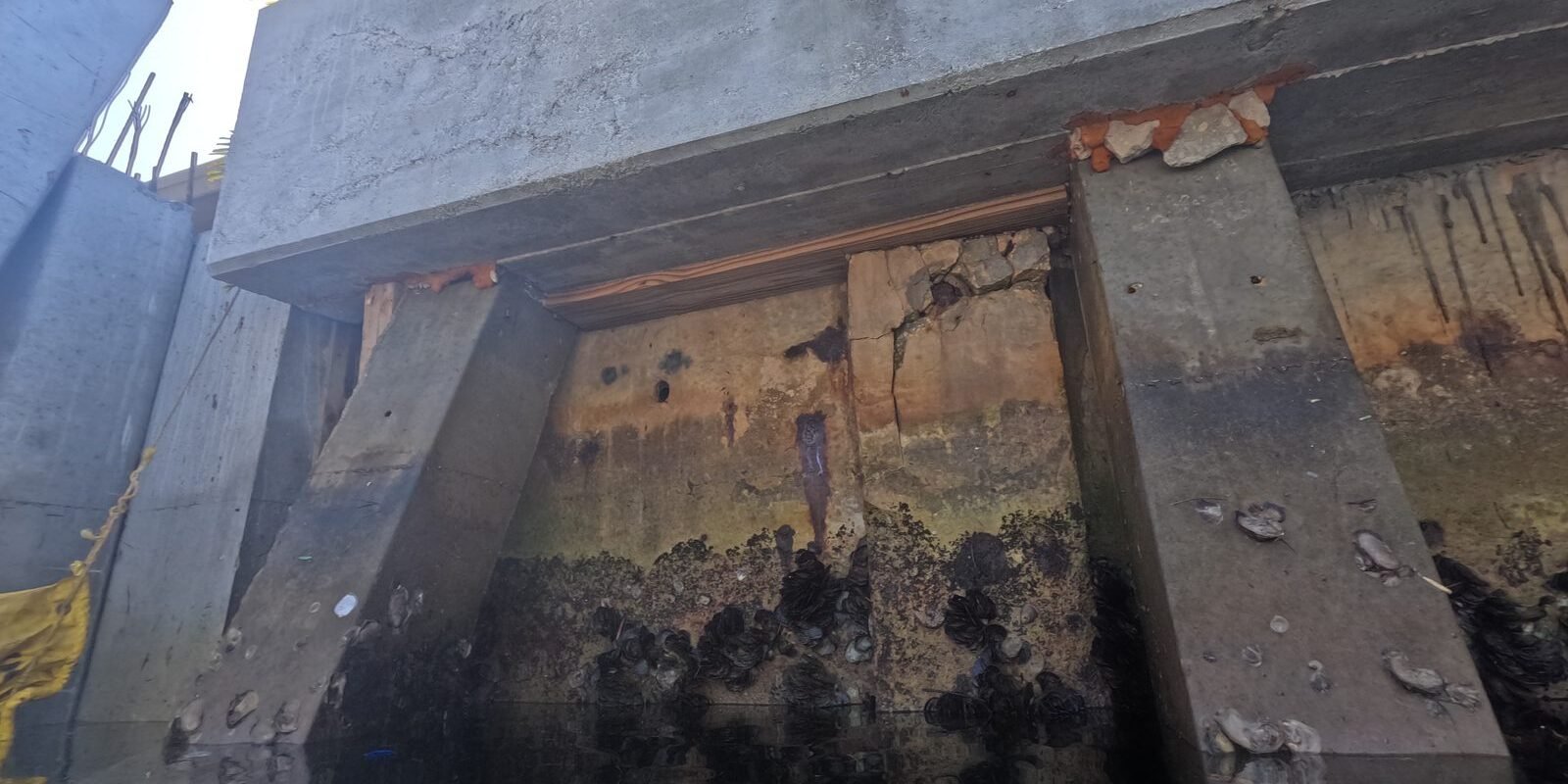
In the bulkhead vs. seawall comparison, the short answer is this: a bulkhead is a vertical retaining wall built mainly to hold soil back, while a seawall is the broader term for a shoreline structure engineered to resist both soil pressure and wave or boat-wake energy. In South Florida, homeowners use “seawall” for almost any waterfront wall, but Souffront Contractors treats the distinction as structural, not just semantic, because it changes how the wall is built, inspected, and repaired.
Key takeaways
- A bulkhead is typically a continuous cast-in-place or sheet-pile wall built to retain soil, with no king piles or batter piles — it relies on a buried tieback system instead.
- A pile-supported seawall uses vertical king piles, angled batter piles, precast concrete panels, and a cap, and is generally the stronger option for open water or wave exposure.
- Both structure types can use tiebacks — buried anchors that resist soil pressure — but only pile-supported seawalls have the piling system.
- Miami-Dade DERM permits and regulates both structure types the same way, regardless of which name is used on the plans.
- A structural inspection for either type is a flat fee, typically $1,500–$3,000 depending on complexity, quoted before any site visit.
What is a seawall?
In coastal engineering, a seawall most often refers to a pile-supported retaining structure built along canals, bays, or open water. It is designed to hold back soil and resist wave action, boat wake, and storm surge over decades of exposure.
A typical pile-supported seawall has four structural components:
- King piles — the main vertical structural piles, usually precast concrete, spaced evenly along the wall to carry the load.
- Batter piles — piles driven at an angle behind the wall, working with the king piles to resist the horizontal push of the soil.
- Panels — precast concrete or vinyl sheeting that spans between the piles and physically holds the soil back.
- Cap — the horizontal concrete beam across the top that ties the piles together and supports foot traffic, railings, or a dock.
This is the design most common on wider canals, bay-front lots, and any property exposed to meaningful wave energy.
What is a bulkhead?
A bulkhead is also a vertical retaining wall along the water’s edge, but it is built differently. Instead of a piling system, a bulkhead is usually a continuous cast-in-place concrete wall or interlocking sheet piling — vinyl, steel, or concrete sections driven side by side to form one solid barrier.
Bulkheads do not have king piles or batter piles. Instead, they rely on tiebacks — buried anchor rods or cables that run from the wall back into stable soil, holding the structure in place against the pressure of the fill behind it. Because a bulkhead is one continuous section rather than a piled frame, it tends to be used in calmer, narrower canals where wave and wake loads are lower.
Bulkhead vs. seawall: the structural differences
Construction method
A seawall is a framed structure — piles carry the load, panels fill the gaps. A bulkhead is a continuous wall — the wall material itself carries the load, with tiebacks providing additional resistance.
Where each is used
Seawalls are common on bay fronts, wider canals, and any lot with real wave exposure. Bulkheads are more common on narrow, protected canals where soil retention is the primary concern and wave energy is minimal.
Failure points
A seawall’s vulnerable points are the piles (cracking, spalling, exposed rebar), the panel-to-pile connection, and the cap. A bulkhead’s vulnerable points are the tiebacks (corrosion or snapping), the wall itself (cracking or bowing), and voids that form behind it when soil washes through gaps or joints.
Repair approach
Repairing a seawall often means addressing individual piles or panels without replacing the whole structure. Repairing a bulkhead more often means addressing the tieback system or, if the wall itself has failed, replacing a full run rather than a single component.
Which one does your property have?
Most owners can’t tell from the surface — both structures look like a flat vertical wall along the water. The visible clue is usually the cap and any visible panel seams: if you can see individual vertical panel lines between piles, it is likely a pile-supported seawall. A smooth, continuous wall face with no repeating seams usually indicates a bulkhead or sheet-pile system.
The reliable way to confirm which structure you have — and its actual condition — is a structural seawall inspection. An inspector identifies the wall type, checks the cap, piles or wall face, and tieback system, and documents any voids, cracking, or corrosion in an engineer-sealed report.
Why the distinction matters for repairs and permitting
Getting the structure type right affects both the repair scope and the permit application. Miami-Dade DERM reviews shoreline work under the same environmental and structural permitting process regardless of whether the plans call the structure a bulkhead or a seawall — but the engineering drawings, material specs, and repair method differ based on which one is actually in the ground. Submitting repair plans for the wrong structure type causes review delays and, in some cases, a failed inspection mid-project.
For HOAs and condo boards, this same distinction matters for HOA compliance reporting and reserve planning — the repair cost per linear foot, and the expected service life, both depend on which structure type is documented in the engineer’s report.
Signs of trouble that apply to both structure types
- Visible leaning, bowing, or rotation of the wall or cap
- Cracking or spalling concrete with exposed, rusted rebar
- Soil settling, sinkholes, or voids in the yard near the wall — a sign of soil loss behind the structure
- Rust staining running down the wall face
- Gaps or separation at panel seams or wall joints
- A tieback rod visibly broken, disconnected, or protruding from the soil
Any of these signs warrants a professional inspection before the damage worsens. Left unaddressed, soil loss behind either structure type accelerates and can lead to a sudden section failure.
Talk to a Florida-licensed engineer
If you’re not sure whether your property has a bulkhead or a pile-supported seawall — or you’ve noticed cracking, leaning, or soil loss — a Florida-licensed structural engineer can identify the structure type and its condition in one visit. Souffront Contractors inspects, engineers, permits, and builds under one roof, with a fixed-fee, engineer-sealed report and typically same-business-day response. Use the form below to schedule an inspection.
Frequently asked questions
Is a bulkhead the same thing as a seawall?
Not exactly. Both hold back soil at the water’s edge, but a seawall is typically a pile-supported structure with king piles, batter piles, panels, and a cap, while a bulkhead is a continuous cast-in-place or sheet-pile wall that relies on buried tiebacks instead of a piling system. In everyday conversation the terms are often used interchangeably, but the engineering behind them is different.
Which is stronger, a bulkhead or a seawall?
A pile-supported seawall is generally the stronger option for open water, wide canals, or any location with meaningful wave and wake exposure, because the piling system distributes load across multiple structural points. A well-built bulkhead performs well in calmer, protected canals where soil retention — not wave resistance — is the main job.
How do I know which type my property has?
A structural seawall inspection identifies the exact structure type by examining the cap, wall face, and any visible piles or panel seams. This is the most reliable way to confirm what you have and document its current condition.
Do bulkheads have piles?
No. A true bulkhead does not have king piles or batter piles — it is a continuous wall. It does typically have tiebacks, which are buried anchor rods or cables that hold the wall against the pressure of the soil behind it.
Does Miami-Dade DERM permit bulkheads and seawalls differently?
No. Miami-Dade DERM reviews shoreline retaining structures under the same environmental and structural permitting process regardless of which term is used, but the engineering drawings and repair specifications must match the actual structure type in the ground.
How much does an inspection cost for either structure type?
A structural inspection is priced as a flat fee — typically $1,500–$3,000 depending on the complexity of the inspection — and is not based on the wall’s linear footage. The fee is quoted upfront before any site visit and covers either a bulkhead or a pile-supported seawall.
Can a bulkhead be converted into a pile-supported seawall?
Yes, in some cases a full replacement project converts a failing bulkhead into a pile-supported seawall for greater strength, particularly on lots exposed to wider canals or open water. This requires a new engineered design and a fresh permit, since it is a different structure type than what currently exists.
What are the first signs a bulkhead or seawall is failing?
Watch for leaning or bowing of the wall, cracking with exposed rebar, rust staining, soil settling or sinkholes in the yard near the wall, and any visible gaps at panel seams or joints. Any of these signs should prompt a professional inspection before the problem grows.
About Souffront Contractors Inc.: a Florida-licensed structural engineering and marine construction firm serving Miami-Dade, Broward, and Palm Beach counties. Talk to a seawall repair contractor who engineers, permits, and builds the fix — or call (877) 420-7220.
Got a seawall or structural question?
Five fields. Same business day from a Florida-licensed engineer, routed into our dispatch CRM in real time.
- Same business dayAcknowledgment from a Florida licensed engineer — Mon–Fri 8 AM–5:30 PM.
- Engineer-sealed reportAccepted by carriers, building departments, and real-estate transactions.
- Fixed-fee proposalNo hourly billing. Repair scope priced line-by-line.