
Can Your Seawall Cap Support a Davit Lift?
Davit installation on a seawall cap concentrates real weight in one spot. Here's the structural check most installers skip — and what it costs to get right.
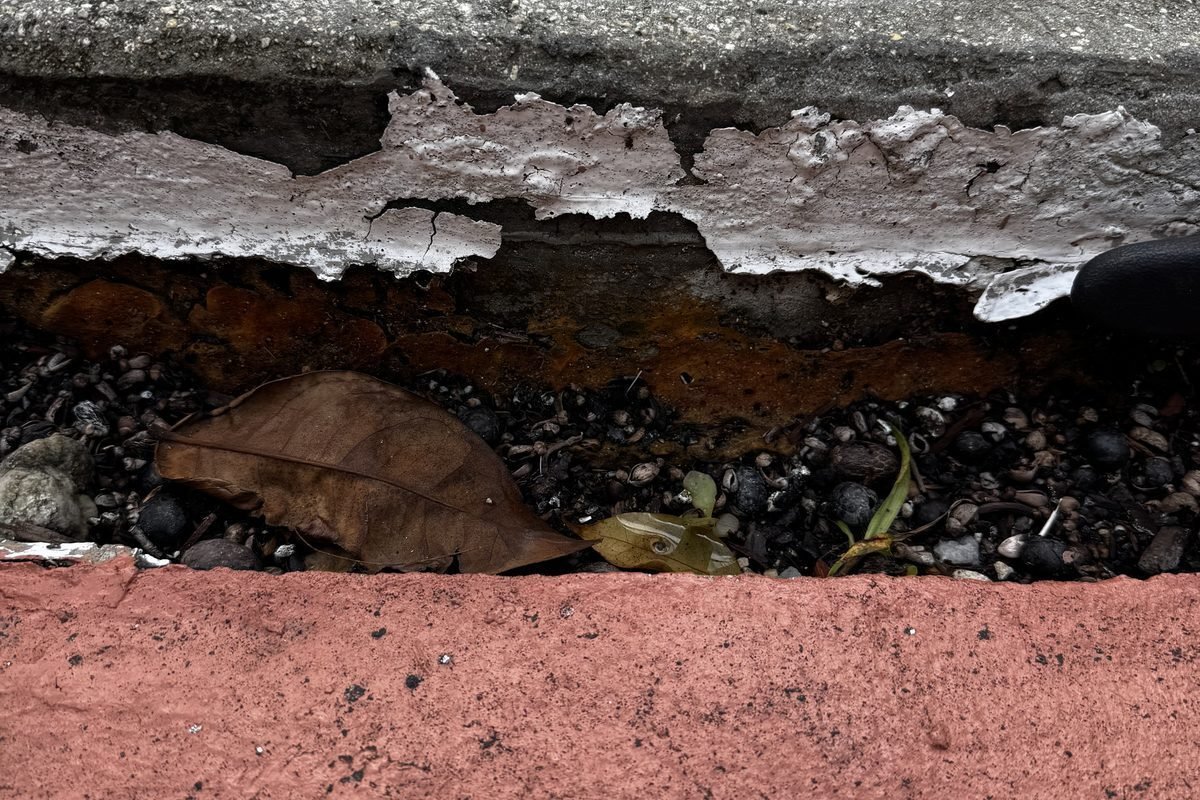
A davit bolted to a seawall cap puts a concentrated point load on concrete that was almost never designed to carry one. Before you install a jet ski or small boat davit anywhere on Biscayne Bay — Key Biscayne, Coconut Grove, or any canal-front lot — the cap needs a load check from a Florida-licensed structural engineer, not just a marine contractor with a drill. Skip that check and you find out the hard way, usually as a crack running out from the anchor bolts within a season or two.
Key takeaways
- A davit doesn’t spread its load like a person walking the cap — it concentrates dead weight, lift weight, and dynamic swing force into four anchor bolts in one small footprint.
- Most South Florida seawall caps were poured to hold the wall together, not to carry a point load — there’s no calculation on file that says they can.
- Warning signs after installation: hairline cracks radiating from the bolt pattern, a hollow sound when you tap the cap near the davit base, or visible cap deflection when the lift is loaded.
- Cap thickness, reinforcement, and how far the davit sits from the wall face (cantilever length) all change the answer — there’s no universal “it’ll be fine.”
- A structural review of a davit location is typically folded into a seawall or dock inspection, quoted upfront before any site visit.
What a davit does to a seawall cap that a person walking on it doesn’t
A davit is the fixed arm-and-winch you see on canal docks lifting a jet ski or small boat clear of the water. It looks simple to mount — four bolts into the cap, done in an afternoon. But a person walking the cap distributes their weight over two boot soles moving across several feet of concrete. A davit does the opposite: it takes the weight of the unit itself, the weight of whatever’s hanging from it, and the swing and shock load of raising and lowering that load, and drives all of it straight down through four small anchor points.
On a lot along Biscayne Bay or one of the canal systems feeding it, that base plate usually lands twelve to twenty-four inches from the waterside edge of the cap — the section with the least concrete behind it and the shortest path to a crack.
The calculation nobody runs before drilling
Here’s the check that gets skipped almost every time: does the cap, as built, have the section depth and reinforcement to carry that point load without cracking or pulling the anchors loose? Nobody wrote that number down when the seawall was built forty years ago, because caps aren’t designed for davits — they’re designed to tie the top of the panels together and resist the soil and water pressure behind the wall.
A proper check works backward from the load:
- Dead load — the davit’s own weight, typically 150–400 lbs depending on the model.
- Live load — the vessel being lifted. A jet ski runs 500–900 lbs; a small skiff can push past 1,500 lbs.
- Dynamic load factor — raising and lowering adds shock loading, often modeled as 1.5–2x the static weight at the moment of lift-off.
- Anchor pull-out capacity — what the concrete and embedded rebar (if any) can actually resist before the bolt pulls a cone of concrete out with it.
Add it up and a loaded davit can put several thousand pounds of combined static and dynamic force through a footprint smaller than a dinner plate. Whether the cap can take that depends on things you can’t see by looking at it — cap thickness, whether it’s reinforced with rebar or just plain concrete, and how much sound concrete surrounds the anchor points.
What we actually check on site before signing off
This is where field observation earns its keep. On a seawall inspection that includes a proposed or existing davit location, we’re looking at:
- Cap thickness and edge distance — measured directly, not estimated. A cap poured thinner than 6–8 inches near the water edge is a different conversation than one poured thick and reinforced.
- Existing cracking — hairline cracks radiating from bolt holes are the first sign the cap is already working harder than it should. On an existing installation, we sound the concrete around each anchor with a hammer for the hollow tone that means the bond has already failed.
- Rebar presence and cover — a pachometer scan tells us whether there’s reinforcing steel in the cap section under the davit base, and how deep it sits.
- Cantilever distance from the wall face — the closer the davit sits to the water side edge, the shorter the load path and the higher the stress concentration.
- Condition of the wall below — a cap can only be as good as what’s holding it up. If the panels or piles below show deterioration, adding a point load on top is the wrong move regardless of what the cap itself can take.
None of this is visible from the dock. It’s why a davit installed by eye, without a structural review, is a bet — sometimes it holds for years, sometimes the first hard lift after a hot South Florida summer is the one that finds the weak spot.
When the cap needs reinforcement before the davit goes in
If the calculation comes back short — cap too thin, no rebar where the load lands, or edge distance too tight — there are still ways to make the installation work instead of just saying no:
- Local cap thickening — a reinforced concrete pour that widens and deepens the section under the davit base, tying into the existing cap with epoxy-set dowels.
- Through-bolted backing plate — spreading the load across a steel plate that ties into sound concrete further from the edge, rather than relying on four isolated anchor points.
- Relocating the davit — sometimes the simplest fix is moving the mounting point a few feet to land over a thicker or better-reinforced section of cap, identified during the same inspection.
What we don’t do is bolt a davit to a cap that hasn’t been checked and call it done. If the wall itself is already showing deterioration — see our notes on seawall repair — that gets addressed first. Loading a compromised structure with a new point load just moves the timeline up.
Where this fits with dock and marine work generally
Davits usually come up alongside broader dock work — a new lift package, a dock rebuild, or a full marine construction project. If you’re planning a new dock or boat lift installation, the smart sequence is structural review of the seawall cap before the davit is ordered, not after it’s sitting in a box. That way the mounting plan matches what the cap can actually carry, instead of forcing a fix after the fact.
What this costs and how it’s scoped
A structural check of a davit location is typically part of a seawall inspection, priced as a flat fee — usually $1,500–$3,000 depending on the scope of the inspection, quoted upfront before any site visit. It is not priced per linear foot of seawall; that pricing model applies to repair and replacement work, not inspections. If cap reinforcement or a backing plate turns out to be needed, that’s scoped and quoted as its own line item once we know what the cap actually needs.
Talk to a Florida-licensed engineer
If you’re planning a davit installation, or you already have one and you’ve noticed a crack near the base, get the cap checked before it becomes a bigger repair. Souffront provides an engineer-sealed structural assessment, fixed-fee and quoted before we show up, with a same-business-day response. The scheduling form is right below.
Frequently asked questions
Can any seawall cap support a davit?
No. A davit’s load depends on the cap’s thickness, reinforcement, and how far the mounting point sits from the water edge — none of which is standard across South Florida seawalls. A cap poured thin or without rebar near the anchor location may not hold a loaded davit without cracking or the anchors pulling loose over time.
What size boat or jet ski can a seawall cap handle on a davit?
There’s no fixed weight limit that applies to every cap. A structural engineer calculates the combined dead load, live load, and dynamic lift force for the specific vessel and davit model, then checks that against the cap’s actual thickness, reinforcement, and anchor pull-out capacity at that exact location.
What are the warning signs a davit is overloading a seawall cap?
Hairline cracks radiating out from the anchor bolts, a hollow sound when the concrete around the base is tapped, visible flex or deflection when the lift is loaded, and rust staining bleeding from the bolt holes are the most common signs the cap is carrying more than it should.
Do I need a permit to install a davit on my seawall?
Most Miami-Dade municipalities require a permit for a davit or boat lift installed on a seawall or dock, and some require an engineer’s letter confirming the structure can support the load. Requirements vary by city, so check with the local building department before installation.
Can an older seawall cap be reinforced to carry a davit?
Often, yes. Options include locally thickening the cap with a reinforced concrete pour tied into the existing structure, using a through-bolted backing plate to spread the load over a wider area, or relocating the davit to a section of cap with better thickness or reinforcement. The right fix depends on what the inspection finds.
How much does a structural check for a davit installation cost?
It’s typically bundled into a seawall inspection, priced flat-fee at $1,500–$3,000 depending on complexity, and quoted before any site visit. If the cap needs reinforcement, that work is scoped and priced separately once the inspection identifies what’s required.
Should the davit installer be the one checking the cap’s capacity?
No. A davit or dock contractor installs hardware; a Florida-licensed structural engineer determines whether the concrete underneath can carry the load. The two are different scopes, and relying on the installer’s judgment alone skips the calculation that actually protects the investment.
Is this check different for a wood dock piling versus a concrete seawall cap?
Yes. A davit mounted to a piling transfers load down the length of the pile into the soil it’s driven into, which is a different calculation than a point load on a horizontal concrete cap. Each mounting location — cap, piling, or dock deck — needs its own structural review.
Related from Souffront Contractors: dock repair and dock builders — all delivered by the same Florida-licensed structural engineering and marine construction team. Call (877) 420-7220.
About Souffront Contractors Inc.: a Florida-licensed structural engineering and marine construction firm serving Miami-Dade, Broward, and Palm Beach counties. Choose a seawall inspection company whose reports are signed and sealed by a licensed structural engineer — see our seawall contractors page or call (877) 420-7220.
Got a seawall or structural question?
Five fields. Same business day from a Florida-licensed engineer, routed into our dispatch CRM in real time.
- Same business dayAcknowledgment from a Florida licensed engineer — Mon–Fri 8 AM–5:30 PM.
- Engineer-sealed reportAccepted by carriers, building departments, and real-estate transactions.
- Fixed-fee proposalNo hourly billing. Repair scope priced line-by-line.