
DERM Seawall Permits in Miami-Dade Explained
How DERM permits work for seawall repair and construction in Miami-Dade, what documents you need, typical timelines, and how to avoid delays.
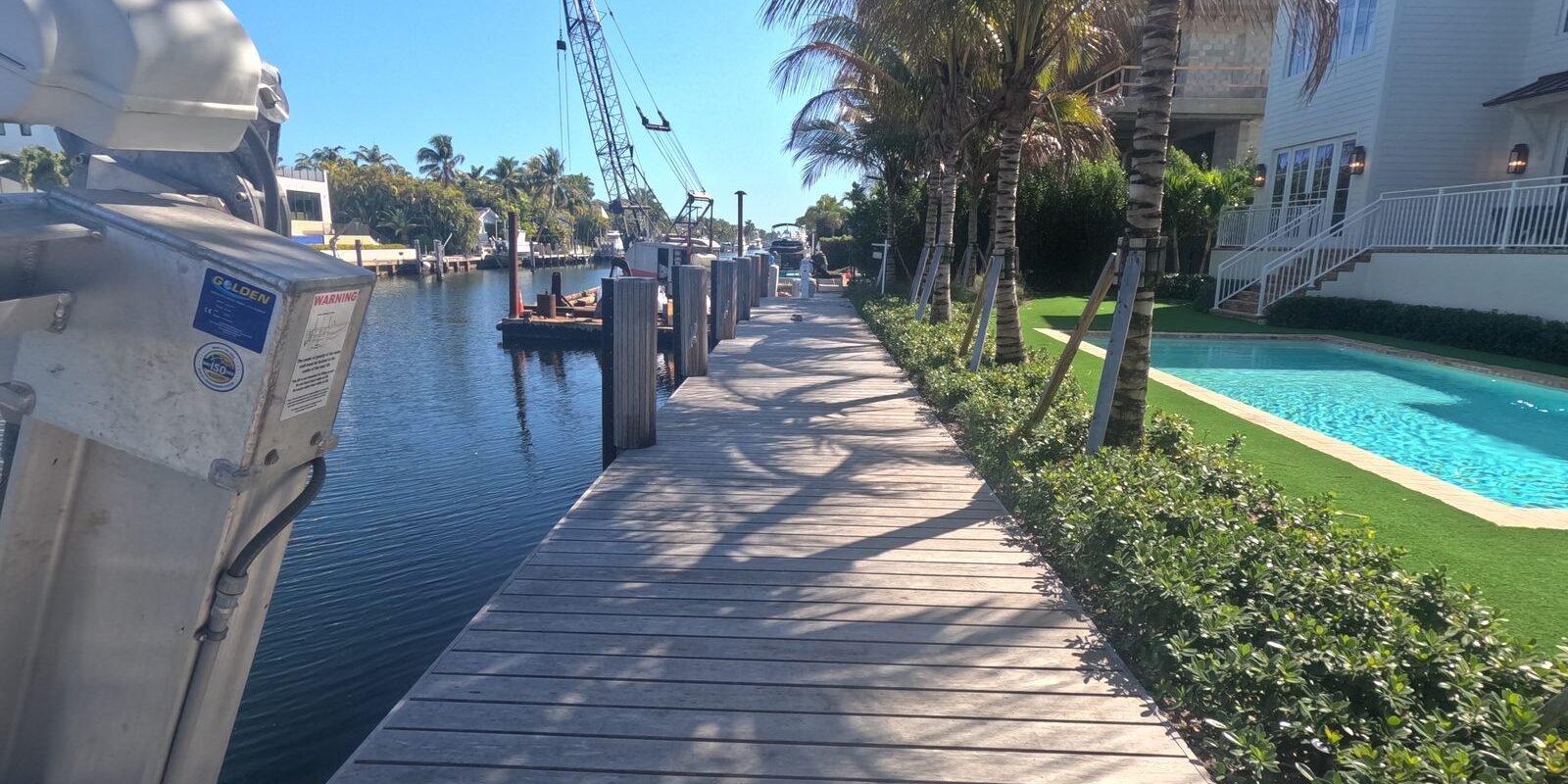
A DERM seawall permit in Miami-Dade is required before almost any repair, replacement, or new construction on a seawall, dock, or shoreline structure. The Division of Environmental Resources Management (DERM) reviews the work for environmental impact, while the county or city building department reviews it for structural compliance. Most residential seawall projects need both approvals before a contractor can start work.
Key takeaways
- DERM permits cover environmental review; a separate building permit covers structural compliance — most seawall jobs need both.
- An engineer-sealed plan set is required for almost all seawall repair or replacement work in Miami-Dade.
- Typical DERM review takes 4–8 weeks for straightforward residential repairs; complex or waterway-adjacent projects can take longer.
- Working on a seawall without a permit can trigger a stop-work order, fines, and a forced retroactive permit application.
- Fixed-fee inspections from Souffront Contractors generate the condition report DERM and the building department typically require as a permit attachment.
What DERM actually regulates
DERM oversees any activity that affects Miami-Dade’s canals, bays, and shoreline — including seawalls, docks, riprap, and shoreline stabilization. Its review focuses on environmental protection: seagrass beds, mangroves, water quality, and manatee habitat near the work area. This is separate from — and in addition to — the structural review a city or county building department performs on the same project.
Because these two reviews run in parallel, permit packages for seawall repair or seawall construction in Miami-Dade typically include both an environmental resource permit application and a building permit application, often submitted around the same time.
When state and federal review also apply
Some seawall projects also require a Florida Department of Environmental Protection (FDEP) environmental resource permit, and work in navigable waterways can trigger review by the U.S. Army Corps of Engineers (USACE). A licensed engineer familiar with Miami-Dade waterfront permitting can tell you early which agencies apply to your specific property, so you’re not surprised mid-project.
Documents a DERM permit application needs
A complete package generally includes:
- A survey or site plan showing the seawall’s location relative to the property line and mean high water line.
- Engineer-sealed structural plans describing the repair or new construction — panel type, tieback spacing, cap details, and pile depth.
- A current condition assessment or inspection report documenting what’s failing and why the work is needed.
- Proof of ownership and, for HOA or condominium associations, board authorization.
- Contractor license and insurance information once a contractor is selected.
Missing or incomplete documents are the single most common cause of review delays. Submitting a complete package the first time is faster than submitting a thin one and waiting through multiple rounds of “requests for additional information.”
The DERM permit process, step by step
- Inspection and condition report. A Florida-licensed structural engineer inspects the seawall, cap, and piles, and documents deterioration in a sealed report. This report anchors the permit application and the eventual repair scope.
- Engineering design. The engineer produces sealed repair or replacement plans matching the actual field conditions — not a generic template.
- Application submission. The DERM environmental application and the local building permit application are submitted, often together, with the survey, plans, and inspection report attached.
- Agency review. DERM reviews for environmental impact; the building department reviews for structural and Florida Building Code compliance. Reviewers may issue comments requiring plan revisions.
- Permit issuance. Once both reviews clear, permits are issued and construction can begin.
- Inspections during construction. The building department typically requires inspections at key stages — pile driving, tieback installation, and final completion — before the permit is closed out.
How long DERM permitting takes
For a typical residential repair with a complete application, expect roughly 4–8 weeks for DERM and building department review combined. Projects near seagrass, mangroves, or in a heavily trafficked waterway can take longer, and any request for additional information restarts part of the review clock. Building in a buffer of several extra weeks into any project timeline is realistic, especially ahead of hurricane season when permitting offices see a volume spike.
What happens without a permit
Unpermitted seawall work in Miami-Dade is a common trigger for code enforcement action. If DERM or a building inspector finds work done without permits, the property owner typically faces a stop-work order, fines that accrue daily until resolved, and a requirement to file for an after-the-fact permit — which can mean removing completed work that doesn’t match approved plans. Getting the permit sequence right the first time is almost always cheaper than fixing it after the fact. Violation response support is available if a stop-work order or notice of violation has already been issued.
Where the process commonly stalls
- Missing or outdated survey. DERM needs an accurate as-built showing the seawall’s exact position.
- Generic engineering plans. Plans that don’t reflect actual field conditions get sent back for revision.
- No condition documentation. Reviewers want to see why the proposed repair matches the actual damage, not just a repair description.
- HOA authorization gaps. Condominium and HOA projects need board approval documentation attached up front, not added later.
Talk to a Florida-licensed engineer
If you’re planning seawall repair, replacement, or new construction in Miami-Dade, start with an engineer-sealed inspection — it’s the document DERM and the building department both expect to see. Souffront Contractors inspects, engineers, permits, and builds as one company, with inspections quoted as a fixed fee before any site visit and a same-business-day response. The contact form below gets your project a direct answer, not a runaround.
Frequently asked questions
Do I need a DERM permit to repair my seawall in Miami-Dade?
Yes, in almost all cases. DERM reviews the environmental impact of seawall repair and replacement work, and this review runs alongside — not instead of — a separate structural building permit from the city or county. Both are typically required before work can start.
How long does a DERM seawall permit take to get approved?
A complete residential application typically takes 4–8 weeks for combined DERM and building department review. Incomplete applications, projects near seagrass or mangroves, or seasonal permitting backlogs can extend that timeline.
What documents does DERM require for a seawall permit?
A survey or site plan, engineer-sealed structural plans, a current condition or inspection report, proof of ownership (or HOA board authorization), and contractor license and insurance information once a contractor is selected.
Can I start seawall repairs before my permit is approved?
No. Starting work before permits are issued risks a stop-work order, accruing fines, and a forced after-the-fact permit application that can require removing or redoing completed work to match approved plans.
Does every seawall project need a full structural engineering plan?
Almost every repair or replacement project does. DERM and local building departments generally require engineer-sealed plans describing the specific repair scope — panel type, tieback spacing, pile depth — matched to the property’s actual field conditions.
Is a seawall inspection required before applying for a DERM permit?
A current condition assessment is standard practice and often expected as part of a complete permit package, since it documents why the proposed repair scope is necessary and supports the engineering design.
Who reviews seawall permits besides DERM?
The local building department reviews structural compliance with the Florida Building Code. Depending on the property, Florida DEP or the U.S. Army Corps of Engineers may also have jurisdiction, particularly for work in navigable waterways.
What happens if DERM finds unpermitted seawall work on my property?
DERM or code enforcement can issue a stop-work order and daily fines, and require the owner to file a retroactive permit application. If completed work doesn’t match what gets approved after the fact, portions may need to be removed or rebuilt.
About Souffront Contractors Inc.: a Florida-licensed structural engineering and marine construction firm serving Miami-Dade, Broward, and Palm Beach counties. Learn more about engineer-led seawall repair across South Florida — or call (877) 420-7220.
Got a seawall or structural question?
Five fields. Same business day from a Florida-licensed engineer, routed into our dispatch CRM in real time.
- Same business dayAcknowledgment from a Florida licensed engineer — Mon–Fri 8 AM–5:30 PM.
- Engineer-sealed reportAccepted by carriers, building departments, and real-estate transactions.
- Fixed-fee proposalNo hourly billing. Repair scope priced line-by-line.