
What a Dock Builder Should Check Before You Get a Quote
What a structural engineer inspects before quoting a Miami dock — pilings, bottom soil, tides, and permits — so your bid isn't missing the real cost.
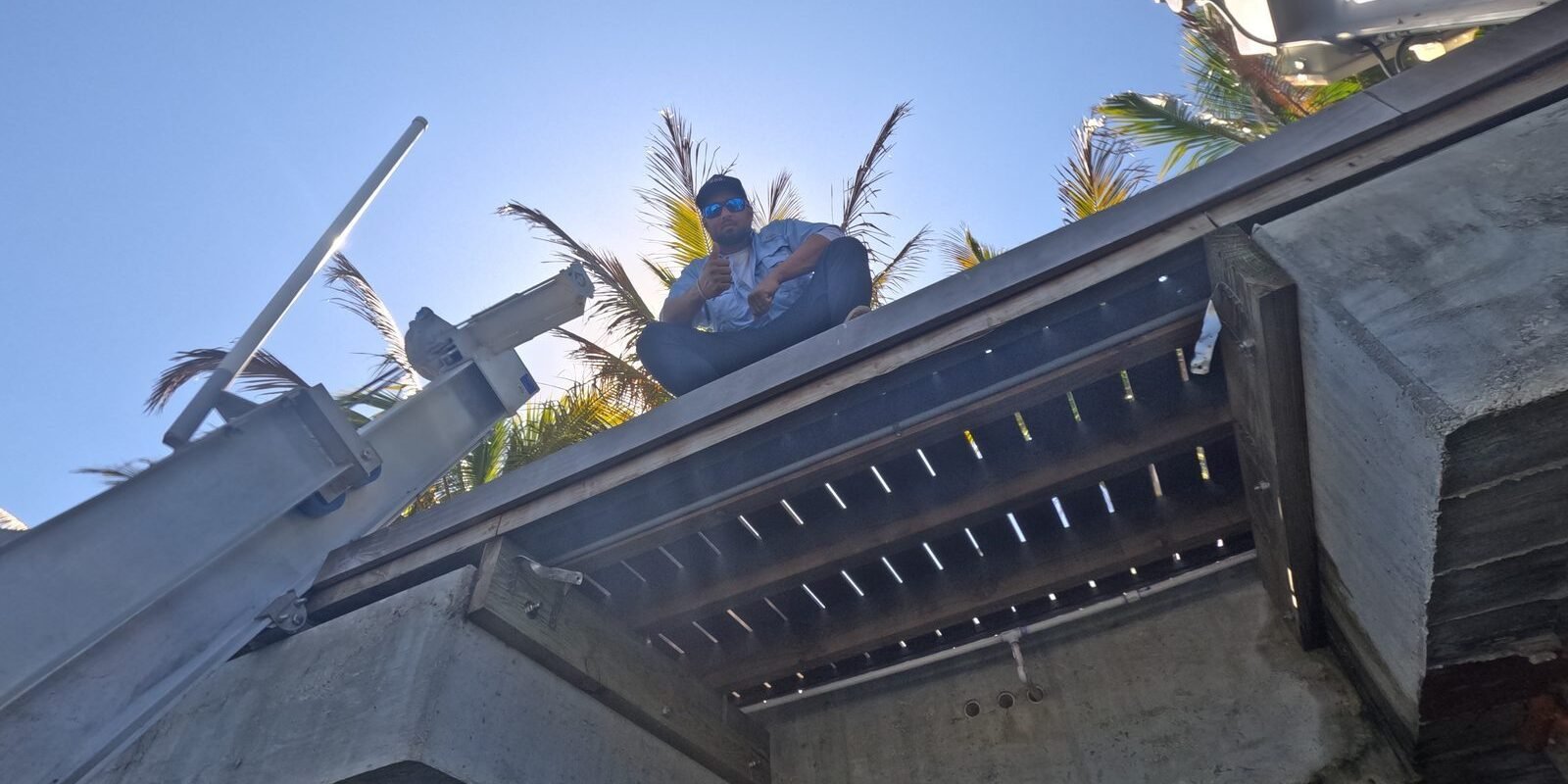
A dock builder who quotes your job from a photo and a dock length is guessing. A quote that’s worth the paper it’s printed on comes after a site inspection of the pilings, the bottom soil, the tide range, and how the dock ties into your seawall — the same site work a Souffront Contractors structural engineer walks through before pricing a job in Coconut Grove, Key Biscayne, or anywhere along Biscayne Bay.
Skip that step and the “quote” is really a placeholder. The real price shows up later, as a change order, once the crew hits something the estimate never accounted for.
Key takeaways
- A real dock quote follows a site inspection — piling condition, bottom soil, and tide range all change the price.
- Marine borer damage and internal piling rot are invisible above the waterline; they require a below-water check.
- If the new dock ties into an existing seawall, the seawall’s condition has to be checked first, or the dock has nothing sound to anchor to.
- Miami-Dade dock permits route through DERM and sometimes the U.S. Army Corps of Engineers — a builder who skips that review will hand you a permit delay, not a finished dock.
- A boat lift, davit, or heavier decking material changes the pile size and spacing the quote needs to include.
Why a fast quote is the first red flag
Anyone can measure a dock’s footprint from a satellite image and email back a number. What that number can’t account for is what’s actually holding the structure up, or what’s underneath it. A contractor who quotes without getting in the water — or at least sending someone who will — is pricing the dock you can see, not the dock you’re going to build.
Souffront’s approach on dock and marine construction jobs is the same one used on seawall work: inspect first, price second. The site conditions decide the pile count, the bracing, and the material — not the other way around.
What’s below the waterline that a quote can’t skip
Piling condition is the single biggest cost driver on any new dock or dock repair, and most of it is invisible from the deck. A dock inspection before quoting should cover:
- Timber pile integrity — marine borer damage (shipworm and gribble) hollows out timber piles from the inside; a pile that looks solid at the waterline can be honeycombed six inches down.
- Concrete pile spalling and rebar exposure — cracked concrete lets saltwater reach the reinforcing steel, and corroding rebar expands and cracks the pile further.
- Piling wrap condition — if a previous dock piling repair installed a fiberglass or plastic piling wrap, the builder needs to know whether it’s still sealed or whether water has gotten underneath it.
- Embedment depth — how far each pile is actually driven into the bottom, which determines how much lateral load it can take from wave action and boat wake.
None of this shows up in a drive-by quote. It shows up in a below-water inspection, which is exactly why the range on a proper bid is wider before that inspection and tighter after it.
Bottom soil and water depth
A new pile driven into soft muck behaves differently than one driven into sand or limestone. Bottom composition changes how deep piles need to go and how much they cost to install. On Biscayne Bay properties — Coconut Grove, Key Biscayne, and the barrier islands off Miami Beach — the bottom can shift from sand to soft sediment within a few hundred feet, which is one reason two docks on the same street can carry very different pile specs.
Water depth at mean low tide also determines whether a fixed dock stays usable year-round or whether a floating dock makes more sense for the property. A builder who doesn’t check tide range before quoting is guessing at the deck height, too.
The seawall connection
Most waterfront docks in South Florida tie back into a seawall or bulkhead, either structurally or just by proximity. If the seawall behind the dock has a cracked cap, a leaning panel, or soil loss at the toe, that’s a problem for the dock project, not a separate one. A dock built off a failing wall inherits that wall’s problems.
This is where hiring one firm for both scopes pays off. Souffront inspects, engineers, permits, and builds — so the same structural engineer who is pricing your dock construction can tell you in the same visit whether the seawall needs attention first. A separate dock-only contractor has no way to catch that, because it isn’t what they were hired to look at.
Permits: the part that stalls half the jobs that skip this step
A new dock, a dock expansion, or most dock repair work over a certain scope needs a permit in Miami-Dade County. Depending on the project, that review can involve Miami-Dade DERM and, for anything extending further into navigable water, the U.S. Army Corps of Engineers. Environmental review can also flag seagrass beds or manatee protection zones nearby, which affects where piles can go and what time of year work can happen.
A builder who quotes a firm price and a firm timeline without pulling permit history for the property is quoting a job that doesn’t yet have a legal path to get built. Ask any dock builder for their dock permit Florida process in writing before you sign anything.
Decking, material, and load — what changes the price after the site visit
The last variable a real quote accounts for is what the dock has to carry. A dock rated for foot traffic and a small vessel is a different structure than one built for a boat lift or a davit system — those add concentrated loads that change pile spacing and bracing. Decking material matters too: a concrete dock carries more dead weight than timber or composite decking, which again pushes back on the pile design underneath it.
None of these numbers are knowable from a satellite photo. They come out of the same inspection that catches the piling and bottom-soil issues above.
Talk to a Florida-licensed engineer
If you’re collecting quotes for a new dock, a floating dock, or dock repair anywhere along Biscayne Bay, get one from a firm that inspects before it prices. Souffront’s engineer-sealed site visits identify piling condition, bottom soil, seawall interaction, and permit requirements up front, so the number you get is the number you pay — not the number before the change orders start. Fixed-fee, same-business-day response, and the request form is right below.
Frequently asked questions
Do I need a structural engineer before I get a dock builder’s quote?
You don’t need a separate engineer if the dock builder is one — a licensed structural engineer inspecting the piling, bottom conditions, and any seawall connection before pricing catches problems a standard contractor walk-through misses, and it makes the final quote more reliable.
What is a piling wrap, and when does a dock need one?
A piling wrap is a fiberglass or plastic sleeve installed around a piling at and below the waterline to stop further marine borer damage and slow corrosion on concrete piles. It’s typically recommended when a pile inspection finds early-stage deterioration that hasn’t yet compromised the pile’s structural capacity.
How can I tell if a dock quote is missing something?
Ask whether the quote followed a below-water inspection of the pilings and a check of the bottom soil. If the number was generated from measurements or photos alone, without anyone getting in the water, assume it doesn’t account for piling condition, embedment depth, or bottom composition — all of which change the real cost.
Does my seawall’s condition affect my dock quote?
Yes, if the dock ties into or sits near the seawall. A cracked cap, leaning panel, or soil loss behind the wall can affect what the dock is anchored to, which is why a combined structural engineer and dock builder inspection catches issues a dock-only contractor won’t be scoped to look for.
What permits does a new dock need in Miami-Dade County?
Most new docks and significant dock repairs require a Miami-Dade DERM permit, and projects extending further into navigable water may also need U.S. Army Corps of Engineers review. Environmental factors like nearby seagrass beds or manatee protection zones can add conditions or timing restrictions to the permit.
Timber, concrete, or composite pilings — which should I choose?
Each has tradeoffs: timber is common and lower cost but vulnerable to marine borers without treatment or a piling wrap; concrete resists borers but is vulnerable to spalling and rebar corrosion over time; composite resists both but costs more upfront. The right choice depends on your site’s bottom conditions, budget, and how long you want the structure to last before major maintenance.
How long does dock permitting take in South Florida?
Timelines vary by scope and jurisdiction, but straightforward dock repairs typically move faster than new dock construction or projects requiring Army Corps review. A builder who handles permitting in-house, rather than outsourcing it, can usually give you a more accurate timeline because they’re tracking the application directly.
Why does bottom soil matter for a dock quote?
Piles driven into soft sediment need different depth and spacing than piles driven into sand or rock to carry the same load safely. Since bottom composition can vary significantly even between neighboring waterfront lots on Biscayne Bay, it has to be checked at your specific site, not assumed from a nearby project.
Related from Souffront Contractors: seawall repair — all delivered by the same Florida-licensed structural engineering and marine construction team. Call (877) 420-7220.
About Souffront Contractors Inc.: a Florida-licensed structural engineering and marine construction firm serving Miami-Dade, Broward, and Palm Beach counties. Partner with a full-service marine construction company for docks, seawalls, and waterfront structures — see our seawall contractors page or call (877) 420-7220.
Got a seawall or structural question?
Five fields. Same business day from a Florida-licensed engineer, routed into our dispatch CRM in real time.
- Same business dayAcknowledgment from a Florida licensed engineer — Mon–Fri 8 AM–5:30 PM.
- Engineer-sealed reportAccepted by carriers, building departments, and real-estate transactions.
- Fixed-fee proposalNo hourly billing. Repair scope priced line-by-line.