
What Really Drives Dock Repair Cost in Miami?
Dock repair cost in Miami depends on materials, piling condition, and permitting, not just square footage. A field-notes breakdown of what actually sets the price.
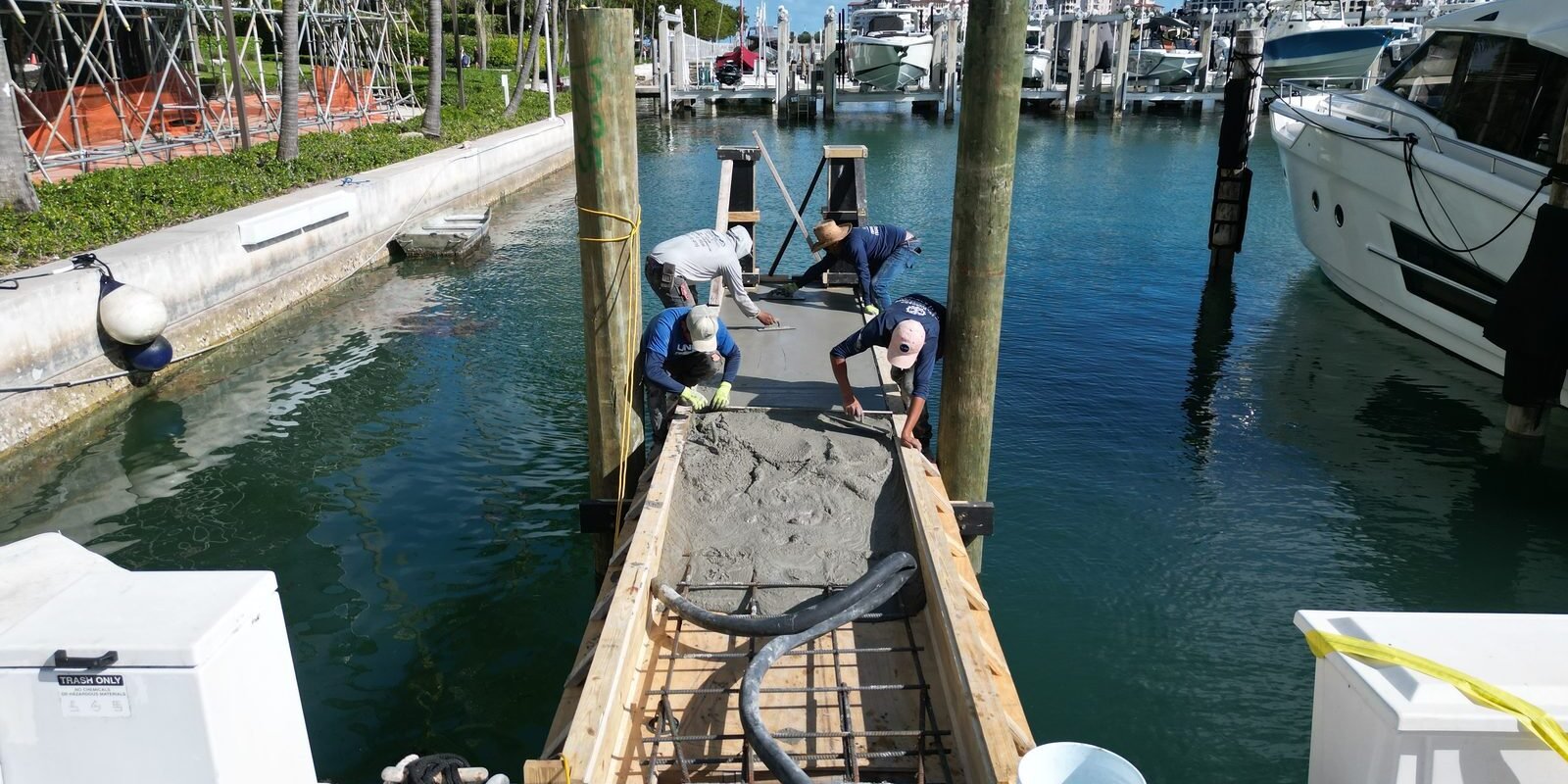
Dock repair cost in Miami usually comes down to three things: how many pilings are actually failing, whether the decking material can be patched or has to come off, and what the permitting window looks like for your waterway. On a typical canal-front property in Coconut Grove or Key Biscayne, a licensed Souffront Contractors crew is usually diagnosing rot at the waterline, not damage across the whole structure — and that distinction is what separates a $3,000 repair from a $30,000 one.
Walk out on most South Florida docks with a problem and the story is the same. The deck looks fine from the house. The trouble is six inches above the tide line, where wood pilings sit wet half the day and dry the other half — the cycle that rots timber from the inside out long before it looks bad from above.
Key takeaways
- Dock repair cost in Miami is driven by piling condition, material type, and access — not by dock square footage alone.
- Isolated piling or stringer repair on a timber dock typically runs a few hundred to low thousands of dollars per piling; a full deck or piling replacement job moves into five figures.
- Concrete docks fail differently than timber — spalling and exposed rebar, not rot — and usually cost more to repair per linear foot.
- Miami-Dade permitting (DERM, plus the local building department) applies to most over-water dock work, even minor piling replacement.
- A pre-repair dock inspection that separates cosmetic wear from structural failure is what keeps the repair scope — and the invoice — from growing mid-project.
What a dock inspection in Miami actually finds
On Biscayne Bay canals and Intracoastal-adjacent lots, the same failure points show up over and over:
- Piling wrap missing or torn — exposes the timber or a steel piling’s protective jacket to marine borers and saltwater directly.
- Soft or spongy decking near cleats and ladder attachment points, where fasteners have let water in.
- Rust staining running down a concrete dock edge — a sign the rebar inside is corroding and expanding, which cracks the concrete around it.
- Loose or rotated pilings you can rock by hand — usually means the embedment in the bay bottom has lost holding capacity.
- Corroded hardware on boat lifts, cleats, and ladder brackets, which is cheap to replace now and expensive to ignore.
None of that is visible from a listing photo, which is exactly why cost estimates done over the phone are unreliable. A hands-on structural engineer inspection is what turns a guess into a number you can actually plan around.
What drives dock repair cost in Miami
Material
Timber docks are repaired piece by piece — a rotted stringer or piling gets cut out and replaced without touching the rest of the structure. Concrete docks don’t work that way. Once rebar corrosion starts, the surrounding concrete has to be chipped back, the steel treated or replaced, and the section repoured — which is why concrete dock repair generally costs more per linear foot than timber spot repair, even though concrete lasts longer overall.
Scope: piling repair vs. full replacement
Replacing two or three failing pilings on an otherwise sound dock is a contained job. Replacing pilings across the whole structure, or pulling and rebuilding the decking to get access to them, is a different project — closer to new dock construction pricing than a repair.
Access and equipment
A dock reachable by truck and a barge-mounted pile driver costs less to work on than one tucked behind a seawall with no barge access, where a marine contractor has to bring in a spud barge or work the tide.
Permitting
Most dock work over the water in Miami-Dade requires a permit — DERM environmental review, plus the city or county building department, and sometimes a Florida DEP submerged-lands component depending on the waterway. Permit timelines add weeks, not dollars, but they belong in the schedule from day one.
Typical dock repair cost ranges in South Florida
These are general South Florida ranges, not a quote — every dock gets a fixed-fee estimate after a hands-on inspection:
- Isolated piling replacement: roughly $800–$1,800 per piling, depending on water depth, soil, and access.
- Localized timber repair (stringers, decking sections, hardware): a few hundred to a few thousand dollars per repair area.
- Concrete dock spall repair: generally higher per linear foot than timber, since it involves demolition, rebar work, and repour.
- Full dock replacement: a new-construction project, priced by material (timber, composite, or concrete) and square footage, not folded into a repair estimate.
If your dock also has a boat lift, factor that in separately — boat lift installation and lift piling work is usually quoted apart from the dock structure itself.
When repair stops making sense
There’s a point on every aging dock where patching individual pilings costs more, over a few years, than replacing the structure once. The signs that you’re past that point: more than a third of the pilings show rot or corrosion, the deck framing is failing in multiple unrelated spots, or the dock predates current Florida Building Code wind and load requirements for the area. At that stage, a dock builder quote for a new structure is worth getting alongside the repair estimate, so you’re comparing the real numbers instead of guessing.
Talk to a Florida-licensed engineer
If your dock has a soft spot, a loose piling, or rust bleeding down the edge, get a Florida-licensed structural engineer out to look at it before you get repair quotes. Souffront inspects, engineers, permits, and builds under one roof — so the estimate you get reflects what’s actually failing, priced fixed-fee before anyone touches the water. Same-business-day response. The contact form is right below.
Frequently asked questions
How much does dock repair cost in Miami?
Isolated piling or timber repair typically runs a few hundred to a few thousand dollars per repair area, while full piling replacement across a dock moves into five figures. The exact number depends on material, how many pilings are failing, and site access — which is why a hands-on inspection comes before any estimate.
Do I need a permit to repair my dock in Miami-Dade?
In most cases, yes. Work over the water — including piling replacement — typically requires review from Miami-Dade DERM and the local building department, and sometimes a state submerged-lands component through Florida DEP. Minor cosmetic repairs above the waterline may not trigger the same review, but it’s worth confirming before work starts.
What’s the difference between repairing and replacing a dock?
Repair addresses specific failed components — a rotted piling, a soft deck section, corroded hardware — while the rest of the structure stays in place. Replacement means the dock has failed broadly enough that a new structure costs less over time than continuing to patch it, usually once a significant share of the pilings are compromised.
How long does a dock repair take?
A contained piling or decking repair often takes a few days of on-water work once permits are in hand. The permitting step is usually the longer part of the timeline, running several weeks depending on the scope and the reviewing agency.
What are the warning signs my dock needs repair?
Watch for a piling that rocks when you push on it, decking that feels soft or springs underfoot, rust streaks running down a concrete edge, and corroded cleats or ladder hardware. Any of these is worth a dock inspection before you put weight or a boat lift load on the structure.
Does homeowners or flood insurance cover dock repair?
Coverage varies by policy and is worth confirming directly with your carrier — standard homeowners policies frequently exclude or limit dock and seawall coverage, especially for gradual deterioration rather than a sudden storm event. An engineer’s inspection report documenting the cause of damage is often what a carrier asks for either way.
Is a concrete dock more expensive to repair than a wood dock?
Per linear foot, yes, generally. Concrete repair involves demolishing damaged sections, treating or replacing corroded rebar, and repouring, while timber repair is often a direct swap of a rotted piling or stringer. Concrete typically lasts longer between repairs, which offsets some of that cost over the life of the dock.
Who do I call for dock repair near me in Miami?
Look for a marine contractor that also has a Florida-licensed structural engineer on staff, so the person diagnosing the damage is the same one pricing and building the fix — not a salesperson passing your dock off to a sub. That’s the difference between an estimate and an engineering opinion.
Related from Souffront Contractors: seawall repair — all delivered by the same Florida-licensed structural engineering and marine construction team. Call (877) 420-7220.
About Souffront Contractors Inc.: a Florida-licensed structural engineering and marine construction firm serving Miami-Dade, Broward, and Palm Beach counties. Learn more about engineer-led seawall repair across South Florida — see our seawall contractors page or call (877) 420-7220.
Got a seawall or structural question?
Five fields. Same business day from a Florida-licensed engineer, routed into our dispatch CRM in real time.
- Same business dayAcknowledgment from a Florida licensed engineer — Mon–Fri 8 AM–5:30 PM.
- Engineer-sealed reportAccepted by carriers, building departments, and real-estate transactions.
- Fixed-fee proposalNo hourly billing. Repair scope priced line-by-line.