
Do You Need a Permit to Repair a Dock in Florida?
A dock permit in Florida depends on what you're replacing. Here's what triggers one, who issues it in Biscayne Bay cities, and what skipping it costs you.
Yes — in almost every case, a dock repair in Florida needs a permit, and figuring out the dock permit Florida rules before you start work is what separates a two-week fix from a six-month one. We see it constantly from Coconut Grove to Key Biscayne: an owner replaces a few rotted boards without a permit, the city notices during an unrelated inspection, and now the whole dock repair is tied up in an after-the-fact application with a structural engineer’s report attached to it. Souffront Contractors pulls these permits across Miami-Dade and Broward on a regular basis, so here’s what actually triggers one, what doesn’t, and who you’re filing with.
Key takeaways
- Most dock repairs in Florida require a permit — the exceptions are narrow (minor decking or handrail swaps on an already-permitted structure, generally under a set square footage).
- Anything touching pilings, structural framing, or the seawall cap triggers a permit from the city or county, and often a state Environmental Resource Permit from Florida DEP.
- Work over navigable water can also fall under U.S. Army Corps of Engineers jurisdiction, separate from local permitting.
- In Biscayne Bay corridor cities — Coral Gables, Coconut Grove, Key Biscayne, Miami Beach — canal and island lots often carry extra DERM environmental review on top of the building permit.
- Unpermitted dock work found during a sale or insurance inspection usually costs more to resolve after the fact than it would have cost to permit upfront.
What actually triggers a permit for a dock repair in Florida
Florida’s building code treats a dock the same way it treats any other structure attached to your property: change something structural, and you need a permit. On site, the line usually falls here:
- Generally exempt — replacing a handful of individual deck boards on an existing, already-permitted dock, in-kind, with no change to size or framing.
- Almost always permitted — piling replacement or dock piling repair, stringer or joist replacement, any change to the footprint, new decking over a significant percentage of the surface, electrical work, and any repair tied to a boat lift or davit.
- Permitted and reviewed by more than one agency — work that touches the seawall cap, the shoreline, or submerged land.
The exemption is narrower than most owners assume, and it’s local-government-specific — one city’s threshold for “minor repair” is not the next city’s. We don’t guess on this; we call the building department before we quote the job.
Who you’re filing with: city, county, and sometimes the state
A dock repair in Miami-Dade or Broward can touch three or four separate reviews, not one:
- Local building department — the city or county structural permit, based on your plans and (for anything structural) an engineer’s sealed drawings.
- Miami-Dade DERM — Miami-Dade’s environmental regulatory arm reviews work in or near the water, including most dock and seawall-adjacent repairs in the county.
- Florida DEP — an Environmental Resource Permit from the state is required for a wider range of dock work than most owners expect, particularly anything expanding the structure or affecting submerged land.
- U.S. Army Corps of Engineers — docks and repairs over navigable waters can fall under federal jurisdiction through the Jacksonville District, run alongside the state and local process rather than instead of it.
None of these offices talk to each other automatically. Part of what a marine contractor actually does on a dock job is sequence these applications so they don’t stall each other out.
Biscayne Bay owners: where this gets missed
Canal-front and island properties around Coconut Grove, Key Biscayne, and the barrier islands off Miami Beach carry extra scrutiny because the water is shallower, the seagrass is protected, and the lots sit closer together than almost anywhere else in the county. A dock repair that would sail through in an inland canal can draw a DERM comment letter here over turbidity control or seagrass setback. If the repair involves the cap where the dock ties into the bulkhead, that section typically needs the same engineering review as a standalone seawall inspection — one more reason to have a single firm looking at both structures instead of two contractors working from different assumptions.
What happens if you repair a dock without a permit
We get called in after the fact more often than owners expect. The pattern is almost always the same: a contractor replaces pilings or reframes a section without pulling anything, the work gets flagged — by a neighbor complaint, a code inspector driving the seawall, or a buyer’s inspector during closing — and the city opens a case. At that point you’re not permitting a repair anymore; you’re resolving a code violation, which usually means an as-built survey, a structural engineer’s report on work that’s already covered up, and sometimes exposing framing that was just finished so an inspector can see it. It costs more than doing it right the first time, and it slows down anything tied to the property — refinancing, insurance renewal, or a sale.
What a permitted repair actually looks like on site
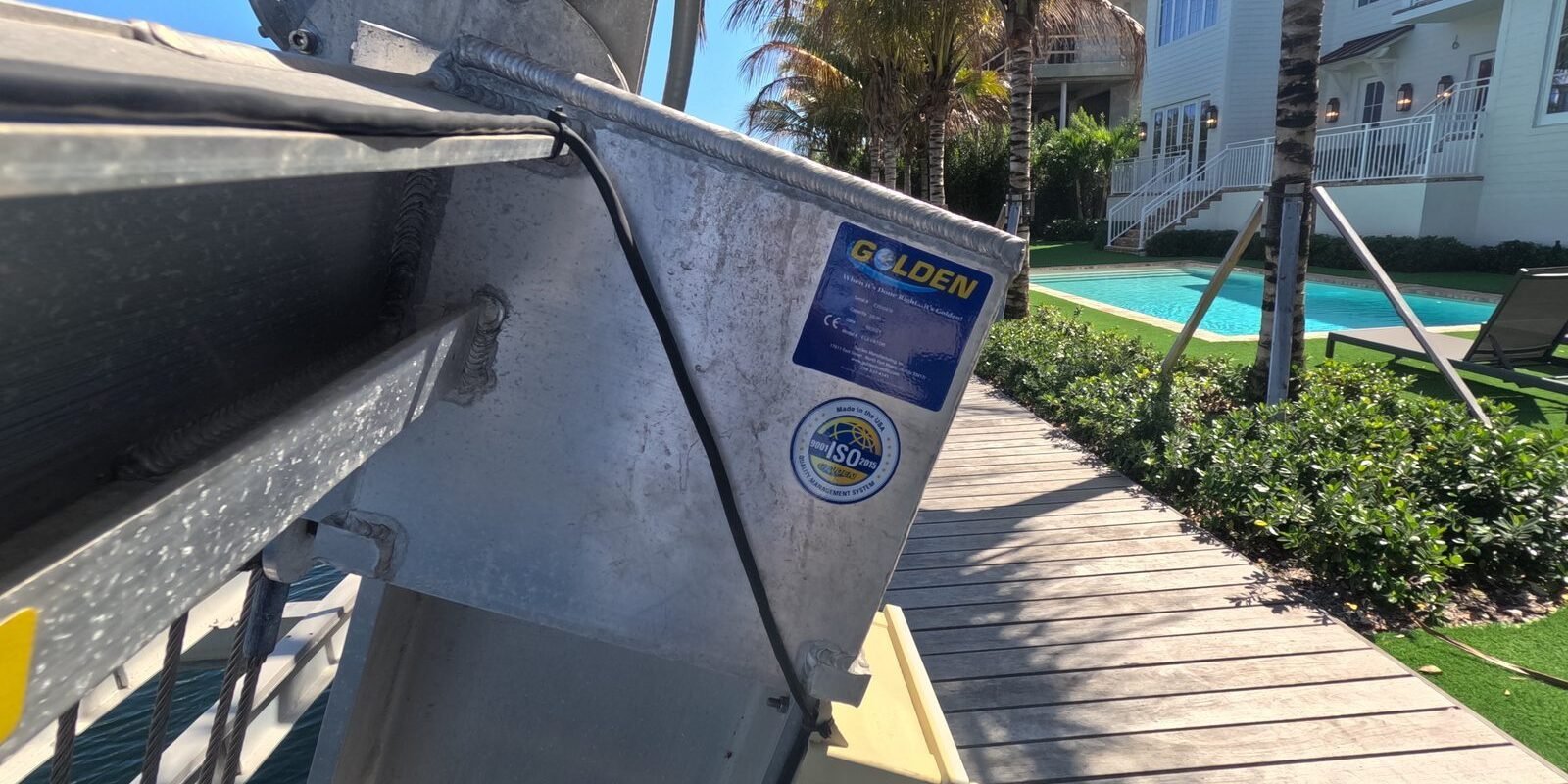
On a typical Biscayne Bay dock, the repair scope we see most is piling rot at the waterline, decking that’s delaminated from years of standing water, and a stringer that’s lost section from marine borers. A proper repair plan documents each piling’s condition before touching it, specifies the replacement material — concrete, treated timber, or composite decking — and ties the structural drawings to whatever permit category the city assigns. If a boat lift or davit is mounted on the dock, that gets re-evaluated too, since a repaired structure sometimes needs a reassessment of the load it was built to carry. This is also where new dock construction and repair overlap: if more than a defined share of the structure needs replacing, most building departments treat it as new construction for permitting purposes, not repair.
Talk to a Florida-licensed structural engineer
If you’re not sure whether your dock repair needs a permit, don’t guess and don’t wait for a violation notice to answer the question for you. Souffront is one firm that inspects, engineers, permits, and builds — the same structural engineer who evaluates the dock can seal the drawings and file the permit, with a fixed-fee quote before any work starts. Call (877) 420-7220 or use the form below to get a straight answer on your specific dock.
Frequently asked questions
Do I need a permit to replace a few boards on my dock?
Usually not, if the dock is already legally permitted and you’re replacing a small number of individual boards in-kind with no change to size or framing. Replacing a significant portion of the decking, or any framing underneath it, crosses into permitted work in most Florida jurisdictions.
Do I need a permit to replace dock pilings in Florida?
Yes. Piling replacement is structural work and requires a permit in virtually every Florida city and county, typically with engineer-sealed drawings showing the number, size, and embedment of the new pilings.
Who issues dock repair permits in Miami-Dade County?
The city or county building department issues the structural permit. Miami-Dade DERM reviews the environmental side for work in or near the water, and depending on scope, Florida DEP and the U.S. Army Corps of Engineers may also have jurisdiction.
How long does it take to get a dock repair permit in Florida?
It varies by city and by how many agencies are involved. A straightforward local building permit can move in a few weeks; a repair that also needs DERM or state DEP sign-off typically takes longer because those reviews run in sequence, not in parallel.
What happens if I repair a dock without a permit?
If it’s discovered, the city opens a violation case and you’ll need to permit the work after the fact — usually with an as-built survey and a structural engineer’s report, and sometimes with finished work exposed again for inspection. It costs more and takes longer than permitting upfront.
Does repairing a dock near a seawall require a separate permit?
If the repair touches the cap or ties into the seawall itself, that portion is typically reviewed as seawall work, which can mean an additional engineering evaluation on top of the dock permit.
Does adding a boat lift or davit to an existing dock need a permit?
Yes. Boat lift installation and davit installation are both permitted work in Florida, and if they’re mounted on a dock being repaired, the structure’s load capacity is usually reassessed as part of that permit.
Can I use any contractor for a dock repair, or do I need an engineer?
Structural dock repairs — pilings, framing, anything load-bearing — need engineer-sealed drawings to get permitted, regardless of which contractor builds it. Using a firm where the structural engineer and the contractor are the same company removes a step, since the drawings and the field work come from one source.
About Souffront Contractors Inc.: a Florida-licensed structural engineering and marine construction firm serving Miami-Dade, Broward, and Palm Beach counties. Partner with a full-service marine construction company for docks, seawalls, and waterfront structures — see our seawall contractors page or call (877) 420-7220.
Got a seawall or structural question?
Five fields. Same business day from a Florida-licensed engineer, routed into our dispatch CRM in real time.
- Same business dayAcknowledgment from a Florida licensed engineer — Mon–Fri 8 AM–5:30 PM.
- Engineer-sealed reportAccepted by carriers, building departments, and real-estate transactions.
- Fixed-fee proposalNo hourly billing. Repair scope priced line-by-line.