
Why November Is the Best Time to Fix Your Seawall
South Florida's dry season — November through April — is the best window for seawall repairs. Here's why timing matters and what to do before it closes.
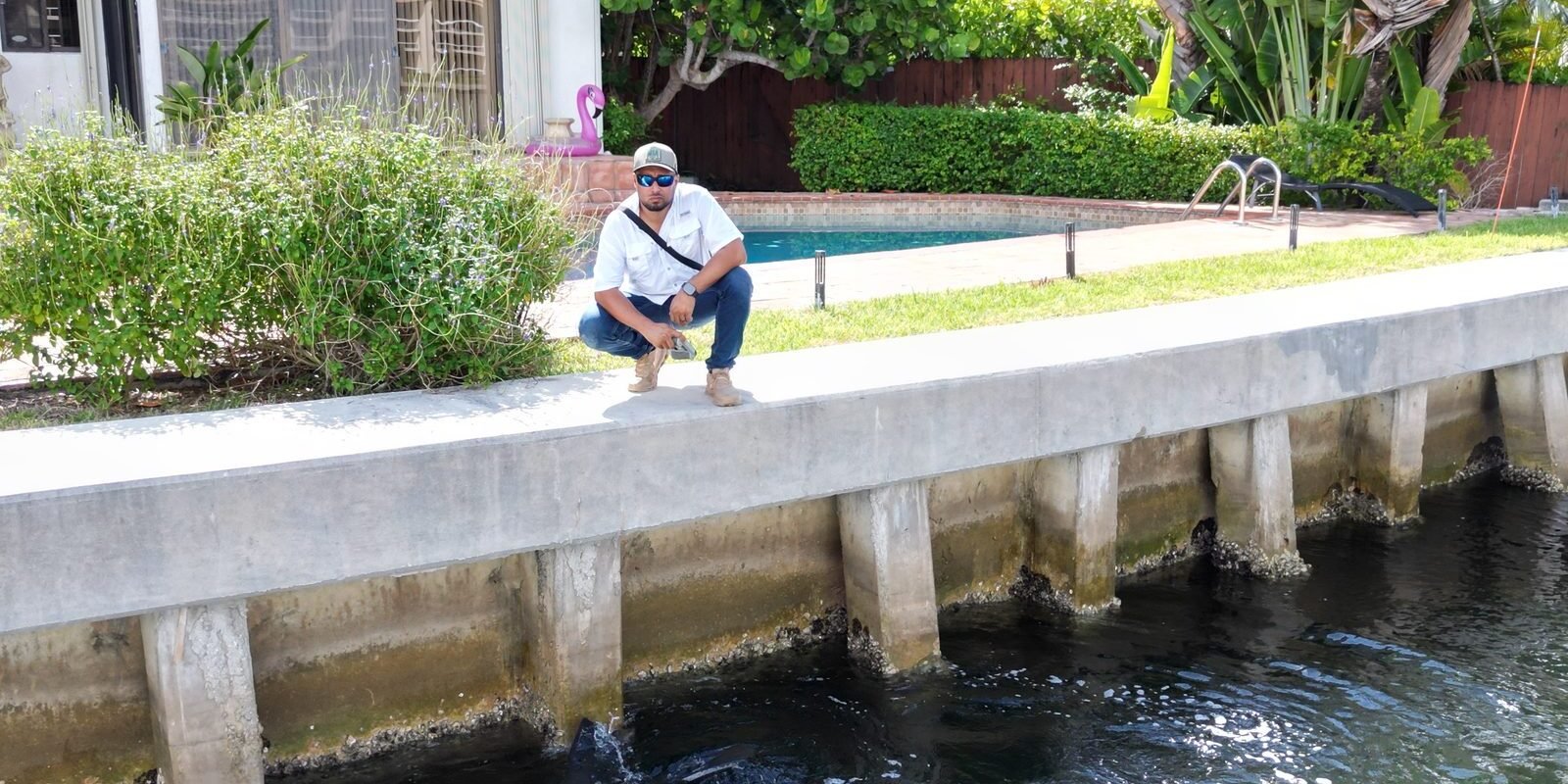
If your seawall has a crack, a leaning panel, or soil loss behind the cap, the window to fix it affordably opens in November and closes in April. South Florida’s dry season gives Souffront Contractors — and any seawall repair crew — calmer water, lower groundwater, and a permitting runway long enough to actually finish the job before hurricane season returns.
Key takeaways
- November through April is South Florida’s dry season — lower water tables, calmer Biscayne Bay conditions, and faster permit timelines make this the best window for seawall work.
- Seawall damage that looks minor in October often turns structural by June after a summer of surge, rain saturation, and hydrostatic pressure cycles.
- Permit applications filed in November routinely clear before March; applications filed in May often don’t clear until after the next wet season starts.
- A flat-fee seawall inspection — typically $1,500–$3,000, quoted upfront — identifies what actually needs repair before a contractor bids the work.
- Boards and property managers who start scope in November can have a signed contract and mobilized crew by February, finishing months before the June 1 hurricane season open.
What the dry season actually changes on your seawall
Water is your seawall’s main enemy — and in South Florida, water pressure works from both sides. During the wet season (May through October), rain saturates the soil behind the wall. Hydrostatic pressure — the weight of that saturated soil pushing against the panel — spikes. Tiebacks (the buried steel anchors that hold the wall against that pressure) are under maximum load exactly when no one can safely work around them.
From November onward, rainfall drops sharply. Groundwater recedes. Hydrostatic pressure falls. That matters for three practical reasons:
- Safer tieback work. Installing or retensioning tiebacks in dry-season soil is measurably less disruptive than doing it in saturated fill. The anchor sets more predictably, and there is less risk of soil migration behind the panel during excavation.
- Lower water levels at the toe. The toe is the bottom edge of the seawall panel, where erosion and undermining start. In calm, lower-tide winter conditions, divers and crews can observe and work the toe without fighting surge or turbid water — common in Biscayne Bay canal properties and island seawalls from Coconut Grove to Key Biscayne.
- Better concrete cure conditions. Cap pours and panel repairs cure more reliably in 70–80°F ambient temperatures than in August’s heat and humidity. A cap poured in February has months to reach full strength before the next hurricane season loads it.
The permit calendar: why filing in November beats filing in May
Seawall work in Miami-Dade almost always requires a building permit. Work near or waterward of the mean high-water line may also require a Miami-Dade DERM environmental resource permit, and certain navigable-water projects trigger U.S. Army Corps of Engineers coordination. None of those agencies move fast.
A complete permit application filed in November has a realistic path to approval before February or March. The same application filed in May — when every contractor, HOA, and property manager who procrastinated is filing at once — routinely sits in queue until late summer. By then, the wet season has started, mobilization gets pushed to fall, and the project is a full year behind where it could have been.
Boards and property managers in Coral Gables, Miami Beach, and along Biscayne Bay canal fronts know this pattern. The ones who start the process in October or November consistently finish before the ones who wait for spring.
For projects that also trigger Florida DEP coastal construction permitting, the lead times are even longer — another reason early filing is not optional.
What you should actually inspect before you call a contractor
Before any repair bid makes sense, you need to know what is actually wrong. A contractor who bids without an independent engineering inspection is bidding on what he can see from the dock — not on what a structural engineer finds when he probes below the waterline, checks tieback tension, and cores the cap.
Walk your seawall in November and look for these specific conditions:
- Cap cracking or spalling. Horizontal cracks along the cap are often a sign of tieback failure or panel rotation — not just surface weathering. Vertical cracks at panel joints that have widened since last year mean the panels are moving.
- Soil loss behind the wall. If you can see daylight through a panel joint, or if the ground behind the wall has settled, soil is migrating through the wall into the water. Every tidal cycle pulls more of it out.
- Panel lean or bow. Hold a straight line along the cap. Any section that bows toward the water — even an inch or two — is under active load. That does not self-correct.
- Rust staining. Brown or orange streaking down a concrete panel traces back to corroding steel — either the tieback rod, the waler (the horizontal beam behind the panel), or embedded reinforcing. Corrosion expands and cracks concrete from the inside.
- Undermining at the toe. If a diver or camera shows a void beneath the panel’s base, the wall has lost its bearing. This is the condition that leads to sudden panel failure.
A flat-fee inspection by a Florida-licensed structural engineer documents all of these conditions with photographs, measurements, and a written assessment — typically $1,500–$3,000 depending on wall length, access, and whether an underwater dive inspection is needed. That fee is quoted before any site visit. It is also the document that lets you get three comparable repair bids instead of three bids on three different scopes.
Why HOA and condo boards lose money by waiting until spring
Most boards do not plan seawall repairs in November. They plan them in April, when a resident finally complains loudly enough. By then, the permit runway is short, contractor schedules are full, and the damage that was moderate in November has been through another wet season.
Here is what that delay actually costs:
- Accelerated damage. A cracked cap that lets water into the panel cavity all wet season is a panel that may need full replacement by spring — instead of a $150-per-linear-foot cap repair, the board is now looking at $400–$600 per linear foot for panel and tieback work. General industry ranges vary; the point is that deferred maintenance never gets cheaper.
- Emergency mobilization premiums. If a panel fails during a June storm, the board does not get three bids. They get whoever is available, at whatever price that contractor quotes, because the channel or canal front is open to water.
- Owner relations damage. A board that starts a repair in February and finishes in April looks competent. A board that started in April and is still pulling permits in September, through hurricane season, has a different conversation at the annual meeting.
The boards that avoid these outcomes typically follow a simple calendar: inspect in October or November, scope and bid in December, permit in January, mobilize in February or March.
What engineer-led construction management adds when the project is large
For a seawall replacement or major repair — anything over roughly 100 linear feet, or any project involving tieback replacement, panel replacement, or new concrete cap on a condo or HOA property — a board of volunteers is not equipped to manage the contractor on their own. The engineer who wrote the inspection report is typically gone once the report is delivered. The contractor answers to himself.
This is exactly the gap that engineer-led construction management fills. As the board’s owner’s representative, a Florida-licensed structural engineer stays on the project from scope through closeout: writing bid documents so competing proposals are actually comparable, reviewing submittals and shop drawings, observing site work at the milestones that matter (tieback installation, cap pour, backfill), reviewing pay applications against work actually completed, and evaluating change orders so the board knows whether a $60,000 add is a real differing condition or a gap in the original bid.
One real scenario: a contractor backfills behind the cap before the tiebacks are fully torqued and tensioned. If no one qualified was there to observe that milestone, the board has no record it happened incorrectly — and the warranty claim, if the wall moves later, becomes a dispute the board will lose. An engineer on-site at that moment, with a written observation report, changes the outcome entirely.
Souffront both inspects and builds seawalls, so any interest in bidding the construction work is disclosed in writing before the oversight engagement starts. A board can also engage Souffront for oversight only, with a separate contractor doing the work. Construction management is scoped and quoted upfront, per project, before any work begins.
A practical November-to-April timeline for South Florida boards
- October–November: inspection. Commission a flat-fee structural inspection. Get a written report with photographs, condition ratings, and a recommended scope. This is the document everything else builds on.
- November–December: scope and bid. Use the inspection report to write a real scope of work. Send it to at least three seawall repair contractors. Compare bids line by line — not just the total.
- December–January: contract and permit application. Sign with the selected contractor. File permit applications immediately. For DERM or DEP-regulated work, earlier is always better.
- February–March: mobilization and construction. Permit in hand, dry season in full effect, crew on site. Tieback installation and cap pours in February conditions cure reliably before summer.
- March–April: closeout. Final observation, punch list, as-builts, warranties. Documentation in the association’s files before the next board cycle.
Talk to a Florida-licensed structural engineer
If your seawall has any of the conditions described above — cracking, staining, lean, or soil loss — November is the right time to get an inspection on the calendar. A Florida-licensed structural engineer will give you a written, engineer-sealed assessment with a flat fee quoted before the site visit. Souffront responds to inspection requests the same business day. Fill out the form below to get started.
Frequently asked questions
Why is the dry season better for seawall repairs in South Florida?
November through April brings lower groundwater, reduced hydrostatic pressure behind the wall, calmer bay and canal conditions, and better concrete cure temperatures. These conditions make tieback installation safer, underwater toe inspection more accurate, and cap pours more reliable. Permit applications filed in November also clear well before the wet season begins.
What does a seawall inspection cost in South Florida?
A flat-fee structural seawall inspection typically runs $1,500–$3,000, depending on wall length, access, the number of structural components, and whether an underwater dive inspection below the waterline is needed. The fee is quoted before any site visit — not billed hourly or per linear foot.
How much does seawall repair cost in Miami-Dade or Broward?
Industry repair ranges run roughly $100–$250 per linear foot for moderate work such as cap replacement, crack injection, or panel sealing. Full panel and tieback replacement typically runs $400–$600 per linear foot. These are general industry ranges — not a project quote. An engineer inspection and a written scope are the only way to get an accurate bid for your specific wall.
Do I need a permit to repair a seawall in Miami-Dade?
Yes. Most seawall repair or replacement work in Miami-Dade requires a building permit. Work at or waterward of the mean high-water line also typically requires a Miami-Dade DERM environmental resource permit. Projects on navigable waterways may require U.S. Army Corps of Engineers coordination. Filing early — in November or December — gives your project the longest runway before hurricane season.
What are the warning signs that a seawall needs repair?
The most common signs are horizontal or widening cracks in the cap, rust staining on the panel face, visible soil loss or settlement behind the wall, panel lean or bow toward the water, and voids at the toe found during an underwater inspection. Any of these conditions should be assessed by a Florida-licensed structural engineer before a contractor bids the work.
Can a condo or HOA board manage a seawall project without an engineer?
Technically yes — but boards that try usually discover the problems at the change-order stage. Without someone who reads drawings and knows construction sequencing, a board cannot verify whether submitted pay applications match completed work, whether a change order reflects a real differing condition, or whether the contractor followed the spec at critical milestones like tieback torquing. An owner’s representative — a Florida-licensed structural engineer acting as the board’s single point of contact — fills that gap from scope through closeout.
How long does a seawall repair project take from inspection to completion?
For a straightforward repair on a residential or small HOA seawall, four to six months is a realistic end-to-end timeline when the process starts in November: inspection in November, bidding in December, permit application in January, mobilization in February, and closeout in March or April. Larger replacements or projects requiring DERM or DEP permits may run six to nine months. Starting in spring compresses or eliminates the construction window before hurricane season.
Does Souffront handle both the inspection and the construction management?
Yes. Souffront is a single firm that inspects, engineers, permits, and builds — so the engineer overseeing your project has actually built the same type of work. If Souffront is engaged as owner’s representative and also has an interest in bidding the construction, that is disclosed in writing before the oversight engagement starts. A board can also engage Souffront for oversight only, with a separate contractor performing the repair. Construction management fees are scoped and quoted per project, upfront.
Related from Souffront Contractors: HOA and condo board compliance reports — all delivered by the same Florida-licensed structural engineering and marine construction team. Call (877) 420-7220.
About Souffront Contractors Inc.: a Florida-licensed structural engineering and marine construction firm serving Miami-Dade, Broward, and Palm Beach counties. Partner with a full-service marine construction company for docks, seawalls, and waterfront structures — see our seawall contractors page or call (877) 420-7220.
Got a seawall or structural question?
Five fields. Same business day from a Florida-licensed engineer, routed into our dispatch CRM in real time.
- Same business dayAcknowledgment from a Florida licensed engineer — Mon–Fri 8 AM–5:30 PM.
- Engineer-sealed reportAccepted by carriers, building departments, and real-estate transactions.
- Fixed-fee proposalNo hourly billing. Repair scope priced line-by-line.