
What’s in an Engineer-Sealed Seawall Report?
What a Florida-licensed engineer includes in a sealed seawall inspection report, why the seal matters, and how to read one before you buy, sell, or repair.
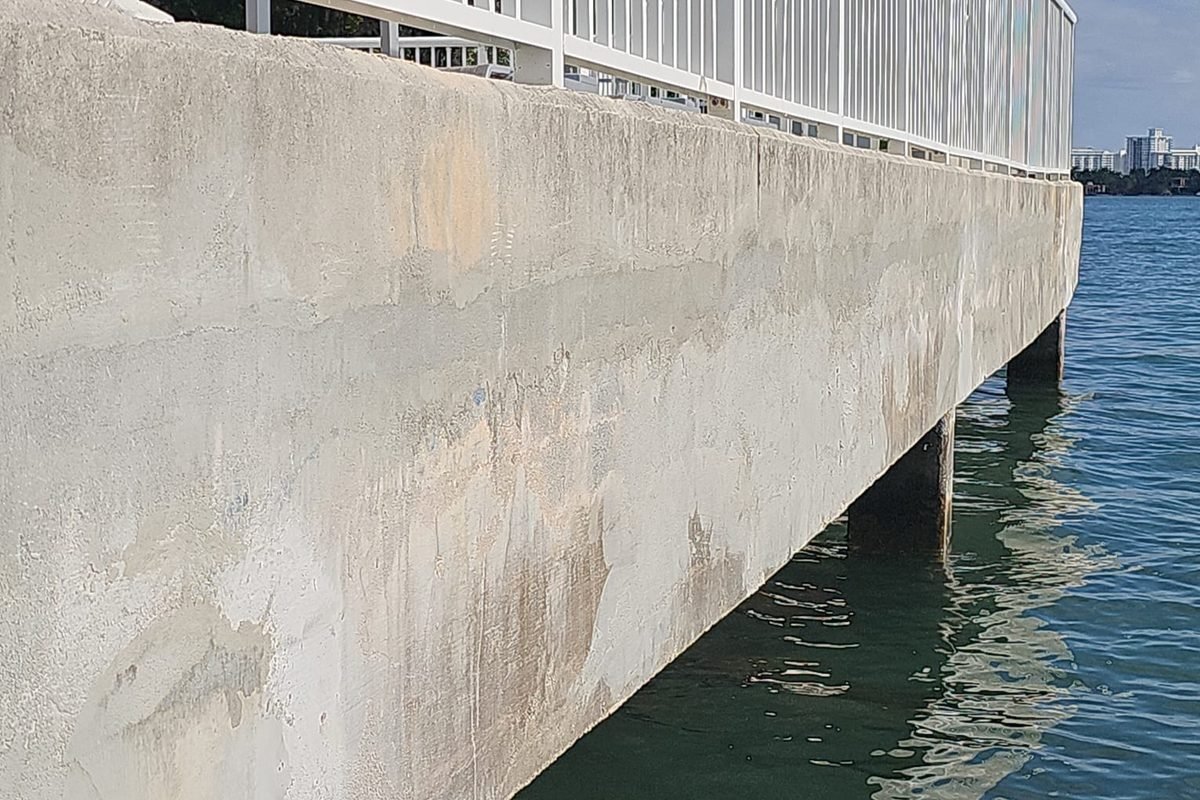
An engineer-sealed seawall report is a structural assessment signed and stamped by a Florida-licensed structural engineer, documenting the wall’s current condition, the specific defects found, and the engineer’s professional recommendations. The seal means a licensed engineer personally reviewed the findings and is putting their license behind the conclusions — not a general opinion, but a legally recognized structural record.
Key takeaways
- An engineer-sealed report carries a licensed engineer’s stamp and signature, making it a legal structural record — not just a written estimate.
- It documents wall type, materials, observed defects, condition ratings for each component, and specific repair recommendations.
- Lenders, insurers, HOA boards, and title companies commonly require a sealed report before approving financing, coverage, or a sale.
- A residential seawall inspection in Miami-Dade, Broward, or Palm Beach typically runs $1,500–$3,000 as a flat fee, quoted before the site visit — never priced by wall length.
- A sealed report is different from a contractor’s repair quote: the engineer has no financial interest in whether repairs happen or who performs them.
Why the engineer’s seal matters
Anyone can look at a seawall and say it looks bad. A seal changes what that opinion is worth. In Florida, a structural engineer’s license and seal mean the person signing the report is legally accountable for its accuracy under state law. That accountability is what makes the document usable for permitting, insurance claims, financing, and legal disputes — a walkthrough estimate from a contractor is not.
For waterfront property in Miami, Fort Lauderdale, and Boca Raton, this distinction comes up constantly. HOA boards need a sealed document to justify special assessments to owners. Buyers’ attorneys want a sealed report before closing on a waterfront listing. Insurers want one before writing or renewing a policy near the water.
What’s actually inside the report
A complete engineer-sealed report is a structured technical document, not a narrative. Expect these sections:
Property and wall identification
Address, folio number, wall type (concrete panel, vinyl sheet pile, riprap, or cast-in-place bulkhead), approximate length, and construction era if known.
Component-by-component condition findings
The engineer inspects and rates each structural element separately: the cap, the panels, the piles (king and batter piles on pile-supported walls; tiebacks on bulkheads), and drainage features like weep holes. Each component gets a condition rating — Good, Fair, Poor, Critical, or Very Poor — with the specific observation behind it (a hairline crack is not the same finding as exposed, corroding rebar).
Elevation data
Cap elevation measured or surveyed against NOAA tidal datums and FEMA base flood elevation, showing how much freeboard the wall has against normal high tide and storm surge.
Photographic documentation
Dated photos tied to each finding, including above-water and, where warranted, below-waterline conditions.
Professional opinion and recommendations
The engineer’s assessment of the wall’s overall structural adequacy, split into immediate, short-term, and long-term recommendations — so the owner knows what needs attention now versus what can be monitored.
Disclosure statement
Florida law requires the engineer to disclose whether the firm may also bid on any repair work identified in the report, and whether the engineer or a relative has a financial interest in a firm that might bid on it.
What a sealed report is not
A sealed report is not a repair quote and not a sales pitch. A firm that both inspects and later bids on repairs discloses that relationship in writing, as required by Florida law, so the owner can evaluate the recommendation on its own terms. It’s also not a guarantee — the report reflects the wall’s condition on the day of the visit and does not predict future deterioration with certainty.
When you need one
- Buying or selling waterfront property — protects both sides from a post-closing structural dispute.
- Insurance renewal or a new policy — some carriers request current structural documentation on older seawalls.
- Visible damage — cracking, leaning, soil loss behind the wall, or a sudden drop in the yard near the cap.
- HOA capital planning — a sealed report gives a board defensible documentation before a special assessment vote.
- Before filing a claim or a repair permit — Miami-Dade DERM and local building departments require engineering documentation to permit most seawall repair work.
What it costs and how long it takes
A standard residential seawall inspection and sealed report typically runs $1,500–$3,000, depending on the complexity of the inspection — access conditions, whether a below-waterline dive is needed, the number of structural components, and the scope of the report. This is a flat fee quoted before any site visit, never priced per linear foot of wall. Turnaround for the sealed document is typically within several business days of the site visit, faster if there’s a closing deadline involved.
Talk to a Florida-licensed engineer
If you need a sealed report for a closing, an insurance renewal, an HOA board decision, or because something about your wall looks off, Souffront Contractors handles the inspection, the sealed report, and — if repairs are needed — the permitting and construction, all under one company. Fees are fixed and quoted upfront, with a same-business-day response. Reach out through the form below or call (877) 420-7220.
Frequently asked questions
What makes a report “sealed” versus just written?
A seal is the engineer’s official stamp and signature, applied under their Florida license, confirming they personally reviewed and stand behind the findings. Only a licensed engineer can apply one, which is what makes the document legally recognized for permitting, insurance, and financing purposes.
How much does an engineer-sealed seawall report cost?
Typically $1,500–$3,000 for a residential wall, depending on the complexity of the inspection. It’s a flat fee quoted before the site visit, not a per-linear-foot charge.
How long does it take to get the sealed report after the inspection?
Most sealed reports are delivered within several business days of the site visit. Timelines can be adjusted for closing deadlines or urgent insurance requests.
Do I need a below-waterline inspection, or is above-water enough?
It depends on the wall’s condition and history. Most of the structural load-bearing area of a seawall sits below the waterline, so if there’s any sign of instability, soil loss, or unknown wall age, a below-waterline review gives a much more complete picture than a visual check from the dock.
Will an engineer-sealed report tell me if my seawall needs to be replaced?
Yes. The report includes condition ratings for each structural component and a professional opinion on whether repairs, monitoring, or full replacement is appropriate, with immediate, short-term, and long-term recommendations.
Can the same company that inspects my seawall also do the repairs?
Yes, and Florida law requires that relationship to be disclosed in writing in the report itself. Souffront Contractors discloses this on every report so property owners can evaluate the recommendation independently before deciding who performs any repair work.
Do HOAs and lenders actually require a sealed report?
Many do. HOA boards typically need one to justify a special assessment to owners, and lenders or insurers on waterfront properties frequently request current structural documentation before approving financing or coverage.
What areas do you cover for seawall inspections?
Souffront Contractors inspects seawalls throughout Miami-Dade, Broward, and Palm Beach counties, including Key Biscayne, Coral Gables, and Hollywood.
About Souffront Contractors Inc.: a Florida-licensed structural engineering and marine construction firm serving Miami-Dade, Broward, and Palm Beach counties. Work with a Florida-licensed seawall contractor who is also the engineer of record — or call (877) 420-7220.
Got a seawall or structural question?
Five fields. Same business day from a Florida-licensed engineer, routed into our dispatch CRM in real time.
- Same business dayAcknowledgment from a Florida licensed engineer — Mon–Fri 8 AM–5:30 PM.
- Engineer-sealed reportAccepted by carriers, building departments, and real-estate transactions.
- Fixed-fee proposalNo hourly billing. Repair scope priced line-by-line.