
Epoxy Injection vs. Seawall Cap Replacement in Miami
Cracked seawall cap in Miami-Dade? Learn when epoxy injection holds and when structural replacement is the only real fix, per a licensed engineer.
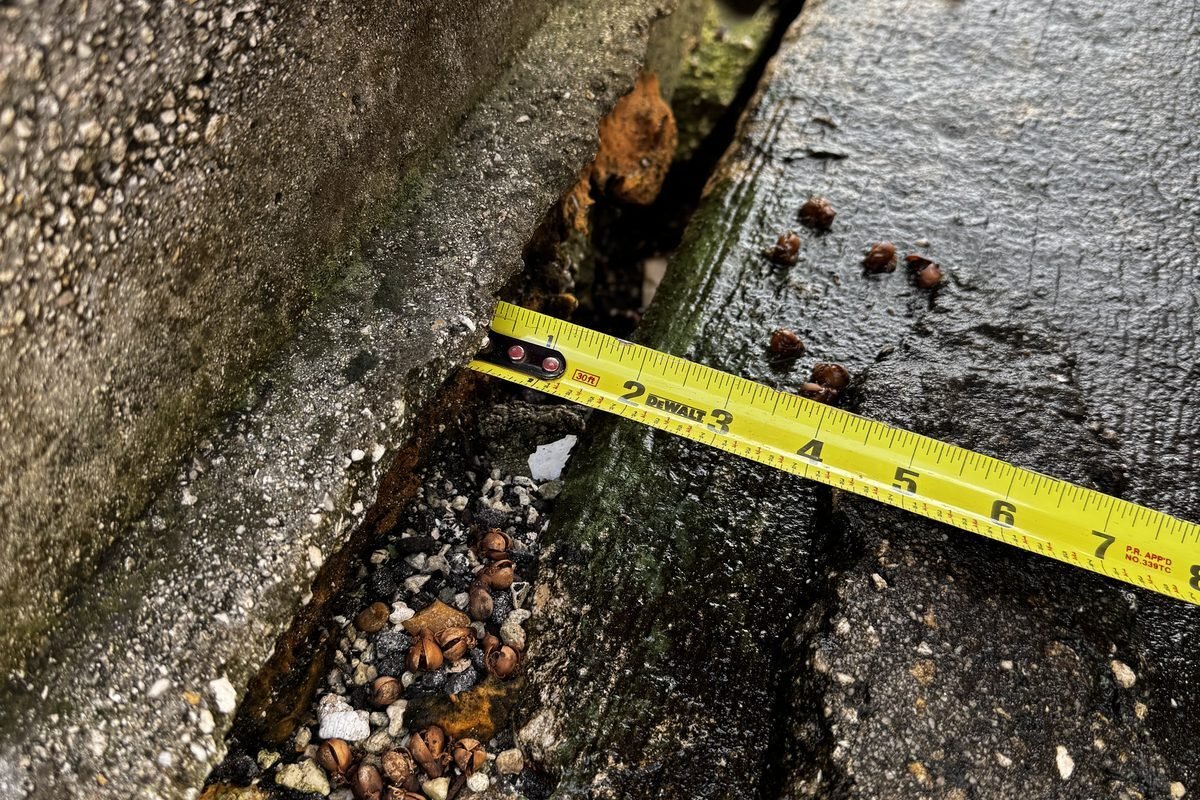
Epoxy injection works when a seawall cap crack is a surface or hairline issue with no active steel corrosion or soil loss behind it — structural replacement is required when the crack signals broken or corroding reinforcing steel, a failing tieback connection, or voids forming under the cap. For waterfront homes and condo associations from Coral Gables to Miami Beach, telling the two apart takes a hands-on inspection, not a guess from the seawall’s edge. Souffront Contractors is a Florida-licensed structural engineering and marine construction firm that inspects, engineers, permits, and builds seawall repairs across Biscayne Bay and the surrounding waterway.
Key takeaways
- Epoxy injection seals hairline and surface cracks in sound concrete — it does not stop active steel corrosion or replace lost soil support.
- Structural replacement is needed when reinforcing steel is exposed and rusting, the cap has spalled through, or a tieback connection has failed.
- A seawall inspection — including sounding the cap and checking for hollow spots — is the only reliable way to tell which repair path applies.
- Repair costs generally run $100–$250 per linear foot for moderate work; full cap or panel replacement with new tiebacks runs roughly $400–$600 per linear foot.
- Canal-front and island properties around Biscayne Bay see faster deterioration from tidal cycling and brackish water, so cracks that look cosmetic often aren’t.
What causes a cracked seawall cap
The cap is the poured concrete beam running along the top of a seawall. It ties the panels or piles together and gives the wall its top-of-structure strength. Cracks form for a handful of reasons:
- Corrosion jacking — rebar inside the cap rusts, expands, and pushes the surrounding concrete apart from the inside out.
- Settlement — soil loss or erosion behind the wall lets the cap move and crack under its own weight.
- Tieback stress — a failing or overloaded tieback (the buried anchor holding the wall against soil pressure) transfers load unevenly into the cap.
- Thermal and shrinkage cracking — normal curing-related hairline cracks that formed when the concrete was poured, unrelated to structural distress.
In Biscayne Bay corridor properties — Coral Gables, Coconut Grove, Key Biscayne, and the barrier islands off Miami Beach — daily tidal cycling and brackish groundwater accelerate rebar corrosion compared to inland concrete. A crack that would stay cosmetic on a freshwater canal in a drier climate can progress faster here.
Epoxy injection: when a seal is enough
Epoxy injection pumps a high-strength resin directly into a crack under pressure, bonding the concrete back into one solid mass and sealing out water. It is a legitimate, permanent fix for the right kind of crack — not a cosmetic patch.
Epoxy injection works well when:
- The crack is hairline to moderate width with no visible spalling or exposed steel.
- A sounding survey (tapping the concrete to listen for hollow spots) shows the surrounding concrete is still solid and bonded.
- There’s no evidence of active rebar corrosion — no rust staining, no expansion cracking radiating outward.
- The cap and wall are otherwise sound; the crack is an isolated defect, not a symptom of broader deterioration.
Done correctly, epoxy injection restores the crack to near its original strength and stops water intrusion that would otherwise reach the steel inside. It’s faster and less disruptive than replacement, which matters for HOA boards managing budgets and homeowners who want the wall usable again quickly.
Structural replacement: when repair isn’t enough
Some cracks are a symptom, not the problem. Injecting resin into a crack caused by active corrosion or a failed tieback seals the surface without fixing what’s actually pushing the concrete apart — the crack, or a new one nearby, comes back.
Replacement is the right call when:
- Reinforcing steel is visibly exposed and rusting (spalling concrete, rust streaks bleeding from the crack).
- Sounding reveals delaminated or hollow concrete beyond the visible crack itself.
- A tieback connection has corroded through or pulled loose, and the cap has lost its anchor point.
- Soil loss behind the wall has created voids, meaning the wall’s support — not just its concrete — has failed.
Full or partial seawall repair at this stage usually means removing the damaged cap section, addressing the corroded steel or failed tieback underneath, and pouring new concrete tied properly into the sound structure on either side. Where an entire wall section has reached the end of its service life, that scope moves into full seawall construction rather than a cap-only repair.
How an inspection decides which path applies
The decision isn’t visual. A structural engineer inspection combines a few checks that a homeowner or property manager can’t safely do alone:
- Sounding survey — tapping the cap and exposed panel surfaces to map hollow or delaminated concrete beyond what’s visible.
- Crack mapping — measuring width, depth, and whether the crack is stable or actively growing.
- Steel and tieback assessment — checking exposed reinforcing steel condition and, where accessible, tieback connection integrity.
- Below-waterline review — a dive or underwater inspection where soil loss or panel movement at the toe of the wall is suspected, since problems below the waterline often explain cracking above it.
This is the core of what a seawall inspection is designed to catch before a homeowner or board commits to a repair scope. A typical residential inspection is a flat fee, generally $1,500–$3,000 depending on complexity — access, whether a below-waterline dive is needed, and the number of structural components involved — quoted upfront before any site visit, never priced by the wall’s length.
Cost and timeline differences
Epoxy injection on an isolated crack is typically a matter of days once access and permitting (where required) are in place, and costs considerably less than a replacement scope. Structural cap or panel replacement involves demolition, formwork, new reinforcing steel, concrete curing time, and often tieback work — figure several weeks depending on scope and permit review. As general ranges for the South Florida market: moderate repairs run roughly $100–$250 per linear foot, while full panel or cap replacement with new tiebacks runs roughly $400–$600 per linear foot. These are industry ranges, not a quote — every project is scoped and priced after inspection.
Talk to a Florida-licensed engineer
If a seawall cap has a crack you’re not sure about, the fastest way to know which repair path applies is a hands-on inspection from a Florida-licensed structural engineer — not a guess based on how the crack looks from the yard. Souffront inspects, engineers, permits, and builds the repair under one roof, which means the person deciding whether it’s epoxy injection or replacement is the same firm that stands behind the work. Reports are engineer-sealed, pricing is quoted upfront, and most inspection requests get a same-business-day response. Call (877) 420-7220 or use the form below.
Frequently asked questions
Can epoxy injection fix a seawall cap crack permanently?
Yes, when the crack is isolated, the surrounding concrete is sound, and there’s no active steel corrosion behind it. Epoxy injection bonds the concrete back into one piece and seals out water, which is a permanent fix for that specific defect. It does not address corrosion, soil loss, or tieback failure — if any of those are present, the crack is a symptom of a larger problem that injection alone won’t solve.
How do I know if my seawall crack needs replacement instead of a repair?
Warning signs include rust staining bleeding from the crack, visibly exposed reinforcing steel, a hollow sound when the concrete is tapped near the crack, or any noticeable movement or settlement of the cap. A structural engineer inspection with a sounding survey is the reliable way to confirm which condition applies, since corrosion and delamination often extend further than what’s visible on the surface.
What does a seawall cap inspection cost in Miami-Dade?
A typical residential seawall inspection is a flat fee, generally $1,500–$3,000 depending on complexity — wall length is a minor factor compared to access conditions, whether a below-waterline dive is needed, and how many structural components are being assessed. The fee is quoted upfront before any site visit, never charged per linear foot.
Is epoxy injection cheaper than seawall cap replacement?
Yes, significantly. Epoxy injection addresses an isolated crack in otherwise sound concrete and generally costs a small fraction of a replacement scope. Full cap or panel replacement involves demolition, new reinforcing steel, formwork, and curing time, which is why it falls in the roughly $400–$600 per linear foot range compared to $100–$250 per linear foot for moderate repairs.
Does living on Biscayne Bay make seawall cracking worse?
Properties along the Biscayne Bay corridor — Coral Gables, Coconut Grove, Key Biscayne, and the Miami Beach barrier islands — see faster rebar corrosion than inland concrete structures because of daily tidal cycling and brackish groundwater exposure. A crack that might stay purely cosmetic elsewhere can progress into active corrosion damage faster in these conditions, which is one reason routine inspection matters more on tidal waterfront property.
Can I do epoxy injection myself on a small crack?
It isn’t recommended. Determining whether a crack is a candidate for injection requires confirming there’s no hidden corrosion or delamination behind it — something a sounding survey and trained inspection catch that a visual check from the yard won’t. Injecting resin over a crack caused by active corrosion just seals in the problem while it keeps progressing underneath.
Who do I call to inspect a cracked seawall cap in Miami-Dade or Broward?
A Florida-licensed structural engineering firm that handles both the inspection and the repair, such as Souffront Contractors, can assess the crack, tell you plainly whether it needs epoxy injection or structural replacement, and carry out the fix without handing the project off between separate companies. Call (877) 420-7220 to schedule an assessment.
Related from Souffront Contractors: HOA and condo board compliance reports — all delivered by the same Florida-licensed structural engineering and marine construction team. Call (877) 420-7220.
About Souffront Contractors Inc.: a Florida-licensed structural engineering and marine construction firm serving Miami-Dade, Broward, and Palm Beach counties. Get seawall repair in Coral Gables and across Miami-Dade County — see our seawall contractors page or call (877) 420-7220.
Got a seawall or structural question?
Five fields. Same business day from a Florida-licensed engineer, routed into our dispatch CRM in real time.
- Same business dayAcknowledgment from a Florida licensed engineer — Mon–Fri 8 AM–5:30 PM.
- Engineer-sealed reportAccepted by carriers, building departments, and real-estate transactions.
- Fixed-fee proposalNo hourly billing. Repair scope priced line-by-line.