
Does Your Marina Need Floating Docks or Fixed Docks?
Floating docks vs. fixed docks for South Florida marinas: how Biscayne Bay tides, upkeep costs, and DERM permitting decide which system fits your property.
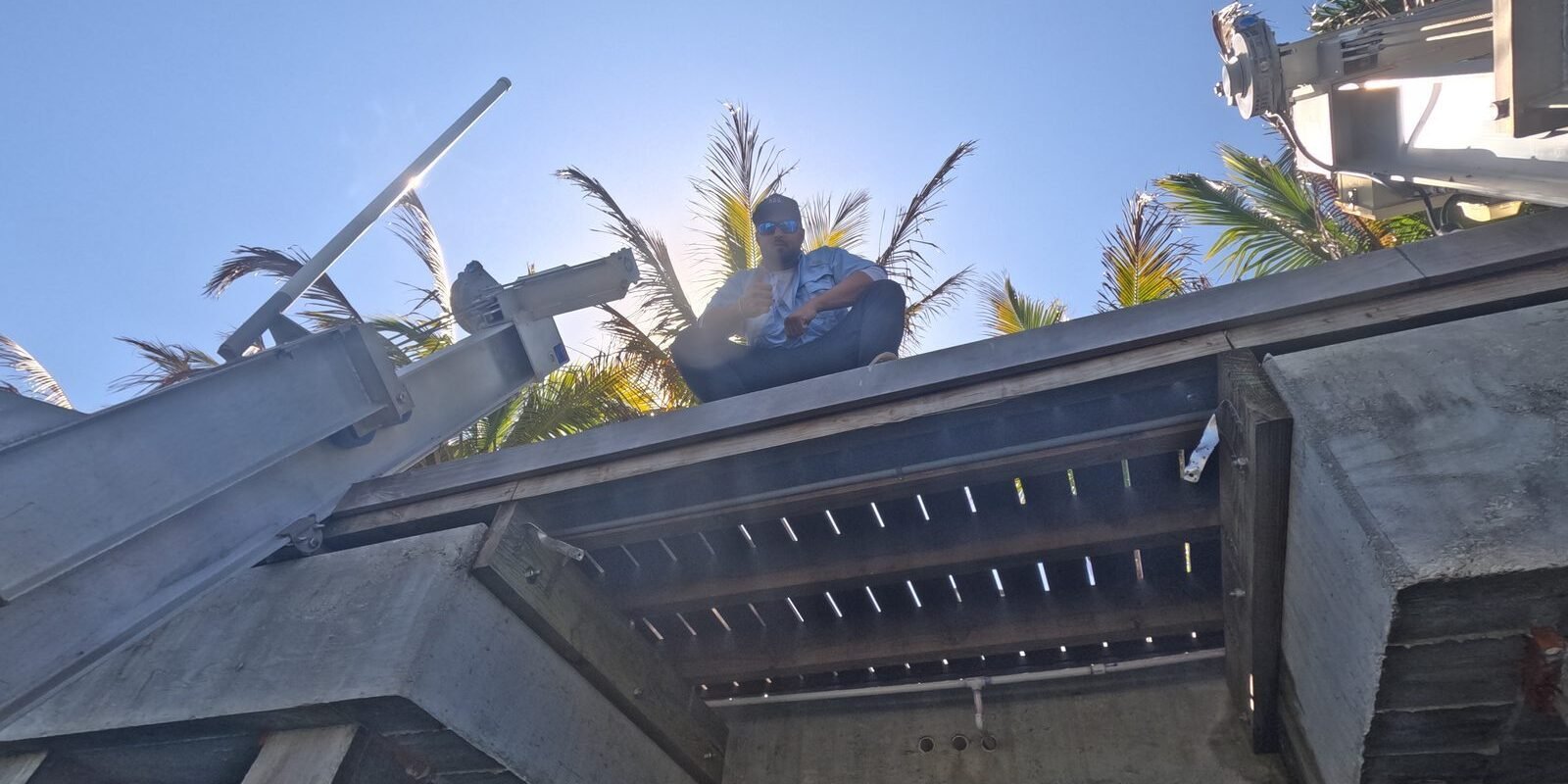
Floating docks vs. fixed docks comes down to one question: how much does the water under your marina move? In a Coconut Grove or Key Biscayne marina on Biscayne Bay, tide swings of roughly 2 to 2.5 feet make that question worth answering before you sign a contract. Souffront Contractors designs and builds both systems, and the right one depends on your bathymetry, your boat sizes, and how much maintenance you’re willing to sign up for.
Key takeaways
- Fixed docks work best in areas with a small tidal range and stable bottom conditions; they cost less upfront and need less mechanical upkeep.
- Floating docks track the water surface, so they stay usable at low tide in areas with a bigger tidal swing or fluctuating water levels.
- Floating systems have more moving parts — flotation units, hinges, gangways — that need periodic inspection and eventual replacement.
- Permitting for either system in Miami-Dade or Broward runs through DERM, and often FDEP and the U.S. Army Corps of Engineers if the structure extends into navigable water.
- A dock permit in Florida typically takes longer to review than the dock itself takes to build — plan for that in your timeline.
What Biscayne Bay tides do to a fixed dock
A fixed dock is a platform on pilings, set at one elevation. That’s fine until the tide drops. In a lot of Biscayne Bay marinas, a fixed dock built for a mean high water condition leaves boats sitting low against the deck at low tide, and freeboard that’s awkward to step over at high tide. Owners with deep-draft sailboats or larger sportfishers feel this more than owners with small skiffs, because the boat’s freeboard changes relative to a deck height that never moves.
Fixed docks do have real advantages. They’re simpler structurally — concrete or timber decking on driven or augered pilings — and they hold up well in areas with minimal tidal range or where the marina sits behind a controlled structure. Maintenance is mostly about the pilings and decking, not moving hardware.
How a floating dock system handles the same tide
A floating dock rides on flotation units — concrete-encased foam billets or air-filled polyethylene drums — connected to guide pilings that let the whole structure rise and fall with the water. The deck height relative to the boat stays close to constant no matter what the tide is doing. That’s the reason most modern marina construction in tidal, high-boat-traffic areas of South Florida defaults to floating systems for finger piers and slips, while keeping a fixed main pier or bulkhead connection.
The tradeoff is mechanical complexity. Hinges, connector plates, and flotation units all wear, and a damaged flotation unit lets a section of dock list to one side. A dock inspection on a floating system should check the flotation units for waterlogging and the hinge hardware for corrosion — not just the decking.
Cost and maintenance, side by side
As a general range — not a project quote — fixed timber or concrete dock construction tends to run less per square foot than a comparable floating system, because you’re not paying for flotation hardware and hinge assemblies. Floating docks cost more to build but often cost less to repair over time: a damaged section can be uncoupled and repaired or replaced without touching the rest of the structure. A damaged fixed dock section usually means working around active pilings in place.
Concrete dock decking outlasts timber in a saltwater environment and holds up better in the sun, but it’s heavier — which matters directly for a floating system’s flotation calculations. Any floating dock builder should size flotation to the actual dead load of a concrete deck, not a generic timber assumption.
Permitting: DERM, FDEP, and the Corps
Any new dock or marina structure in tidal water in Miami-Dade goes through Miami-Dade DERM, and often the Florida Department of Environmental Protection and the U.S. Army Corps of Engineers if the structure sits in navigable water or affects seagrass beds. A dock permit in Florida reviews square footage over the water, pile spacing, and — for marinas — the number of slips relative to the parcel’s water frontage. Floating docks trigger additional review on flotation unit specifications and anchoring; fixed docks get more scrutiny on pile penetration and structural loading, which is where having a Florida-licensed structural engineer stamp the design saves a review cycle instead of costing one.
Which one actually fits your property
Look at three things before you decide: your site’s tidal range, your boat mix, and how the dock connects to the shoreline. A protected canal with a small tidal swing and small boats is often a fixed-dock site. An open-bay marina with mixed boat sizes and real tidal movement — much of the Biscayne Bay corridor — usually favors floating slips off a fixed or bulkhead-connected main pier. Most working marinas end up as a hybrid: fixed access pier, floating finger piers.
Talk to a Florida-licensed engineer
Souffront Contractors inspects, engineers, permits, and builds marine construction projects in Miami-Dade, Broward, and Palm Beach — including floating dock and marina systems and fixed dock construction. Every project is scoped and quoted upfront, before permitting starts, by the same firm that will build it. Call (877) 420-7220 or use the form below to get a Florida-licensed structural engineer looking at your site.
Frequently asked questions
Are floating docks better than fixed docks?
Neither is better in every case. Floating docks handle tidal swings and fluctuating water levels better, which fits most open Biscayne Bay marina sites. Fixed docks cost less to build and have fewer moving parts, which fits protected, low-tide-range sites and smaller boats.
How much tidal range justifies a floating dock?
There’s no hard cutoff, but once low tide leaves more than about a foot of awkward freeboard against a fixed deck, most marina owners in South Florida move to a floating system for the slips, even if the main access pier stays fixed.
Do floating docks need more maintenance than fixed docks?
Yes, in terms of components inspected. Flotation units, hinges, and connector hardware need periodic checks that a fixed dock’s pilings and decking don’t require. Fixed docks concentrate their maintenance on piling condition and decking wear instead.
What permits do I need for a new dock in Miami-Dade?
Most new dock and marina construction needs a Miami-Dade DERM permit, and frequently a Florida DEP environmental resource permit and a U.S. Army Corps of Engineers permit if the structure is in navigable water. Marinas with multiple slips face additional review tied to water frontage and seagrass impact.
Can I convert a fixed dock to a floating dock?
Often yes, if the guide pilings can be reused or supplemented and the substructure can support flotation loads. It requires a structural engineer to verify pile capacity and a new permit review, since the load path and footprint typically change.
What material lasts longest for a dock deck in saltwater?
Concrete decking generally outlasts pressure-treated timber in a saltwater, HVHZ environment, with less periodic replacement. It adds dead load, though, which has to be accounted for in flotation sizing on a floating system or pile capacity on a fixed one.
How long does a floating dock system take to build?
Fabrication and installation of the dock itself is usually the shorter part of the timeline. Permitting through DERM, FDEP, and potentially the Corps of Engineers is typically the longer phase, so plan the permitting timeline separately from the construction schedule.
Does a marina need a marine contractor or a general contractor?
A marine contractor with dock and marina construction experience specifically, not a general contractor, should design and build over-water structures. Pile driving, flotation engineering, and DERM/FDEP permitting are specialized enough that a marine construction firm gets it through review faster and builds it to hold up in saltwater.
Related from Souffront Contractors: commercial property inspections and dock repair — all delivered by the same Florida-licensed structural engineering and marine construction team. Call (877) 420-7220.
About Souffront Contractors Inc.: a Florida-licensed structural engineering and marine construction firm serving Miami-Dade, Broward, and Palm Beach counties. Book a seawall inspection in Miami or anywhere on the South Florida waterfront — see our seawall contractors page or call (877) 420-7220.
Got a seawall or structural question?
Five fields. Same business day from a Florida-licensed engineer, routed into our dispatch CRM in real time.
- Same business dayAcknowledgment from a Florida licensed engineer — Mon–Fri 8 AM–5:30 PM.
- Engineer-sealed reportAccepted by carriers, building departments, and real-estate transactions.
- Fixed-fee proposalNo hourly billing. Repair scope priced line-by-line.