
What to Demand at Your Pre-Construction Meeting | Souffront
Before seawall work starts, your HOA board needs one meeting that locks in scope, schedule, and accountability. Here is the exact agenda to demand.
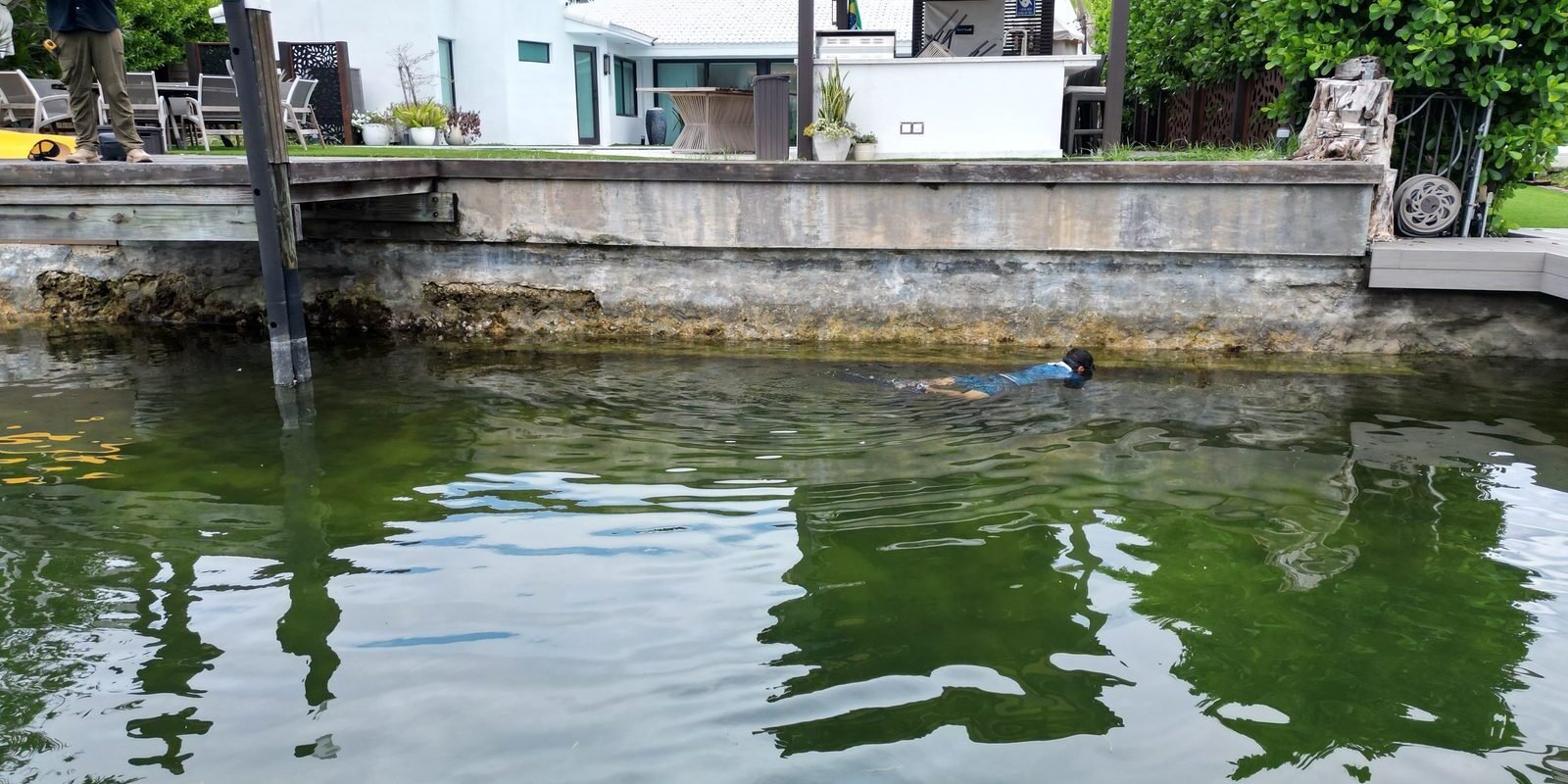
Before a single panel is poured or a tieback is drilled, your HOA board should sit down with the contractor and a Florida-licensed structural engineer for a pre-construction meeting — the one hour that sets every expectation for the months ahead. Without it, change orders land without context, work gets done out of sequence, and the board has no basis to push back. Souffront Contractors runs these meetings as the first formal step in its engineer-led construction management service, and what follows is the agenda your board should demand, regardless of who is in the room.
Key takeaways
- A pre-construction meeting is not a formality — it is the board’s last clear chance to lock in scope, schedule, and accountability before money starts moving.
- The meeting should include the contractor, the board’s engineer or owner’s representative, the property manager, and at least one board officer.
- Every verbal agreement made in this meeting must be confirmed in writing before mobilization.
- If competing bids were not built from the same scope documents, the pre-construction meeting is where gaps surface — and where change orders are born.
- Boards in Miami, Coral Gables, Coconut Grove, and Key Biscayne face specific Biscayne Bay tidal and canal-front conditions that must be addressed in writing at this stage.
Why this meeting matters more than the contract signing
Most boards assume the signed contract does the work. It does not. A construction contract defines obligations; a pre-construction meeting defines reality. The contractor reads the drawings one way. The board assumed something else. The engineer who wrote the original report is gone. No one reconciled the three.
That gap is where nearly every seawall dispute starts. A board in a Coconut Grove canal-front community once signed a contract for full panel replacement along 180 feet of seawall. The contractor showed up and said the access barge would need to tie off at the neighbor’s dock. No one had discussed that. Work stopped for two weeks while the board scrambled to get permission. Two weeks of standby time, billed as a change order.
A pre-construction meeting — with a written agenda, a named owner’s representative, and documented decisions — prevents exactly that.
Who must be in the room
Get this wrong and the meeting accomplishes nothing. The right attendees are:
- The contractor’s project manager — not a salesperson, not an estimator. The person who will actually run the job.
- The board’s engineer or owner’s representative — someone who can read the drawings and ask technical questions on the board’s behalf.
- The property manager or CAM — they coordinate resident access, parking, and noise complaints. They need to hear everything firsthand.
- At least one board officer — decisions made here may need ratification. Have authority in the room.
- The permitting contact — if permits are open with Miami-Dade DERM, the city building department, or the Florida Department of Environmental Protection, confirm who is tracking them and who handles agency calls.
If the contractor sends someone who cannot answer questions about sequencing, materials, or subcontractors, reschedule. That is not the right representative.
The agenda your board should demand — item by item
1. Confirm the scope of work, line by line
Pull out the bid documents and the signed contract. Walk every line item with the contractor present. Ask: is this in your price, or is this an allowance? What triggers an extra? If the board’s scope said “repair spalled cap concrete,” ask what happens when the cap is removed and the tie rod behind it is corroded. Is that an included contingency or a future change order? Get the answer in writing before the meeting ends.
On Biscayne Bay properties — particularly island communities in Key Biscayne or the Venetian Islands — tidal windows matter. Ask the contractor how they handle work that can only proceed at low tide, and whether the schedule already accounts for that. If it does not, the schedule in the contract is fictional.
2. Review the construction drawings and submittals
The contractor should bring their submittals — shop drawings, material data sheets, mix designs for concrete, specifications for tieback anchors. These are compared against what the engineer of record specified. If the contractor proposes a substitution (a different tieback system, a different concrete mix), that substitution needs written approval from the engineer before it is used, not after.
This is core construction management work: the board’s engineer reviews submittals so the board is never the one deciding whether a material swap is acceptable. That is not a decision a volunteer board officer should make alone.
3. Walk the site sequence step by step
Ask the contractor to narrate the job start to finish. Where does equipment stage? How does the barge access the water? Where is spoil material going? When are tiebacks installed relative to the cap pour? What is the curing time before backfill? Who calls for the building department inspection, and how far in advance?
Listen for vagueness. “We’ll figure that out on site” is not an answer. A seawall repair that backtracks in sequence — say, backfilling before tiebacks are properly set — can compromise the wall without anyone knowing it happened. The only protection is a written sequence agreed upon before work starts.
4. Establish the observation and documentation protocol
Who will observe the work at key construction stages, and how will it be documented? The board’s engineer or owner’s representative should be present when tiebacks are installed, when concrete is placed, and when backfill operations begin. These are not optional visits — they are the moments when defects are either caught or buried.
Agree on how site observations will be communicated. A brief written field report after each visit — what was observed, what was acceptable, what was flagged — creates the record the board needs if a dispute arises later. Without that record, the board has nothing but memory against a contractor’s invoice.
This documentation is part of what a construction management and owner’s representative engagement delivers. The board does not have to track it themselves.
5. Set the pay application schedule and review process
Ask the contractor: when do you submit pay applications, in what format, and what documentation supports each request? The board should not receive an invoice saying “30% complete — $54,000 due” with nothing behind it. Pay applications should reference the schedule of values, list the work completed since the last draw, and be verified by the owner’s representative before the board approves payment.
Agree at this meeting that pay applications are submitted on a fixed day each month (or at agreed project milestones), reviewed by the board’s engineer within a set number of business days, and that no payment is released for work not yet verified. Write it down. Put it in the meeting minutes.
6. Define the change order process
Change orders are the number-one source of board anxiety on seawall projects. Some are legitimate — a contractor opens a panel and finds the tie rod has completely corroded through, which no one could see from the surface. Others are bid gaps: the contractor priced the job low knowing they would recover margin through extras.
Agree at this meeting that every change order requires: a written description of the changed condition, a photo, a proposed cost with material and labor breakdown, and written approval from the board’s engineer before any out-of-scope work begins. A contractor who objects to that process is telling you something.
Legitimate differing conditions exist in South Florida seawall work — Biscayne Bay sediment, old corroded hardware from 1970s construction, voids that only appear after excavation. A fair change order process protects both sides. An uncontrolled one protects only the contractor.
7. Confirm permit status and agency contacts
Who holds the permit? Who is the contractor of record? If Miami-Dade DERM or a city building department has issued a permit, confirm the permit number, the required inspections listed on the permit, and who calls them in. If the project is in or adjacent to navigable waters, confirm whether a U.S. Army Corps of Engineers permit or exemption is in place.
Get the contractor’s license number and confirm it is active. The board’s engineer should already know this, but verify it in writing at this meeting. Write the permit number and inspection contact into the meeting minutes so it is never lost in an email chain.
8. Agree on the closeout package
Ask the contractor what they deliver at the end of the job. The answer should include: as-built drawings reflecting what was actually constructed, warranties for materials and workmanship, any required engineer-sealed reports, and release of lien documentation. If the contractor has not thought about closeout, you are dealing with someone who considers the job done when the last truckload leaves.
As-built drawings matter especially for seawall work. The next board, the next engineer, and the next contractor need to know exactly where the tiebacks are, how deep the panels go, and what materials were used. That documentation is worth real money at the next project — or at sale.
Turn the meeting into a written record
Everything agreed in this meeting goes into written minutes distributed to all parties within 48 hours. The contractor must acknowledge them in writing — a reply email confirming receipt is enough if the minutes are detailed. If the contractor disputes an item in the minutes, that dispute surfaces now, not mid-project.
The property manager should keep the original. The board’s engineer keeps a copy. So does the board president. When a change order arrives three months later and someone says “we never discussed that,” the minutes are the answer.
What happens when there is no one on the board’s side
Most HOA and condo boards run seawall projects with no technical representative of their own. The engineer who wrote the original report has no contract to come back. The contractor answers to himself. The property manager is not an engineer. The board — volunteers with full-time jobs and 200 owners watching — is left reviewing a $180,000 change order with no one to tell them whether it is real.
That is the problem an owner’s representative solves. A Florida-licensed structural engineer acts as the board’s single point of contact from scope through closeout — writing bid documents, running the bid, reviewing submittals, observing the work at critical stages, reviewing pay applications, evaluating change orders, and assembling the closeout package. The board makes decisions; the engineer gives them the information to make them well.
Souffront Contractors offers this service to HOA and condo boards across Miami-Dade, Broward, and Palm Beach. Because Souffront both performs marine construction and provides oversight services, any interest in bidding the construction work is disclosed to the board in writing before engagement. A board can engage Souffront for oversight only. That transparency is not a liability — it is what makes the relationship work.
If you want a professional seawall inspection before the project even reaches bid stage, that is the right starting point. Inspection fees are flat, quoted upfront, and typically range from $1,500 to $3,000 depending on complexity — not per linear foot.
Talk to a Florida-licensed structural engineer
If your board is heading into a seawall project and has not yet identified a technical representative, call (877) 420-7220 or use the form below. Souffront scopes and quotes construction management services before the project starts — fixed fee, clearly defined, no surprises. Same-business-day response on most inquiries.
Frequently asked questions
What is the purpose of a pre-construction meeting for a seawall project?
A pre-construction meeting locks in scope, sequence, documentation requirements, and the change order process before work begins. It is the board’s last opportunity to surface ambiguities — material substitutions, site access issues, permit status, pay application format — while there is still time to resolve them without costing money or stopping the job.
Who should represent the HOA board at a pre-construction meeting?
The board should be represented by a Florida-licensed structural engineer or owner’s representative who can read construction drawings and evaluate technical claims, plus a board officer with decision-making authority and the property manager. Without a technical representative, the board cannot meaningfully verify what the contractor commits to.
What is an owner’s representative on a seawall project?
An owner’s representative — sometimes called a construction manager or the board’s engineer — is a licensed professional the board hires to act on its behalf throughout the project. They review submittals, observe the work at critical construction stages, evaluate change orders, review pay applications, and assemble the closeout package. The board stays informed and in control without needing to be on-site themselves.
How does an owner’s representative handle change orders?
The owner’s representative reviews each change order against the original scope documents, asks the contractor for a written description of the changed condition, photographs, and a cost breakdown, and advises the board whether the extra is justified. Boards that lack this review often approve change orders that represent bid gaps rather than genuine unforeseen conditions.
How much does construction management for an HOA seawall project cost?
Construction management fees are scoped and quoted per project, before the project starts. There is no standard per-linear-foot rate for oversight services. The fee depends on the size of the project, the number of site observation visits required, and the complexity of the permit and agency coordination involved. Souffront quotes this upfront so the board can budget it alongside construction costs.
Can a seawall contractor also serve as the board’s owner’s representative?
Not on the same project. If Souffront is performing the construction, it cannot simultaneously act as an independent owner’s representative for that same scope. When Souffront provides oversight on a project it may also bid, any such interest is disclosed to the board in writing before engagement, and the board can engage Souffront for oversight only. Independence matters — do not let any contractor self-certify their own work.
What permits are typically required for seawall work in Miami-Dade?
Most seawall repair and replacement work in Miami-Dade requires a building permit from the local municipality and an Environmental Resource Permit or exemption through Miami-Dade DERM. Work in or adjacent to navigable waters may also require coordination with the U.S. Army Corps of Engineers. The pre-construction meeting should confirm which permits are open, who holds them, and what agency inspections are required before the work is covered or backfilled.
What should the closeout package include after a seawall project?
A complete closeout package includes as-built drawings showing what was actually built (not just what was designed), material and workmanship warranties from the contractor and manufacturers, any engineer-sealed reports required by the permit or the association’s governing documents, and lien release documentation from the contractor and all major subcontractors. This package should be archived by the association and handed to the next board — it is a real asset at the next repair cycle or at sale.
Related from Souffront Contractors: HOA and condo board compliance reports — all delivered by the same Florida-licensed structural engineering and marine construction team. Call (877) 420-7220.
About Souffront Contractors Inc.: a Florida-licensed structural engineering and marine construction firm serving Miami-Dade, Broward, and Palm Beach counties. Choose a seawall inspection company whose reports are signed and sealed by a licensed structural engineer — see our seawall contractors page or call (877) 420-7220.
Got a seawall or structural question?
Five fields. Same business day from a Florida-licensed engineer, routed into our dispatch CRM in real time.
- Same business dayAcknowledgment from a Florida licensed engineer — Mon–Fri 8 AM–5:30 PM.
- Engineer-sealed reportAccepted by carriers, building departments, and real-estate transactions.
- Fixed-fee proposalNo hourly billing. Repair scope priced line-by-line.