
How Hurricanes Damage South Florida Seawalls
How storm surge, wave action, and heavy rain damage South Florida seawalls, the warning signs after a hurricane, and what a post-storm inspection covers.
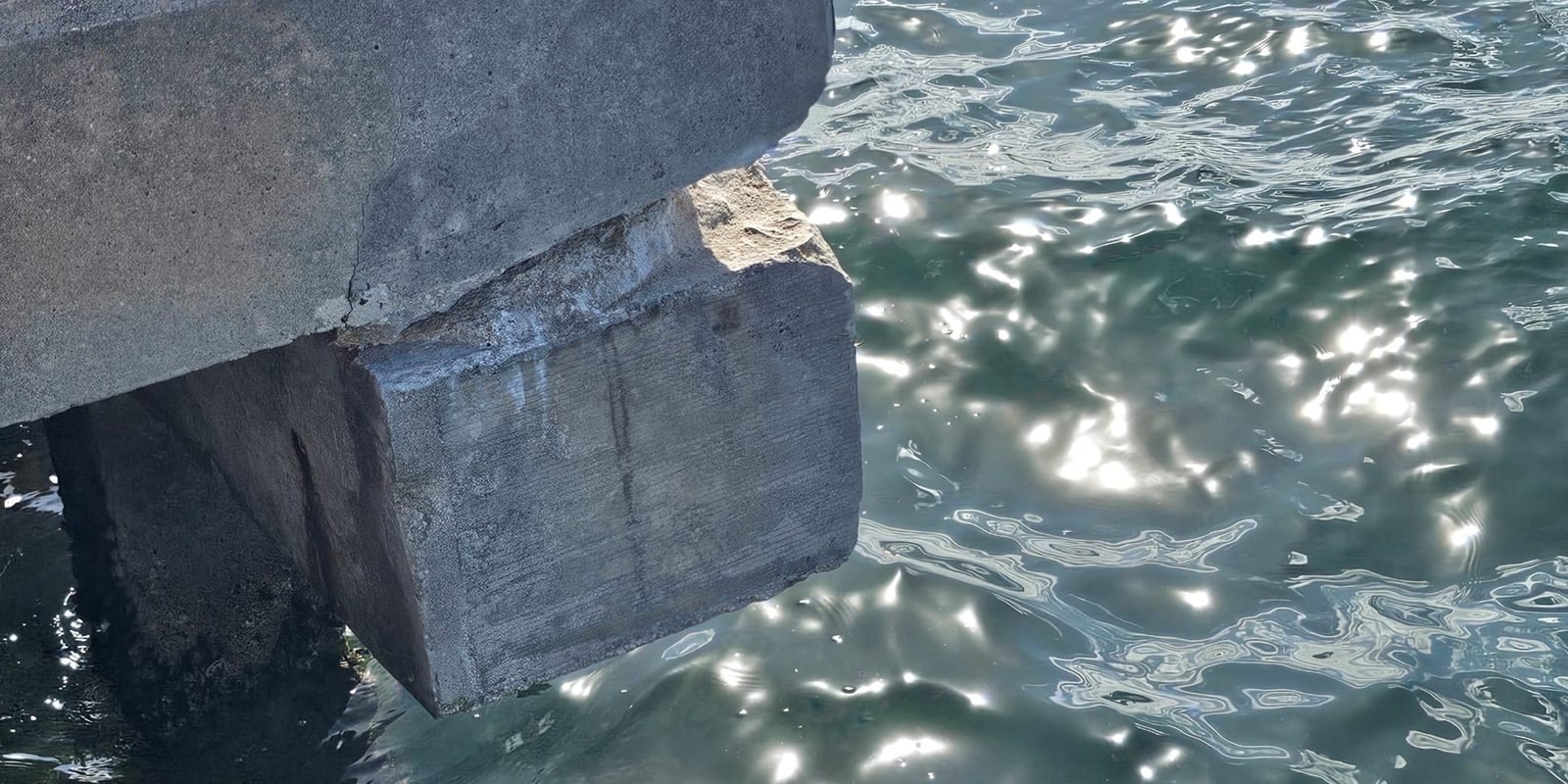
Hurricanes damage South Florida seawalls through three forces working together: storm surge that raises water levels above the cap, wave action that pounds panels and erodes soil behind the wall, and heavy rainfall that saturates backfill and adds pressure from the land side. A wall that looked sound in June can develop cracks, voids, or a lean by the end of hurricane season. A visual check after any named storm, tropical system, or period of sustained flooding is the only way to catch damage before it becomes a collapse.
Key takeaways
- Storm surge and wave action erode soil behind a seawall even when the wall itself looks undamaged from above.
- Heavy rain saturates backfill and increases hydrostatic pressure, which is a leading cause of tieback failure and wall lean.
- Warning signs after a storm include new cracks, soil settlement near the cap, leaning panels, and sinkholes in the yard.
- A seawall inspection after a hurricane is a flat fee, quoted upfront, based on the complexity of the assessment.
- Miami-Dade, Broward, and Palm Beach all regulate seawall repair permitting through county and state agencies.
How storm surge attacks a seawall
Storm surge pushes water levels well above a seawall’s normal high-tide line. When surge tops the cap, water flows over the wall and back down through the soil on the land side, carrying fine soil particles with it. This process, called scour, hollows out voids behind the panels that are invisible from the surface. A wall can look intact after a storm and still have lost a significant amount of the soil that holds it in place.
Repeated surge events compound the problem. Each overtopping event removes a little more backfill, so a wall that survived one hurricane with minor scour may fail during the next one if the voids were never identified and filled.
Wave action and erosion at the toe
Waves generated by hurricane-force wind hit a seawall with far more force than normal boat wake or tidal chop. Repeated wave impact at the toe of the wall — the base, below the waterline — can undermine the footing and expose or damage batter piles on pile-supported walls. Because this area sits underwater, damage here often goes unnoticed until the wall visibly shifts or leans.
Wave energy also accelerates existing cracks in concrete panels. A hairline crack that was stable in calm conditions can widen rapidly when repeatedly flexed by wave impact during a storm.
Rainfall, saturated soil, and hydrostatic pressure
South Florida hurricanes bring extreme rainfall, sometimes more than a foot in 24 hours. That water saturates the soil behind a seawall faster than it can drain, especially where weep holes or jets are blocked or undersized. Saturated soil is heavier and exerts significantly more hydrostatic pressure against the back of the wall than dry soil.
This pressure is one of the most common causes of tieback failure. A tieback — the buried anchor rod that connects the wall to a deadman anchor further inland — is designed for a specific load. When saturated soil pushes harder than the tieback was designed to resist, the rod can stretch, the deadman can shift, or the connection at the cap can crack and pull free.
Warning signs to check after a storm
Walk the full length of the seawall and the yard behind it after any hurricane, tropical storm, or period of sustained coastal flooding. Look for:
- New cracks in the cap or panels, or existing cracks that have visibly widened
- Soil settlement, depressions, or small sinkholes within a few feet of the wall
- A visible lean or bulge in the wall that wasn’t there before
- Gaps opening between panels or between the wall and an adjacent dock or seawall
- Debris or displaced rock at the base of the wall, which can indicate scour
- Water pooling in the yard well after the rain has stopped, which can signal a drainage or backfill problem
Any of these signs warrants a professional assessment. Some damage, like scour below the waterline, cannot be confirmed from the shoreline and requires a closer inspection of the submerged sections.
What a post-hurricane seawall inspection covers
A structural seawall inspection after a storm documents the wall’s current condition against a baseline, so any new damage is clearly identified. It typically includes a review of the cap, panels, and piles above the waterline, an assessment of drainage and any visible soil loss, and — when conditions warrant — a review of the wall below the waterline to check for scour or displaced material at the toe.
The inspection is priced as a flat fee, quoted before any site visit, based on the scope of what needs to be reviewed rather than an hourly rate. The result is an engineer-sealed report that documents findings with photos and gives clear, prioritized recommendations, which is also the documentation most insurance carriers request for a storm-damage claim.
When damage requires repair, not just monitoring
Not every crack or settlement means the wall needs to be rebuilt. A licensed engineer categorizes findings by severity and recommends monitoring, targeted repair, or replacement based on what’s actually happening structurally. Repairs are priced by the extent of the work involved — a few damaged panels or a single failed tieback cost far less to address than a full section replacement — and that scope is defined during the inspection, not guessed at beforehand.
Common post-storm repairs include seawall repair for cracked or spalled panels, tieback replacement where hydrostatic pressure has pulled an anchor loose, and soil stabilization where scour has created voids behind the wall. Left unaddressed, these issues typically worsen with the next heavy rain or storm event rather than staying the same.
Permitting after storm damage
Seawall repair work in South Florida generally requires permitting through county environmental agencies, including Miami-Dade DERM, along with review under the Florida Department of Environmental Protection’s submerged lands and environmental resource rules. Work within navigable waterways can also fall under U.S. Army Corps of Engineers jurisdiction. An engineer-sealed report and repair plan built to Florida Building Code and HVHZ requirements is typically what these agencies expect to see before permits are issued.
Talk to a Florida-licensed engineer
If your seawall has been through a hurricane, tropical storm, or a season of heavy rain and surge, get it looked at before the next one. Souffront Contractors is a Florida-licensed structural engineering and marine construction firm serving Miami-Dade, Broward, and Palm Beach — one company that inspects, engineers, permits, and builds, with a fixed-fee quote before any site visit and a same-business-day response. Call (877) 420-7220 or use the form below to schedule an assessment.
Frequently asked questions
How do I know if my seawall was damaged by a hurricane?
Check for new or widened cracks, a visible lean or bulge, soil settlement or small sinkholes near the wall, gaps between panels, and displaced rock or debris at the base. Some damage, especially scour below the waterline, isn’t visible from the shoreline and needs a professional assessment to confirm.
Should I get my seawall inspected after every hurricane?
Yes, after any named storm, tropical system, or period of extended coastal flooding that hit your property directly. Damage from surge and saturated soil often isn’t visible until it has progressed, so a check after the storm catches problems while they’re still minor.
How much does a hurricane damage seawall inspection cost?
A seawall inspection is a flat fee, typically $1,500–$3,000 depending on the complexity of the assessment, including factors like whether a below-waterline review is needed and how many structural components are involved. The fee is quoted upfront, before any site visit.
What causes a seawall to lean after a storm?
Leaning is usually caused by saturated backfill soil putting excess hydrostatic pressure on the wall, combined with scour that has removed supporting soil from behind or below the panels. A stretched or failed tieback anchor is a common contributing factor.
Can a seawall fail weeks after a hurricane instead of during it?
Yes. Scour and soil loss from a storm can weaken a wall’s support without causing immediate visible failure. The wall can continue settling or shifting over the following weeks, especially if additional rain saturates the already-loosened soil.
Does homeowners insurance cover hurricane seawall damage?
Coverage varies significantly by policy and carrier, and many standard policies exclude or limit seawall and dock coverage. An engineer-sealed inspection report with dated photos is the documentation most carriers require to evaluate a claim, regardless of what the policy ultimately covers.
What permits are needed to repair a storm-damaged seawall in South Florida?
Repairs generally require permitting through county environmental agencies like Miami-Dade DERM, along with state review under Florida DEP’s submerged lands rules, and potentially U.S. Army Corps of Engineers review for work in navigable waterways. An engineer-sealed repair plan is typically required as part of the permit application.
Do older seawalls fail faster in hurricanes than newer ones?
Age alone isn’t the deciding factor — construction method, material condition, and maintenance history matter more. An older wall with sound tiebacks and no prior scour damage can outperform a newer wall that already has hidden soil loss or a compromised anchor system. An inspection is the only way to know which category a given wall falls into.
About Souffront Contractors Inc.: a Florida-licensed structural engineering and marine construction firm serving Miami-Dade, Broward, and Palm Beach counties. Choose a seawall inspection company whose reports are signed and sealed by a licensed structural engineer — or call (877) 420-7220.
Got a seawall or structural question?
Five fields. Same business day from a Florida-licensed engineer, routed into our dispatch CRM in real time.
- Same business dayAcknowledgment from a Florida licensed engineer — Mon–Fri 8 AM–5:30 PM.
- Engineer-sealed reportAccepted by carriers, building departments, and real-estate transactions.
- Fixed-fee proposalNo hourly billing. Repair scope priced line-by-line.