
What King Tide Season Means for Your Miami Seawall
King tide flooding this month can expose seawall problems early. Here's what to check on a Miami seawall, what's normal, and what signals real damage.
King tide season in Miami runs roughly October through November, when the highest tides of the year push water several inches to a foot above normal high tide. For a property on Biscayne Bay — in Coral Gables, Coconut Grove, or along the Key Biscayne shoreline — this is the month your seawall tells you the truth. Water that normally sits a foot below your cap now sits at it, or over it, and whatever is wrong with the wall shows up fast. Souffront Contractors gets more seawall calls in late October and November than any other stretch of the year, and it’s not a coincidence.
Key takeaways
- King tide season (roughly October–November in Miami-Dade) pushes water a foot or more above normal high tide, exposing weak points a normal tide hides.
- Water coming up through the yard near the wall, not over it, usually means soil loss or a failed drainage system behind the cap — not storm surge.
- A seawall inspection is a flat fee, typically $1,500–$3,000 depending on complexity, quoted before any site visit — never priced per linear foot.
- Standing water on the cap itself for more than a tide cycle, or a cap that visibly rocks underfoot, is a same-week call, not a wait-and-see.
- Most king tide “damage” is really pre-existing deterioration that finally has enough water behind it to show itself.
Walk the wall at the next high tide, not after
The best time to check a seawall is during the event, not the week after the water recedes. Pick a day with a predicted king tide — Miami-Dade publishes the schedule — and walk the property an hour before and at peak high tide. You’re looking for where the water is coming from, not just how high it gets.
- Water over the cap in a sheet from the bay side is tide doing what tide does. Note the depth and move on.
- Water bubbling up in the yard several feet back from the wall, with no sheet flow over the cap, is a different problem. That’s water finding a path through voided soil behind the wall — a sign the seawall is no longer holding back what it’s supposed to.
- Water pooling at specific joints or cracks in the cap rather than sheeting evenly tells you where the cap has already separated or where a panel has shifted.
What to check at the cap
The cap is the concrete beam running the top of the wall, and it’s the easiest component to check without getting in the water. During a king tide, look for:
- Hairline cracks that are now wet and dark when the rest of the cap is dry — water is tracking through the crack, which means it goes all the way through.
- A cap section that flexes or rocks slightly when you stand on it. A sound cap doesn’t move under body weight.
- Rust staining bleeding out of a crack line — that’s corroding rebar inside the cap, and king tide saturation accelerates it.
- Gaps or stepping between adjacent cap sections where one side sits lower than the other — a sign of differential settlement behind the wall.
Any one of these on its own is worth logging. Two or more together, or anything paired with active water intrusion in the yard, is worth a call.
What to check at the toe and face of the wall
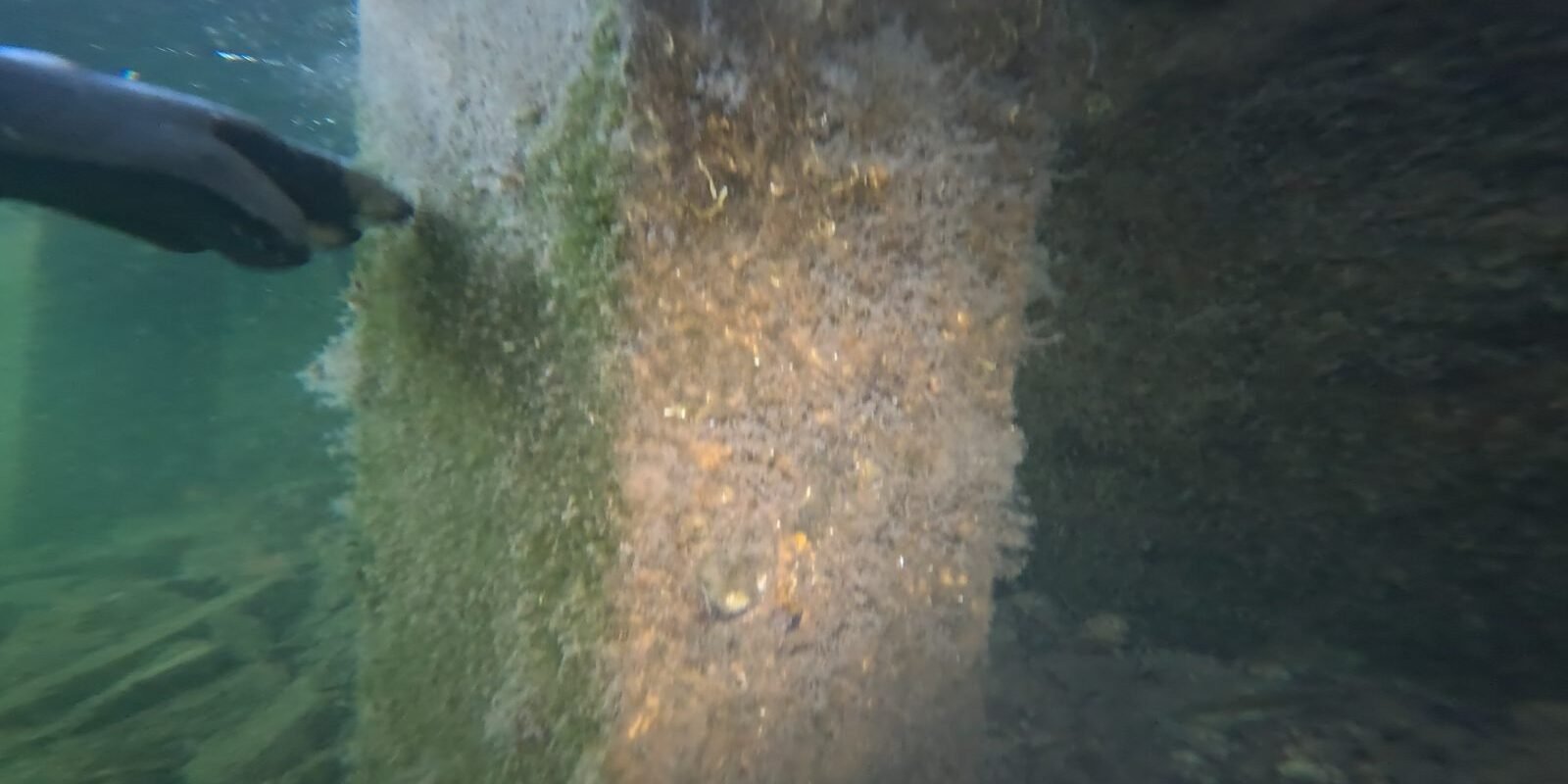
If you can see the face of the wall at low tide the day before or after, check it before the water comes back up. Look for leaning or bulging panels, exposed rebar, and marine growth patterns that suddenly show a new waterline — that can mean the wall has settled. Soil loss at the toe (the base of the wall, underwater) is the hardest problem to see and the most common cause of a wall that looks fine above water and fails below it. If your property has had visible soil loss in the yard during past king tides, that’s usually toe erosion working its way up, not a surface drainage issue.
Drainage: the part everyone forgets
Most seawalls have weep holes or drain jets built into the cap or panels to relieve water pressure as the tide drops. During king tide season, check that these are actually draining — not packed with sand, mulch, or sealed over by a past repaint or paver job. A wall with blocked drainage holds hydrostatic pressure behind it longer than it was designed to, and that pressure is what cracks caps and pushes panels out of plane over time. This is a five-minute check and one of the most common fixable issues Souffront finds on otherwise sound walls.
HOA and condo common areas: why this month matters to the board
If you manage or sit on the board of a waterfront association, king tide season is when owners start emailing about standing water on the seawall, the pool deck, or the dock. Before you commission repairs, get a clear answer on what’s actually happening: normal seasonal tide, a drainage problem that’s fixable in a day, or wall movement that needs an engineer’s eyes. A documented seawall inspection during or right after king tide season gives the board something concrete to point to — dated photos, measurements, and a written condition assessment from a Florida-licensed structural engineer — instead of relying on whichever owner emailed loudest.
What’s normal versus what needs a structural engineer
Some water during king tide is expected and not a sign of failure. A low spot on the lawn that holds water for a tide cycle and drains afterward is usually fine. What separates a normal nuisance from a real problem is whether the water is finding a new path each time, whether the cap or panels are moving, and whether the volume of water or soil loss is increasing season over season. A structural engineer inspection during this window can tell the difference in one site visit, because the conditions that hide a problem in July are gone — the water is already doing the stress test for you.
Talk to a Florida-licensed engineer
If this month’s king tides showed you something new on your wall — water where it didn’t used to be, a cap that moved, a crack that’s now wet — don’t wait for it to dry out and go quiet again. Souffront Contractors inspects, engineers, permits, and repairs seawalls as one company, so the same team that documents the problem can scope and price the fix. A standard residential seawall inspection is a flat fee, typically $1,500–$3,000 depending on complexity, quoted before any site visit. Fill out the form below and we’ll get back to you the same business day.
Frequently asked questions
When is king tide season in Miami?
King tide season in Miami-Dade generally runs from October through November, with the highest predicted tides tied to the full and new moons. Miami-Dade County publishes the specific dates and times each year.
Is water over my seawall cap during a king tide a sign of damage?
Not by itself. A thin sheet of water flowing evenly over the cap during peak high tide is normal for many low-elevation seawalls. It becomes a concern when the water pools at specific cracks or joints, when the cap flexes underfoot, or when water is also appearing in the yard well back from the wall.
Why is water coming up in my yard instead of over the seawall?
This usually means water is finding a path through voided or washed-out soil behind the wall rather than coming over the top. It’s one of the more serious signs to catch during king tide season, since it points to soil loss the wall is no longer containing.
How much does a seawall inspection cost in Miami?
A standard residential seawall inspection is a flat fee, typically $1,500–$3,000 depending on the complexity of the inspection — wall length, whether a below-waterline dive is needed, and the number of structural components reviewed. It is never priced per linear foot, and the fee is quoted before any site visit.
Should I call a seawall contractor or an engineer first if I see flooding this month?
Start with an inspection from a Florida-licensed structural engineer rather than a seawall contractor pricing repairs on the spot. An engineer’s assessment gives you an independent read on what’s actually wrong and what it will cost to fix, before any repair work is scoped or bid.
Can blocked drainage make king tide flooding worse?
Yes. Weep holes and drain jets in the cap and panels are designed to relieve water pressure as the tide drops. If they’re blocked by sand, mulch, or sealed over during a past project, water pressure builds up behind the wall longer than it should, which accelerates cracking and panel movement over time.
Do I need to do anything if my seawall looks fine during king tide season?
If the wall shows no new cracking, no cap movement, and water behaves the same way it has in past seasons, no action is needed beyond normal monitoring. Keep an eye on it each king tide season, since conditions that are fine one year can change after a storm or a slow buildup of soil loss.
Does Souffront Contractors do emergency seawall inspections during king tide flooding?
Yes. If a king tide reveals active water intrusion, cap movement, or new cracking, Souffront Contractors can schedule a site visit quickly and provide a written engineering assessment, typically with same-business-day response to the initial call.
Related from Souffront Contractors: seawall repair and HOA and condo board compliance reports — all delivered by the same Florida-licensed structural engineering and marine construction team. Call (877) 420-7220.
About Souffront Contractors Inc.: a Florida-licensed structural engineering and marine construction firm serving Miami-Dade, Broward, and Palm Beach counties. Partner with a full-service marine construction company for docks, seawalls, and waterfront structures — see our seawall contractors page or call (877) 420-7220.
Got a seawall or structural question?
Five fields. Same business day from a Florida-licensed engineer, routed into our dispatch CRM in real time.
- Same business dayAcknowledgment from a Florida licensed engineer — Mon–Fri 8 AM–5:30 PM.
- Engineer-sealed reportAccepted by carriers, building departments, and real-estate transactions.
- Fixed-fee proposalNo hourly billing. Repair scope priced line-by-line.