
Neighbor’s Failing Seawall Threatening Yours? What to Do
A neighbor's failing seawall can undermine your own wall through soil loss and pressure. Here's how to document damage, get it assessed, and protect your property.
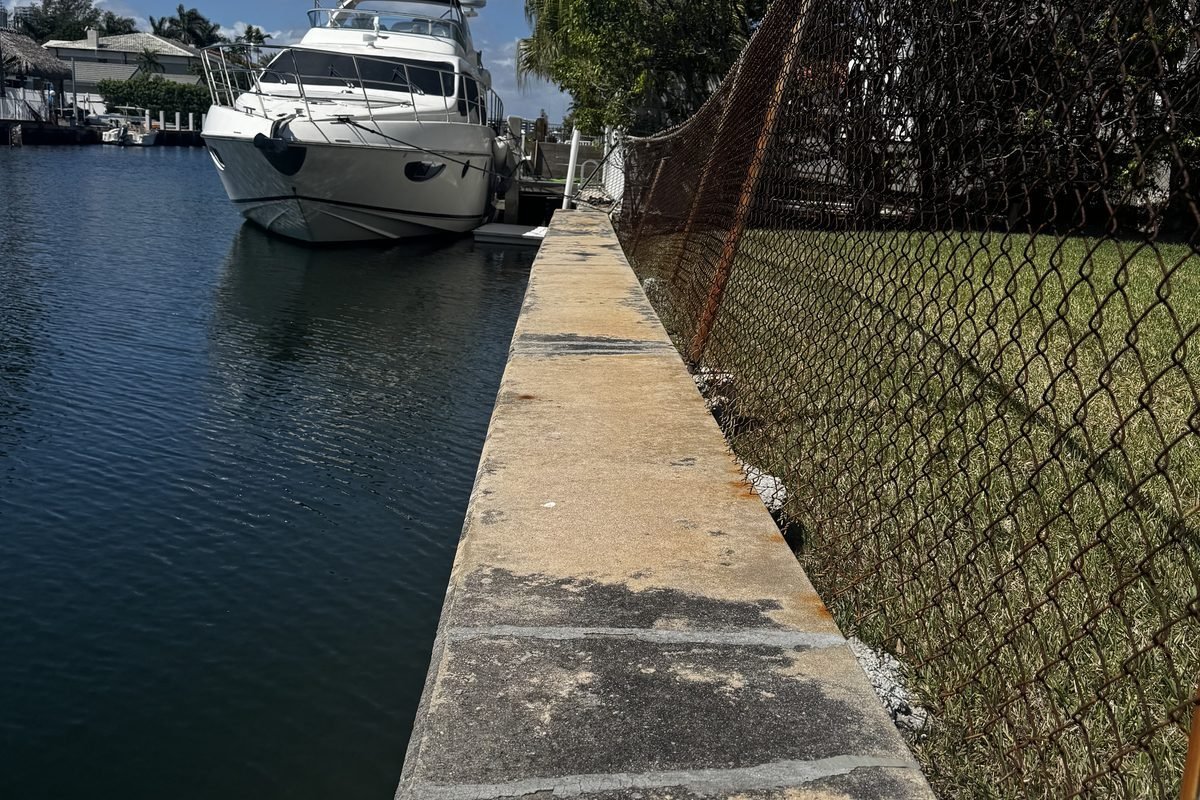
A neighbor’s failing seawall can threaten your property even though it sits on their side of the property line. Soil, groundwater, and structural loads don’t stop at a boundary marker — when one section of wall fails, the ground behind your neighbor’s wall (and often behind yours) can shift, settle, or wash out. Souffront Contractors gets called into these disputes often, usually after a homeowner notices a sinkhole, a leaning fence, or cracking pavers near the property line.
Key takeaways
- Seawalls are connected systems — soil loss or panel failure next door can undermine your own wall, yard, or dock.
- Document visible damage (cracks, tilting, sinkholes, exposed rebar, soil washout) with dated photos before you contact anyone.
- An independent, engineer-sealed assessment gives you objective evidence for insurance, HOA boards, or a conversation with your neighbor.
- Miami-Dade DERM and local code enforcement can be involved if the failing wall poses a public safety or environmental risk.
- A standard residential structural assessment is billed as a single flat fee, quoted before the engineer ever visits the site — cost depends on the wall’s condition, access, and scope, not a formula tied to footage.
Why a neighbor’s seawall problem becomes your problem
Seawalls hold back soil and water using a combination of the wall panel, a cap, and buried anchors called tiebacks — the horizontal rods or straps that anchor the wall to a “deadman” further inland. When a neighboring wall fails, one or more of these things typically happens:
- Soil migration — water finds a gap or hole in the failing wall and pulls soil out from behind it, including soil that may extend under your property.
- Loss of lateral support — if your wall and your neighbor’s wall share a corner or a common tieback field, their failure can reduce the support behind your own wall.
- Redirected water flow — tidal and storm flow that used to move evenly along the shoreline can concentrate at the gap, accelerating erosion on both properties.
This is why a seawall inspection for one property often needs to account for the condition of the walls on either side of it, not just the wall directly in front of the house.
Warning signs to document immediately
Before you talk to your neighbor, your HOA, or an engineer, walk your own property line and the visible portion of the neighboring wall. Take dated photos and video of:
- Visible cracks, spalling concrete, or exposed, rusting rebar in the neighbor’s cap or panels
- A leaning, bulging, or rotated wall section
- Sinkholes, soft spots, or sudden settling in your yard near the property line
- A fence, pool deck, dock, or paver section that has shifted or dropped
- Turbid or discolored water near the base of either wall after rain or high tide
- Gaps opening between wall panels or at the property-line joint
Keep a simple log with dates. If the situation changes quickly — a sinkhole growing, a wall audibly cracking — that record matters for insurance claims and any code enforcement report.
Your practical and legal options
1. Start with a documented conversation
Most neighbor disputes move faster when the first contact is calm and in writing (email or a dated letter), not just a conversation at the fence. State what you observed, when, and ask whether they’re aware of the condition. Keep a copy.
2. Get an independent engineering assessment
An assessment from a licensed engineer who has no stake in either property gives both sides objective facts instead of opinions. It documents the actual condition of both walls, whether they’re structurally connected, and what’s driving the damage. This report is also what an HOA board, insurer, or attorney will want to see before acting.
3. Loop in your HOA or condo association, if applicable
If either property is part of an association, the board may have authority — or an obligation — to address a shared seawall issue. Souffront prepares HOA compliance reports specifically to give boards a clear, defensible basis for decisions like this.
4. Contact code enforcement or Miami-Dade DERM if there’s a public safety or environmental concern
A severely failing seawall can be a code violation, and in Miami-Dade County the Department of Environmental Resources Management (DERM) regulates shoreline and coastal structures. If a wall is actively collapsing or discharging soil into the waterway, DERM or your local building department may need to be notified. Souffront’s violation response service helps property owners navigate an open case once a notice has been issued.
5. Understand that repair responsibility is a legal question, not just an engineering one
Florida property law generally holds each owner responsible for maintaining their own seawall, but shared damage, encroachment, and negligence claims can shift that. An engineering report doesn’t settle liability by itself, but it’s usually the first document an attorney asks for.
What an independent seawall assessment covers
A standard residential structural assessment from Souffront looks at the wall cap, panels, visible piles, drainage, and — where warranted — a below-waterline review of the submerged portion of the wall. The engineer evaluates whether the neighboring wall’s condition is affecting your property’s soil, drainage, or structural support, and documents everything with photos and a written, sealed report.
This assessment is billed as a single flat fee, typically in the $1,500–$3,000 range for a standard residential wall. The exact number is quoted upfront, before any site visit, based on factors like site access, whether an underwater component is needed, and how many structural elements are being evaluated — not a rate tied to the length of the shoreline. You’ll know the number before you commit to anything.
If repairs are needed: what the costs typically look like
Repair and replacement work, unlike an assessment, is commonly estimated per linear foot of wall, because materials and labor scale directly with length. As a general industry range for South Florida (not a fixed Souffront quote):
- Moderate repairs — cap patching, tieback tightening, panel sealing — often run roughly $100–$250 per linear foot.
- Full panel and tieback replacement often runs roughly $400–$600 per linear foot, depending on materials and access.
Every project is different. A written scope from seawall repair specialists will lay out exactly what’s included before work starts.
Talk to a Florida-licensed engineer
If a neighboring wall is showing signs of failure, don’t wait for it to reach your property line. A same-business-day response and an engineer-sealed report give you clear, independent documentation you can bring to your neighbor, your HOA, your insurer, or an attorney. The fee is quoted upfront and the report is yours to use however you need it.
Frequently asked questions
Can my neighbor’s failing seawall actually damage my property?
Yes. Seawalls rely on soil and buried tiebacks that don’t respect property lines. A failure next door can pull soil from under your yard, reduce support behind your own wall, or redirect water flow that accelerates erosion on your side.
Who is responsible for repairing a seawall — the neighbor or both owners?
In most cases, each property owner is responsible for maintaining the seawall on their own property line. Shared damage, encroachment, or negligence can complicate that, which is why an independent engineering report and, in some cases, a real estate or property attorney are both worth involving.
What are the first signs a neighboring seawall is failing?
Look for cracked or spalling concrete, exposed rebar, a leaning or bulging wall, sinkholes or soft ground near the property line, shifting pavers or fencing, and cloudy water near the base of the wall after rain or high tide.
Should I contact Miami-Dade DERM about a neighbor’s seawall?
If the wall is actively collapsing, discharging soil into the waterway, or otherwise poses a public safety or environmental concern, DERM or your local code enforcement office can open a case. For a less urgent issue, an independent assessment is usually the better first step.
How much does an independent seawall assessment cost?
A standard residential assessment is a flat fee, typically $1,500–$3,000 depending on the wall’s condition, site access, and whether a below-waterline review is needed. The exact fee is quoted before the engineer visits the site.
Will my homeowners insurance cover damage from a neighbor’s failing seawall?
It depends on your policy and the cause of the damage. Most insurers want a written, sealed engineering report documenting the condition and cause before they’ll evaluate a claim.
Can I make my neighbor pay for repairs if their wall damaged my property?
That’s a legal determination, not an engineering one. An independent report documenting the condition and likely cause of the damage is typically the first piece of evidence an attorney or mediator will ask for.
How long does an assessment take?
A standard residential site visit is usually completed in a single visit, with the written, sealed report following shortly after. Response time is generally same business day for scheduling the visit itself.
About Souffront Contractors Inc.: a Florida-licensed structural engineering and marine construction firm serving Miami-Dade, Broward, and Palm Beach counties. Reach a licensed seawall contractor in Boca Raton and across Palm Beach County — or call (877) 420-7220.
Got a seawall or structural question?
Five fields. Same business day from a Florida-licensed engineer, routed into our dispatch CRM in real time.
- Same business dayAcknowledgment from a Florida licensed engineer — Mon–Fri 8 AM–5:30 PM.
- Engineer-sealed reportAccepted by carriers, building departments, and real-estate transactions.
- Fixed-fee proposalNo hourly billing. Repair scope priced line-by-line.