
Riprap vs. Seawall: Choosing the Right Shoreline Fix
Riprap or a new seawall? Compare cost, durability, and permitting for South Florida shorelines, with guidance from a Florida-licensed engineer.
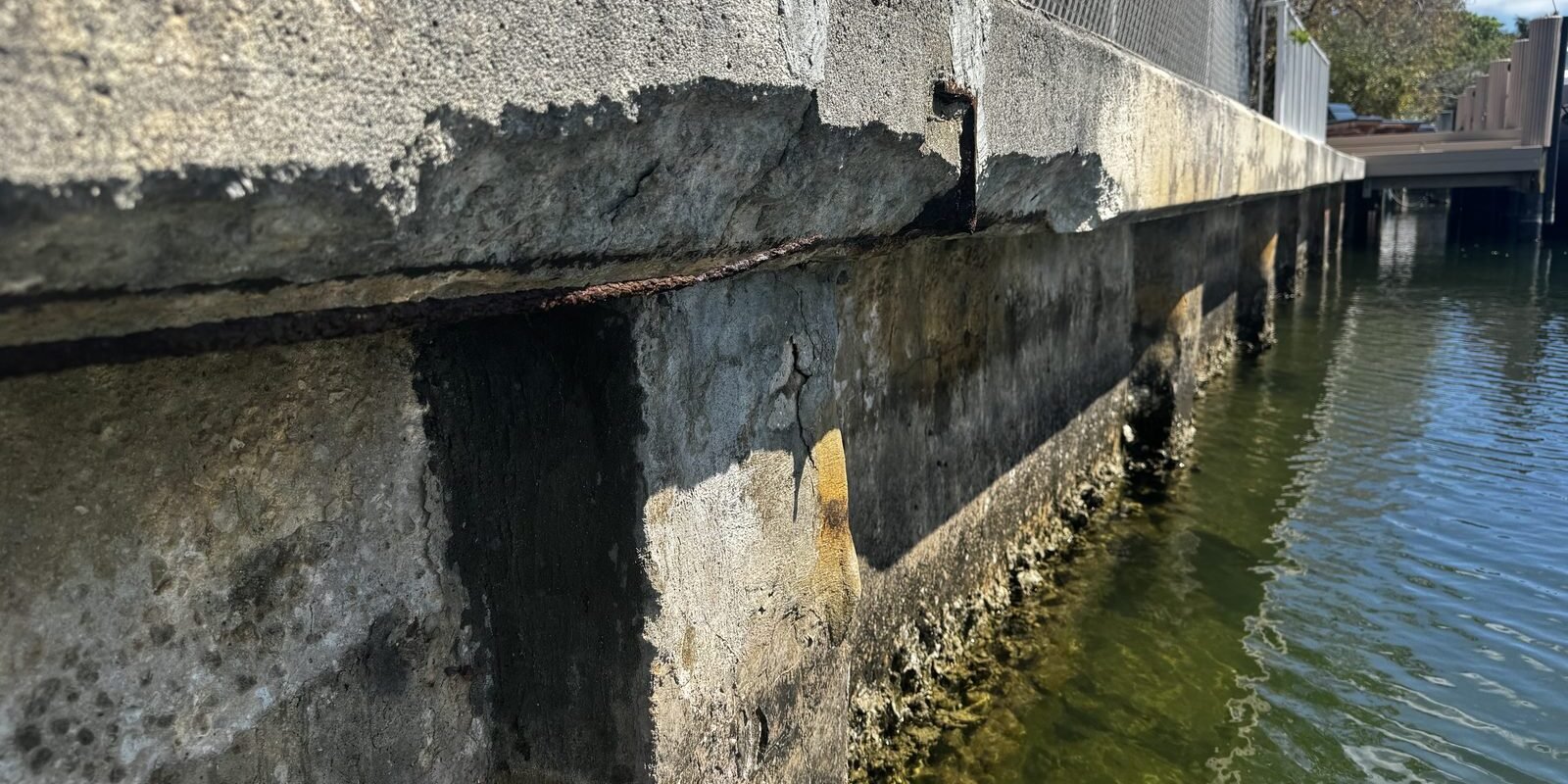
Riprap and a new seawall solve the same problem — erosion and wave energy — in different ways. Riprap uses loose stone to absorb wave energy and slow erosion, while a seawall is a rigid vertical structure that holds soil in place and creates a hard property line. Souffront Contractors evaluates both options for waterfront property owners across Miami-Dade, Broward, and Palm Beach before recommending either one.
Key takeaways
- Riprap is lower-cost upfront and works well on low-energy shorelines with a shallow bank, but it uses more shoreline width and needs periodic stone replenishment.
- A seawall holds a vertical property line, supports docks and structures behind it, and typically lasts 30-50 years when properly engineered, but costs more per linear foot to install.
- Wave energy, soil type, adjacent structures, and how the property will be used (dock, pool deck, seating area) usually decide the right fix, not price alone.
- Both riprap and seawall work in Miami-Dade waters require permits through Miami-Dade DERM, and often Florida DEP and USACE review as well.
- An engineer-led site assessment is the fastest way to know which option performs better and costs less over 20+ years, not just at installation.
How riprap and seawalls actually work
Riprap is a sloped layer of large stone, rock, or rubble placed along a shoreline bank. Waves lose energy as they move through the gaps between stones, which reduces the erosive force that reaches the soil behind it. Riprap needs a sloped bank to function correctly — it is not a vertical structure.
A seawall is a vertical wall, typically built from concrete panels, vinyl sheet piling, or a combination of both, anchored into the ground with tiebacks — buried anchors that hold the wall against soil pressure from behind. A seawall holds a hard, straight property line and can support a dock, pool deck, or patio built right up to the edge of the water.
Cost comparison
Riprap generally costs less per linear foot to install than a new seawall, since it does not require piling, panel forms, or a cap pour. However, riprap uses more horizontal shoreline space and may need stone replenishment over time as smaller pieces settle or shift.
New seawall construction and repair generally runs in the range of $400-$600 per linear foot for full panel and tieback replacement, and roughly $100-$250 per linear foot for moderate repair work — general industry ranges, not a fixed Souffront quote. A seawall costs more to install but reclaims usable land at the water’s edge and supports structures a riprap slope cannot.
Durability and maintenance
A well-engineered seawall, properly reinforced against rebar corrosion and built with adequate tieback anchoring, typically lasts 30-50 years in South Florida’s saltwater environment. Maintenance is mostly periodic inspection for cracking, spalling, or cap movement.
Riprap has a longer practical lifespan in low-wave-energy settings since there is no structural panel or anchor system to fail, but stones can shift, settle, or wash out during storm surge and need periodic regrading or restocking. Riprap performs worse in areas with heavy boat traffic, strong tidal currents, or exposed wave energy.
When riprap makes sense
- The shoreline has a natural slope and low wave energy, such as a protected canal or cove.
- The property does not need a hard vertical edge for a dock or waterfront structure.
- Environmental permitting favors a “softer,” more natural shoreline treatment — some jurisdictions and HOAs prefer riprap or living shoreline approaches for ecological reasons.
- Budget favors a lower upfront cost and the owner accepts periodic stone maintenance.
When a new seawall makes sense
- The property has an existing vertical seawall that has failed structurally — cracked panels, leaning cap, or exposed rebar — and riprap cannot be installed without regrading the entire bank.
- The owner wants to build or maintain a dock, boat lift, or patio directly at the water’s edge.
- The waterway has significant wave energy from boat wake, tidal flow, or open water exposure.
- Property lines and usable land area matter — a seawall reclaims land that a sloped riprap bank would otherwise consume.
Can you combine riprap and a seawall?
Yes. Some properties use riprap at the toe (base) of an existing seawall to dissipate wave energy before it reaches the wall, reducing scour and undermining at the foundation. This hybrid approach is common where a seawall already exists and additional wave protection is needed without full replacement.
Permitting differences
Both options require permitting in Miami-Dade County waters. Miami-Dade DERM reviews shoreline work for environmental impact, and larger projects may also need review from the Florida Department of Environmental Protection and the U.S. Army Corps of Engineers if the work affects navigable water. Riprap projects sometimes move through permitting faster since they are viewed as a lower-impact shoreline treatment, but this varies by waterway and jurisdiction.
A violation response may also be required if an existing structure has an open DERM notice — this needs to be resolved before new work is approved, regardless of which fix is chosen.
Talk to a Florida-licensed engineer
Choosing between riprap and a new seawall depends on wave energy, soil conditions, how you use the property, and what already exists on the shoreline. Souffront Contractors inspects the site, engineers the right fix, handles the permitting, and builds it — one company, fixed-fee, with a same-business-day response. Schedule an assessment using the form below.
Frequently asked questions
Is riprap cheaper than a seawall?
Riprap generally costs less per linear foot to install than a new seawall, since it does not require piling, panel forms, or a concrete cap. However, it uses more shoreline width and may need periodic stone replenishment, so the lifetime cost gap is smaller than the installation cost alone suggests.
How long does riprap last compared to a seawall?
A properly engineered seawall typically lasts 30-50 years in South Florida’s saltwater environment. Riprap can last longer in low-wave-energy settings since there is no structural panel or anchor to fail, but stones shift and settle over time and need periodic maintenance, especially after major storms.
Can I install riprap instead of repairing my existing seawall?
It depends on the bank slope and the condition of the existing wall. If the seawall has failed and the bank behind it has already eroded to a slope, riprap may be viable. If the property needs a hard vertical edge for a dock, patio, or boat lift, a repaired or rebuilt seawall is usually the better fix.
Do I need a permit to install riprap in Miami-Dade County?
Yes. Riprap and seawall work in Miami-Dade waters both require a permit through Miami-Dade DERM, and larger or more exposed projects may also need Florida DEP or U.S. Army Corps of Engineers review.
What are the signs my seawall needs to be replaced instead of repaired?
Look for a leaning or bulging cap, large cracks running through panels, exposed and rusted rebar, visible gaps at panel joints, or soil loss and voids behind the wall. These signs point to advancing tieback or panel failure rather than surface wear, and usually mean replacement is more cost-effective than repeated repairs.
Can riprap be used at the base of an existing seawall?
Yes. Riprap placed at the toe of a seawall can dissipate wave energy before it reaches the wall, reducing scour and undermining at the foundation. This hybrid approach works well when the seawall itself is structurally sound but needs added protection from wave action.
Which option is better for a property with a dock or boat lift?
A seawall is almost always the better choice for properties with a dock, boat lift, or patio at the water’s edge, since it provides a stable vertical structure to build from. Riprap’s sloped design does not support these structures without additional engineering.
How do I know which option is right for my property?
The right fix depends on wave energy, soil type, existing structures, and how you plan to use the shoreline. A site assessment from a Florida-licensed structural engineer identifies these factors and recommends the option that performs best over the long term, not just at installation.
About Souffront Contractors Inc.: a Florida-licensed structural engineering and marine construction firm serving Miami-Dade, Broward, and Palm Beach counties. Schedule a professional seawall inspection with a licensed structural engineer — or call (877) 420-7220.
Got a seawall or structural question?
Five fields. Same business day from a Florida-licensed engineer, routed into our dispatch CRM in real time.
- Same business dayAcknowledgment from a Florida licensed engineer — Mon–Fri 8 AM–5:30 PM.
- Engineer-sealed reportAccepted by carriers, building departments, and real-estate transactions.
- Fixed-fee proposalNo hourly billing. Repair scope priced line-by-line.