
Why Your Seawall Engineer Should Stay Through Construction
What happens when no engineer oversees a seawall repair after permitting — and why owners from Coral Gables to Key Biscayne now ask for it.
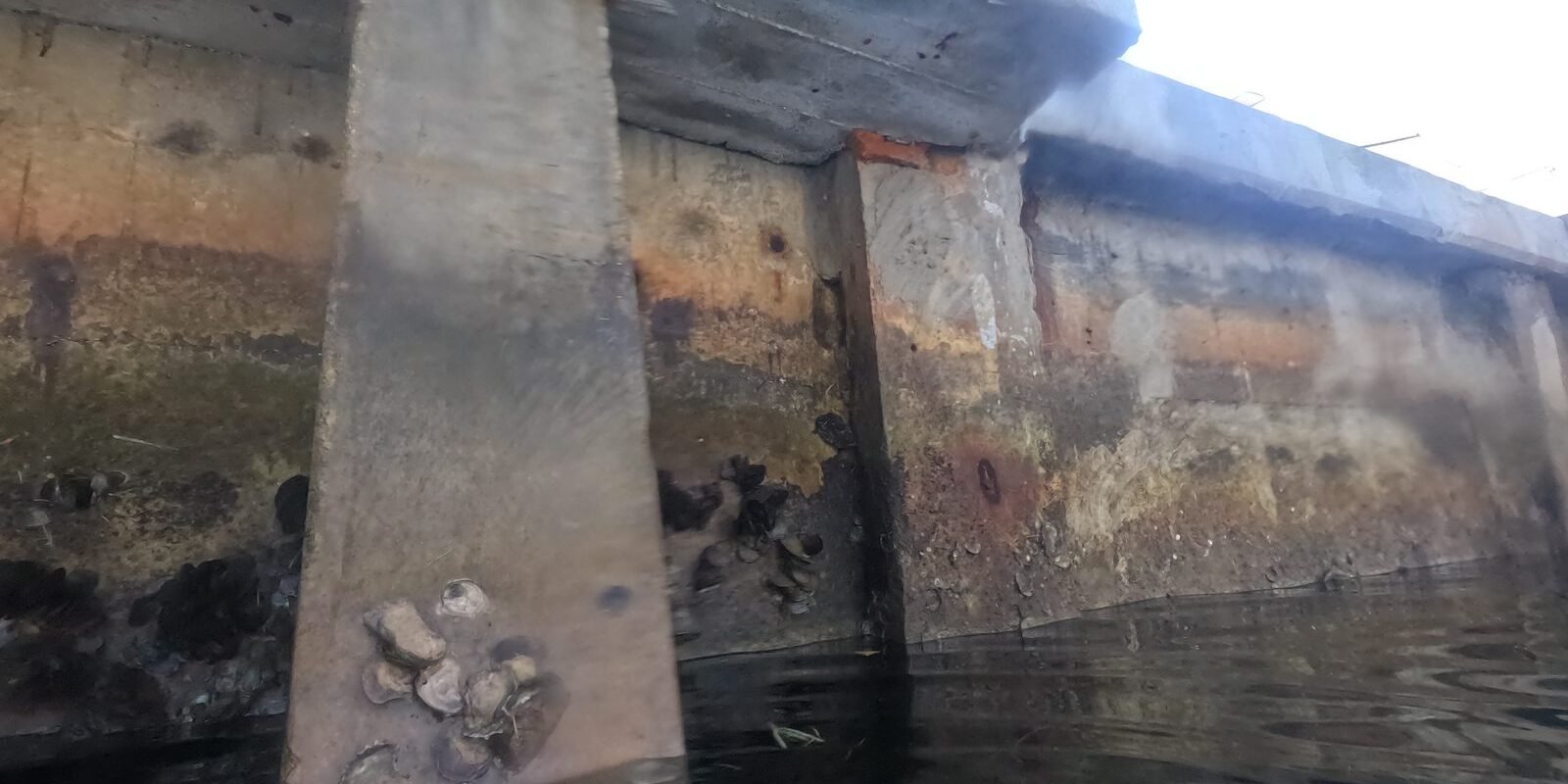
The Florida-licensed structural engineer who inspected your seawall and wrote the report should not disappear the day the contractor pulls a permit. Seawall construction oversight — a qualified engineer checking tieback torque, rebar placement, and backfill sequencing while the work is happening, not after — is what keeps a $150,000 repair from turning into a $300,000 do-over. At Souffront Contractors, we see the gap most often on waterfront properties from Coral Gables to Key Biscayne and along Biscayne Bay: an engineer wrote a good report, a contractor got permitted off it, and then nobody who reads structural drawings ever came back to the site.
Key takeaways
- Most seawall repairs are permitted off an engineer’s report, but the same engineer is rarely retained to watch the work get built.
- Tieback installation, cap reinforcement, and backfill sequencing are buried within days — if no one qualified is there, no one can verify them afterward.
- An owner’s representative or construction manager on a seawall job reviews submittals, pay applications, and change orders on the board’s behalf — they don’t supervise the contractor’s means and methods.
- Construction oversight is scoped and quoted upfront, before the project starts — never priced the way an inspection is.
- A firm that inspects, engineers, permits, and builds can put someone on site who has actually installed a tieback, not just drawn one.
What gets buried before anyone checks it
A seawall repair has a handful of moments that matter more than all the others, and every one of them gets covered in dirt or concrete within a day or two. Tieback rods get torqued to a spec and then backfilled. Cap reinforcement gets tied, formed, and poured. Deadmen get set and buried. Once that happens, there is no non-destructive way to confirm any of it was done to spec.
On a job with no engineer-led construction management, the board finds out about a shortcut the same way everyone eventually does: a section of new wall in Miami Beach or Sunny Isles Beach starts leaning within two years, and the wall has to be opened up to figure out why. By then the contractor who poured it is on another job, the warranty argument takes months, and the board is paying twice.
Why “the contractor is inspected by the city” isn’t the same thing
Miami-Dade and most Broward cities require permit inspections at set milestones, and those inspectors do real work. But a building department inspector is checking code compliance at a scheduled visit — not reviewing whether the contractor’s means and methods match what the engineer specified, and not sitting through a full day of tieback installation to watch torque values. A structural engineer inspection at the start of a project and a city permit inspection during it are both real, and neither one is construction oversight. Oversight means someone who understands the drawings is physically present, or reviewing documentation in real time, at the stages that actually determine whether the wall lasts.
The stages that need eyes on them
- Excavation and existing condition verification, before anything gets covered
- Tieback and anchor installation, including torque and depth
- Rebar placement and cap formwork, before the pour
- The concrete pour itself, if it’s a cast-in-place cap or panel
- Backfill sequencing and compaction behind the new wall
Who signs off on a change order for $180,000
This is the part condo and HOA boards feel most. A project starts, the contractor hits something unexpected — old riprap, a collapsed void behind the existing wall, soil that won’t compact — and a change order arrives. The board, made up of volunteers with day jobs, has to decide whether that’s a legitimate differing condition or a gap the low bidder left out of the original scope on purpose.
An owner’s representative reviews that change order against the original bid documents and the drawings before it reaches the board, and tells them in plain terms whether it holds up. That’s the practical value of having a construction manager involved from the start: someone wrote the scope of work tight enough that competing bids were actually comparable, so a change order later means something real changed — not that the board is now paying for what should have been priced the first time.
What Souffront’s role actually is — and isn’t
An owner’s representative on a seawall construction project observes, reviews, verifies, and advises on the owner’s behalf. That includes reviewing submittals and shop drawings, being present at the milestones above, reviewing pay applications against work actually completed, and coordinating with Miami-Dade DERM or the local building department when permitting questions come up mid-project. It does not mean Souffront supervises the contractor’s crew, takes on the contractor’s safety obligations, or guarantees the contractor’s work — those stay with the licensed contractor performing the construction.
Because Souffront both performs seawall construction and offers this oversight role, we say plainly: a board can engage us for oversight only, on a project someone else builds. If Souffront also has an interest in bidding the repair work itself, that’s disclosed in writing before the board decides anything. A board that wants that separation gets it — the point of the role is to work for the board, not around a conflict.
What it costs
Construction oversight is not priced like a seawall inspection. A standard residential inspection is a flat fee, typically $1,500–$3,000 depending on complexity, quoted before the site visit. Oversight of an active construction project is a different scope entirely — it runs for the length of the job, not a single visit — so it’s scoped and quoted upfront, before the project starts, based on the project’s size, duration, and number of milestone visits. There’s no standard number to quote in the abstract, and any contractor who gives you one before seeing the scope of work is guessing.
Talk to a Florida-licensed engineer
If your board is heading into a seawall or dock repair and no one on the project reads structural drawings for a living, that’s worth fixing before the contract gets signed, not after the first change order. Souffront can review your bid documents, propose an oversight scope, or start with a fixed-fee inspection and engineer-sealed report — same-business-day response, no obligation. The contact form below reaches us directly.
Frequently asked questions
What does “seawall construction oversight” actually mean?
It means a Florida-licensed structural engineer or owner’s representative observes and reviews the work at key stages — tieback installation, reinforcement placement, pours, and backfill — and reviews submittals, pay applications, and change orders on the property owner’s behalf. It is oversight and documentation, not supervision of the contractor’s crew.
Isn’t the contractor already inspected by the county or city?
Building department inspectors check code compliance at scheduled permit milestones, which is separate from oversight. They are not reviewing the contractor’s means and methods against the engineer’s drawings or sitting through the full installation of a tieback system.
Which stages of a seawall project matter most for oversight?
Tieback and anchor installation, cap reinforcement and formwork before the pour, the concrete pour itself, and backfill compaction. All four get covered within days and cannot be verified non-destructively once they are.
Does hiring an owner’s representative cost extra on top of the repair?
Yes — it is a separate, project-specific scope, quoted upfront before the work starts. It is not priced the way a flat-fee inspection is, because it runs for the duration of construction rather than a single visit.
Who decides if a change order is legitimate if the board has no engineer on the project?
Without an owner’s representative, that decision falls to the board itself, comparing a technical change order against bid documents they likely didn’t write and may not fully understand. An owner’s representative reviews it against the original scope and drawings before it reaches the board.
Can Souffront oversee a project it also wants to bid on?
Souffront discloses any interest in bidding the construction in writing before a board engages us for oversight. A board can also engage Souffront for oversight only, on a project built by another licensed contractor.
Is engineer oversight required by Miami-Dade or Broward permitting rules?
Permit inspections by the local building department are required and are separate from owner-side construction oversight, which is not mandated by code but is common practice on larger commercial and HOA seawall projects for exactly this reason. Requirements vary by jurisdiction — Miami-Dade DERM and city building departments should be confirmed for your specific project.
What happens if a problem is found after the wall is already backfilled?
Confirming a defect after backfill usually requires excavating the section in question, which is slow and expensive, and the resulting warranty dispute with the contractor can take months to resolve. That is the core argument for having someone present before the work is covered, rather than diagnosing it afterward.
Related from Souffront Contractors: HOA and condo board compliance reports — all delivered by the same Florida-licensed structural engineering and marine construction team. Call (877) 420-7220.
About Souffront Contractors Inc.: a Florida-licensed structural engineering and marine construction firm serving Miami-Dade, Broward, and Palm Beach counties. Work with a Florida-licensed seawall contractor who is also the engineer of record — see our seawall contractors page or call (877) 420-7220.
Got a seawall or structural question?
Five fields. Same business day from a Florida-licensed engineer, routed into our dispatch CRM in real time.
- Same business dayAcknowledgment from a Florida licensed engineer — Mon–Fri 8 AM–5:30 PM.
- Engineer-sealed reportAccepted by carriers, building departments, and real-estate transactions.
- Fixed-fee proposalNo hourly billing. Repair scope priced line-by-line.