
Does Foam Injection Fix a Seawall, or Just Hide It?
Polyurethane foam injection can stop soil loss behind a Miami seawall fast — but it doesn't fix a cracked panel or a failed tieback. Here's the real difference.
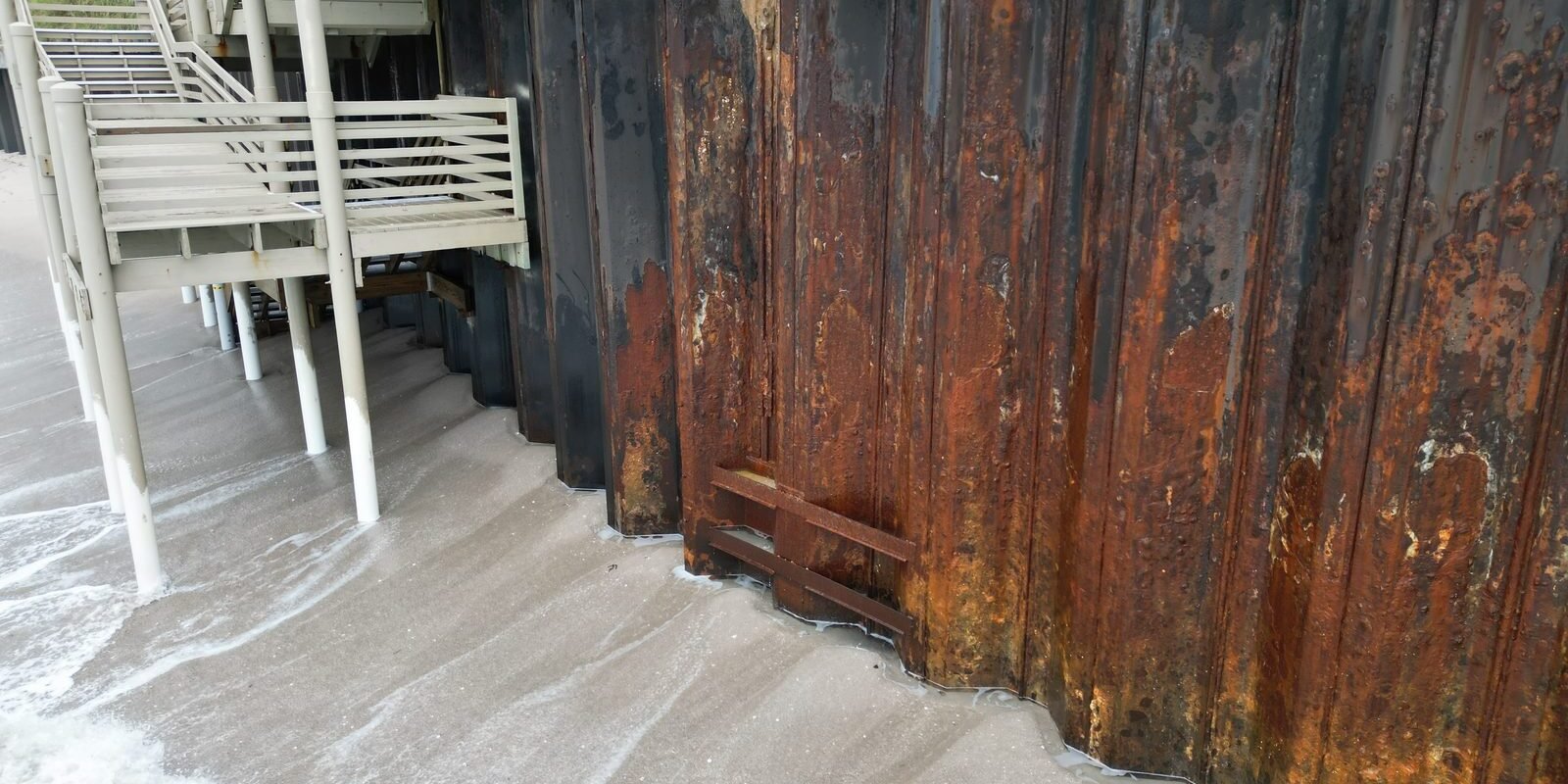
Polyurethane foam injection fills the voids that soil loss leaves behind a seawall — it does not repair a cracked panel, a corroded tieback, or a seawall cap that has already separated from the wall. On a recent inspection of a canal-front property near Souffront Contractors‘ Coral Gables service area, the homeowner had already paid a crew to inject foam under a sunken section of patio slab. The slab stopped sinking. The seawall panel six feet away, the one actually losing the soil, kept moving.
Key takeaways
- Foam injection fills voids behind a seawall caused by soil loss — it does not strengthen a cracked panel, repair a failed tieback, or stop active corrosion.
- It works well as a fast, low-disruption fix for isolated soil loss behind a structurally sound wall, often in the same general cost range as moderate seawall repairs ($100–$250 per linear foot, general industry range).
- It is a bandage when the voids are a symptom of a bigger problem — a rotated panel, a snapped tieback, or a seawall cap with no reinforcement left.
- Injection work on a permitted seawall repair in Miami-Dade or Broward typically needs special inspection to document grout pressures and placement for the building department.
- The only way to know which situation you’re in is a structural seawall inspection before anyone picks up an injection wand.
What foam injection actually does
A polyurethane foam injection crew drills small ports through the seawall cap or an adjacent slab, then pumps expanding polyurethane resin into the voids behind the wall. The foam expands, displaces groundwater, and fills the gap where soil used to be. Done correctly, it stops a sinking patio or seawall cap from sinking further and can slow the erosion path that’s feeding the void.
That’s the whole job. The foam does not add steel, does not tie the wall back to anything, and does not change the condition of the panel, cap, or piles sitting in front of it. If the wall was structurally sound before the void formed, injection can be a legitimate, narrow fix. If the wall was already failing, injection buys time and nothing more.
Where the technique genuinely works
- Isolated soil loss behind an otherwise sound wall — a small gap from an old weep hole that never had a filter fabric installed, for example.
- Settling pavers or a slab-on-grade near the cap, where the seawall itself tests out structurally sound on inspection.
- A stopgap before a scheduled seawall repair or replacement, to stabilize soil loss in the weeks before crews mobilize.
Where it’s a bandage, not a repair
- The seawall panel has rotated or bowed outward — the void is a symptom of the panel losing its grip on the soil, not the cause.
- A tieback has snapped or corroded through. Foam does not replace tension. The wall is still unanchored.
- The seawall cap is cracked through with exposed, corroding rebar. Foam under a cracked cap just hides the next failure point.
- There’s a structural reason the soil is leaving — a failed panel joint, a hole in the sheet pile, undermining at the toe — that injection does nothing to close.
What we actually see on these calls in Biscayne Bay and canal-front properties
Most of the foam injection calls Souffront gets start the same way: a homeowner on a canal in Coconut Grove, Key Biscayne, or a Biscayne Bay finger canal notices their seawall cap or adjacent pool deck has dropped an inch or two. A contractor quotes foam injection as the fix, sometimes without ever getting underneath the waterline to look at the panel or the tiebacks. The void gets filled. The underlying reason the soil left in the first place — a gap in the panel joint, a rusted-through tieback, a cap with no functioning drainage — stays exactly where it was.
A proper seawall inspection checks the cap, the panels, the piles, and the tiebacks as a system, both above and below the waterline. That’s what tells you whether the void behind your cap is an isolated drainage problem or the first visible sign that the wall itself is failing.
The permitting and quality-control side most crews skip
Grout and foam injection on a permitted seawall repair in Miami-Dade or Broward isn’t a quiet, off-the-books fix — it’s structural work tied to a permit, and the building department expects documentation of injection pressures, port spacing, and material volumes. On jobs that cross that threshold, a special inspector verifies and logs the work as it happens, the same way they’d verify a tieback installation or a cap pour. Skip that step and you have no record of what was actually placed behind your wall — which matters the next time you sell the property or file an insurance claim.
Miami-Dade’s DERM and local building departments both have jurisdiction over work on or behind a permitted seawall, and the Florida Building Code governs what counts as a structural repair versus incidental maintenance.
Cost, in plain terms
Foam injection is typically priced per linear foot of wall treated or per injection port, and for an isolated void it often lands at or below the lower end of general seawall repair ranges — moderate seawall repairs run roughly $100–$250 per linear foot, full panel or tieback replacement roughly $400–$600 per linear foot (general industry ranges, not a Souffront quote). The number that matters isn’t the injection price — it’s whether injection is the right scope at all. A seawall repair plan built off a real inspection tells you whether you’re buying a permanent fix or six months before the same void reopens somewhere else along the wall.
When full repair or replacement is the honest answer
If the inspection turns up a rotated panel, a broken tieback, or a cap that’s lost its structural section, injecting foam into the void behind it treats the symptom while the cause keeps working. At that point the real options are a seawall repair or replacement scope sized to the actual damage, sometimes paired with soil stabilization behind the wall where erosion has undermined a wider section than the cap alone shows. Foam can still play a role in that scope — stabilizing soil ahead of panel or tieback work — but as one line item in a repair plan, not the plan itself.
Talk to a Florida-licensed engineer
Before anyone drills a port into your seawall cap, get a structural inspection that actually looks at the panels, piles, and tiebacks behind the void. Souffront Contractors inspects, engineers, permits, and builds as one company, with a fixed-fee inspection and an engineer-sealed report that tells you whether foam injection solves the problem or just delays the real one. Reach us at (877) 420-7220, or use the form below for a same-business-day response.
Frequently asked questions
Is polyurethane foam injection a permanent seawall repair?
It’s permanent for the void it fills, but only if the void was caused by isolated soil loss behind a structurally sound wall. If the void was caused by a cracked panel, a failed tieback, or ongoing erosion from a structural defect, the void will likely reopen because the underlying cause was never addressed.
How do I know if my seawall just needs foam injection or a full repair?
Only a structural inspection that checks the cap, panels, piles, and tiebacks — above and below the waterline — can tell you that. A sunken slab or cap alone doesn’t tell a contractor what’s happening to the wall itself; it just tells them where the soil went.
Does foam injection stop a seawall from leaning further?
No. Foam fills the space where soil used to be; it adds no tension or structural capacity to the wall. If a panel is leaning because a tieback failed, the panel is still unanchored after injection — the foam just fills in behind it.
Does foam injection work require a permit in Miami-Dade or Broward?
Structural injection work tied to a seawall repair generally does, and on permitted jobs the building department typically requires special inspection to document injection pressures and placement. Work that’s purely cosmetic slab leveling, unrelated to the seawall structure, is sometimes treated differently — check with the local building department before assuming either way.
What causes the soil voids behind a seawall in the first place?
Common causes include a missing or torn filter fabric behind weep holes, a cracked or open panel joint, tidal action working through a small gap over years, or active erosion from a structural defect like a corroded tieback or a hole in the wall itself. The first three are often good candidates for injection alone; the last is not.
How much does seawall foam injection cost compared to full repair?
Foam injection for an isolated void typically prices at or below moderate seawall repair ranges (roughly $100–$250 per linear foot, general industry range), while full panel or tieback replacement runs roughly $400–$600 per linear foot. These are general ranges, not quotes — actual pricing depends on what the inspection finds.
Can foam injection be part of a larger seawall repair plan?
Yes. It’s often used to stabilize soil ahead of panel or tieback replacement work, or to address a secondary void discovered during a larger repair. In that context it’s one line item in an engineered repair scope, not a standalone fix for a failing wall.
About Souffront Contractors Inc.: a Florida-licensed structural engineering and marine construction firm serving Miami-Dade, Broward, and Palm Beach counties. Learn more about engineer-led seawall repair across South Florida — see our seawall contractors page or call (877) 420-7220.
Got a seawall or structural question?
Five fields. Same business day from a Florida-licensed engineer, routed into our dispatch CRM in real time.
- Same business dayAcknowledgment from a Florida licensed engineer — Mon–Fri 8 AM–5:30 PM.
- Engineer-sealed reportAccepted by carriers, building departments, and real-estate transactions.
- Fixed-fee proposalNo hourly billing. Repair scope priced line-by-line.